How do radius and length of a ball milling jar affect efficiency? Optimize geometry for superior polymer composites.
Updated 4 months ago
Optimizing jar geometry is fundamental to achieving high milling efficiency. The radius of a ball milling jar dictates the impact energy by controlling the fall height of the media, while the length determines the spatial distribution and density of the polymer and reinforcement materials. Together, these dimensions define the trajectory of the grinding media, directly influencing the shear and impact forces required for superior interfacial bonding in polymer composites.
The geometry of a milling jar serves as the physical framework for energy transfer during the mechanochemical process. Effective milling requires a precise balance where the radius provides sufficient kinetic energy for impact and the length ensures uniform material distribution to prevent localized overheating or dead zones.
The Influence of Jar Radius on Kinetic Energy
Fall Height and Impact Energy
The radius of the cylindrical jar is the primary factor determining the potential energy of the grinding media. As the jar rotates, the grinding balls are lifted by centrifugal force; the radius defines the maximum fall height before gravity overcomes these forces, sending the media into a cascading or falling motion.
In polymer composite processing, this fall height is critical because it generates the impact energy necessary to break down fiber bundles. High-energy impacts are essential for creating the fresh surfaces needed for strong interfacial bonding between the reinforcement fibers and the polymer matrix.
Collision Frequency and Trajectory
The internal radius defines the enclosed reaction space and dictates the motion trajectory of the grinding balls. A larger radius increases the distance a ball travels during each rotation, which can optimize the collision frequency between the media and the polymer particles.
If the radius is correctly calibrated to the rotation speed, the balls will strike the "toe" of the charge with maximum force. This trajectory ensures that the shear and impact forces are distributed effectively throughout the composite mixture.
The Role of Jar Length in Material Distribution
Material Distribution Density
While the radius manages energy intensity, the jar length influences the distribution density of the material. A length that is proportional to the diameter ensures that the polymer and fibers do not become overly compressed or unevenly concentrated in one section of the jar.
Proper length-to-diameter ratios prevent the formation of "dead zones" where material might evade the grinding media. Uniform distribution is vital for ensuring that every part of the polymer matrix receives consistent mechanical treatment.
Space for Fiber Alignment and Shear
The longitudinal space within the jar allows for the sufficient lifting and dropping of reinforcement fibers. In polymer composites, the goal is often to disperse fibers without causing excessive structural damage that would weaken the final product.
The jar length provides the necessary volume for the shear forces to act across the fibers, facilitating their integration into the matrix. This spatial freedom helps in achieving a homogenous blend, which is a prerequisite for high-performance composite materials.
Thermal and Boundary Considerations
Heat Exchange and Surface Area
The geometric dimensions define the total surface area of the jar, which acts as the boundary for heat exchange. Mechanochemical reactions in polymer milling generate significant heat due to friction and impact.
The ratio of the jar's volume to its surface area influences the local temperature distribution. If the dimensions are too large without adequate external cooling, the resulting heat can lead to the thermal degradation of the polymer or unwanted phase changes.
Sample Purity and Wear Resistance
The internal dimensions also determine the frequency of contact between the grinding media and the jar walls. Smaller jars may experience higher relative wear on the wall surfaces per unit of material processed.
Choosing a geometry that minimizes excessive wall-striking while maintaining high-impact collisions is essential for ensuring sample purity. This balance prevents the contamination of the polymer composite with wear debris from the jar material.
Understanding the Trade-offs
Impact Energy vs. Material Degradation
While a larger radius increases impact energy and efficiency, it also increases the risk of mechanical degradation of the polymer chains. Excessive force can "over-mill" the composite, reducing the molecular weight of the polymer and compromising the structural integrity of the reinforcement fibers.
Distribution Volume vs. Energy Density
Increasing the jar length improves material throughput and distribution, but it can dilute the energy density if the charge of grinding balls is not increased proportionally. A jar that is too long for its media load will result in inefficient milling, as the balls spread too thinly to provide consistent impacts.
How to Apply This to Your Project
Recommendations for Optimization
- If your primary focus is maximizing fiber dispersion: Prioritize a jar with a moderate radius and longer length to facilitate more lateral movement and shear without destroying fiber length.
- If your primary focus is achieving high interfacial bonding: Opt for a larger radius to increase the impact energy, ensuring the polymer and reinforcement are mechanically fused at the molecular level.
- If your primary focus is processing heat-sensitive polymers: Use a smaller radius or segmented jars with a high surface-area-to-volume ratio to improve heat dissipation and prevent thermal softening.
By precisely calibrating jar dimensions to your specific material properties, you transform ball milling from a trial-and-error process into a predictable, high-efficiency manufacturing stage.
Summary Table:
| Geometric Dimension | Primary Mechanism Affected | Impact on Polymer Composite Milling |
|---|---|---|
| Jar Radius | Fall height & kinetic energy | Determines impact force for fiber breakdown & interfacial bonding. |
| Jar Length | Material distribution density | Prevents "dead zones" and ensures uniform shear across the polymer matrix. |
| Surface Area | Heat exchange capacity | Regulates local temperature to prevent thermal degradation of polymers. |
| Volume Ratio | Energy density | Balances material throughput with the frequency of media collisions. |
Elevate Your Material Research with Precision Engineering
Achieving the perfect interfacial bond in polymer composites requires more than just high-quality materials—it requires the right equipment. At [Brand Name], we provide complete laboratory sample preparation solutions for material science, specializing in high-performance powder processing and compaction equipment.
Whether you need to optimize your grinding trajectory with our planetary ball mills, jet mills, or cryogenic grinders, or require precise shaping with our Cold/Warm Isostatic Presses (CIP/WIP) and vacuum hot presses, our solutions are designed for maximum efficiency and sample purity.
Our extensive product line includes:
- Milling: Planetary, jet, sand/bead, disc, and rotor mills.
- Crushing & Sizing: Jaw/roll crushers and vibratory/air-jet sieve shakers.
- Mixing: Powder mixers and vacuum defoaming mixers.
- Pressing: Standard lab presses, XRF pellet presses, and advanced hot presses.
Don't let inefficient geometry stall your innovation. Contact our experts today to find the ideal equipment configuration for your specific material requirements!
References
- Adel Jalaee, E. Johan Foster. Improvement in the Thermomechanical Properties and Adhesion of Wood Fibers to the Polyamide 6 Matrix by Sequential Ball Milling Technique. DOI: 10.1021/acssuschemeng.3c06351
Mentioned Products
- High Energy Omnidirectional Planetary Ball Mill 16L
- High Energy Omnidirectional Planetary Ball Mill 20L
- Heavy Duty Horizontal Planetary Ball Mill for Efficient Industrial Grinding and Sample Preparation
- Single Tank High Energy Vibratory Ball Mill for Laboratory Grinding and Mixing
- 8L Planetary Ball Mill for Laboratory Grinding and Sample Preparation
People Also Ask
- What role does an omni-directional planetary ball mill play in brass/cobalt antimonide pretreatment? Achieve Nano-Scale Homogeneity.
- What is the role of a high-energy planetary ball mill in Li2ZrO3 and LBS prep? Achieve Superior Electrolyte Density
- What role does a high-energy planetary ball mill play in processing quenched bioactive glass? Achieve Nano-Scale Precision
- What role does a planetary ball mill play in nano-mineral filler prep? Achieve Sub-100nm Precision & Performance
- What role does a high-energy planetary ball mill play in magnesium-based hydrogen storage alloy preparation?

Tech Team · PowderPreparation
Last updated on Jun 03, 2026
Related Products

High Energy Omnidirectional Planetary Ball Mill 16L

High Energy Omnidirectional Planetary Ball Mill 20L

Heavy Duty Horizontal Planetary Ball Mill for Efficient Industrial Grinding and Sample Preparation
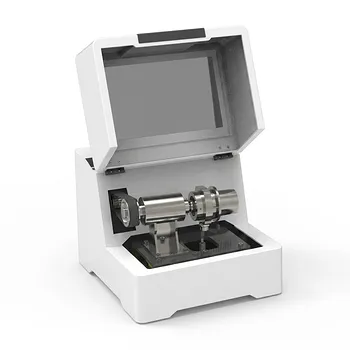
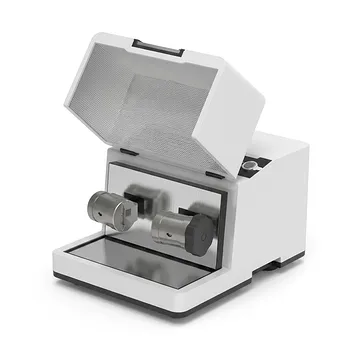
Single Tank High Energy Vibratory Ball Mill for Laboratory Grinding and Mixing

8L Planetary Ball Mill for Laboratory Grinding and Sample Preparation

Dual Station Planetary Ball Mill 24L

Vertical Square Planetary Ball Mill for Laboratory Sample Preparation and Nanoscale Grinding

Vertical Semi Circular Planetary Ball Mill for Laboratory Precision Grinding

High Energy Planetary Ball Mill for Nano Scale Grinding and Mechanical Alloying

Miniature Planetary Ball Mill with Vacuum Grinding and High Efficiency for Laboratory Sample Preparation

High Throughput Micro Ball Mill for Cryogenic Grinding and Laboratory Cell Disruption
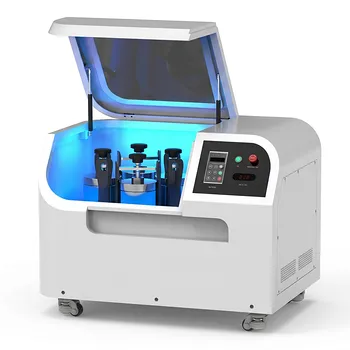
Planetary Ball Mill 12L

High Energy Laboratory Planetary Ball Mill for Nano Grinding and Material Science Sample Preparation

Vertical Production Planetary Ball Mill for High Throughput Powder Processing
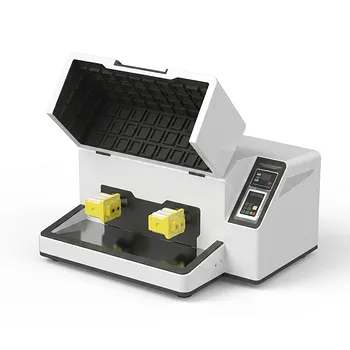
Multi-Platform Nanoscale High-Energy Vibratory Ball Mill

Nano High Energy Vibratory Ball Mill for Laboratory Sample Preparation

High Energy Planetary Ball Mill for Nano Scale Grinding and Colloidal Mixing in Material Science Research
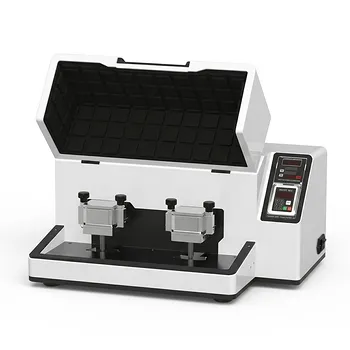
Nanoscale High Energy Vibratory Ball Mill Low Temperature

360° Rotating Omnidirectional Laboratory Planetary Ball Mill for Homogeneous Ultra-Fine Grinding and Mixing