How do standard test sieves contribute to the evaluation of catalyst granularity? Improve Kinetic Accuracy & Stability
Updated 4 months ago
Standard test sieves provide the mechanical precision required to grade catalyst particles into highly uniform size ranges. By isolating specific diameters—often ranging from 106 micrometers to over 4 millimeters—these sieves eliminate physical variables like internal diffusion and external mass transfer limitations. This ensures that the data collected during chemical reactions reflects true kinetic rates rather than physical transport interference.
Core Takeaway: Standard test sieves are the foundational tools for ensuring catalyst uniformity, a prerequisite for obtaining accurate kinetic data and maintaining stable reactor dynamics by preventing pressure drops and bypass flow.
Achieving Kinetic Accuracy through Particle Selection
Eliminating Internal Diffusion Influence
In catalyst preparation, particles are typically pressed and crushed before being graded by standard test sieves. By selecting a narrow range, such as 0.2 to 0.63 mm, researchers can ensure that the reactant gases penetrate the catalyst fully. This mechanical screening allows for the acquisition of accurate ammonia production rates and kinetic data without the "shadow" of internal diffusion.
Neutralizing External Mass Transfer Limitations
Uniform particle size distribution ensures that the fluid film surrounding each catalyst particle is consistent throughout the reactor bed. This consistency eliminates external mass transfer limitations, which can otherwise skew experimental results. By using high-precision sieves, technicians can isolate the chemical performance of the catalyst from the physical environment.
Isolating Fine Powders for Dry Reforming
For ground catalyst powders, sieves are used to isolate particles smaller than 106 micrometers. This strict classification ensures that the catalyst packing within a reactor is dense and uniform. Such uniformity is vital for complex reactions like dry reforming, where inconsistent packing leads to erratic results.
Optimization of Reactor Dynamics
Managing Pressure Drop and Flow Consistency
Inconsistent catalyst sizes often lead to excessive pressure drops or local bypass flow within a chemical reactor. Standard test sieves remove oversized clumps and fine powders that would otherwise clog the interstitial spaces between particles. This results in a stable flow environment that protects the integrity of the reactor vessel and the efficiency of the process.
Preventing Gas Bypassing and Temperature Gradients
When catalyst granularity is not controlled, gas may take the path of least resistance, known as channeling or bypassing. This leads to localized temperature gradients (hotspots) that can deactivate the catalyst or cause thermal stress. Vibratory sieve shakers paired with standard sieves ensure a homogeneous bed that facilitates even heat and mass distribution.
Calculating Production Yield and Metrics
Sieves are the primary tool for assessing the particle size distribution span and the median particle size (d50). By combining sieves of different apertures—ranging from 355 to 4000 micrometers—producers can calculate the precise yield of target-sized granules. This data is essential for quality control and scaling up catalyst production from the lab to the plant.
Understanding the Trade-offs
The Risk of Particle Attrition
While sieving is essential for grading, the mechanical action of vibratory shakers can cause fragile catalysts to break or wear down. This "attrition" creates new fines during the very process intended to remove them. Technicians must balance the duration of the sieving cycle with the mechanical strength of the catalyst.
Limitations of Two-Dimensional Screening
Standard sieves classify particles based on their smallest cross-section, which can be misleading for non-spherical catalysts. For example, a long, needle-like particle may pass through a mesh if it hits the surface vertically, despite having a much larger volume than a spherical particle. This geometric limitation means that "uniformity" in sieving refers to the second dimension, not necessarily the total volume or shape.
Applying Granularity Control to Your Process
Recommendations for Catalyst Management
Effective evaluation of catalyst granularity requires selecting the right screening strategy based on your specific operational goals.
- If your primary focus is Kinetic Research: Use high-precision sieves to isolate narrow ranges (e.g., 0.2–0.63 mm) to completely remove internal diffusion as a variable.
- If your primary focus is Industrial Scale-up: Prioritize calculating the d50 and yield of spherical granules to ensure the catalyst bed will maintain a stable pressure drop over long production cycles.
- If your primary focus is Reactor Safety: Utilize vibratory sieve shakers to rigorously remove fines (<106 micrometers) that contribute to hotspots and gas bypassing.
Precise granularity control through standardized sieving remains the most reliable method for ensuring that chemical processes are governed by intentional chemistry rather than accidental physics.
Summary Table:
| Application | Key Benefit | Impact on Chemical Process |
|---|---|---|
| Kinetic Research | Isolates narrow ranges (0.2–0.63 mm) | Eliminates internal diffusion and mass transfer limitations. |
| Reactor Dynamics | Removes fines (<106 μm) and clumps | Prevents pressure drops, gas bypassing, and localized hotspots. |
| Quality Control | Measures d50 and particle span | Ensures consistent production yield and predictable scaling. |
| Sieve Shaking | High-precision vibratory grading | Facilitates a homogeneous catalyst bed for even heat distribution. |
Optimize Your Catalyst Evaluation with Precision Equipment
Achieving accurate kinetic data and reactor stability starts with precise particle size control. At [Company Name], we provide complete laboratory sample preparation solutions for material science, specializing in high-performance powder processing and compaction equipment.
Our extensive product line is designed to meet the rigorous demands of chemical research and industrial scaling:
- Granularity Control: Vibratory and air-jet sieve shakers equipped with a wide range of standard test sieves and precision meshes.
- Size Reduction: Jaw and roll crushers, liquid nitrogen cryogenic grinders, and advanced mills (planetary ball, jet, sand/bead, disc, and rotor).
- Sample Preparation: Powder mixers, defoaming mixers, and a full spectrum of hydraulic presses, including Cold/Warm Isostatic Presses (CIP/WIP), XRF pellet presses, and vacuum hot presses.
Ready to enhance your lab's efficiency and ensure the integrity of your material testing? Contact our experts today to find the right solution for your process!
References
- Hubert Ronduda, Wioletta Raróg‐Pilecka. Boosting the Catalytic Performance of Co/Mg/La Catalyst for Ammonia Synthesis by Selecting a Pre-Treatment Method. DOI: 10.3390/catal11080941
Mentioned Products
- Laboratory Vibratory Test Sieve Shaker for Precision Particle Size Analysis and Powder Grading
- Stainless Steel Laboratory Vibratory Test Sieve Shaker
- Small Laboratory Vibrating Sieve Shaker for Precise Particle Size Analysis
- 三维电磁微量振动筛分仪
- Small Laboratory Vibratory Sieve Shaker for Powder Gradation and Particle Size Analysis
People Also Ask
- What role does a laboratory sieve shaker play in determining PDI? Achieve Precision in Biomass Quality Testing
- What are the functions of sieve shakers for coconut shell powder? Achieve Precise Particle Size & Quality Control.
- What function does a laboratory sieve shaker perform in the PSD analysis of residual soil? Ensure Precise Grading
- What is the role of a laboratory sieve shaker in the preparation of plantain peel adsorbents? Standardize Particle Size
- What is the function of a laboratory vibratory sieve shaker? Enhance Coal Particle Size Distribution (PSD) Analysis

Tech Team · PowderPreparation
Last updated on Jun 03, 2026
Related Products

Laboratory Vibratory Test Sieve Shaker for Precision Particle Size Analysis and Powder Grading
Stainless Steel Laboratory Vibratory Test Sieve Shaker

Small Laboratory Vibrating Sieve Shaker for Precise Particle Size Analysis

三维电磁微量振动筛分仪

Small Laboratory Vibratory Sieve Shaker for Powder Gradation and Particle Size Analysis
Laboratory Air Jet Sieving Machine for Fine Powder Particle Size Analysis and Deagglomeration

Laboratory Dry and Wet Three Dimensional Vibratory Sieve Shaker for Particle Analysis

Stainless Steel Rotary Vibrating Sieve High Precision Circular Vibratory Separator Industrial Powder Grading Machine Multi Layer Sifting Equipment
Vibratory Sieve Shaker Electromagnetic 3D Motion Powder Particle Size Analyzer for Dry and Wet Sieving
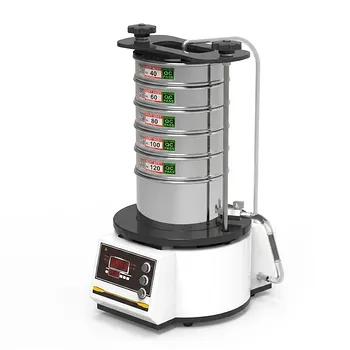
High Frequency Wet Three-Dimensional Vibrating Sieve Shaker for Dry and Wet Particle Size Analysis

Three Dimensional Rotary Vibrating Sieve
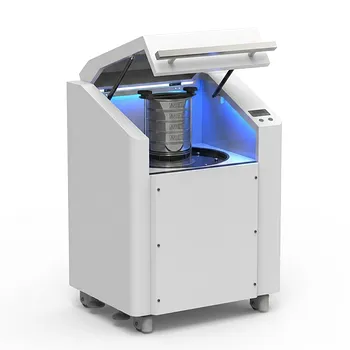
High Frequency Cabinet Type Three-Dimensional Rotary Vibrating Sieve Shaker for Dry Sieving and Particle Classification

Heavy Duty Dry Three Dimensional Vibratory Sieve Shaker for Particle Separation

Dry Three Dimensional Vibratory Sieve Shaker

Tapping Oscillating Sieve Shaker for Dry and Wet Particle Size Analysis
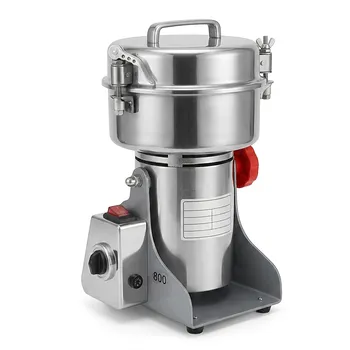
Small High-Speed Laboratory Grinder for Rapid Sample Preparation
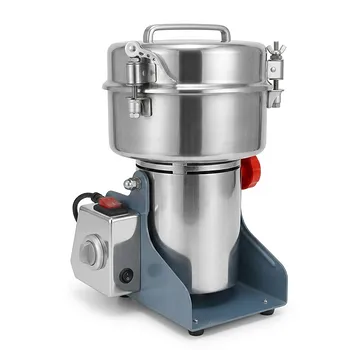
Small High-Speed Grinder for Efficient Laboratory Sample Preparation
Portable Cutting Mill for Laboratory Sample Preparation and RoHS WEEE Compliance Testing
Continuous Feeding Grinder High Efficiency Pulverizer for Lab Sample Preparation