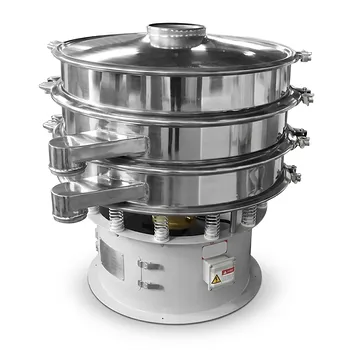
How do precision analytical sieves ensure the reliability of thermogravimetric analysis data for metal powders?
Updated 4 months ago
To ensure reliable thermogravimetric analysis (TGA) data, precision analytical sieves strictly control the particle size distribution (PSD) of metal powders to standardize the effective contact area available for reactions. By isolating specific mesh sizes—typically around 50 μm—researchers eliminate the surface-area-to-volume ratio as a hidden variable, ensuring that changes in mass during oxidation or evaporation are due to intrinsic material kinetics rather than physical inconsistencies.
Core Takeaway: Precision sieving transforms a raw powder into a calibrated analytical sample, ensuring that TGA results are repeatable, comparable across different alloy compositions, and reflective of true chemical behavior.
The Link Between Particle Size and Reaction Kinetics
Surface Area as the Primary Reactive Foundation
The reliability of TGA data depends heavily on the "effective contact area," which is the total surface where oxygen interacts with the metal. Precision sieves ensure that every sample in a series has a uniform surface area, preventing larger particles from skewing the data through slower reaction rates.
Standardizing Oxidation and Evaporation Rates
In thermogravimetric studies, oxidation and evaporation are surface-dependent phenomena. By using a specific mesh size, such as 50 μm, you ensure that the kinetic energy and mass transfer observed are consistent across multiple trials.
Controlling the Reaction Environment
Uniform particle size allows for precise measurements of how a material responds to oxygen partial pressure. Without this control, the data would reflect the random geometry of the powder rather than the material’s actual chemical sensitivity to its environment.
Ensuring Data Integrity and Comparability
Eliminating Geometric Variables
When comparing different alloy compositions, the only variable should be the chemistry of the alloy itself. Strict PSD control removes the noise caused by varying particle shapes and sizes, allowing for a "clean" comparison of kinetic properties.
Achieving Statistical Repeatability
Repeatability is the hallmark of high-quality TGA data. Analytical sieves enable researchers to produce identical sample batches, ensuring that an experiment performed today will yield the same results as one performed next month.
Enhancing Comparative Alloy Research
By standardizing the physical state of the ground powder, researchers can confidently attribute differences in TGA curves to the alloying elements. This is critical for developing new materials where subtle changes in composition must be accurately quantified.
Understanding the Technical Trade-offs
The Risk of Mesh Blindness and Wear
Over time, sieves can become "blinded" or clogged by fine metal particles, which alters the effective mesh size. Regular calibration and cleaning are required to ensure the sieve continues to deliver the precise 50 μm (or other specified) distribution required for high-stakes TGA.
Agglomeration in Fine Powders
Very fine metal powders often suffer from electrostatic attraction or moisture-driven agglomeration. Even if a sieve is technically accurate, these clumps can behave like larger particles during TGA, potentially distorting the kinetic data if not properly managed.
Material Loss and Representative Sampling
Sieving inherently removes a portion of the original sample to achieve uniformity. You must ensure that the particles passing through the sieve are still chemically representative of the bulk material, as some alloy phases can segregate by size during the grinding process.
Applying Sieving Standards to Your Analysis
To achieve the highest level of data integrity in your thermogravimetric experiments, your approach to powder preparation must be as rigorous as the analysis itself.
- If your primary focus is Kinetic Precision: Utilize certified precision sieves to isolate a narrow particle size range, such as 45–50 μm, to maximize the clarity of oxidation curves.
- If your primary focus is Alloy Comparison: Standardize the sieving duration and equipment across all samples to ensure that physical processing remains a constant across different chemical compositions.
- If your primary focus is High-Temperature Evaporation: Prioritize the removal of "fines" (ultra-small particles) through double-sieving, as these particles can evaporate prematurely and create deceptive initial mass-loss data.
By mastering the physical consistency of your metal powders, you elevate your TGA data from a mere observation to a definitive scientific measurement.
Summary Table:
| Factor | Influence on TGA Data | Benefit for Research |
|---|---|---|
| PSD Control | Standardizes effective contact area | Ensures repeatable reaction kinetics |
| Geometric Uniformity | Eliminates particle shape variables | Allows for accurate alloy comparisons |
| Fines Removal | Prevents premature evaporation | Increases integrity of mass-loss data |
| Mesh Consistency | Maintains constant reaction environment | Enables statistical repeatability |
Elevate Your Material Analysis with Precision Sample Preparation
Achieving reliable TGA data starts with meticulous powder preparation. At KinTek, we provide complete laboratory sample preparation solutions tailored for material science. We specialize in high-precision powder processing and compaction equipment to ensure your samples meet the strictest analytical standards.
Our extensive product line includes:
- Sieve Shakers & Meshes: Vibratory and air-jet sieve shakers with a wide range of certified test sieves for precise PSD control.
- Advanced Milling: Planetary ball mills, jet mills, and cryogenic grinders for superior particle size reduction.
- Compaction Solutions: A full spectrum of hydraulic presses, including Cold/Warm Isostatic Presses (CIP/WIP), vacuum hot presses, and XRF pellet presses.
- Material Processing: Crushers, powder mixers, and defoaming mixers for comprehensive sample handling.
Standardize your research and eliminate variables today. Contact our technical experts to discover how our specialized equipment can enhance your laboratory's accuracy and efficiency.
References
- Yuki OIWA, Haruka TADA. Study on Oxygen Partial Pressure Dependence and Kinetic of Oxidation and Vaporization Behavior of Insoluble Residues (Noble Metal Precipitation) in High-Level Waste. DOI: 10.15669/pnst.8.257
Mentioned Products
- Laboratory Vibratory Test Sieve Shaker for Precision Particle Size Analysis and Powder Grading
- Small Laboratory Vibrating Sieve Shaker for Precise Particle Size Analysis
- Laboratory Air Jet Sieving Machine for Fine Powder Particle Size Analysis and Deagglomeration
- Stainless Steel Rotary Vibrating Sieve High Precision Circular Vibratory Separator Industrial Powder Grading Machine Multi Layer Sifting Equipment
- Laboratory Dry and Wet Three Dimensional Vibratory Sieve Shaker for Particle Analysis
People Also Ask
- What role does a laboratory sieve shaker play in determining PDI? Achieve Precision in Biomass Quality Testing
- What are the functions of sieve shakers for coconut shell powder? Achieve Precise Particle Size & Quality Control.
- What function does a laboratory sieve shaker perform in the PSD analysis of residual soil? Ensure Precise Grading
- What is the role of a laboratory sieve shaker in the preparation of plantain peel adsorbents? Standardize Particle Size
- What is the function of a laboratory vibratory sieve shaker? Enhance Coal Particle Size Distribution (PSD) Analysis

Tech Team · PowderPreparation
Last updated on Jun 03, 2026
Related Products
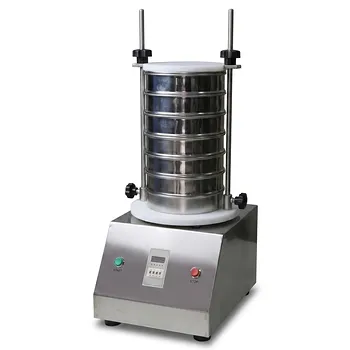
Laboratory Vibratory Test Sieve Shaker for Precision Particle Size Analysis and Powder Grading
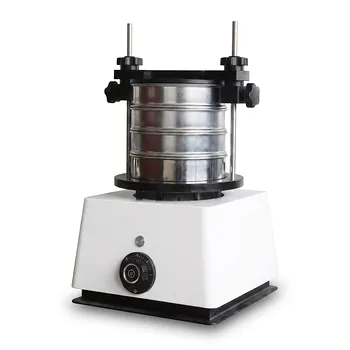
Small Laboratory Vibrating Sieve Shaker for Precise Particle Size Analysis
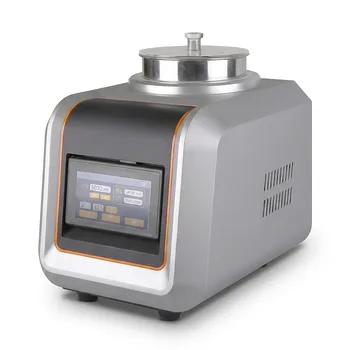
Laboratory Air Jet Sieving Machine for Fine Powder Particle Size Analysis and Deagglomeration
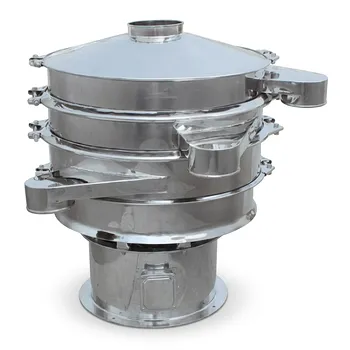
Stainless Steel Rotary Vibrating Sieve High Precision Circular Vibratory Separator Industrial Powder Grading Machine Multi Layer Sifting Equipment
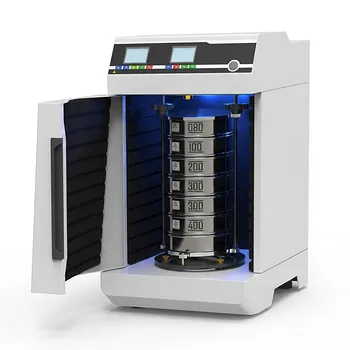
Laboratory Dry and Wet Three Dimensional Vibratory Sieve Shaker for Particle Analysis
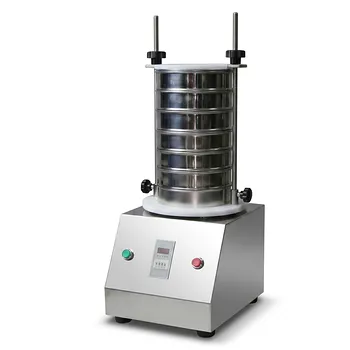
Small Laboratory Vibratory Sieve Shaker for Powder Gradation and Particle Size Analysis
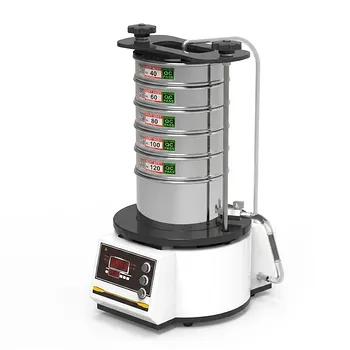
High Frequency Wet Three-Dimensional Vibrating Sieve Shaker for Dry and Wet Particle Size Analysis
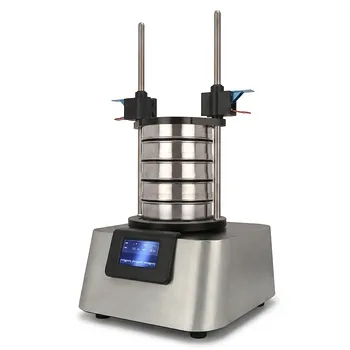
Vibratory Sieve Shaker Electromagnetic 3D Motion Powder Particle Size Analyzer for Dry and Wet Sieving
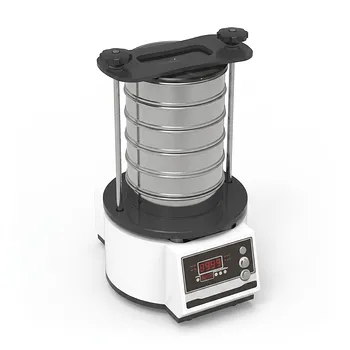
Tapping Oscillating Sieve Shaker for Dry and Wet Particle Size Analysis
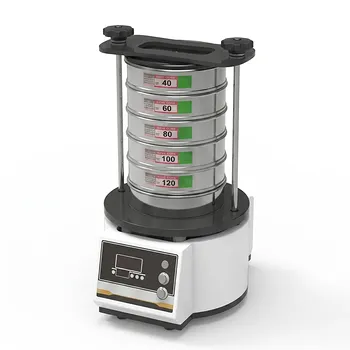
Dry Three Dimensional Vibratory Sieve Shaker
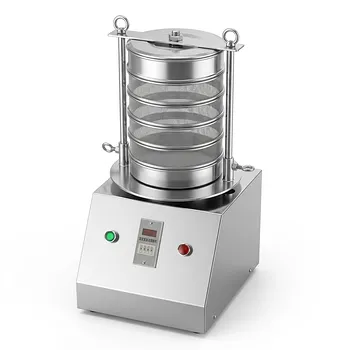
Stainless Steel Laboratory Vibratory Test Sieve Shaker
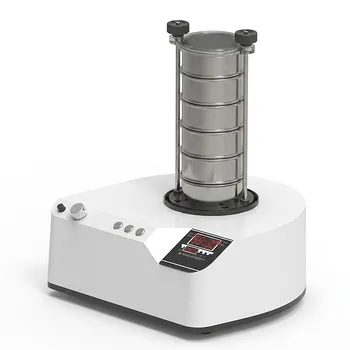
三维电磁微量振动筛分仪
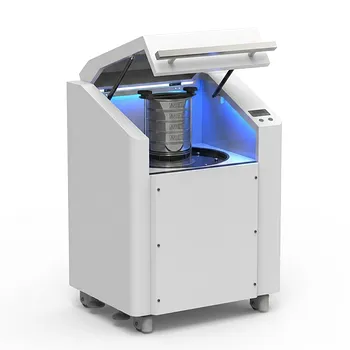
High Frequency Cabinet Type Three-Dimensional Rotary Vibrating Sieve Shaker for Dry Sieving and Particle Classification
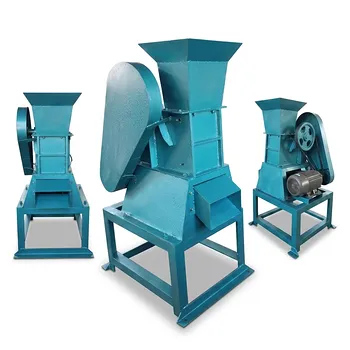
Custom Raised Height Laboratory Jaw Crusher for Precision Sample Preparation in Material Science
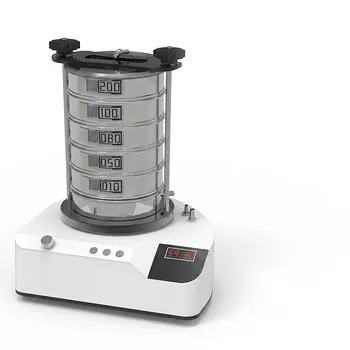
Heavy Duty Dry Three Dimensional Vibratory Sieve Shaker for Particle Separation