How does the tilt angle of the container influence fluid flow within a planetary centrifugal mixer? Master 3D Convection
Updated 5 months ago
The tilt angle is the primary catalyst for three-dimensional chaotic convection within a planetary mixer. By offsetting the container axis from the revolution axis—typically at angles between 40 and 45 degrees—the mixer generates a constantly shifting vector of resultant forces. This geometric configuration prevents the material from simply rotating in place, instead forcing it into a complex spiral upward motion that eliminates dead zones and ensures macroscopic homogeneity.
The tilt angle transforms basic centrifugal rotation into a sophisticated 3D flow field by leveraging shifting resultant forces and Coriolis effects. This configuration breaks fluid symmetry, driving rapid material exchange across both longitudinal and radial directions to achieve a superior mix.
The Mechanics of Three-Dimensional Flow
Constant Force Reorientation
The tilt of the container axis relative to the revolution axis ensures that the resultant forces acting on the fluid are never static. As the container revolves, the direction of these forces changes continuously throughout the cycle.
This dynamic force environment prevents material stratification, a common failure in purely vertical mixing systems. By constantly "pulling" the fluid in different directions, the mixer forces the entire volume to participate in the process.
Inducing Spiral Motion
The specific geometry of a tilted axis prompts a spiral upward motion along the container walls. This creates internal circulation loops where material from the bottom of the container is systematically moved to the top.
This vertical displacement is critical for heavy or high-viscosity materials that might otherwise settle. The resulting flow ensures that the entire batch experiences uniform shear and contact.
Breaking Symmetry with Coriolis Forces
The Role of Coriolis Forces
In a planetary centrifugal mixer, the tilted rotation generates powerful Coriolis forces. These forces induce a vortex structure that is inherently tilted relative to the rotation axis itself.
This tilt is essential for breaking the laminar symmetry that often traps materials in localized pockets. By disrupting these stable patterns, the mixer transitions the fluid into a chaotic state that facilitates faster blending.
Longitudinal and Radial Exchange
The three-dimensional flow field significantly enhances the exchange efficiency of materials in two directions simultaneously. Fluid moves both radially (from the center to the wall) and longitudinally (from top to bottom).
This dual-axis movement is what allows planetary mixers to handle complex formulations, such as dispersing fine powders into high-viscosity resins. The tilt ensures that no part of the container remains isolated from the primary flow.
Understanding the Trade-offs and Constraints
The Impact of Charging Rates
The effectiveness of the tilt angle is heavily dependent on the charging rate, or filling volume, of the container. A lower charging rate (around 20%) provides the free space necessary for materials to tumble and diffuse.
If the container is overfilled (exceeding 40-50%), the internal movement becomes restricted regardless of the tilt angle. In these cases, the material lacks the headspace to form the necessary spiral structures, requiring much higher speeds to achieve homogeneity.
Container Aspect Ratio Limitations
The aspect ratio (height to diameter) of the container acts as a spatial constraint on the flow field. Research suggests that specific ratios, such as 1.25, are optimal for minimizing low-speed zones.
If the container is too shallow or too deep, the vortex structure induced by the tilt may not develop fully. This can lead to the formation of "dead zones" where the dissipation of energy is insufficient to break down material agglomerates.
How to Apply This to Your Process
Making the Right Choice for Your Goal
- If your primary focus is rapid homogenization of powders: Utilize a lower charging rate (20%) to maximize the free space created by the tilted axis for tumbling and diffusion.
- If your primary focus is dispersing high-viscosity fluids: Ensure your mixer is set to a tilt of 40-45 degrees to maximize the Coriolis-induced vortex and longitudinal material exchange.
- If your primary focus is eliminating dead zones in a large batch: Select a container with an optimal aspect ratio (near 1.25) to complement the tilt-induced spiral flow and minimize low-speed areas.
By mastering the intersection of tilt angle, charging rate, and container geometry, you can optimize the chaotic convection necessary for even the most challenging material formulations.
Summary Table:
| Key Factor | Influence on Fluid Flow | Optimal Setting/Ratio |
|---|---|---|
| Tilt Angle | Generates 3D chaotic convection & Coriolis forces | 40° – 45° |
| Charging Rate | Affects free space for tumbling & material exchange | ~20% (Max 40-50%) |
| Aspect Ratio | Minimizes low-speed "dead zones" | 1.25 (Height:Diameter) |
| Flow Type | Transitions laminar symmetry to chaotic state | Spiral upward motion |
Achieve Perfect Homogeneity with Our Advanced Mixing Solutions
Struggling with material stratification or stubborn dead zones in your formulations? Our specialists provide complete laboratory sample preparation solutions tailored for material science. We offer state-of-the-art planetary centrifugal mixers and defoaming mixers designed to leverage optimized tilt geometries, ensuring rapid 3D chaotic convection for even the most high-viscosity resins and fine powders.
Beyond mixing, we manufacture a full spectrum of high-performance equipment to support your entire workflow:
- Powder Processing: Planetary ball mills, jet mills, and liquid nitrogen cryogenic grinders.
- Compaction & Pressing: A full range of hydraulic presses, including Cold/Warm Isostatic Presses (CIP/WIP), XRF pellet presses, and vacuum hot presses.
- Sizing & Analysis: Vibratory/air-jet sieve shakers and precision powder mixers.
Let us help you optimize your material processing. Contact us today to find the ideal equipment for your laboratory's unique requirements!
References
- Yoshiyuki Komoda, Naoto Ohmura. Estimation of mean shear rate in a vessel of a planetary centrifugal mixer based on the heat balance equation. DOI: 10.1016/j.cherd.2024.01.006
Mentioned Products
- High Viscosity Planetary Centrifugal Vacuum Mixer for Material Defoaming and Uniform Mixing
- High Efficiency Vacuum Planetary Centrifugal Mixer and Defoaming Machine for Industrial Material Research and Precise Laboratory Powder Dispersion
- Industrial Planetary Centrifugal Vacuum Defoaming Mixer for High Viscosity Paste and Powder Homogenization
- High Viscosity Planetary Centrifugal Mixing and Vacuum Defoaming Machine for Laboratory Material Preparation
- High Speed Vacuum Planetary Centrifugal Mixer and Defoamer for Industrial Paste Processing
People Also Ask
- What core functions does a planetary centrifugal mixer perform? Optimize Hard Carbon Anode Slurry & Degassing
- Why is a planetary centrifugal mixer recommended for geopolymer slurries? Achieve high-shear, air-free homogenization.
- Why is a planetary centrifugal mixer utilized for wood powder and HPMC? Achieve uniform dispersion & rapid defoaming.
- How does a planetary centrifugal mixer address key challenges in Tyr-CDs@EVA optical films? Ensure Optical Clarity.
- What is the role of a planetary centrifugal mixer in UHTC slurry preparation? Achieve Void-Free, High-Viscosity Mixing

Tech Team · PowderPreparation
Last updated on May 14, 2026
Related Products
High Viscosity Planetary Centrifugal Vacuum Mixer for Material Defoaming and Uniform Mixing
High Efficiency Vacuum Planetary Centrifugal Mixer and Defoaming Machine for Industrial Material Research and Precise Laboratory Powder Dispersion
Industrial Planetary Centrifugal Vacuum Defoaming Mixer for High Viscosity Paste and Powder Homogenization
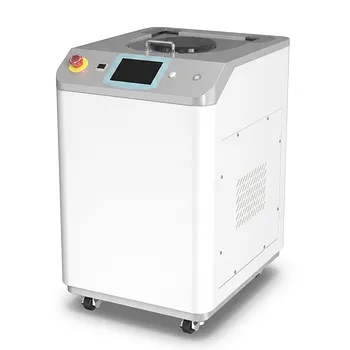
High Viscosity Planetary Centrifugal Mixing and Vacuum Defoaming Machine for Laboratory Material Preparation
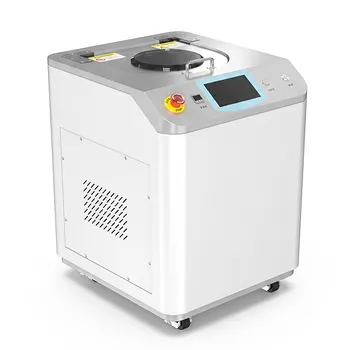
High Speed Vacuum Planetary Centrifugal Mixer and Defoamer for Industrial Paste Processing
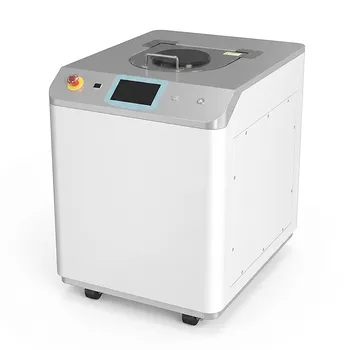
Industrial Planetary Centrifugal Vacuum Defoaming Mixer for High Viscosity Paste and Advanced Material Science
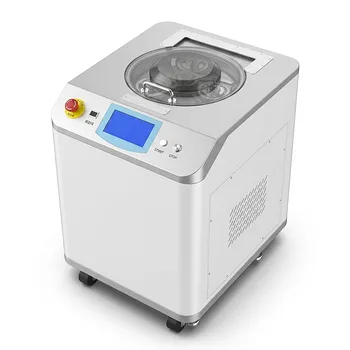
Dual Cup Vacuum Centrifugal Mixer Planetary Paste Defoaming Machine Industrial Material Processor
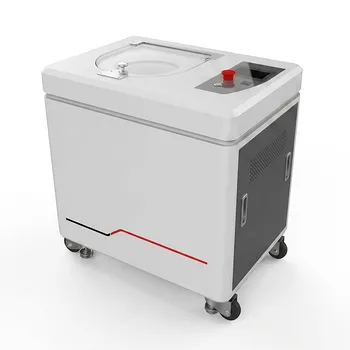
非介入式材料均质机真空脱泡行星搅拌高粘度混合设备
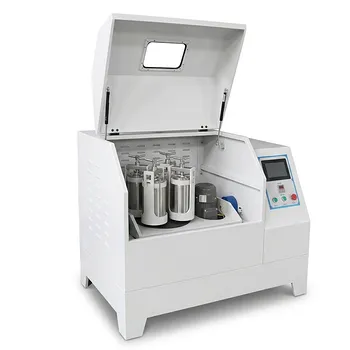
360° Rotating Omnidirectional Laboratory Planetary Ball Mill for Homogeneous Ultra-Fine Grinding and Mixing
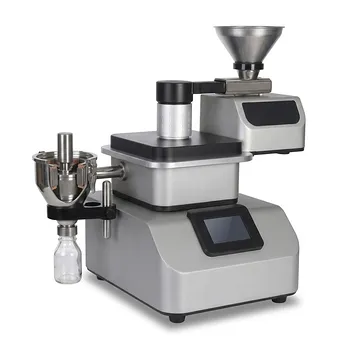
Ultra Centrifugal Mill for Rapid Laboratory Sample Preparation and Fine Powder Grinding
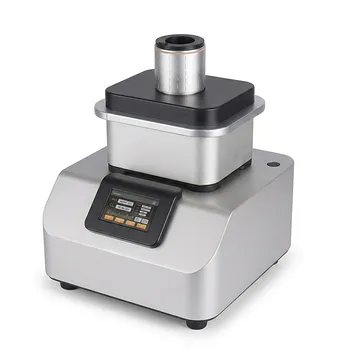
Ultra Centrifugal Mill High Speed Laboratory Grinder for Fibrous and Brittle Sample Preparation
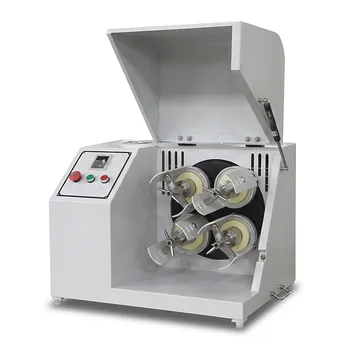
Horizontal Light Duty Planetary Ball Mill for Laboratory Sample Preparation
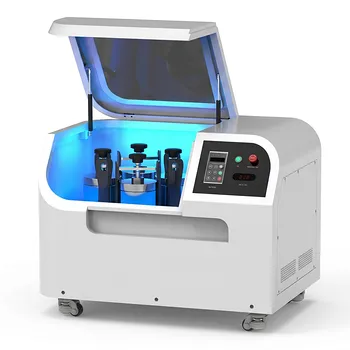
Planetary Ball Mill 12L
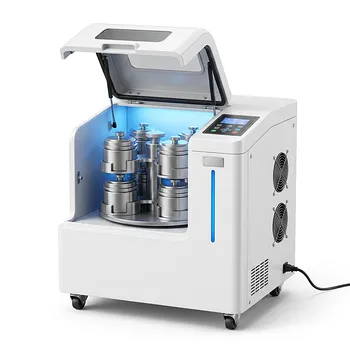
High Energy Omnidirectional Planetary Ball Mill 20L
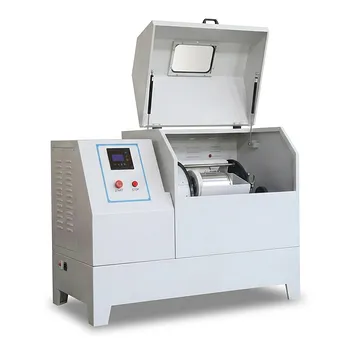
Heavy Duty Horizontal Planetary Ball Mill for Efficient Industrial Grinding and Sample Preparation
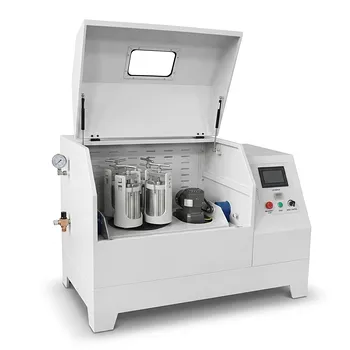
Vertical Production Planetary Ball Mill for High Throughput Powder Processing

High Energy Omnidirectional Planetary Ball Mill 16L
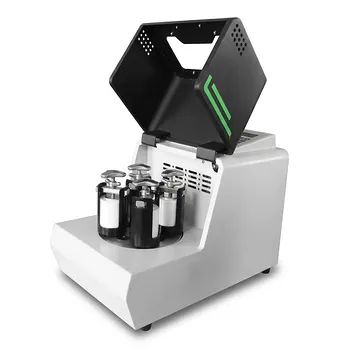
Miniature Planetary Ball Mill with Vacuum Grinding and High Efficiency for Laboratory Sample Preparation

Vertical Square Planetary Ball Mill for Laboratory Sample Preparation and Nanoscale Grinding