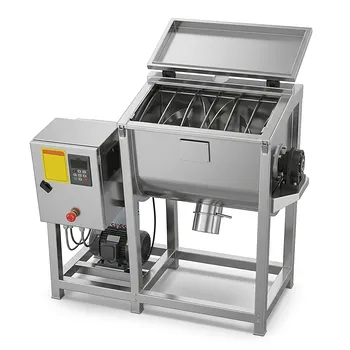
What is the role of a planetary centrifugal mixer in preparing DCPD resin-based matrices? Ensure Flawless Homogeneity
Updated 3 months ago
The planetary centrifugal mixer is the critical bridge between raw chemical components and a high-performance composite matrix. It performs the dual role of molecular-level homogenization and high-efficiency degassing for DCPD resin, catalysts, and inhibitors. This ensures that the subsequent curing process is chemically uniform and the final carbon fiber composite is free from structural micro-voids.
By utilizing simultaneous high-speed revolution and rotation, these mixers achieve a level of dispersion and air-removal that traditional blade-based methods cannot match. This dual-action process is essential for maintaining the mechanical integrity and predictable curing behavior required in high-performance resin systems.
Achieving Molecular-Level Homogeneity
Dispersing Catalysts and Inhibitors
In DCPD (dicyclopentadiene) systems, the distribution of catalysts and inhibitors must be perfectly uniform to ensure a controlled reaction. The mixer utilizes simultaneous revolution and rotation to generate powerful shear forces that break down molecular clusters. This level of dispersion ensures that every part of the resin matrix contains the precise ratio of components required for stable polymerization.
Impact on Curing Kinetics
Uniformity at the microscopic level is vital for the consistency of curing kinetics. When resin components are mixed to a molecular-level uniformity, the subsequent photothermal or thermal curing occurs at a predictable and even rate. This prevents "hot spots" or areas of incomplete curing that could weaken the finished carbon fiber composite.
High-Energy Mechanical Mixing
Unlike traditional stirring, the planetary centrifugal mixer does not use blades that can introduce air or fail to reach "dead zones" in the container. The high-energy centrifugal forces ensure that even high-viscosity resins and additives are folded and sheared into a single, cohesive phase. This is particularly important when incorporating fine fillers or additives that tend to agglomerate.
Simultaneous Degassing and Defoaming
The Mechanics of Centrifugal Defoaming
As the mixer rotates and revolves, the resulting centrifugal force acts on the difference in density between the resin and entrapped air. This force drives micro-bubbles to the surface where they collapse, effectively degassing the material without the need for a separate vacuum stage in many applications.
Eliminating Structural Weak Points
In carbon fiber composites, internal micro-bubbles act as stress concentrators that can lead to delamination or premature failure. By minimizing internal micro-bubble defects, the planetary centrifugal mixer ensures the electrical and mechanical integrity of the matrix. This leads to a higher-quality interface between the DCPD resin and the carbon fiber reinforcements.
Improving Optical and Material Accuracy
For resins used in additive manufacturing or precision molding, the removal of air is critical for optical path propagation and volumetric accuracy. Air bubbles are compressible and can interfere with the linear relationship between pressure and material output. Removing these bubbles ensures that the final part matches the intended engineering specifications exactly.
Understanding the Trade-offs
Thermal Management Challenges
The high-speed shear forces required for mixing can generate significant internal friction and heat. In DCPD systems, which are sensitive to temperature, excessive heat during mixing could trigger a premature chemical reaction or "gelation." Users must often balance mixing speed with cooling intervals to maintain the stability of the resin.
Scaling and Volume Limitations
Planetary centrifugal mixers are typically designed for batch processing rather than continuous production. While they are unsurpassed for precision and quality, the volume of material processed in a single cycle is limited compared to industrial-scale inline mixers. This makes them ideal for high-value, high-performance composites rather than low-cost, bulk materials.
How to Apply This to Your Project
Selecting a Process for Your Goal
To get the most out of a planetary centrifugal mixer when preparing DCPD matrices, consider your specific performance requirements:
- If your primary focus is maximum mechanical strength: Prioritize longer degassing cycles at high centrifugal force to ensure the complete elimination of micro-voids.
- If your primary focus is rapid prototyping: Optimize the revolution-to-rotation ratio to achieve molecular homogeneity in the shortest possible time.
- If your primary focus is chemical stability: Monitor the temperature of the resin during mixing to prevent premature curing caused by frictional heat.
By mastering the balance of shear force and centrifugal degassing, you can ensure your DCPD resin-based matrices provide a flawless foundation for high-performance carbon fiber composites.
Summary Table:
| Feature | Mechanical Action | Impact on DCPD Composite |
|---|---|---|
| Molecular Dispersion | Dual rotation & revolution shear forces | Eliminates "hot spots" and ensures uniform curing kinetics |
| Centrifugal Degassing | Density-driven bubble migration | Removes micro-voids to prevent delamination and failure |
| Blade-free Mixing | High-energy non-contact folding | Prevents air entrapment and eliminates container "dead zones" |
| Thermal Control | Adjustable speed and intervals | Maintains chemical stability by managing frictional heat |
Elevate Your Composite Material Performance
Achieving the perfect DCPD matrix requires precision and the right equipment. At [Company Name], we provide complete laboratory sample preparation solutions for material science, specializing in advanced powder processing and resin mixing technology.
Our extensive product lines are designed to support your research and production from start to finish:
- Mixing Excellence: Planetary centrifugal mixers and defoaming mixers for bubble-free resins.
- Size Reduction: Jaw/roll crushers, liquid nitrogen cryogenic grinders, and high-energy mills (planetary ball, jet, sand, and rotor).
- Particle Analysis: Vibratory and air-jet sieve shakers.
- Compaction & Forming: A full spectrum of hydraulic presses, including Cold/Warm Isostatic Presses (CIP/WIP), vacuum hot presses, and XRF pellet presses.
Whether you are refining resin kinetics or preparing advanced powder samples, our experts are here to help you optimize your workflow. Contact us today to find the perfect solution for your lab!
References
- Carter F Dojan, Mostafa Yourdkhani. Additive manufacturing of carbon fiber-reinforced thermoset composites via in-situ thermal curing. DOI: 10.1038/s41467-025-59848-2
Mentioned Products
- High Viscosity Planetary Centrifugal Vacuum Mixer for Material Defoaming and Uniform Mixing
- High Efficiency Vacuum Planetary Centrifugal Mixer and Defoaming Machine for Industrial Material Research and Precise Laboratory Powder Dispersion
- Industrial Planetary Centrifugal Vacuum Defoaming Mixer for High Viscosity Paste and Powder Homogenization
- High Viscosity Planetary Centrifugal Mixing and Vacuum Defoaming Machine for Laboratory Material Preparation
- High Speed Vacuum Planetary Centrifugal Mixer and Defoamer for Industrial Paste Processing
People Also Ask
- What core functions does a planetary centrifugal mixer perform? Optimize Hard Carbon Anode Slurry & Degassing
- Why is a planetary centrifugal mixer recommended for geopolymer slurries? Achieve high-shear, air-free homogenization.
- Why is a planetary centrifugal mixer utilized for wood powder and HPMC? Achieve uniform dispersion & rapid defoaming.
- How does a planetary centrifugal mixer address key challenges in Tyr-CDs@EVA optical films? Ensure Optical Clarity.
- What is the role of a planetary centrifugal mixer in UHTC slurry preparation? Achieve Void-Free, High-Viscosity Mixing

Tech Team · PowderPreparation
Last updated on Jun 03, 2026
Related Products
High Viscosity Planetary Centrifugal Vacuum Mixer for Material Defoaming and Uniform Mixing
High Efficiency Vacuum Planetary Centrifugal Mixer and Defoaming Machine for Industrial Material Research and Precise Laboratory Powder Dispersion
Industrial Planetary Centrifugal Vacuum Defoaming Mixer for High Viscosity Paste and Powder Homogenization
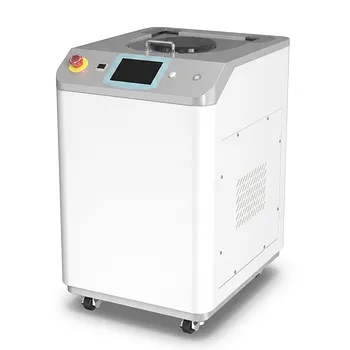
High Viscosity Planetary Centrifugal Mixing and Vacuum Defoaming Machine for Laboratory Material Preparation
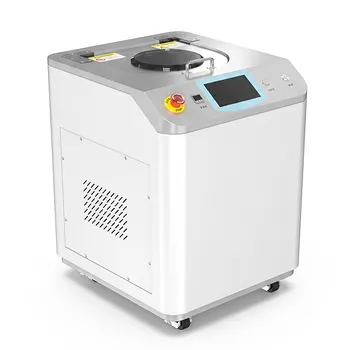
High Speed Vacuum Planetary Centrifugal Mixer and Defoamer for Industrial Paste Processing
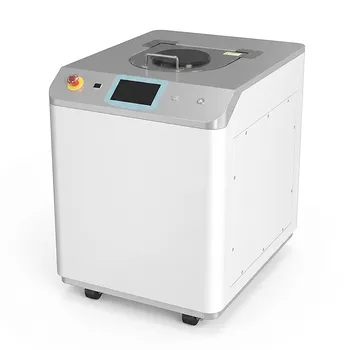
Industrial Planetary Centrifugal Vacuum Defoaming Mixer for High Viscosity Paste and Advanced Material Science
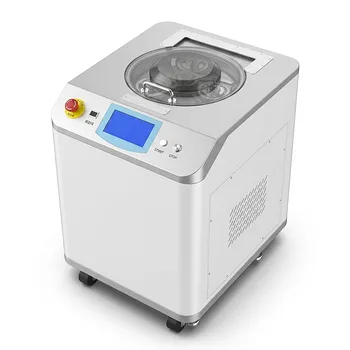
Dual Cup Vacuum Centrifugal Mixer Planetary Paste Defoaming Machine Industrial Material Processor
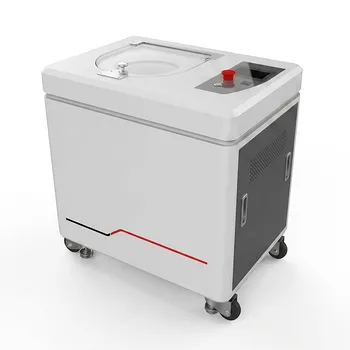
非介入式材料均质机真空脱泡行星搅拌高粘度混合设备

360° Rotating Omnidirectional Laboratory Planetary Ball Mill for Homogeneous Ultra-Fine Grinding and Mixing
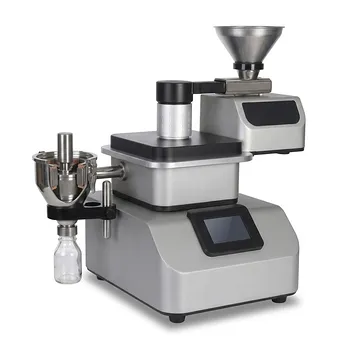
Ultra Centrifugal Mill for Rapid Laboratory Sample Preparation and Fine Powder Grinding
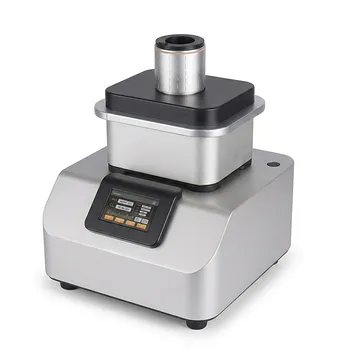
Ultra Centrifugal Mill High Speed Laboratory Grinder for Fibrous and Brittle Sample Preparation
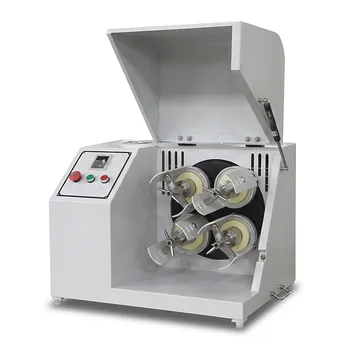
Horizontal Light Duty Planetary Ball Mill for Laboratory Sample Preparation
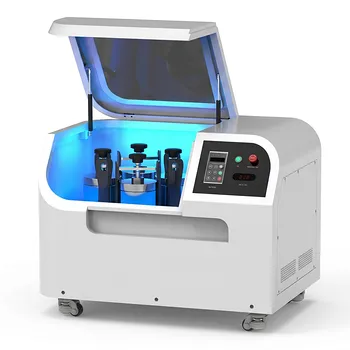
Planetary Ball Mill 12L

High Energy Omnidirectional Planetary Ball Mill 20L

Heavy Duty Horizontal Planetary Ball Mill for Efficient Industrial Grinding and Sample Preparation

Vertical Production Planetary Ball Mill for High Throughput Powder Processing

High Energy Omnidirectional Planetary Ball Mill 16L

Miniature Planetary Ball Mill with Vacuum Grinding and High Efficiency for Laboratory Sample Preparation

Vertical Square Planetary Ball Mill for Laboratory Sample Preparation and Nanoscale Grinding