Planetary Centrifugal Mixer vs. Manual Mixing for Eu2O3 Resins: Achieving Superior Dispersion & Deaeration
Updated 5 months ago
The transition from manual mixing to planetary centrifugal mixing offers a paradigm shift in material consistency for high-performance composites. For Europium Oxide (Eu2O3) modified resin composites, this technology ensures near-perfect particle dispersion, complete deaeration, and a contamination-free process that manual methods simply cannot replicate.
A planetary centrifugal mixer (PCM) solves the dual challenge of high-viscosity resin handling and nanoparticle agglomeration by utilizing simultaneous rotation and revolution. This dual-action motion produces a dense, homogenous composite that is structurally superior and free of the micro-bubbles common in manual preparation.
Achieving Superior Particle Dispersion
Eliminating Europium Oxide Agglomeration
Europium Oxide particles often naturally clump together, creating weak points in a resin matrix. The powerful centrifugal forces generated by high-speed revolution and rotation effectively break down these agglomerates. This ensures that the Eu2O3 fillers are distributed uniformly, preventing the degradation of mechanical properties caused by uneven loading.
Homogeneity in High-Viscosity Matrices
Resin bases are often highly viscous, making it difficult for manual stirring to reach every part of the mixture. A planetary mixer induces multi-scale vortex fields within the fluid, ensuring deep mixing even at high viscosity. This leads to extreme homogeneity of the composite components, which is essential for the accurate evaluation of additive effects.
Precision at High Filler Loadings
Manual mixing struggles to incorporate inorganic fillers once they reach higher weight percentages. Planetary mixers can rapidly disperse fillers even at loading levels as high as 50wt percent. The high-energy mixing method ensures that the reinforcement phase forms a continuous, supporting structure within the polymer network.
Enhancing Structural Integrity via Deaeration
Simultaneous Mixing and Defoaming
Manual mixing inevitably introduces air into the resin, which must be removed in a separate, often imperfect, step. A planetary centrifugal mixer performs degassing and mixing simultaneously. The pressure generated by the rotation forces air bubbles to the surface and out of the material in a very short timeframe.
Preventing Micro-bubble Defects
Internal micro-bubbles act as stress concentrators that can lead to premature structural failure. By automatically eliminating these bubbles, the mixer ensures the density of the internal structure. This is critical for enhancing the interlaminar properties and overall structural density of the final hardened composite.
Consistency in Mechanical Performance
Without the voids caused by air entrapment, the mechanical performance of the resin becomes predictable and consistent. This ensures that every batch of Eu2O3 modified resin meets the same rigorous standards. Consistency is a primary advantage over manual methods, which are subject to human error and variable shear application.
Optimizing Process Efficiency and Purity
The Non-Contact Advantage
Planetary mixers are bladeless, meaning the mixing occurs entirely within the container without a paddle touching the material. This "non-contact" approach eliminates the risk of cross-contamination from cleaning paddles or external impurities. It also prevents physical damage to shear-sensitive materials that might be harmed by traditional mechanical stirring.
Drastic Reduction in Processing Time
Manual mixing of nanoparticles into resin can take significant time and effort to reach even a basic level of dispersion. A planetary centrifugal mixer can achieve superior results in as little as one minute. This efficiency allows for faster prototyping and higher throughput in production environments.
Maintenance and Material Savings
Since there are no mixing blades to clean, there is significantly less material waste and no need for harsh cleaning solvents. This makes the process more environmentally friendly and cost-effective over the long term. The lack of cleaning also reduces downtime between batches, further increasing operational efficiency.
Understanding the Trade-offs
Thermal Management Concerns
The high-energy shear forces required to disperse Eu2O3 can generate significant internal heat within the resin. If not monitored, this heat can trigger premature curing or degrade temperature-sensitive components. Users must often program "pause" cycles or use cooling jackets to manage the thermal profile of the mix.
Equipment Investment and Scaling
The initial capital expenditure for a planetary centrifugal mixer is substantially higher than the cost of manual stirring equipment. Additionally, these mixers are typically batch-limited by the size of the counter-balanced containers. Scaling to very large volumes may require multiple units or larger, more expensive industrial-scale models.
How to Apply This to Your Project
When integrating a planetary centrifugal mixer into your workflow, consider your primary objective to optimize the settings.
- If your primary focus is Maximum Transparency or Optical Clarity: Use longer deaeration cycles at higher revolution speeds to ensure every micro-bubble is removed from the Eu2O3 resin.
- If your primary focus is High-Volume Throughput: Optimize for the shortest possible mix time (e.g., 60-90 seconds) to maximize the number of batches processed per hour.
- If your primary focus is Material Purity: Utilize disposable liners and the non-contact mixing feature to completely eliminate the risk of cross-contamination between different batches.
By leveraging the unique physics of planetary centrifugal mixing, you can transform Europium Oxide modified resins from experimental mixtures into high-performance, defect-free composite materials.
Summary Table:
| Feature | Manual Mixing | Planetary Centrifugal Mixer |
|---|---|---|
| Particle Dispersion | High risk of agglomeration | Uniform, high-energy dispersion |
| Air Entrapment | Introduces micro-bubbles | Simultaneous mixing & deaeration |
| Processing Time | Slow and labor-intensive | Rapid (often < 2 minutes) |
| Contamination | Risk from paddles/cleaning | Zero contact (bladeless mixing) |
| Consistency | Highly variable (human error) | Precise and repeatable batches |
| Viscosity Handling | Difficult for thick resins | Efficient vortex mixing for high-viscosity |
Elevate Your Material Science Research with Precision Solutions
Achieving the perfect composite requires more than just high-quality ingredients; it demands professional-grade processing. At [Company Name], we provide complete laboratory sample preparation solutions tailored for material science.
From breaking down nanoparticles with our planetary ball mills and jet mills to achieving flawless homogeneity with our planetary centrifugal and defoaming mixers, we empower your R&D with unmatched consistency. Whether you are working with Eu2O3 modified resins or high-load powder compacts, our extensive line of equipment—including CIP/WIP hydraulic presses, vacuum hot presses, and sieve shakers—ensures your samples meet the most rigorous standards.
Ready to eliminate defects and boost your lab's throughput?
Contact Our Technical Experts Today to find the ideal equipment for your specific application!
References
- Yuta Utsumi, Keiichi Hosaka. Effects of mixing of europium oxide in resin composites on the fluorescence characteristics and mechanical properties. DOI: 10.1038/s41405-025-00304-0
Mentioned Products
- High Viscosity Planetary Centrifugal Vacuum Mixer for Material Defoaming and Uniform Mixing
- High Efficiency Vacuum Planetary Centrifugal Mixer and Defoaming Machine for Industrial Material Research and Precise Laboratory Powder Dispersion
- Industrial Planetary Centrifugal Vacuum Defoaming Mixer for High Viscosity Paste and Powder Homogenization
- High Viscosity Planetary Centrifugal Mixing and Vacuum Defoaming Machine for Laboratory Material Preparation
- High Speed Vacuum Planetary Centrifugal Mixer and Defoamer for Industrial Paste Processing
People Also Ask
- What core functions does a planetary centrifugal mixer perform? Optimize Hard Carbon Anode Slurry & Degassing
- Why is a planetary centrifugal mixer recommended for geopolymer slurries? Achieve high-shear, air-free homogenization.
- Why is a planetary centrifugal mixer utilized for wood powder and HPMC? Achieve uniform dispersion & rapid defoaming.
- How does a planetary centrifugal mixer address key challenges in Tyr-CDs@EVA optical films? Ensure Optical Clarity.
- What is the role of a planetary centrifugal mixer in UHTC slurry preparation? Achieve Void-Free, High-Viscosity Mixing

Tech Team · PowderPreparation
Last updated on May 14, 2026
Related Products
High Viscosity Planetary Centrifugal Vacuum Mixer for Material Defoaming and Uniform Mixing
High Efficiency Vacuum Planetary Centrifugal Mixer and Defoaming Machine for Industrial Material Research and Precise Laboratory Powder Dispersion
Industrial Planetary Centrifugal Vacuum Defoaming Mixer for High Viscosity Paste and Powder Homogenization
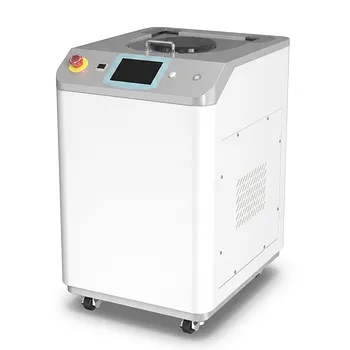
High Viscosity Planetary Centrifugal Mixing and Vacuum Defoaming Machine for Laboratory Material Preparation
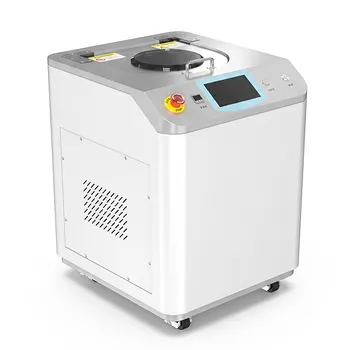
High Speed Vacuum Planetary Centrifugal Mixer and Defoamer for Industrial Paste Processing
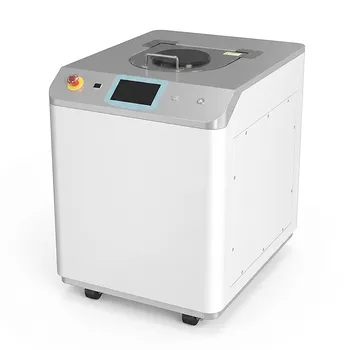
Industrial Planetary Centrifugal Vacuum Defoaming Mixer for High Viscosity Paste and Advanced Material Science
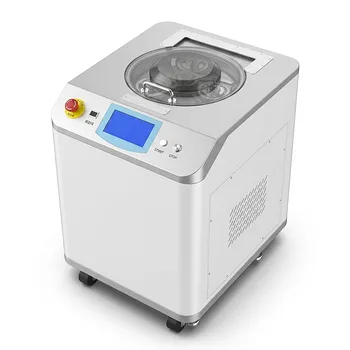
Dual Cup Vacuum Centrifugal Mixer Planetary Paste Defoaming Machine Industrial Material Processor
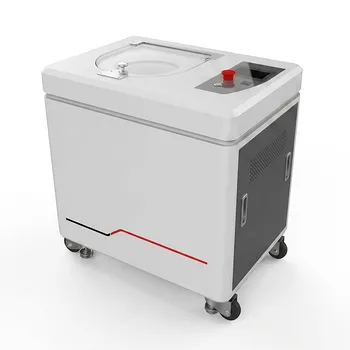
非介入式材料均质机真空脱泡行星搅拌高粘度混合设备
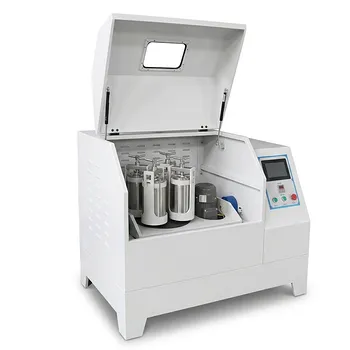
360° Rotating Omnidirectional Laboratory Planetary Ball Mill for Homogeneous Ultra-Fine Grinding and Mixing
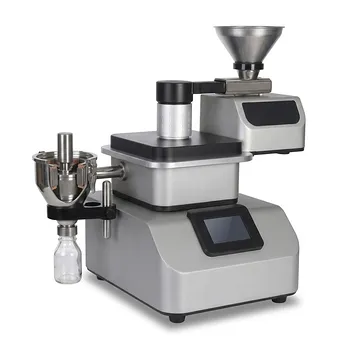
Ultra Centrifugal Mill for Rapid Laboratory Sample Preparation and Fine Powder Grinding
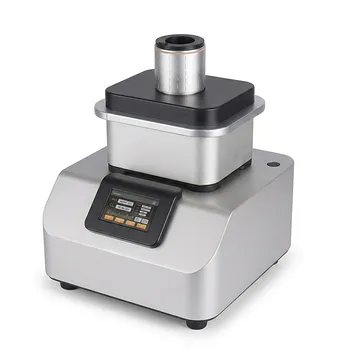
Ultra Centrifugal Mill High Speed Laboratory Grinder for Fibrous and Brittle Sample Preparation
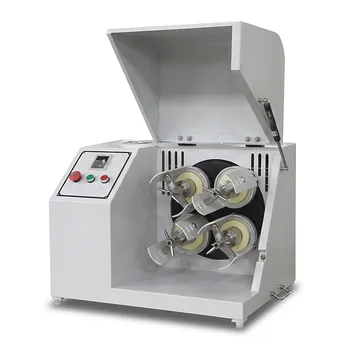
Horizontal Light Duty Planetary Ball Mill for Laboratory Sample Preparation
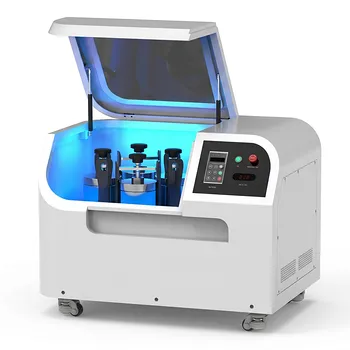
Planetary Ball Mill 12L
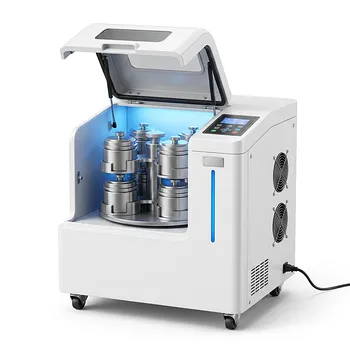
High Energy Omnidirectional Planetary Ball Mill 20L
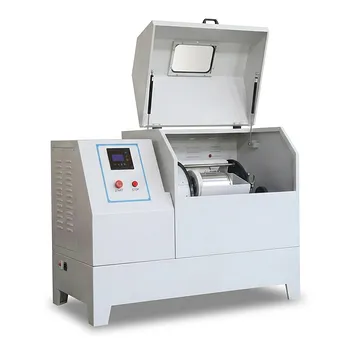
Heavy Duty Horizontal Planetary Ball Mill for Efficient Industrial Grinding and Sample Preparation

Vertical Production Planetary Ball Mill for High Throughput Powder Processing

High Energy Omnidirectional Planetary Ball Mill 16L
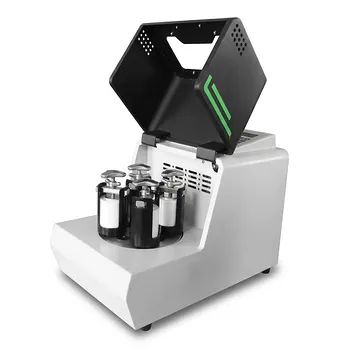
Miniature Planetary Ball Mill with Vacuum Grinding and High Efficiency for Laboratory Sample Preparation
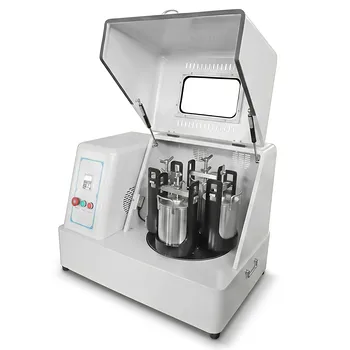
Vertical Square Planetary Ball Mill for Laboratory Sample Preparation and Nanoscale Grinding