How do laboratory ball mills ensure mineral liberation for porphyry copper ore? Master Your Mineral Recovery Strategy
Updated 5 months ago
Laboratory ball mills ensure mineral liberation by utilizing high-energy mechanical forces to physically decouple valuable copper minerals from their surrounding host rock. This process involves the combined action of impact and attrition from grinding media within a rotating drum to reduce porphyry copper ore to a precise particle size—typically measured in microns—where the target minerals are fully exposed and "unlocked" for downstream recovery.
Core Takeaway: Mineral liberation is the physical separation of valuable sulfide minerals from waste gangue. Laboratory ball mills achieve this by precisely controlling the particle size distribution to expose fresh mineral surfaces, which is the essential prerequisite for successful flotation and chemical leaching.
The Mechanics of Mineral Liberation
Impact and Attrition Forces
Laboratory ball mills operate by rotating a drum filled with grinding media, such as steel balls or ceramic cylinders. As the drum turns, the media is lifted and dropped, creating high-energy impacts that fracture large ore particles.
Simultaneously, the rolling motion of the media generates attrition (friction). This secondary force polishes and grinds the particles further, ensuring that the copper-bearing minerals are effectively stripped from the harder gangue matrix.
Breaking the Mineral-Gangue Bond
Porphyry copper ores typically consist of valuable minerals like chalcopyrite, covellite, and pyrite embedded within a matrix of quartz, feldspar, or silica. The grinding process focuses on breaking the physical bonds at the interface of these minerals.
By applying consistent mechanical stress, the mill achieves monomeric liberation. This state occurs when the individual mineral grains are no longer physically attached to the waste rock, allowing them to behave as independent particles during separation.
Optimizing the Physical State for Recovery
Increasing Specific Surface Area
A primary goal of the ball mill is to significantly increase the specific surface area of the ore. This is particularly critical for porphyry copper, where the "fresh" surfaces of minerals like malachite must be exposed to facilitate the dissolution of copper ions during sulfuric acid leaching.
Preparing Surfaces for Flotation
For recovery via flotation, the ball mill creates the necessary physical environment for reagent adsorption. Once the sulfide minerals are liberated from the gangue, chemical collectors can bond to the newly exposed surfaces.
Without this liberation, the reagents would stay in the solution or bond incorrectly to the waste rock. The precision of the laboratory mill ensures that these surfaces remain clean and chemically reactive for the flotation stage.
Understanding the Trade-offs and Constraints
The Risk of Over-Grinding
While fine grinding is necessary for liberation, excessive grinding can be detrimental to the recovery process. Over-grinding creates "slimes"—ultrafine particles that are too small to be recovered efficiently by standard flotation cells.
Media Contamination and Material Selection
The choice of grinding media and jar material is a critical trade-off between durability and purity. While hardened steel is efficient for most porphyry ores, it can introduce iron contamination into the sample.
If the goal of the study is high-purity elemental analysis or X-ray diffraction (XRD), specialists often opt for agate or zirconia components. These materials minimize contamination but may require longer grinding times or different energy settings to achieve the same degree of liberation.
How to Apply These Principles to Your Process
Making the Right Choice for Your Goal
- If your primary focus is Flotation Recovery: Aim for the "liberation size" (often around -125+90 μm) by strictly controlling grinding time to ensure maximum surface exposure without producing excessive slimes.
- If your primary focus is Chemical Leaching: Focus on maximizing the specific surface area of copper-bearing minerals like malachite to accelerate the kinetics of ion dissolution.
- If your primary focus is Geochemical Analysis: Prioritize contamination-free grinding by using agate or zirconia media to ensure the integrity of your elemental data.
- If your primary focus is Sieve Analysis: Use the ball mill to incrementally reduce particle size, allowing you to determine the exact point where minerals transition from "locked" to "liberated."
By mastering the balance between energy input and material constraints, you can ensure your laboratory ball mill provides the ideal foundation for accurate mineralogical study and efficient copper recovery.
Summary Table:
| Key Factor | Grinding Mechanism | Impact on Mineral Recovery |
|---|---|---|
| Mineral Liberation | Mechanical impact & attrition | Decouples valuable sulfides (chalcopyrite) from host rock/gangue. |
| Surface Exposure | Increasing specific surface area | Exposes fresh surfaces for reagent adsorption and chemical leaching. |
| Size Control | Particle size distribution | Prevents over-grinding and "slimes" to maximize recovery efficiency. |
| Purity Control | Media selection (Steel/Agate/Zirconia) | Minimizes iron or elemental contamination for precise geochemical analysis. |
Optimize Your Mineral Recovery with Precision Laboratory Solutions
Achieving perfect mineral liberation requires more than just a mill—it requires a complete, high-performance sample preparation workflow. At our facility, we specialize in providing complete laboratory sample preparation solutions for material science, focusing on advanced powder processing and compaction equipment.
Our extensive product lines are designed to handle every stage of your mineralogical study:
- Size Reduction: Heavy-duty crushers (jaw/roll), liquid nitrogen cryogenic grinders, and high-energy mills (planetary ball, jet, sand/bead, disc, rotor).
- Classification: Sieve shakers (vibratory/air-jet) with a wide range of test sieves.
- Mixing & Preparation: Specialized powder mixers and defoaming mixers.
- Material Compaction: A full spectrum of hydraulic presses, including Cold/Warm Isostatic Presses (CIP/WIP), standard lab presses, and vacuum hot presses for XRF and pelletizing.
Whether you are optimizing flotation recovery for porphyry copper or performing high-purity XRD analysis, we provide the durability and precision your research demands. Contact us today to discuss your specific application and find the ideal equipment for your laboratory.
References
- Yesica L. Botero, Luís A. Cisternas. New insights related to the flotation of covellite in porphyry ores. DOI: 10.1016/j.mineng.2021.107242
Mentioned Products
- 8L Planetary Ball Mill for Laboratory Grinding and Sample Preparation
- Vertical Semi Circular Planetary Ball Mill for Laboratory Precision Grinding
- 360° Rotating Omnidirectional Laboratory Planetary Ball Mill for Homogeneous Ultra-Fine Grinding and Mixing
- Laboratory Disc Mill for Ore and Mineral Sample Preparation
- Horizontal Light Duty Planetary Ball Mill for Laboratory Sample Preparation
People Also Ask
- How does mechanized planetary ball milling compare to manual agate grinding? Optimize sulfide standard material precision.
- What role does a planetary ball mill play in the synthesis of Er-doped PMN-PT ceramics? Enhancing Homogeneity & Purity
- What is the role of a planetary ball mill in the synthesis of biomass-based CaO catalysts? Maximize Surface Activity
- What is the core role of a planetary ball mill in the preparation of modified cellulose fillers? Key Insights
- How does a planetary ball mill contribute to processing waste eggshells into biological fillers? Precision Refinement

Tech Team · PowderPreparation
Last updated on May 14, 2026
Related Products
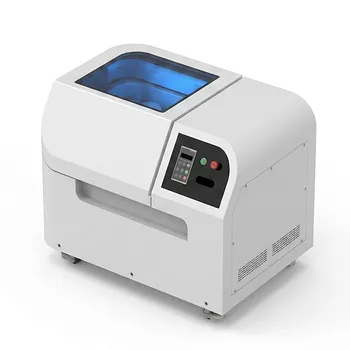
8L Planetary Ball Mill for Laboratory Grinding and Sample Preparation
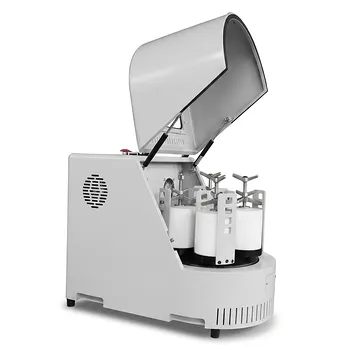
Vertical Semi Circular Planetary Ball Mill for Laboratory Precision Grinding
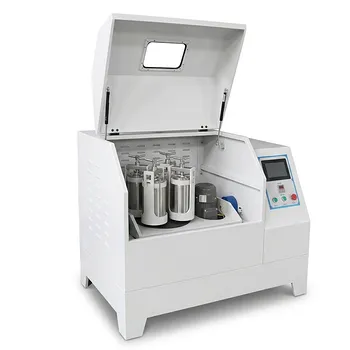
360° Rotating Omnidirectional Laboratory Planetary Ball Mill for Homogeneous Ultra-Fine Grinding and Mixing
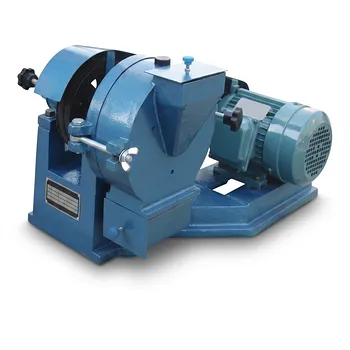
Laboratory Disc Mill for Ore and Mineral Sample Preparation
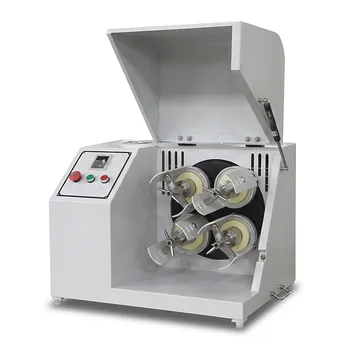
Horizontal Light Duty Planetary Ball Mill for Laboratory Sample Preparation
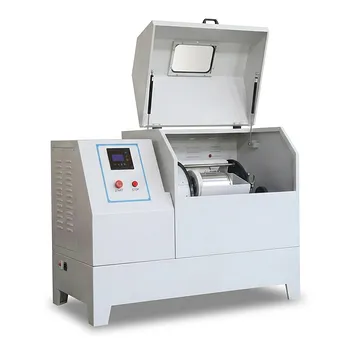
Heavy Duty Horizontal Planetary Ball Mill for Efficient Industrial Grinding and Sample Preparation
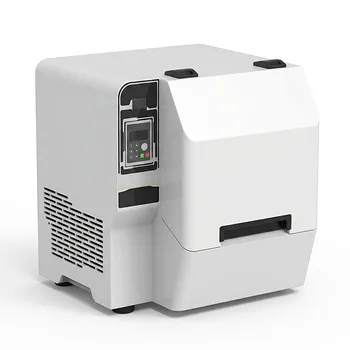
Nano High Energy Vibratory Ball Mill for Laboratory Sample Preparation
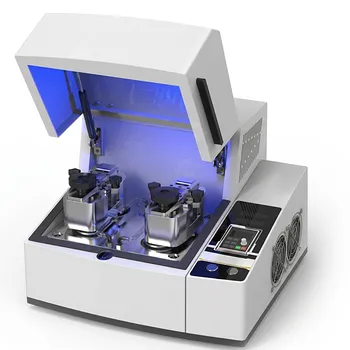
Laboratory Nano High Energy Ball Mill Ultrafine Grinding Mechanical Alloying

Single Tank High Energy Vibratory Ball Mill for Laboratory Grinding and Mixing
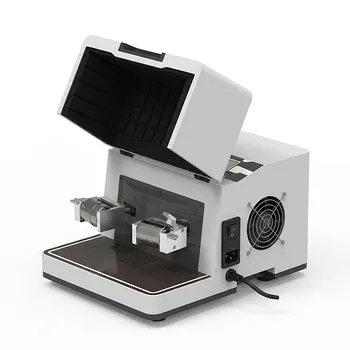
High Energy Hybrid Vibratory Ball Mill for Grinding Mixing and Cell Disruption
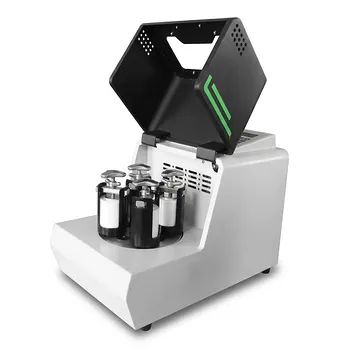
Miniature Planetary Ball Mill with Vacuum Grinding and High Efficiency for Laboratory Sample Preparation
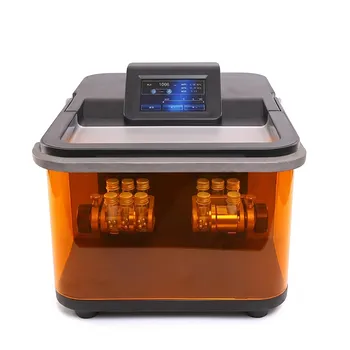
High Throughput Micro Ball Mill for Cryogenic Grinding and Laboratory Cell Disruption

High Energy Laboratory Planetary Ball Mill for Nano Grinding and Material Science Sample Preparation
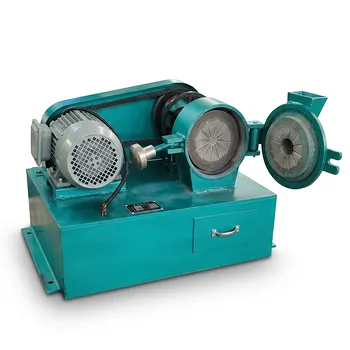
Laboratory Disc Mill Medium Hard Material Grinding Coal Coke Ore Pulverizer
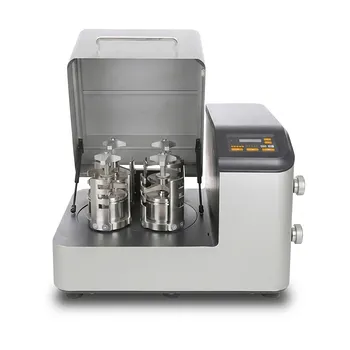
High Energy Planetary Ball Mill for Nano Scale Grinding and Colloidal Mixing in Material Science Research
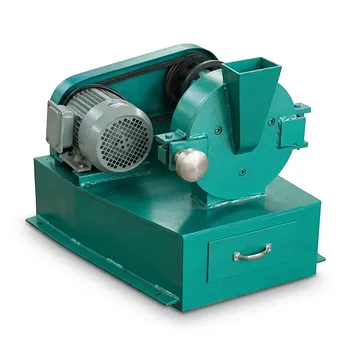
Medium Hardness Material Disc Pulverizer for Coal Ore Sample Preparation
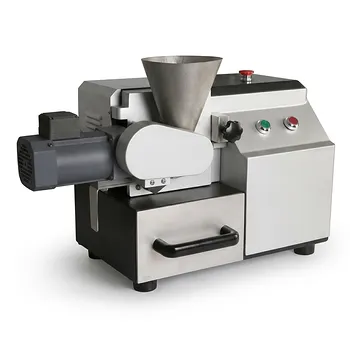
Laboratory Hammer Mill for Coal Quality Analysis and Brittle Mineral Grinding
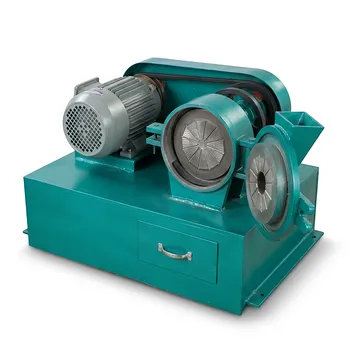
Laboratory Disc Pulverizer for Coal Coke Ore and Medium Hard Materials Sample Preparation
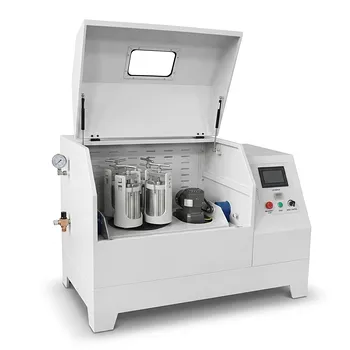
Vertical Production Planetary Ball Mill for High Throughput Powder Processing