How do laboratory ball mills and media prepare high solid-loading alumina nano-slurries? Achieve Superior Dispersion
Updated 4 months ago
Laboratory ball mills and grinding media are the primary drivers of de-agglomeration and homogenization in alumina slurry preparation. By applying continuous mechanical shear and impact forces, they break down powder clusters that naturally form due to surface energy. This process ensures that alumina particles are uniformly wetted and dispersed, allowing for high solid loadings (often up to 40 vol%) that remain stable for downstream ceramic forming processes like slip casting or tape casting.
The successful preparation of high-solid alumina slurries relies on the synergy between mechanical energy and chemical additives. Ball milling provides the necessary force to overcome inter-particle attraction, resulting in a physically stable, high-concentration suspension required for high-performance ceramics.
The Mechanics of Dispersion and De-agglomeration
Breaking Inter-Particle Forces
Alumina powders, particularly at the nano-scale, tend to form tight clusters or agglomerates due to Van der Waals forces. The mechanical impact and shear generated by grinding media provide the kinetic energy required to rupture these bonds. This step is vital to ensure every particle is independently suspended in the liquid phase.
Achieving High Homogenization
A laboratory ball mill facilitates the deep mixing of alumina powder with solvents, binders, and plasticizers. Through extended cycles—sometimes reaching 24 hours—the equipment ensures a consistent distribution of components at a microscopic level. This level of homogenization is the foundation for producing defect-free green bodies and uniform ceramic structures.
Facilitating Chemical Synergy
While mechanical force breaks the particles apart, the ball mill also ensures the dispersant is thoroughly distributed. This allows the chemical additives to coat the newly exposed surface areas of the alumina particles. The result is a steric or electrostatic barrier that prevents the powder from re-agglomerating once the milling stops.
Critical Components of the Milling Process
The Role of High-Hardness Grinding Media
The choice of media, such as zirconia or high-purity alumina, is critical for efficient energy transfer. High-hardness media provide the necessary weight and impact force to grind tough alumina particles effectively. Using the correct media size and material also minimizes wear, which prevents the introduction of unwanted impurities into the slurry.
Managing Viscosity and Solid Loading
To achieve high solid loading (e.g., 40 vol%), the milling process must carefully manage the slurry's viscosity. Continuous mechanical shear keeps the mixture fluid enough for processing, even as particle concentration increases. Proper milling typically results in a stable viscosity (around 176 cP in some applications), making the slurry suitable for precise casting techniques.
High-Energy Planetary Milling
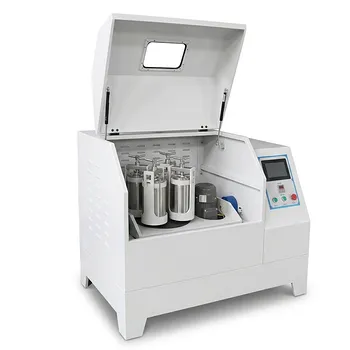
In cases requiring faster results or "forced" homogenization, planetary ball mills utilize high-speed rotation to generate intense collision forces. This approach is particularly effective for mixing new powders with recycled waste or sintering aids. The increased energy density significantly reduces the time needed to achieve a physically stable and compositionally consistent suspension.
Understanding the Trade-offs and Pitfalls
The Risk of Air Entrainment
One of the primary drawbacks of extended ball milling is the introduction of air bubbles into the slurry. These bubbles, if not removed through subsequent degassing, can lead to structural defects or "pinholes" in the final ceramic product. Engineers must balance the need for intensive mixing with the potential for gas incorporation.
Media Wear and Contamination
Continuous impact between the grinding balls and the mill wall leads to gradual media wear. If the media material is not compatible with the alumina powder, it can introduce foreign elements that alter the sintering behavior or dielectric properties of the final ceramic. Selecting media with the same chemistry as the powder is a common strategy to mitigate this.
Time and Energy Consumption
Traditional ball milling is an energy-intensive process that requires long processing times, often exceeding 15 to 24 hours. While effective, this creates a bottleneck in laboratory workflows. Over-milling can also occur, where excessive energy leads to unwanted changes in particle size distribution or overheating of the slurry.
How to Apply This to Your Project
Before beginning the milling process, define your target viscosity and solid-loading requirements to select the appropriate equipment and media.
- If your primary focus is high-volume stability: Utilize high-purity alumina media for 24-hour cycles to ensure complete de-agglomeration and long-term suspension stability.
- If your primary focus is rapid prototyping or research: Employ a planetary ball mill to achieve high-energy homogenization in a fraction of the time required by traditional mills.
- If your primary focus is minimizing contamination: Choose high-hardness zirconia media or media that matches the chemical composition of your alumina powder to reduce the impact of wear.
- If your primary focus is producing defect-free tapes: Incorporate a post-milling degassing step to remove the air bubbles naturally introduced by the mechanical shear of the ball mill.
Mastering the balance of mechanical force and chemical dispersion is the definitive path to achieving high-performance alumina ceramic slurries.
Summary Table:
| Process Phase | Mechanism | Key Role in Slurry Preparation |
|---|---|---|
| De-agglomeration | Mechanical Shear & Impact | Breaks Van der Waals forces to isolate nano-particles. |
| Homogenization | Extended Milling Cycles | Ensures uniform distribution of binders and plasticizers. |
| Chemical Synergy | Surface Coating | Distributes dispersants to create steric/electrostatic barriers. |
| Viscosity Control | Continuous Shear | Maintains fluid flow even at high (40 vol%) solid loadings. |
| Energy Optimization | Planetary Milling | Accelerates mixing and stabilizes recycled waste components. |
Elevate Your Material Preparation with Precision Engineering
Achieving the perfect high-solid alumina slurry requires a delicate balance of mechanical energy and chemical stability. As specialists in material science preparation, we provide complete laboratory sample preparation solutions tailored to your research and production needs.
Our extensive lineup includes:
- Advanced Milling: Planetary ball mills, jet mills, and cryogenic grinders for ultra-fine de-agglomeration.
- Powder Processing: High-performance mixers (powder and defoaming) and vibratory sieve shakers.
- Compaction Excellence: A full spectrum of hydraulic presses, including Cold/Warm Isostatic Presses (CIP/WIP), hot presses, and XRF pellet presses.
Whether you are refining ceramic slurries or developing advanced powder composites, our equipment ensures maximum homogeneity and minimal contamination. Contact us today to optimize your workflow and achieve superior material performance!
References
- Akira Kondo, Makio Naito. Thermoreversible colloidal gelation for direct-assembly of nanoparticles. DOI: 10.1007/bf00990748
Mentioned Products
- High Energy Planetary Ball Mill for Nano Scale Grinding and Mechanical Alloying
- High Energy Laboratory Planetary Ball Mill for Nano Grinding and Material Science Sample Preparation
- Vertical Square Planetary Ball Mill for Laboratory Sample Preparation and Nanoscale Grinding
- High Energy Planetary Ball Mill for Nano Scale Grinding and Colloidal Mixing in Material Science Research
- High Energy Laboratory Planetary Ball Mill for Nano Grinding and Colloidal Mixing of Hard and Brittle Materials
People Also Ask
- Why is a high-energy planetary ball mill used for nano-milling As4Se3? Achieve Expert Structural Transformation
- What role do high-energy planetary ball mills play in FDM composite filament preparation? Optimize Material Performance
- What is the role of a high-energy planetary ball mill in the exfoliation of modified WSe2? Achieve Nano-Precision
- What is the function of a planetary ball mill in glass-ceramic sintering? Optimize Reactivity and Uniformity
- What is the role of a high-energy planetary ball mill in the preparation of high-performance nano-ceramics? Key Guide

Tech Team · PowderPreparation
Last updated on Jun 03, 2026
Related Products

High Energy Planetary Ball Mill for Nano Scale Grinding and Mechanical Alloying

High Energy Laboratory Planetary Ball Mill for Nano Grinding and Material Science Sample Preparation

Vertical Square Planetary Ball Mill for Laboratory Sample Preparation and Nanoscale Grinding
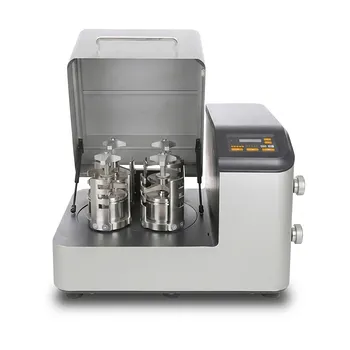
High Energy Planetary Ball Mill for Nano Scale Grinding and Colloidal Mixing in Material Science Research
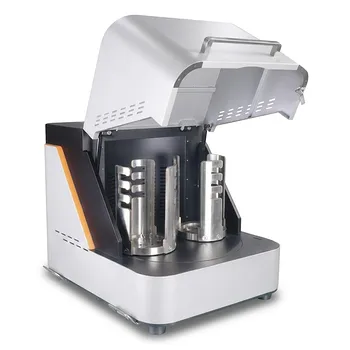
High Energy Laboratory Planetary Ball Mill for Nano Grinding and Colloidal Mixing of Hard and Brittle Materials
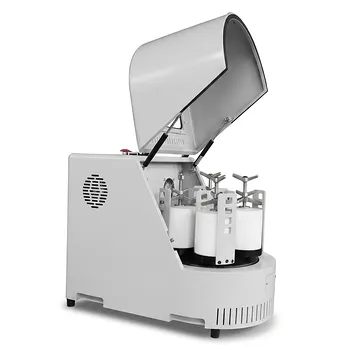
Vertical Semi Circular Planetary Ball Mill for Laboratory Precision Grinding
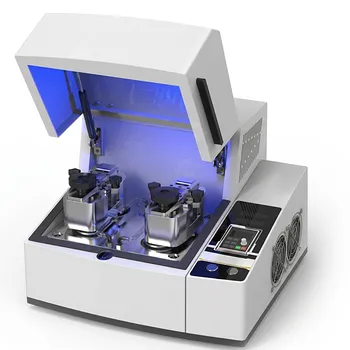
Laboratory Nano High Energy Ball Mill Ultrafine Grinding Mechanical Alloying
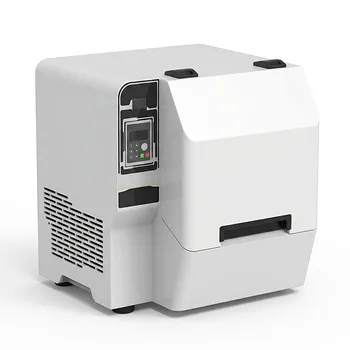
Nano High Energy Vibratory Ball Mill for Laboratory Sample Preparation
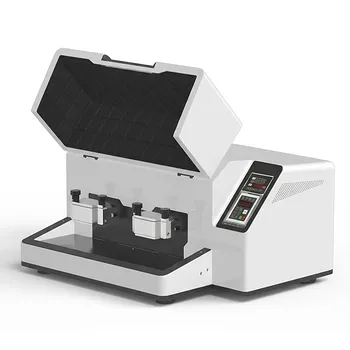
Nanoscale High-Energy Vibratory Ball Mill for Laboratory Sample Preparation, Mechanochemistry, and Mechanical Alloying
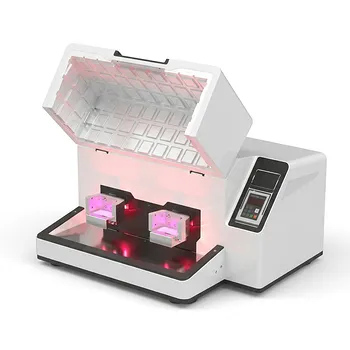
Nano High Energy Vibratory Ball Mill with Heating and Temperature Control
Nanoscale High Energy Vibratory Ball Mill Low Temperature
Multi-Platform Nanoscale High-Energy Vibratory Ball Mill
Laboratory Basket Sand Mill for Wet Grinding and Dispersion of Viscous Slurries
360° Rotating Omnidirectional Laboratory Planetary Ball Mill for Homogeneous Ultra-Fine Grinding and Mixing
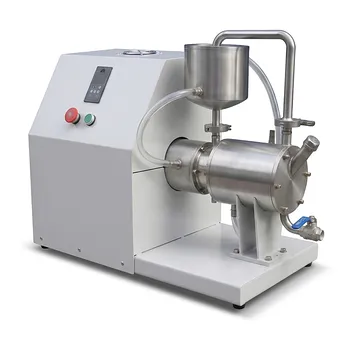
Laboratory Small Horizontal Sand Mill for Nano Materials Wet Grinding
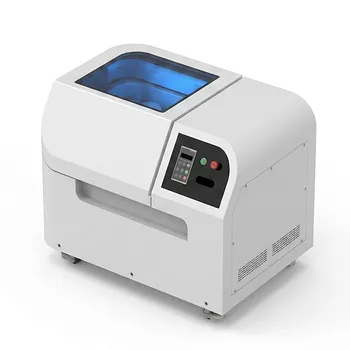
8L Planetary Ball Mill for Laboratory Grinding and Sample Preparation

Miniature Planetary Ball Mill with Vacuum Grinding and High Efficiency for Laboratory Sample Preparation
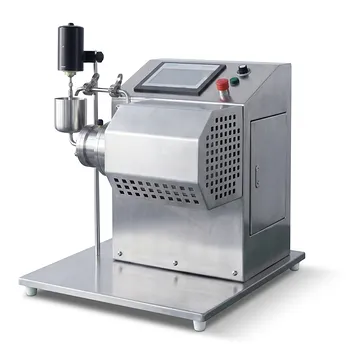
High Efficiency Laboratory Bead Mill Nano Powder Dispersion Sand Mill for Material Science Research
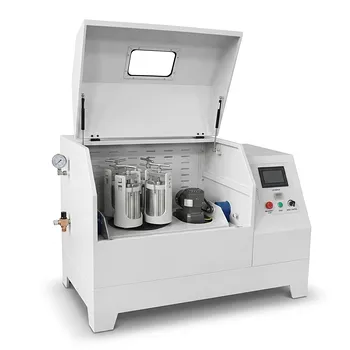
Vertical Production Planetary Ball Mill for High Throughput Powder Processing