The 65-Micron Gate: Unlocking the True Isotopic Fingerprint of Portland Cement
Sep 08, 2026
A Cement Sample’s Silent Ambition
A chunk of Portland cement arrives at the geochemistry lab. It looks indifferent – gray, dense, monolithic. But inside that lump, a hidden story waits. Every element carries a geographical fingerprint, and strontium is one of the best storytellers.
The ambition is simple: dissolve the sample, measure its strontium isotope ratio, and trace the raw material back to a specific quarry or production batch. The reality is much more fragile. If the cement powder does not surrender every last mineral grain into the liquid, the isotopic signal becomes a lie.
The Quest for the Original Signature
Strontium isotopes do not distribute themselves evenly inside a piece of cement. They hide in different mineral phases – some reactive, others stubbornly inert. To read the signature correctly, the analyst must achieve total, homogeneous acid digestion. Partial dissolution creates a selective bias: the measured isotope ratio represents only the phases that dissolved, not the whole rock.
At the heart of this problem sits a mechanical challenge that most people overlook. You cannot trust the chemistry until you have perfected the physics.
The 65-Micron Threshold Emerges
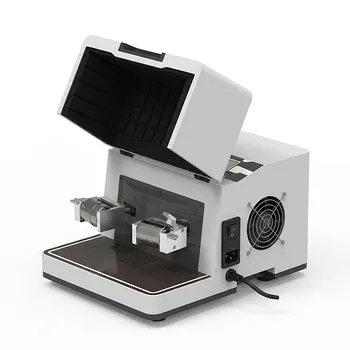
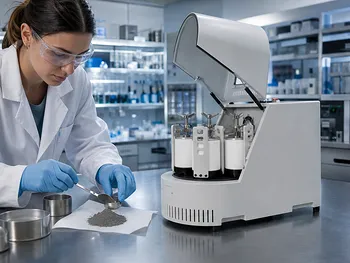
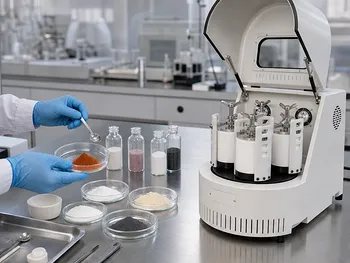
Planetary ball mills solve this by forcing cement particles through a size gate: 65 micrometers. Below this threshold, the specific surface area of the powder expands exponentially. The benefit is not just “smaller particles.” It is a geometric reordering that gives acid molecules access to the deepest crystalline structures.
When particles remain above that size, surface reactions dominate and core minerals stay trapped. Cross the 65‑micron line, and surface-led chemistry turns into bulk chemistry. The acid infiltrates rather than just etching the outside.
Alite and Belite: The Reluctant Witnesses
Portland cement gains its strength from two calcium silicate minerals: alite and belite. These phases are the last to dissolve and the first to hide strontium. If they survive the digestion, the isotope result will drift – often toward an older or more radiogenic value – without the analyst ever realizing it.
Surface Area is a Chemical Amplifier
When a planetary ball mill does its work, it does not just crush. It multiplies reactive interfaces. A single gram of cement might go from a total surface area of a few square meters to several hundred. Every fresh fracture becomes a doorway for nitric acid. This is where the engineer’s romance lives: physical grinding makes a solid sample chemically transparent.
In practical terms, a well‑milled batch digests faster, completely, and without stubborn residues that force researchers into dangerous microwave over‑pressure cycles.
The Hidden Perils Inside Your Jar
High‑energy milling, however, introduces risks that prey on the unprepared. In my conversations with lab managers, three fears surface again and again.
Contamination: The Thief of Isotopic Integrity
The grinding media – jar and balls – wear down. Stainless steel, tungsten carbide, zirconia: each material leaves a chemical shadow. For strontium analysis, even micrograms of contamination from a low‑purity mill can shift isotope ratios outside the acceptable error envelope. High‑purity agate or tungsten carbide media become an ethical requirement, not an upgrade.
Heat: An Invisible Vandal
Under intense planetary motion, localized temperatures can spike. Heat can dehydrate hydrated phases or start partial amorphization. While strontium isotopes normally survive, companion mineralogical studies on the same powder might get corrupted. This is the moment you realize that sample preparation is not a single‑use step; it is an interconnected decision tree.
The Time‑Versus‑Perfection Trade‑Off
Push the mill too long, and you receive an ultra‑fine powder – but at the cost of sample loss on walls, increased media wear, and diminishing returns. Experienced operators find the sweet spot: reach the 65‑micrometer target quickly, then stop. Efficiency and integrity live together only when the operator understands this boundary.
A Psychologist’s View of the Lab
We build cathedral‑sized accelerator mass spectrometers and femtosecond laser ablation cells. Then we feed them samples ground in a hand‑me‑down mill with unknown jar history. This mismatch is not an equipment failure; it is a cognitive bias.
We overvalue the detector and undervalue the preparation. The operator sees the multi‑collector ICP‑MS as the source of truth. Yet the truth was determined hours earlier, inside a rotating jar that nobody watched.
I have watched brilliant geochemists waste months chasing a “signal drift” that turned out to be inconsistent particle size distribution. They re‑tuned the instrument, re‑ran standards, re‑drafted the paper – until someone finally checked the sieve residue and found the mill had been overloaded. That moment of discovery is painful and liberating. It rewires how you see the whole analytical chain.
The Equipment as a Precision Instrument, Not a Kitchen Appliance
A planetary ball mill is not a spice grinder. When used correctly, it becomes a programmable device that controls rotational speed, reversal timing, and pause cycles to finesse the exact energy input. Matching the ball‑to‑powder ratio, picking the right jar geometry, and even pre‑conditioning the jar to reduce wear are acts of engineering discipline.
These decisions are the difference between a powder that flows through a 63‑micron sieve effortlessly and one that leaves behind a trail of coarse, undigestible grit.
From Crushing to Homogenization: The Complete Journey
A single mill cannot answer every call. The hardest cements begin their life as fist‑sized clinkers. The analytical process demands a chain of tools, each respecting the sample’s fragility and the analyst’s goal.
Coarse Crushing with Jaw Crushers
Primary crushing breaks the massive input into manageable fragments. Our jaw crushers are built with hardened steel jaws and adjustable gap settings, so you get controlled output without metallic over‑contamination.
Fine Grinding with Planetary Ball Mills
This is where the 65‑micron gate is crossed. With programmable settings and high‑purity jar options (agate, zirconia, tungsten carbide), the planetary ball mill becomes the central engine of isotopic homogenization.
Alternative Paths: Jet Mills and Cryogenic Grinders
When heat‑sensitive phases or ultra‑low contamination demands arise, jet mills offer a fluid‑energy solution without grinding media. Cryogenic grinders neutralize the heat problem by dosing the process with liquid nitrogen, embrittling even tough cement particles so they fracture cleanly.
Pressing into Solid Proof: CIP/WIP and XRF Pellet Presses
Isotope analysis is often just one step in a larger quality‑control chain. Our Cold/Warm Isostatic Presses (CIP/WIP) produce defect‑free pressed billets from prepared powders, while XRF pellet presses and vacuum hot presses prepare companion specimens for elemental profiling. The same powder that reveals strontium isotopes can be compacted into a stable pellet for X‑ray fluorescence – a unification of workflows that saves time and reduces cross‑batch variability.
Choosing the Right Tools for the Truth You Seek
| Analytical Priority | Recommended Preparation Pathway | Key Equipment Solution |
|---|---|---|
| Maximum Sr‑isotope accuracy | Agate‑lined planetary ball milling below 65 µm | Planetary ball mills with high‑purity agate jars |
| High throughput & batch consistency | Optimized speed and ball‑to‑powder ratio | Programmable planetary ball mills |
| Contamination‑sensitive phases | Media‑free fluid‑energy grinding | Jet mills |
| Heat‑sensitive cement minerals | Low‑temperature embrittlement | Cryogenic grinders |
| Complementary XRF analysis | Pressing milled powder into durable pellets | XRF pellet presses, CIP/WIP |
| Bulk material initial reduction | Jaw crushing to sub‑millimeter grit | Jaw crushers |
| Homogeneous mixing with additives | Controlled powder blending | Powder mixers and defoaming mixers |
Engineering Fidelity into Every Particle
Every piece of cement holds a chemical truth. But truth in geochemistry is not discovered – it is constructed, one particle size reduction at a time. The planetary ball mill is the first guardian of that truth. When you respect the 65‑micron threshold, you give the acid a path to every hidden strontium atom. When you ignore it, you gamble with invisible bias.
We design complete sample preparation ecosystems that honor this principle from the first coarse crush to the final pressed pellet. Our jaw crushers, planetary ball mills, jet mills, cryogenic grinders, sieve shakers, mixers, and isostatic presses are purpose‑built to turn brute rock into reliable data – without letting the process steal the signal you came to measure.
Ready to build a preparation workflow that your mass spectrometer will thank you for? Contact Our Experts
Quick Links
Suggested Products
Vertical Semi Circular Planetary Ball Mill for Laboratory Precision Grinding High Energy Planetary Ball Mill for Nano Scale Grinding and Mechanical Alloying Heavy Duty Horizontal Planetary Ball Mill for Efficient Industrial Grinding and Sample Preparation Vertical Production Planetary Ball Mill for High Throughput Powder Processing 360° Rotating Omnidirectional Laboratory Planetary Ball Mill for Homogeneous Ultra-Fine Grinding and MixingFurther Reading
The Energy Budget of a Single Impact: How the Ball-to-Powder Ratio Shapes Nanocrystalline Reality The High-Energy Gamble: What SiBCN-rGO Fibers Teach Us About Perfect Homogenization The Gentle Violence of a Planetary Mill: Why the Most Critical Moment in SiC–VC Composites Happens Before Any Heat The Forge at 10,000 g: How a Planetary Ball Mill Designs Self-Lubricating Composites Atom by Atom The Alchemist's Hammer: How a Planetary Ball Mill Solves the Diffusion Dilemma in Rare-Earth Doped Ceramics
PowderPreparation
Last updated on May 14, 2026
Related Products
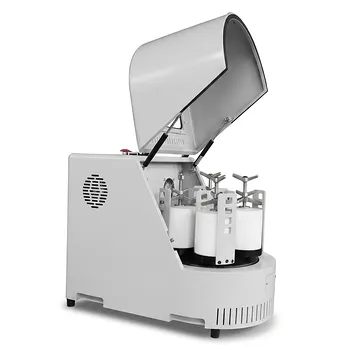
Vertical Semi Circular Planetary Ball Mill for Laboratory Precision Grinding
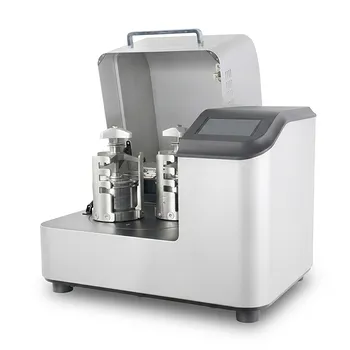
High Energy Planetary Ball Mill for Nano Scale Grinding and Mechanical Alloying
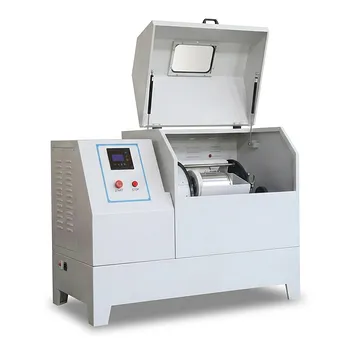
Heavy Duty Horizontal Planetary Ball Mill for Efficient Industrial Grinding and Sample Preparation

Vertical Production Planetary Ball Mill for High Throughput Powder Processing

360° Rotating Omnidirectional Laboratory Planetary Ball Mill for Homogeneous Ultra-Fine Grinding and Mixing
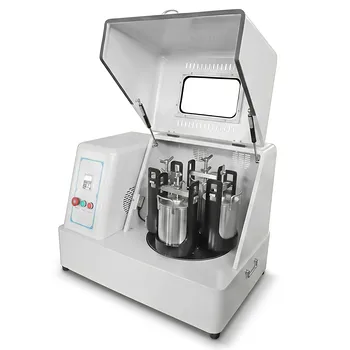
Vertical Square Planetary Ball Mill for Laboratory Sample Preparation and Nanoscale Grinding
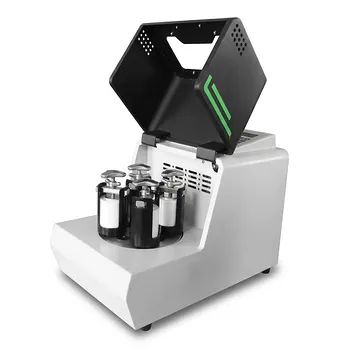
Miniature Planetary Ball Mill with Vacuum Grinding and High Efficiency for Laboratory Sample Preparation
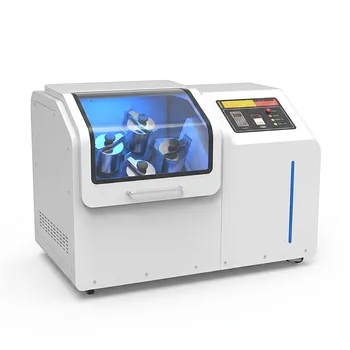
High Energy Omnidirectional Planetary Ball Mill 16L
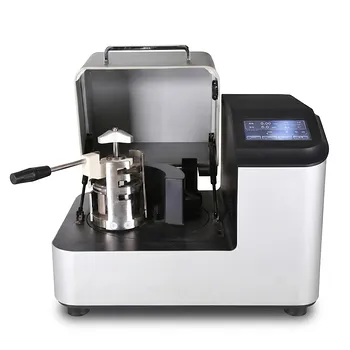
High Energy Laboratory Planetary Ball Mill for Nano Grinding and Material Science Sample Preparation
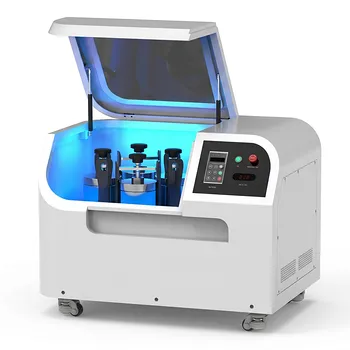
Planetary Ball Mill 12L
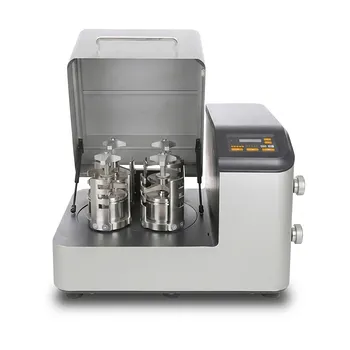
High Energy Planetary Ball Mill for Nano Scale Grinding and Colloidal Mixing in Material Science Research
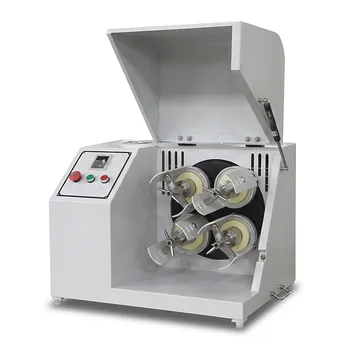
Horizontal Light Duty Planetary Ball Mill for Laboratory Sample Preparation
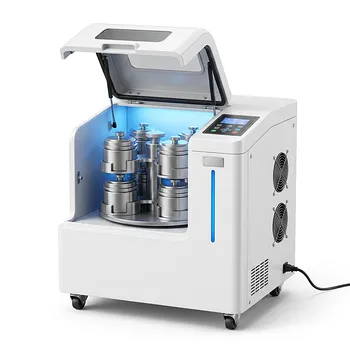
High Energy Omnidirectional Planetary Ball Mill 20L
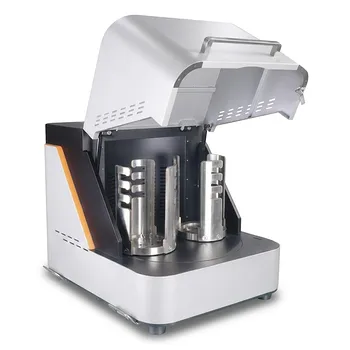
High Energy Laboratory Planetary Ball Mill for Nano Grinding and Colloidal Mixing of Hard and Brittle Materials
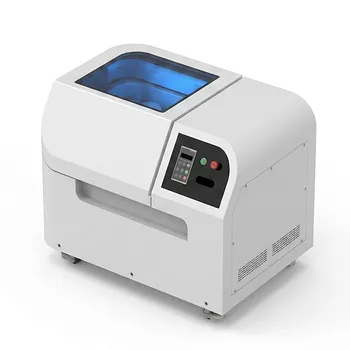
8L Planetary Ball Mill for Laboratory Grinding and Sample Preparation
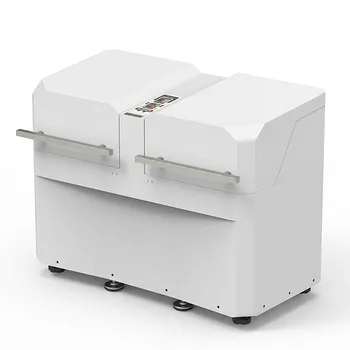
Dual Station Planetary Ball Mill 24L
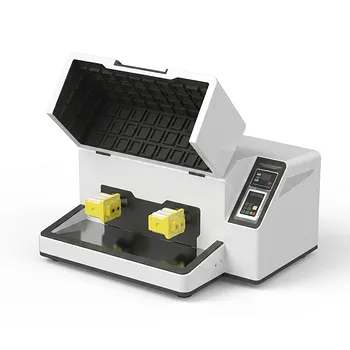
Multi-Platform Nanoscale High-Energy Vibratory Ball Mill
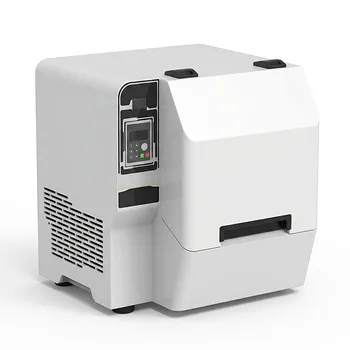
Nano High Energy Vibratory Ball Mill for Laboratory Sample Preparation
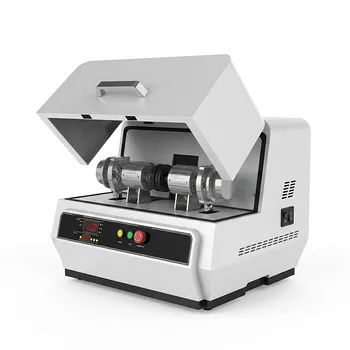
Dual Jar High Energy Vibratory Ball Mill