The Invisible Reactor: How a Ball Mill’s Violent Collisions Quietly Rebuild the Future of Polymers
Jun 17, 2026
The Dilemma Inside Every Polymer
The polymer scientist faces a quiet crisis every morning.
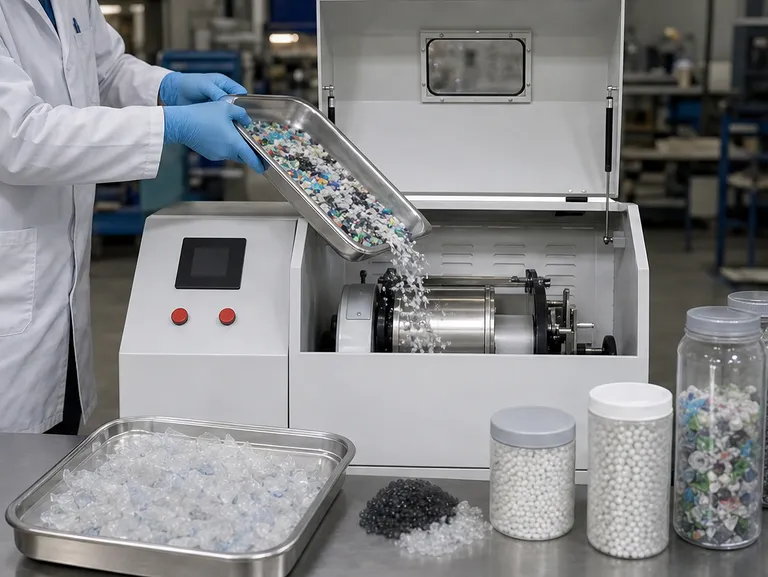
On one side sits a pile of post-consumer plastic—a chaotic jumble of tangled chains, full of locked energy, stubbornly refusing to become something new. On the other side, a pristine white powder waits to be transformed into a high-performance material without the environmental guilt of aggressive solvents or energy-intensive furnaces.
The conventional toolkit offers a false choice: burn it, dissolve it in toxic soup, or melt it at temperatures that destroy the very molecular architecture you wanted to preserve. We waste 90% of the energy just pushing molecules through phase transitions they don’t need.
But there is another way. A path that cuts straight through the thermal barrier. It lives inside a rotating chamber where steel balls slam into powder at impossible speeds, delivering energy exactly where chemistry happens: at the covalent bond itself.
The industrial ball mill is not a grinder. It is a solid-state molecular reactor.
When Force Becomes Chemistry
We tend to think of chemical reactions as delicate conversations between molecules in solution. Heat is the universal translator. Solvents are the crowded room where collisions become statistically inevitable.
Mechanochemistry flips this model violently.
Imagine a single polymer chain. It’s not floating; it’s trapped in a crystalline lattice, surrounded by neighboring chains. You cannot nudge it with gentle Brownian motion. You have to pull on it.
The ball mill does exactly that.
The Anatomy of a Single Collision
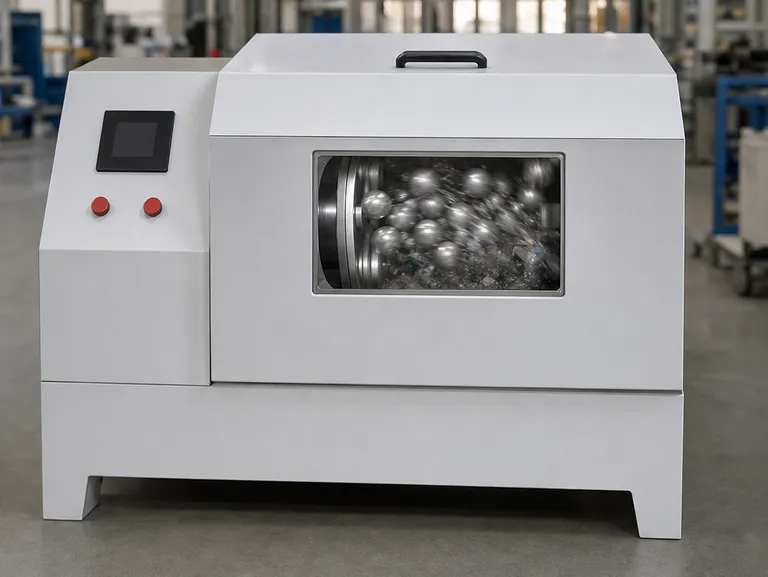
A grinding ball arcs through the chamber's interior. Its trajectory is chaotic but energetic. When it strikes the powder bed, the force isn't just compressive—it’s a shear wave. The particle doesn’t simply crack; it momentarily elongates. For a few picoseconds, the covalent bonds along the polymer backbone experience a tensile load greater than their dissociation energy.
They snap.
Not at random. Chains break at their mechanically weakest link. This is what separates sophisticated mechanochemical control from primitive grinding: site-selective bond cleavage.
Lower Temperature, Higher Precision
The macroscopic temperature of the jar might stay near ambient. You could touch it. And yet, inside, chemical transformations that would normally require 300°C are unfolding.
This is the core psychological hurdle. We’ve been trained to equate heat with progress. If the vessel isn’t glowing, our instincts say nothing is happening. Mechanochemistry demands we unlearn that. The energy is not missing; it’s just targeted, delivered as mechanical shear rather than distributed as thermal vibration. It’s the difference between warming a house with a furnace and using a hammer to drive a single nail.
The Solid-State Advantage: No Solvent, No Problem
Solvents are an expensive intermediary. They dissolve, transport energy, then must be stripped away, distilled, and disposed of. In polymer chemistry, they often swell and plasticize chains, altering reactivity in unpredictable ways.
The ball mill creates a different kind of reaction environment: the solid-solid interface.
Homogenization at the Nanoscale
Think of the powder inside the jar. Each particle is a tiny reactant packet. Under continuous impact, particles fracture, revealing fresh, high-energy surfaces. Additives become intercalated. Layers shear off layers.
The process achieves what solvent mixing takes hours to do poorly: intimate, nanoscale homogenization. Two solids that would sit inertly next to each other are now in forced contact, their dangling bonds meeting at freshly cleaved planes. The result is not a mixture; it’s a reactive composite.
The Depolymerization Switch
For polymers, this opens a critical pathway: controlled depolymerization. Traditional thermal pyrolysis rips chains apart messily, creating a distribution of useless fragments. Mechanochemical depolymerization, properly tuned, can walk the chain backwards to its monomer units.
The key is in the energy dosage.
Too little, and nothing happens. Too much, and you create "harmful slimes"—over-degraded, cross-linked gunk that coats your media and ruins yield. The ball mill sits on a razor’s edge between renewal and ruin.
The Razor’s Edge: Managing the Trade-offs
Psychologically, we love binary solutions: a machine works or it doesn’t. Mechanochemical grinding lives in the gray zone of optimization. It offers three gifts and three thieves.
The Gifts
| Feature | Mechanochemical Function |
|---|---|
| Core Role | Solid-state reactor for molecular transformation |
| Energy Delivery | Mechanical shear and impact, bypassing thermal barriers |
| Chemical Precision | Targeted bond cleavage for controlled depolymerization or functionalization |
| Environment | 100% solvent-free platform, simplifying purification |
| Mixing | Nanometer-scale homogenization and surface activation |
The Thieves
Over-Degradation. Polymer chains can be brittle. A few extra minutes of milling at the wrong frequency, and your valuable long chains become microscopic debris. Molecular weight drops off a cliff.
Thermal Hotspots. While the jar stays cool, the impact point doesn’t. Microscopic hotspots can spike to hundreds of degrees for a microsecond, triggering side reactions—oxidation, crosslinking—that undo the mechanical precision before you even detect them.
Media Contamination. Steel balls rubbing against a steel chamber will produce steel wear particles. Ceramic media will introduce silica or zirconia. For a polymer product that must be pristine, this isn't noise; it's a chemical contaminant that can nucleate unwanted crystallization or act as a pro-degradant later in the product's life.
The solution isn’t to avoid these thieves. It’s to build a fortress around your process with the right equipment and the right monitoring.
Choosing Your Molecular Battlefield
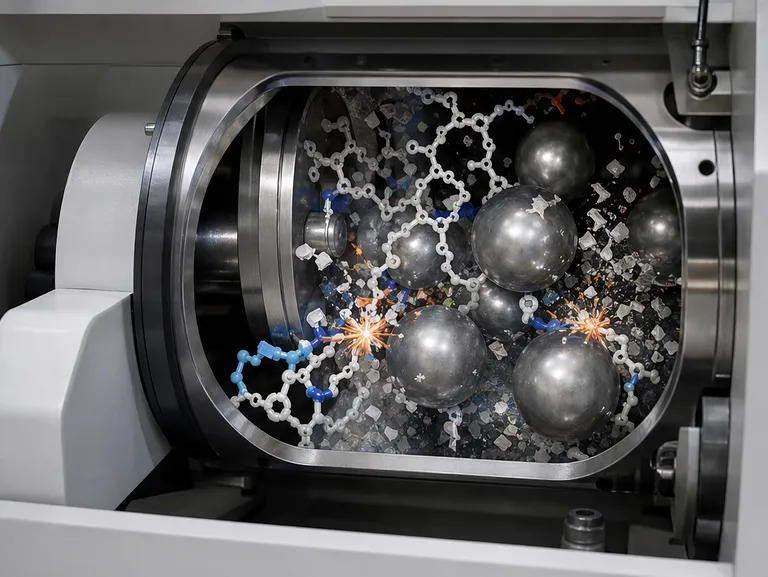
Different polymer projects demand entirely different mechanical signatures. You wouldn’t use a sledgehammer to drive a finishing nail. You shouldn’t use a single milling protocol for every mechanochemical goal.
The choice of mill—and its operating parameters—acts as a chemical switch.
Strategy Guide: Matching Goal to Grinding Action
-
If your goal is depolymerization for chemical recycling: You need high-frequency, high-energy impact. This favors planetary ball mills with high speed ratios. You’re maximizing force per collision to shear backbones. Simultaneously, temperature control becomes critical; pairing a mill with a liquid nitrogen cryogenic grinding system can quench hotspots and protect newly exposed monomers from re-polymerizing before you collect them.
-
If your goal is surface functionalization: You don’t want to break the core particle; you want to activate its shell. Short, intense cycles on a jet mill or a precisely controlled disc mill will create free radicals on the surface without causing bulk attrition. The key is residence time control—flash activation, not prolonged grinding.
-
If your goal is solvent-free synthesis of new polymer blends or composites: Uniform shear and thorough mixing matter more than raw impact force. Here, a ball mill with adjustable media filling rates and programmable reversing cycles ensures that every grain sees the same force history. Complement this with a high-efficiency powder mixer or a defoaming mixer before compaction to maintain chemical homogeneity through downstream steps like hot pressing.
This is where the broader preparation ecosystem earns its keep. Milling alone isn’t the whole story. The polymer powder that emerges from your ball mill still needs to be sized, classified, perhaps compacted into test specimens or production pellets. A seamless workflow—from the initial crush in a jaw crusher to the final XRF pellet press or vacuum hot press for densification—locks in the molecular architecture you’ve so carefully sculpted.
The Engineer’s Romance: Thinking in Milliseconds and Nanometers
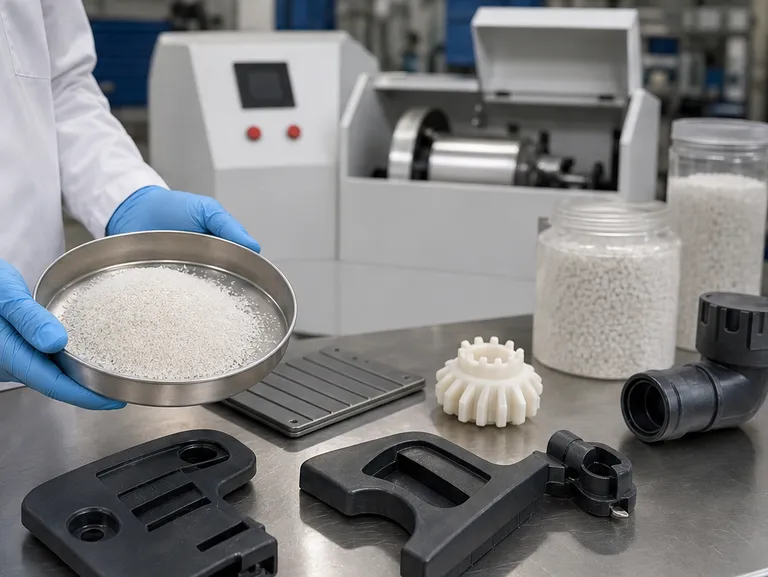
There’s a quiet beauty to mechanochemistry. No flames. No reflux condensers. No fume hoods snaking with ductwork. Just a rotating jar, steel media, and the invisible transfer of kinetic energy into covalent fate.
But the romance doesn’t absolve us of rigor. The difference between a successful mechanochemical process and a failed one is a matter of milliseconds of impact duration, of microns in particle size distribution, of a few RPM in rotation speed.
When you stand beside a ball mill running at 400 RPM, it sounds like chaos. But inside, the collisions are precise enough to select a single bond type—an ester linkage, a disulfide bridge—and break it while leaving the rest of the chain intact. That’s not grinding. That’s an entirely new paradigm for polymer synthesis.
The Whole System Matters
Your ball mill is the reactor. But your crusher prepares the feedstock. Your sieve shaker validates the particle size. Your isostatic press consolidates the powder without destroying the phase structure you created. Every step inherits the precision—or the carelessness—of the one before it.
That’s why, when pursuing this kind of work, the wisest polymer scientists don’t buy a single mill. They assemble a complete laboratory sample preparation ecosystem: jaw and roll crushers for pre-size reduction, cryogenic grinders for heat-sensitive feedstocks, planetary and jet mills for the mechanochemical step itself, air-jet sieve shakers for immediate particle size distribution feedback, and isostatic or vacuum hot presses to lock the final nanostructure into a measurable solid. This integrated approach reduces the variability that kills reproducibility and transforms a promising mechanochemical recipe into a reliable industrial process.
The ball mill didn’t replace the old chemical reactor. It revealed that the old reactor was solving a problem we no longer need to have. Heat is a blunt instrument. Mechanical force, delivered with precision, is a scalpel. In the quiet violence of a rotating jar, polymers are being reborn.
To learn how to configure a complete mechanochemical processing line for your specific polymer application—whether it’s depolymerization, functionalization, or solid-state synthesis—Contact Our Experts.
Quick Links
Suggested Products
Heavy Duty Horizontal Planetary Ball Mill for Efficient Industrial Grinding and Sample Preparation Vertical Semi Circular Planetary Ball Mill for Laboratory Precision Grinding Vertical Square Planetary Ball Mill for Laboratory Sample Preparation and Nanoscale Grinding High Energy Planetary Ball Mill for Nano Scale Grinding and Mechanical Alloying Vertical Production Planetary Ball Mill for High Throughput Powder ProcessingFurther Reading
The Energy Budget of a Single Impact: How the Ball-to-Powder Ratio Shapes Nanocrystalline Reality The Gentle Violence of a Planetary Mill: Why the Most Critical Moment in SiC–VC Composites Happens Before Any Heat The 65-Micron Gate: Unlocking the True Isotopic Fingerprint of Portland Cement The High-Energy Gamble: What SiBCN-rGO Fibers Teach Us About Perfect Homogenization The Alchemist's Hammer: How a Planetary Ball Mill Solves the Diffusion Dilemma in Rare-Earth Doped Ceramics
PowderPreparation
Last updated on May 15, 2026
Related Products
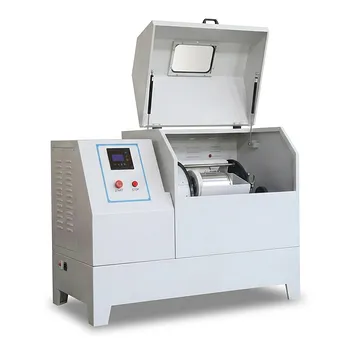
Heavy Duty Horizontal Planetary Ball Mill for Efficient Industrial Grinding and Sample Preparation
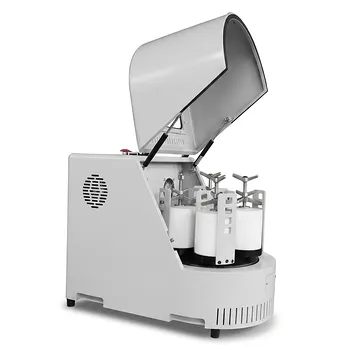
Vertical Semi Circular Planetary Ball Mill for Laboratory Precision Grinding
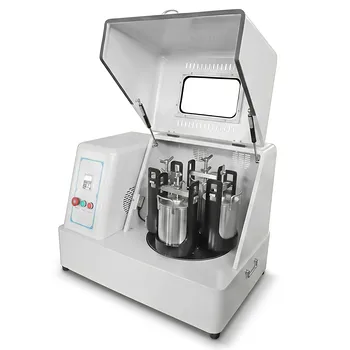
Vertical Square Planetary Ball Mill for Laboratory Sample Preparation and Nanoscale Grinding

High Energy Planetary Ball Mill for Nano Scale Grinding and Mechanical Alloying
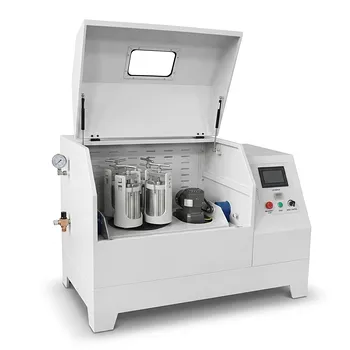
Vertical Production Planetary Ball Mill for High Throughput Powder Processing
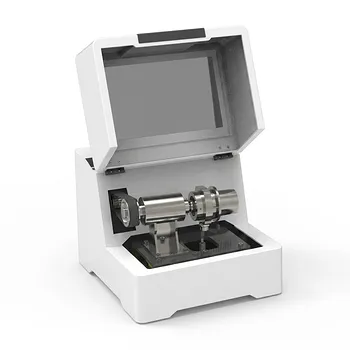
Single Tank High Energy Vibratory Ball Mill for Laboratory Grinding and Mixing
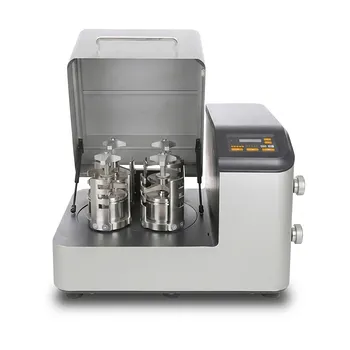
High Energy Planetary Ball Mill for Nano Scale Grinding and Colloidal Mixing in Material Science Research
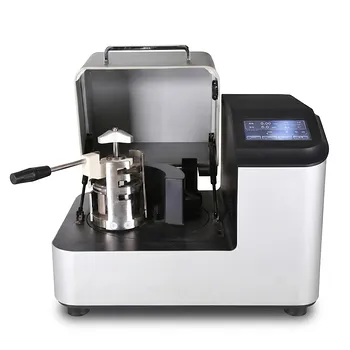
High Energy Laboratory Planetary Ball Mill for Nano Grinding and Material Science Sample Preparation
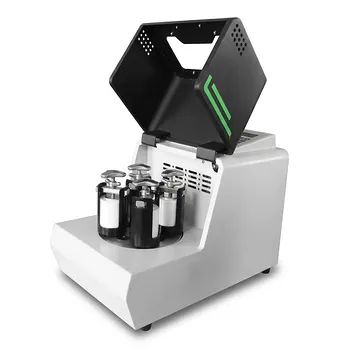
Miniature Planetary Ball Mill with Vacuum Grinding and High Efficiency for Laboratory Sample Preparation

Dual Station Planetary Ball Mill 24L
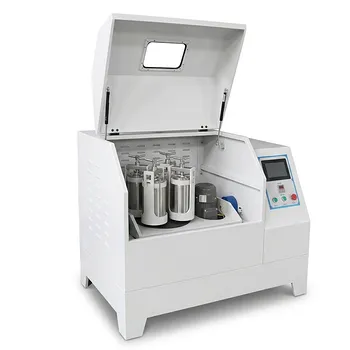
360° Rotating Omnidirectional Laboratory Planetary Ball Mill for Homogeneous Ultra-Fine Grinding and Mixing

High Energy Hybrid Vibratory Ball Mill for Grinding Mixing and Cell Disruption

High Energy Laboratory Planetary Ball Mill for Nano Grinding and Colloidal Mixing of Hard and Brittle Materials
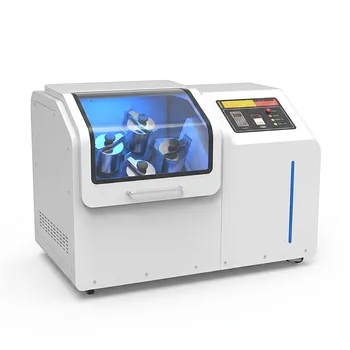
High Energy Omnidirectional Planetary Ball Mill 16L
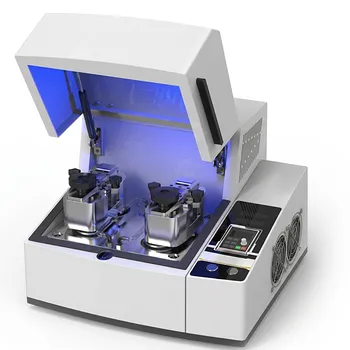
Laboratory Nano High Energy Ball Mill Ultrafine Grinding Mechanical Alloying
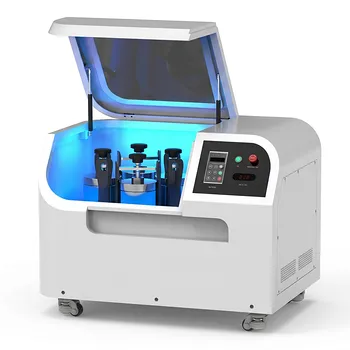
Planetary Ball Mill 12L

High Throughput Micro Ball Mill for Cryogenic Grinding and Laboratory Cell Disruption

8L Planetary Ball Mill for Laboratory Grinding and Sample Preparation

Nanoscale High-Energy Vibratory Ball Mill for Laboratory Sample Preparation, Mechanochemistry, and Mechanical Alloying