Taming the Black Snow: The Planetary Ball Mill’s Role in Making Carbon Nanotubes Ready for Real-World Applications
Jul 09, 2026
The Dust That Hated to Be Touched
You have a jar of multi-walled carbon nanotubes. To the naked eye, it is a heap of black powder so light it seems to float. Under an electron microscope, it is a birds’ nest of filaments, each many times stronger than steel but hopelessly tangled. The nanotubes cling to one another not because they are sticky, but because of a force we cannot see: Van der Waals interactions. Drop a pinch into a solvent and it will clump into stubborn islands. The miracle material—one that could make polymers conductive, composites unbreakable, and thermal interfaces cooler—is, right now, just chaos.
A laboratory is full of objects that refuse to behave. But material scientists have learned that sometimes the best way to tame a nanomaterial is to beat it into submission. Not with a hammer and an anvil, but with a machine whose motion echoes celestial mechanics. The planetary ball mill.
Two Revolutions, One Goal
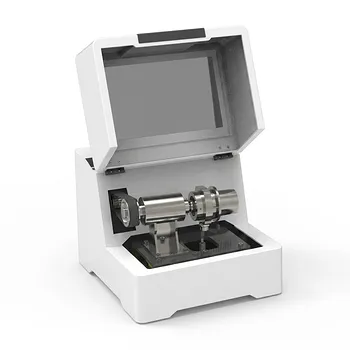
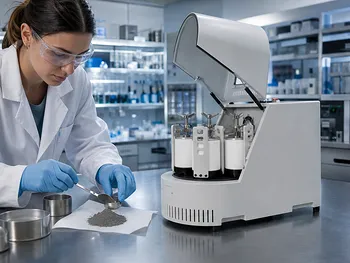
A planetary ball mill gets its name from the way it moves. Grinding jars sit on a sun wheel and spin on their own axes in the opposite direction, just as planets orbit a star while rotating. The result is not gentle. Inside each jar, hardened balls accelerate to high velocity and collide with one another and with the powder in a fury of impacts. The centrifugal forces inside can exceed Earth’s gravity dozens of times.
This violent dance is exactly what the nanotubes need.
The Psychology of Agglomeration
We tend to think of mixing as something that happens naturally—stir a substance and it will spread. With nanomaterials, intuition fails. The very properties that make MWCNTs valuable (nanoscale dimensions, high aspect ratios, enormous surface area) create intensely strong agglomerates. The bundle is not just a cluster of tubes; it is a low-energy state the system wants to maintain. To break it, you need to deliberately input energy that overcomes those inter-tube forces. You need a machine that understands how to deliver energy not as heat, but as strain.
That is the first psychological shift: realizing that dispersion is an energetic problem, not a procedural one. Without enough mechanical energy, no amount of surfactant will penetrate the core of a nanotube nest.
What Happens When a Nanotube Is Milled
Put MWCNTs into a planetary ball mill and three transformations begin almost simultaneously. Each one matters for a different reason.
Unraveling the Nest: De-agglomeration
The high-speed impacts act like millions of microscopic wedges driven between the nanotubes. They overcome the Van der Waals forces that hold bundles together, prying individual tubes apart. The powder that once formed millimeter-sized clods now flows almost like a liquid. For the researcher, this means that subsequent dispersion in a polymer or a solvent becomes predictable rather than a source of frustration.
Cutting the Spaghetti: Dimensional Control
Raw nanotubes can be tens of micrometers long. That length is an asset for some mechanical properties, but a nightmare for processing. Long nanotubes increase suspension viscosity, making it difficult to pour, cast, or spray a composite. The planetary ball mill’s grinding action shortens the tubes, bringing the aspect ratio into a processable range. Think of it as tuning a musical instrument: you sacrifice a little length to gain harmony with your matrix material.
Creating a Surface That Wants to React
Pristine graphite-like walls are chemically inert. The mechanical stress introduced by milling changes that. It generates lattice defects—missing carbon atoms, dangling bonds, edge-plane sites—that are hungry for functional groups. A short, interrupted milling session can deliberately create these active sites without destroying the tube’s core. The surface becomes a scaffold for later carboxylation, amination, or silanization. In this way, the planetary ball mill is not just a grinder; it is an activation tool that primes MWCNTs for chemical attachment.
The Romantic Side of Fracture: Mechanical Alloying
There is an engineer’s romance in the process called mechanical alloying. When MWCNTs are milled together with metal or ceramic powders, the repeated collision and cold-welding events embed nanotubes directly inside the matrix particles. It is not mixing—it is integration at the solid-state level. One particle of aluminum, after hours in the mill, can carry carbon nanotubes locked inside its structure like rebar in concrete. That is a bond formed not by solvent evaporation but by mechanical interlocking and diffusion. The resulting composite powder starts life already reinforced, before it ever sees a furnace.
It is a quiet way of solving the biggest problem in composites: getting the reinforcement to stay where it should.
The Danger of Too Much Enthusiasm
Every powerful tool comes with a warning label, and the planetary ball mill’s warning is this: you can love your nanotubes to death.
When Crystallinity Crumbles
Excessive milling energy or overly long cycles do more than shorten tubes. They can convert ordered graphitic walls into amorphous carbon. An amorphous carbon nanotube fragment is not a nanotube anymore—it is a defect-ridden structure that has lost its electrical conductivity and much of its strength. The beautiful percolation network you hoped to create will behave like a dielectric, not a conductor.
The Unwelcome Guest: Contamination
A planetary ball mill’s grinding jars and balls are made of things like zirconia, tungsten carbide, or hardened stainless steel. Each of these materials wears. A fraction of it ends up in your sample. For a structural composite absorbing a few parts per million of zirconia may not matter. For an electronic ink or a biomedical sensor, those trace impurities can ruin a device. The solution is not to avoid milling, but to select the right grinding media and, if needed, follow up with cleaning steps. Awareness matters more than avoidance.
Tuning the Machine to Your Purpose
This is where the scientist’s judgment turns into a process recipe. The same mill can produce opposite outcomes depending on how it is set.
Matching Parameters to Goals
The planetary ball mill is not a one-button machine. Speed, milling time, ball-to-powder ratio, and atmosphere all shape the final state of the MWCNTs.
| Your Objective | Recommended Approach | Why It Works |
|---|---|---|
| Chemical functionalization | Moderate speed, short cycles | Creates surface defects without destroying cylinder walls |
| Uniform composite dispersion | Higher energy, use of grinding aids | Breaks all agglomerates for a complete percolation network |
| Mechanical alloying (metal matrix) | Long cycles, inert atmosphere | Embeds nanotubes inside metal particles without oxidation |
| Length-controlled suspensions | Low-energy milling, frequent sampling | Cuts tubes gradually while maintaining dispersion viability |
Beyond the Mill: The Full Workflow
The planetary ball mill is the heart of the process, but it is not the only instrument that matters. Once the nanotubes are milled, they frequently need to be classified, mixed with other powders, and eventually consolidated into a solid form. A complete laboratory solution for MWCNT processing includes high-energy ball mills for activation, air-jet sieve shakers to confirm particle size distribution, specialized powder mixers that do not segregate the light nano-fraction, and hydraulic presses or isostatic presses to compact the final blend into dense, testable shapes. When the entire workflow is built around the same philosophy of precise energy input, the transformation from raw nanotube to functional part is seamless.
The Black Snow Becomes an Ordered Structure
There is a moment, after the mill stops and you open the jar, when the powder looks just as black and unremarkable as when you started. But it is not the same. It flows differently. It settles in a solvent with a darker, more uniform hue. Under an electron microscope, the tangles are gone and individual tubes stretch out like filaments in a composite that you can now create.
The carbon nanotube did not change its elemental composition. You just gave it the mechanical signature to participate in the world you are building. The planetary ball mill—together with the downstream tools that shape, measure, and consolidate the powder—turns inert dust into an eager participant in advanced materials. That is what good engineering does: it removes the obstacles to performance so that the material can finally behave the way theory says it should.
The right equipment makes this transition controllable, repeatable, and ready to scale from a few grams to pilot production. When your material demands this level of precision, the machines you select become as critical as the recipe itself. Contact Our Experts to find the ideal grinding, sizing, and consolidation instruments that transform your raw nanotubes into a high-performance additive, batch after predictable batch.
Quick Links
Suggested Products
Vertical Semi Circular Planetary Ball Mill for Laboratory Precision Grinding High Energy Planetary Ball Mill for Nano Scale Grinding and Mechanical Alloying Vertical Production Planetary Ball Mill for High Throughput Powder Processing Heavy Duty Horizontal Planetary Ball Mill for Efficient Industrial Grinding and Sample Preparation 360° Rotating Omnidirectional Laboratory Planetary Ball Mill for Homogeneous Ultra-Fine Grinding and MixingFurther Reading
The 65-Micron Gate: Unlocking the True Isotopic Fingerprint of Portland Cement The Energy Budget of a Single Impact: How the Ball-to-Powder Ratio Shapes Nanocrystalline Reality The High-Energy Gamble: What SiBCN-rGO Fibers Teach Us About Perfect Homogenization The Gentle Violence of a Planetary Mill: Why the Most Critical Moment in SiC–VC Composites Happens Before Any Heat The Forge at 10,000 g: How a Planetary Ball Mill Designs Self-Lubricating Composites Atom by Atom
PowderPreparation
Last updated on May 14, 2026
Related Products

Vertical Semi Circular Planetary Ball Mill for Laboratory Precision Grinding

High Energy Planetary Ball Mill for Nano Scale Grinding and Mechanical Alloying

Vertical Production Planetary Ball Mill for High Throughput Powder Processing

Heavy Duty Horizontal Planetary Ball Mill for Efficient Industrial Grinding and Sample Preparation

360° Rotating Omnidirectional Laboratory Planetary Ball Mill for Homogeneous Ultra-Fine Grinding and Mixing

Vertical Square Planetary Ball Mill for Laboratory Sample Preparation and Nanoscale Grinding

Miniature Planetary Ball Mill with Vacuum Grinding and High Efficiency for Laboratory Sample Preparation

High Energy Laboratory Planetary Ball Mill for Nano Grinding and Material Science Sample Preparation

High Energy Omnidirectional Planetary Ball Mill 16L
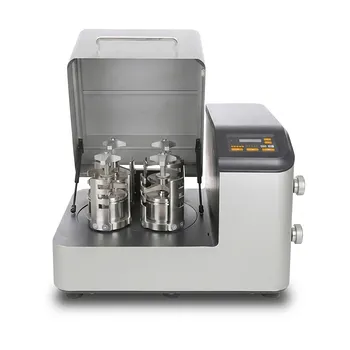
High Energy Planetary Ball Mill for Nano Scale Grinding and Colloidal Mixing in Material Science Research

High Energy Laboratory Planetary Ball Mill for Nano Grinding and Colloidal Mixing of Hard and Brittle Materials

High Energy Omnidirectional Planetary Ball Mill 20L
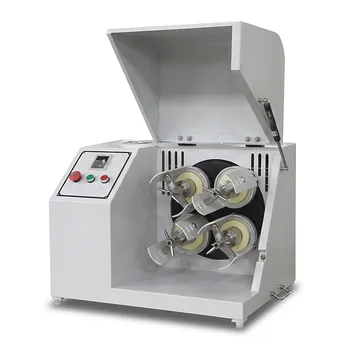
Horizontal Light Duty Planetary Ball Mill for Laboratory Sample Preparation

8L Planetary Ball Mill for Laboratory Grinding and Sample Preparation

Dual Station Planetary Ball Mill 24L

Planetary Ball Mill 12L

Nano High Energy Vibratory Ball Mill for Laboratory Sample Preparation

Multi-Platform Nanoscale High-Energy Vibratory Ball Mill

High Energy Hybrid Vibratory Ball Mill for Grinding Mixing and Cell Disruption