The Invisible Architect of Failure: Why a Bubble in Your Resin-GelMA Mix Casts a Shadow on Your Entire Print
Jul 20, 2026
The Assumption of Purity
The researcher loads the syringe. It’s a precise, golden-amber slurry of resin and Gelatin Methacryloyl (GelMA). To the naked eye, it looks flawless. It was stirred thoroughly. The protocol was followed. Yet, three hours later, the print is a catastrophe. Not a dramatic, spaghetti-like failure, but a subtle one: a micro-crack propagating from an internal void, invisible to the eye until the mechanical test delivers a result 40% below the predicted strength.
We tend to blame the chemistry when composites fail. We doubt the photoinitiator concentration or question the degree of methacrylation. We rarely blame the ghost in the machine: the entrained air. This isn't just a mixing problem. It’s a systemic failure in how we prepare high-viscosity bio-inks. We treat bubbles as a visual nuisance, but physics treats them as the primary architects of structural collapse.
The journey to a reliable, high-fidelity part does not start with the printer’s light engine. It starts with the hidden choreography inside a mixing cup.
The Viscosity Trap: Why Your Stir Bar is Lying to You
A polymer resin and a GelMA solution share a frustrating trait: they are viscous. Not just thick, but resistively cohesive. When you push a magnetic stir bar or a manual blade through this medium, you are not blending. You are performing a polite act of spatial rearrangement.
You are folding, not dispersing.
- Manual mixing creates a macroscopic heterogeneity that tricks the eye.
- It applies localized shear, leaving vast regions of the material completely untouched.
- It actively introduces atmospheric air into the body of the material, whipping in the very defect you are trying to prevent.
The psychology of manual mixing is dangerous. The visual disappearance of a white streak into a clear base gives us a dopamine hit of completion. But at a microscopic level, millions of monomer and polymer chains remain segregated. You have created a visually homogenous weak point.
The Necessary Violence of Dual-Asymmetric Centrifugation
This is where the logic must shift from chemistry to physics. To force two unwilling, high-viscosity fluids into true intimacy, you cannot stir them. You must throw them.
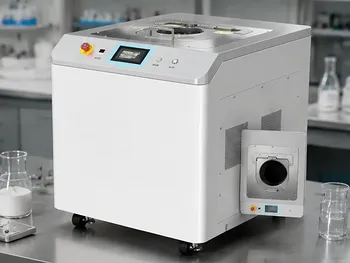
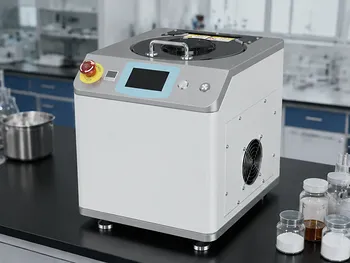
A planetary centrifugal mixer operates on a principle of relentless acceleration. The material container rotates rapidly while revolving around a central axis. This isn't a gentle tumbling.
The material experiences two simultaneous forces:
- Shear Force: Generated not by a blade, but by the extreme relative velocity between the material and the container wall, tearing apart viscosity boundaries.
- Centrifugal Force: Pressing the material at an incredible G-force, compressing and clearing it.
The result is a blade-free, high-dispersion state achieved in seconds. It’s a process that respects the fragility of the GelMA chemistry. Speed is not just a productivity metric; it is a preservation strategy. By completing the mix before thermal build-up can denature the gelatin or trigger premature curing, you maintain the biological and chemical integrity of the composite. You prevent the "pre-gelation" that silently ruins bio-printability.
The Bubble is a Stress Concentrator, Regardless of Its Birth
The battle is not won when the phase boundaries of the resin and GelMA disappear. The second, insidious problem is the cloud of micro-bubbles suspended like a trapped constellation in the viscous slurry. Under simple stirring, these bubbles have no buoyancy pathway to escape. The viscosity is their cage.
Once the material is crosslinked by light or heat, these spheres of air become permanent structural features. A pore.
In a tensile test, this pore becomes an actuary of doom.
- A solid material distributes stress across its load-bearing cross-section.
- A pore reduces that cross-section to zero at its periphery.
- The stress lines must flow around the void, creating an intense concentration at the pore’s equator.
- A crack initiates. It propagates. The part fails.
This is not just about mechanical strength. In a microfluidic chip printed from Resin-GelMA, a single internal channel void can form a leakage path, ruining the device. In an extrusion-based bioprinter, a bubble migrating to the nozzle causes "spitting"—a momentary loss of flow that leaves a catastrophic scar in the printed filament. You are building a house with a missing brick in the foundation, and you won't see it until the roof collapses.
The Thermodynamic Paradox: Heat Versus Integrity
There is a psychological barrier here that we must address. The centrifugal forces that homogenize the composite also generate frictional heat. This is the conservation of energy in action. For a sensitive biomaterial like GelMA, the fear of denaturation is real.
Does the heat of mixing destroy what the dispersion achieves?
The answer lies in engineering control, not in avoiding the process. The limitation of an analog stirrer is not just poor mixing, but a lack of data. A modern planetary mixer allows for the precise management of this thermodynamic paradox.
The solution involves engineered interventions:
- Intermittent Cycles: Pulsing the high-shear energy allows heat to dissipate into the mass without causing a lethal temperature spike.
- Integrated Cooling: Advanced vessels with heat-exchange jackets keep the slurry within the safe zone for bio-inks, even during aggressive mixing.
- Speed Optimization: Finding the rotational velocity that provides maximal shear with minimal internal friction generation.
The weakness of the finished part should not be the price you pay for avoiding heat. You must manage the energy, not fear it. A system that offers programmable, reproducible mixing profiles gives you a level of thermal control that an “eyeballed” manual hot plate stir never can.
The Delicate Balance of Vacuum and Volatility
The purest way to eliminate a bubble is to never let it nucleate, and to force any that do to expand and break. This is the vacuum defoaming function. By lowering the atmospheric pressure inside the mixing chamber, trapped gas pockets are forced to obey Boyle’s Law. They expand, their buoyancy overcomes the yield stress of the fluid, and they rise to the surface to be crushed.
But this introduces a second, quieter danger: selective evaporation.
A solvent molecule in a high-vacuum environment is not inert. Its vapor pressure becomes the dominant physical force. If you pull a deep vacuum on a blend containing volatile solvents, you are not just removing air; you are distilling off critical components, shifting the final concentration of your formula. You're changing the recipe in your effort to perfect the texture.
The right equipment does not apply a brute-force vacuum. It applies a controlled sub-ambient pressure. It finds the goldilocks zone where the bubble’s terminal velocity is sufficient for escape, but the solvent's vapor pressure is not yet reached. This preserves the stoichiometry. The machine must be a chemist’s instrument, not just a physicist’s centrifuge.
The System of Preparation, Not Just a Mixer
Thinking about a mixer in isolation is a narrow view of an integrated workflow. The preparation of a composite is a chain of events. The mixer is the critical link, but it is surrounded by the need for raw material quality and post-processing. The integrity of a Resin-GelMA print is determined before the print signal is sent.
Consider the workflow ecosystem:
- Pre-Processing: Raw powders must be of a defined particle size distribution. Vibration sieving or air-jet classification ensures that the solid phase entering your mixer is consistent, batch after batch.
- The Mixing Core: This is where the high-shear, dual-asymmetric centrifugation and vacuum defoaming must execute a precise protocol to create the homogenous, bubble-free slurry.
- Post-Formulation Treatment: In some applications, the composite requires further densification under isostatic pressure to eliminate any residual latent defects before processing.
This systemic design philosophy—sizing, mixing, compacting—mirrors the approach demanded in powder metallurgy and advanced ceramics. It’s a recognition that material science is a discipline of relentless defect elimination.
A Hardware Selection Guide for the Resin-GelMA Engineer:
| Your Primary Pain Point | The Root Cause | The Technical Solution & Equipment Focus |
|---|---|---|
| Print Head Clogging & Spitting | Micro-bubbles reaching the nozzle and acting as compressible springs. | Precision vacuum defoaming mixers that can hold a controlled low-pressure environment without solvent loss. |
| Anisotropic Mechanical Failure | Unseen phase segregation; high-viscosity streaks of pure resin or GelMA. | High-torque planetary centrifugal mixers with high G-force capability for thorough, blade-free dispersion. |
| Thermal Denaturation of GelMA | Excessive kinetic energy converting to heat during the mixing cycle. | Mixers with active cooling or programmable intermittent cycles to respect the material's thermal ceiling. |
| Batch-to-Batch Inconsistency | Human error in timing and speed; non-reproducible manual protocols. | Digital control systems that allow for recipe locking and cycle memory, ensuring every gram is mixed identically. |
| Material Waste & Scalability | Leaking, splashing, or incomplete recovery from blade-style mixers. | Sealed, blade-free containers that serve as the mixing, storage, and sometimes dispensing vessel in a closed loop. |
The choice of a centrifugal mixer with an integrated defoaming function is therefore not a purchase of convenience. It’s the purchase of a guarantee. It’s the difference between building a part on a foundation of stochastic defects and building it on a foundation of verified, engineered uniformity.
When a load is applied and the structure holds, it won’t be because of luck. It will be because of a silent, early, and violent dance inside a spinning cup—a process that refused to accept the unseen weakness of a simple bubble.
For those looking to build this level of certainty into their material science workflow, the integration of specialized powder processing, milling, and compaction hardware with precision mixing represents a complete, rather than a fragmented, approach to sample preparation. Contact Our Experts
Quick Links
Suggested Products
Industrial Planetary Centrifugal Vacuum Defoaming Mixer for High Viscosity Paste and Powder Homogenization Industrial Planetary Centrifugal Vacuum Defoaming Mixer for High Viscosity Paste and Advanced Material Science Dual Cup Vacuum Centrifugal Mixer Planetary Paste Defoaming Machine Industrial Material Processor High Viscosity Planetary Centrifugal Vacuum Mixer for Material Defoaming and Uniform Mixing High Efficiency Vacuum Planetary Centrifugal Mixer and Defoaming Machine for Industrial Material Research and Precise Laboratory Powder DispersionFurther Reading
The Hidden Disorder in Your Battery Slurry—and the Precision Tool That Destroys It The Most Important Mixer in Your Lab Isn’t a Mixer. It’s an Insurance Policy Against Defects. The 3-Minute Transformation: How Mixing Speed Reveals the Hidden Architecture of Next-Gen Batteries When Trace Elements Dictate Strength: Mastering the Mixing of NiTiZn Alloys for Additive Manufacturing The Silent Architect of Composite Performance: How Planetary Mixing Creates Flawless Al₂O₃-BN/EP Binders
PowderPreparation
Last updated on May 14, 2026
Related Products
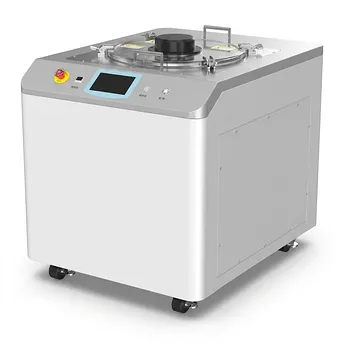
Industrial Planetary Centrifugal Vacuum Defoaming Mixer for High Viscosity Paste and Powder Homogenization
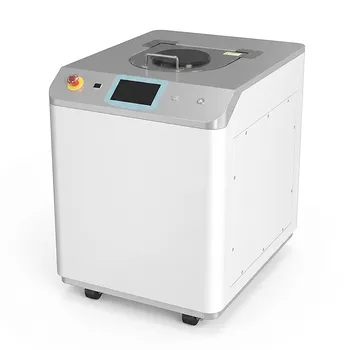
Industrial Planetary Centrifugal Vacuum Defoaming Mixer for High Viscosity Paste and Advanced Material Science
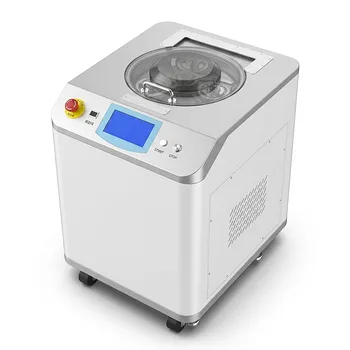
Dual Cup Vacuum Centrifugal Mixer Planetary Paste Defoaming Machine Industrial Material Processor
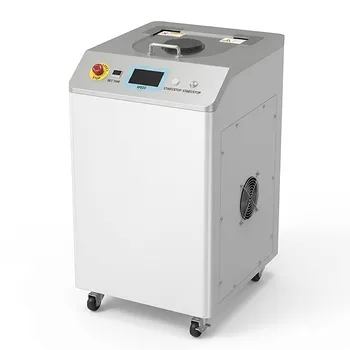
High Viscosity Planetary Centrifugal Vacuum Mixer for Material Defoaming and Uniform Mixing
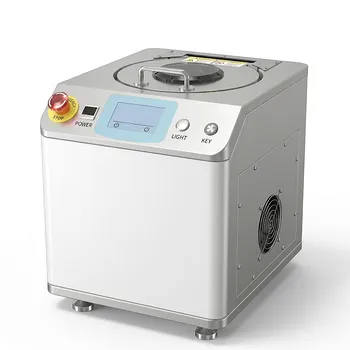
High Efficiency Vacuum Planetary Centrifugal Mixer and Defoaming Machine for Industrial Material Research and Precise Laboratory Powder Dispersion
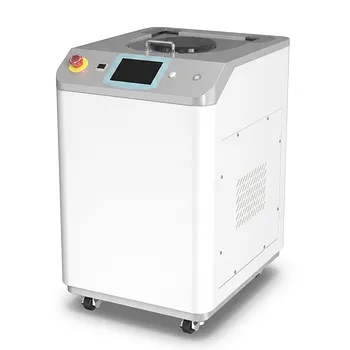
High Viscosity Planetary Centrifugal Mixing and Vacuum Defoaming Machine for Laboratory Material Preparation
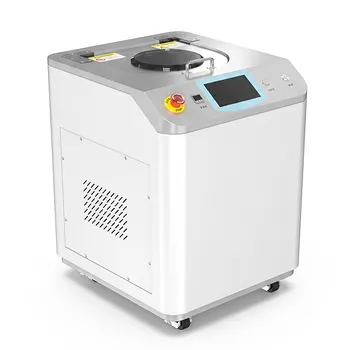
High Speed Vacuum Planetary Centrifugal Mixer and Defoamer for Industrial Paste Processing
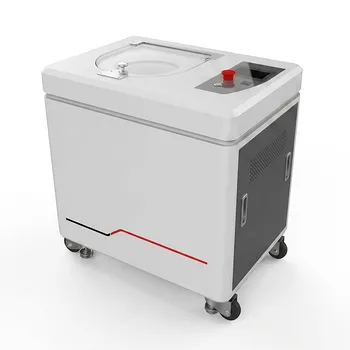
非介入式材料均质机真空脱泡行星搅拌高粘度混合设备
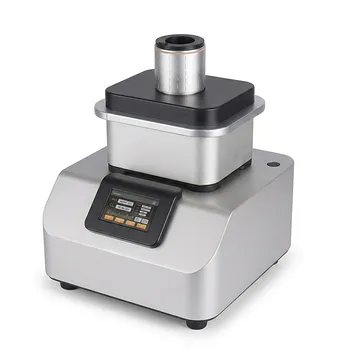
Ultra Centrifugal Mill High Speed Laboratory Grinder for Fibrous and Brittle Sample Preparation
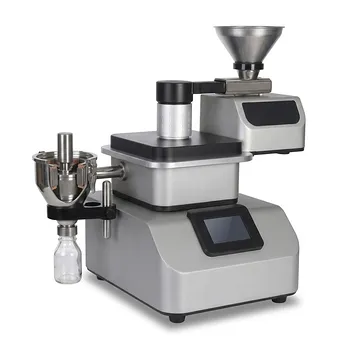
Ultra Centrifugal Mill for Rapid Laboratory Sample Preparation and Fine Powder Grinding
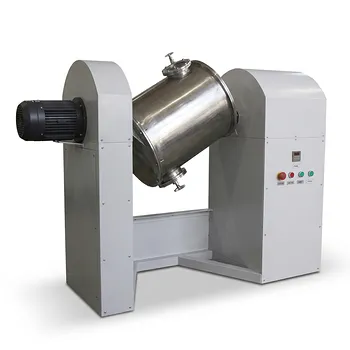
Inclined Mixer for Homogeneous Powder Blending and Grinding
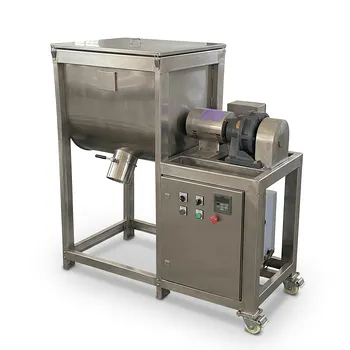
Horizontal Ribbon Mixer for Dry Powder and Slurry Blending
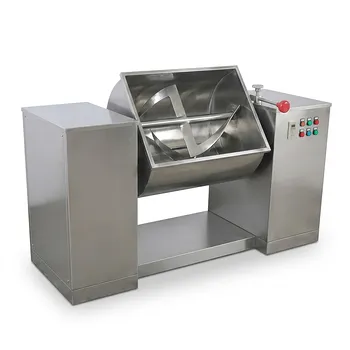
Horizontal Trough Mixer for Uniform Powder and Paste Blending
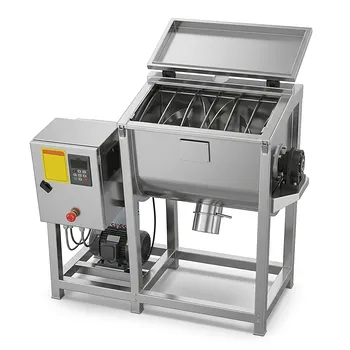
Horizontal Ribbon Mixer for Uniform Powder and Slurry Mixing
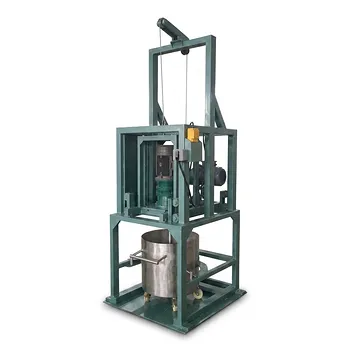
High-Speed Simple Disperser for Efficient Mixing, Dispersion, and Emulsification
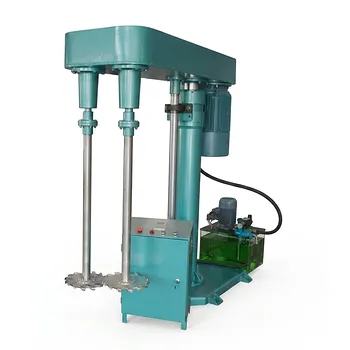
Hydraulic Double Shaft Disperser for High Viscosity Liquid Mixing and Dispersion
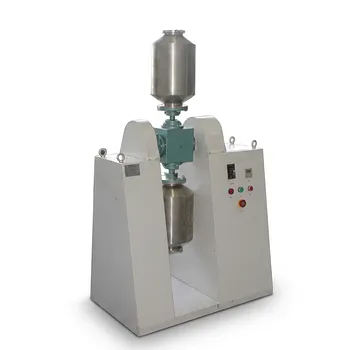
Multi Dimensional Universal Mixer for High Uniformity Powder Blending
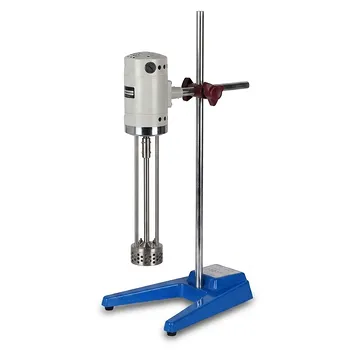
High Shear Laboratory Emulsifier for Mixing and Homogenization
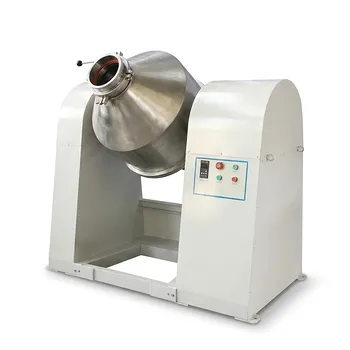
Industrial Double Cone Mixer for Powder Blending and Homogeneous Mixing