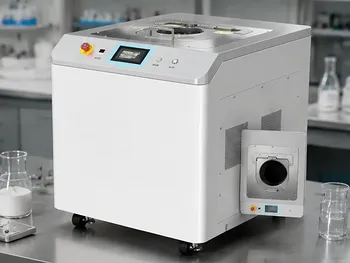
The 3-Minute Transformation: How Mixing Speed Reveals the Hidden Architecture of Next-Gen Batteries
Aug 13, 2026
The Broken Fibers You Never See
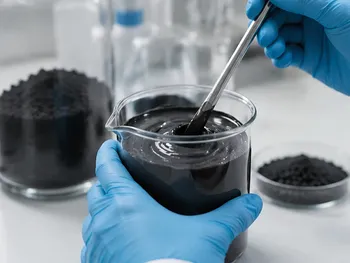
A lab technician pulls a sample from a traditional mixer after six hours. The slurry looks smooth to the naked eye. Under an SEM, however, the landscape tells a different story.
What should be a robust, interconnected web of Ammonium Vanadium Oxide nanofibers now resembles a field of shattered glass. The long conductive pathways are severed. The battery will work, but it will never reach its theoretical capacity. The problem wasn't the chemistry. The problem was the violence of the mixing itself.
We spend millions designing materials at the atomic level, only to shred them with a stainless steel blade.
This is the unspoken bottleneck in advanced battery research. We focus obsessively on novel coatings, dopants, and crystal structures. But between the synthesized powder and the coated foil lies a brutal mechanical step that often negates years of meticulous innovation.
The real challenge isn't just mixing uniformly. It's mixing without destroying.
The Physics of Destruction
Why do traditional methods fail so predictably with nanomaterials?
The Blade's Blind Spot
A mechanical impeller relies on physical contact to generate shear. It must hit the ingredients to move them. For high-aspect-ratio materials—fibers, nanotubes, nanowhiskers—this contact is catastrophic.
Think of it like stirring a cup of tea with a pair of scissors. You might eventually dissolve the sugar, but you'll also systematically cut any tea leaves into dust.
Traditional blade mixing creates three specific problems:
- Mechanical Fracture: Direct impact snaps brittle fibers.
- Dead Zones: High-viscosity areas near the container wall remain static.
- Entrained Air: Blades whip micro-bubbles into the slurry, requiring a separate, lengthy vacuum degassing step.
The result? A slurry that measures “well-mixed” by rudimentary viscosity tests but lacks the continuous electronic percolation network necessary for high-rate performance.
The Carbon Black Cluster Problem
Conductive additives like carbon black don't arrive as individual nanoparticles. They arrive as dense, stubborn agglomerates.
Traditional mixers often fail to break these clusters down to sub-micron levels without extreme processing times. You end up with a "salt and pepper" effect where conductive islands exist in a resistive sea. This heterogeneity creates localized hotspots during charging, accelerating degradation.
You aren't just mixing liquids. You're trying to uniformly distribute nanoscale particulates into a high-viscosity paste without damaging them. It is a paradox of force.
A Different Kind of Energy
There is a mechanism that sidesteps the paradox entirely. It does not treat mixing as a contact sport.
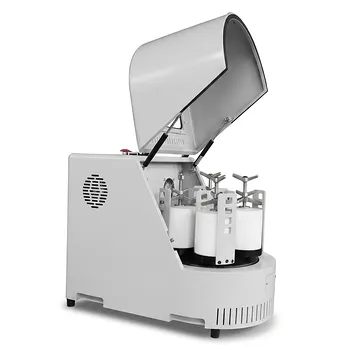
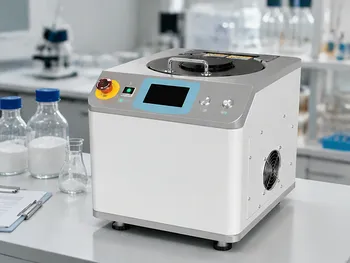
Planetary centrifugal technology operates on a principle of synchronized revolution and rotation. The material is placed inside a container, and that container is subjected to a precise, high-energy kinematic orbit. No blades. No impellers.
The Bladeless Revolution
This is non-contact mixing. The extreme shear forces are generated within the material itself as it is flung through the container walls.
For sensitive nanomaterials, the value proposition is absolute:
- Zero Mechanical Impact: The structural integrity of nanofibers is preserved not as a feature, but as a default state of the process. Your high-aspect-ratio materials retain the long conductive pathways you designed them for.
- Sub-Micron Agglomerate Breakage: The combination of intense acceleration and counter-directional flow creates "liquid knives"—streams of material that shear agglomerates apart without crushing the primary particles.
A uniform electronic conduction network isn't just about dispersion. It's about preserving morphology. This is the distinction that separates a high-performance cathode from a compromised one.
The 2-Minute Benchmark
Time is a hidden cost in R&D. If a mixing cycle takes hours, you iterate slowly. You make conservative adjustments because failure is expensive in terms of time.
The energy density of a planetary centrifugal mixer compresses traditional processing windows from hours down to minutes.
- Traditional Process: 4–6 hours mixing + 1 hour degassing.
- Centrifugal Process: 2–5 minutes mixing + 0 minutes extra degassing.
This speed changes the psychology of experimentation. When a test cycle takes three minutes, you can afford to be bold. You explore more of the formulation space.
The Integrated Solution: Air is the Enemy
A hidden killer of electrode quality is the micro-bubble. Trapped air expands during drying, leaving pinholes and density gradients in the coating.
In a traditional workflow, deaeration is a distinct, passive step. You transfer the viscous slurry to a vacuum chamber and wait for bubbles to slowly migrate to the surface.
In a planetary centrifugal environment, deaeration happens simultaneously with mixing.
Viscosity and the Vacuum
Centrifugal force drives the slurry up the container wall in a thin, dynamic layer. This maximizes the surface area-to-volume ratio. When combined with a vacuum function, gas has a minimal escape distance. It is expelled instantly.
- Flat Morphology: The resulting electrode sheet is dense and free of craters.
- True Density: Without voids, you achieve the target compact density for maximum energy density.
- Optimal Rheology: Even high-viscosity formulations—which would stall a traditional blade motor—behave like a fluid under these forces.
You are not just achieving homogeneity. You are achieving a dense, fully-wetted state that translates directly to electrochemical performance.
The Trade-off: Precision vs. Scale
No tool is universal. Seeing a technology clearly means understanding its boundaries.
Planetary centrifugal mixers excel in the domain of high-value, high-sensitivity materials. They are the first choice for R&D and pilot-scale production where nanoscale integrity is non-negotiable.
The trade-offs are:
- Heat Management: The intensive energy input generates internal friction. For extremely heat-labile chemistries, this must be managed, not ignored.
- Batch Economics: While unmatched in small-to-medium batches, the cost-per-liter can be higher than continuous industrial lines for mass production of commodity materials.
However, for the researcher chasing a breakthrough or the manufacturer producing specialized, high-performance cells, these aren't failures. They're acceptable constraints for a distinct capability.
The Laboratory as a System
A planetary centrifugal mixer solves a specific, critical problem. But it sits inside a chain of processes.
If your upstream particle sizing is inconsistent, no mixer can fix it. If your downstream compaction is imprecise, the perfect slurry is wasted.
Material science is a chain of custody. The integrity of the final electrode depends on every step, from crushing to pressing.
The Complete Workflow
Consider the full journey of a cathode material in a well-equipped battery lab:
- Particle Sizing: Jet mills and planetary ball mills reduce precursors to precisely defined distributions.
- Material Grading: Vibratory sieve shakers and air-jet sieves ensure only the target fraction proceeds.
- Mixing: The planetary centrifugal mixer creates the homogeneous, deaerated slurry, preserving the fragile nanostructures.
- Compaction: Cold Isostatic Presses (CIP) or vacuum hot presses form the final solid body, applying uniform pressure that respects the established dispersion.
A weakness at any single link breaks the chain.
This is the "engineer's romance": not a single magic machine, but a suite of precise tools operating in concert. It’s the quiet satisfaction of a process so tightly controlled that the result is predictable before you even run the characterization.
When you view your laboratory as an integrated system—where crushing, milling, sieving, mixing, and pressing are all designed for advanced materials—you stop fighting your equipment. You start trusting your data.
The three-minute mixing cycle is just the most visible victory. The real victory is the elimination of variables. And in science, that is everything.
Quick Links
Suggested Products
High Efficiency Vacuum Planetary Centrifugal Mixer and Defoaming Machine for Industrial Material Research and Precise Laboratory Powder Dispersion High Viscosity Planetary Centrifugal Vacuum Mixer for Material Defoaming and Uniform Mixing Industrial Planetary Centrifugal Vacuum Defoaming Mixer for High Viscosity Paste and Advanced Material Science Industrial Planetary Centrifugal Vacuum Defoaming Mixer for High Viscosity Paste and Powder Homogenization High Viscosity Planetary Centrifugal Mixing and Vacuum Defoaming Machine for Laboratory Material PreparationFurther Reading
The Hidden Disorder in Your Battery Slurry—and the Precision Tool That Destroys It The Invisible Architect of Failure: Why a Bubble in Your Resin-GelMA Mix Casts a Shadow on Your Entire Print When Two Extra Minutes Define a Skyscraper: The Precision Mixing Protocol That Nanomaterials Demand The Micrometer Trigger: Why a Laboratory Powder Mixer Defines Effervescent Tablet Success The Most Important Mixer in Your Lab Isn’t a Mixer. It’s an Insurance Policy Against Defects.
PowderPreparation
Last updated on May 14, 2026
Related Products
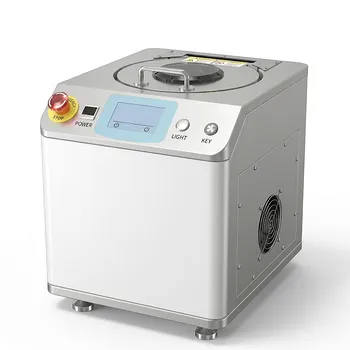
High Efficiency Vacuum Planetary Centrifugal Mixer and Defoaming Machine for Industrial Material Research and Precise Laboratory Powder Dispersion
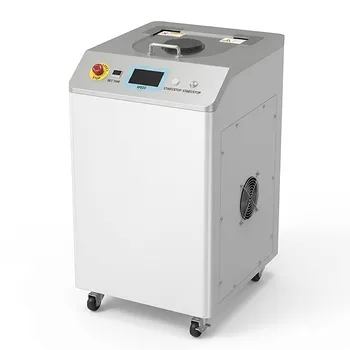
High Viscosity Planetary Centrifugal Vacuum Mixer for Material Defoaming and Uniform Mixing
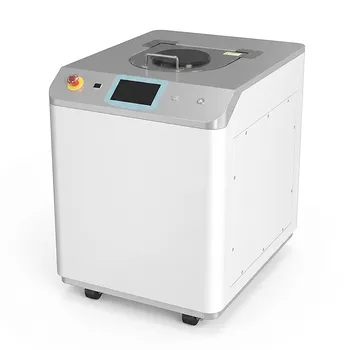
Industrial Planetary Centrifugal Vacuum Defoaming Mixer for High Viscosity Paste and Advanced Material Science
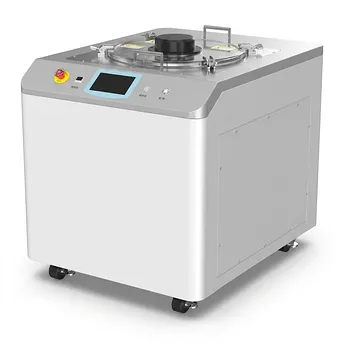
Industrial Planetary Centrifugal Vacuum Defoaming Mixer for High Viscosity Paste and Powder Homogenization
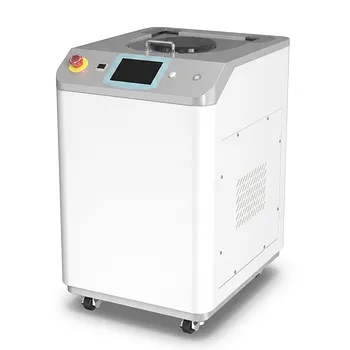
High Viscosity Planetary Centrifugal Mixing and Vacuum Defoaming Machine for Laboratory Material Preparation
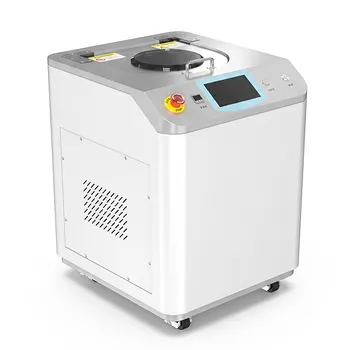
High Speed Vacuum Planetary Centrifugal Mixer and Defoamer for Industrial Paste Processing
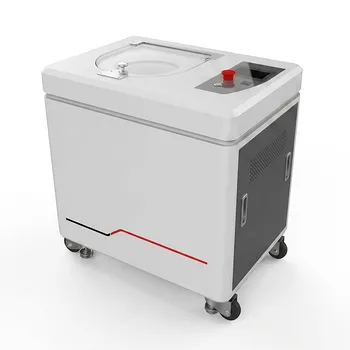
非介入式材料均质机真空脱泡行星搅拌高粘度混合设备
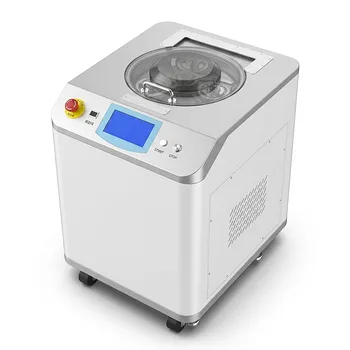
Dual Cup Vacuum Centrifugal Mixer Planetary Paste Defoaming Machine Industrial Material Processor
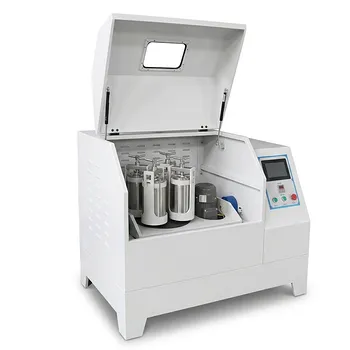
360° Rotating Omnidirectional Laboratory Planetary Ball Mill for Homogeneous Ultra-Fine Grinding and Mixing
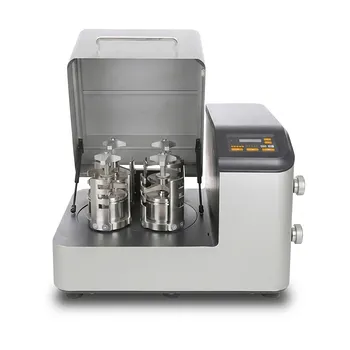
High Energy Planetary Ball Mill for Nano Scale Grinding and Colloidal Mixing in Material Science Research
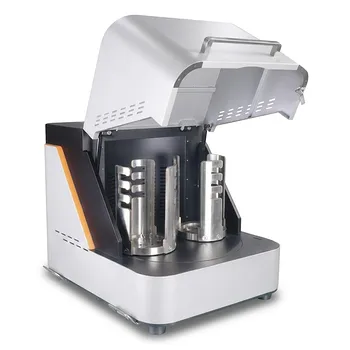
High Energy Laboratory Planetary Ball Mill for Nano Grinding and Colloidal Mixing of Hard and Brittle Materials
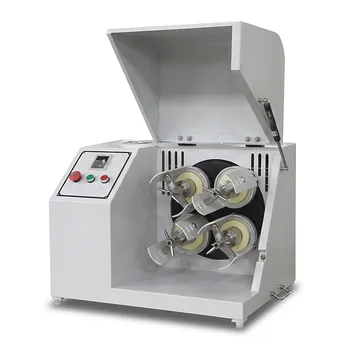
Horizontal Light Duty Planetary Ball Mill for Laboratory Sample Preparation
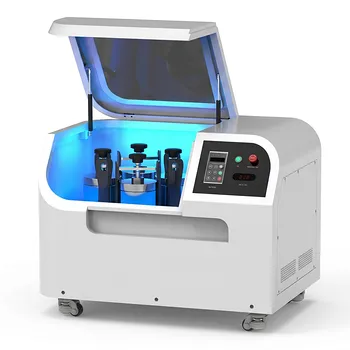
Planetary Ball Mill 12L
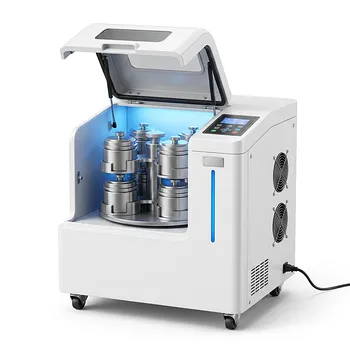
High Energy Omnidirectional Planetary Ball Mill 20L
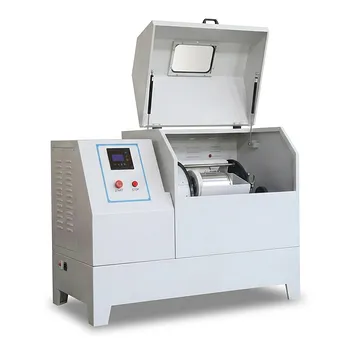
Heavy Duty Horizontal Planetary Ball Mill for Efficient Industrial Grinding and Sample Preparation
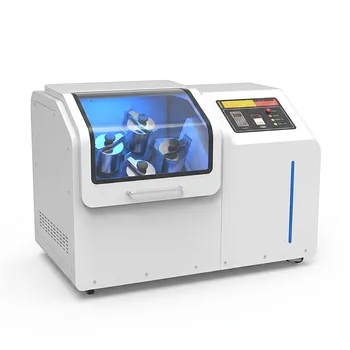
High Energy Omnidirectional Planetary Ball Mill 16L
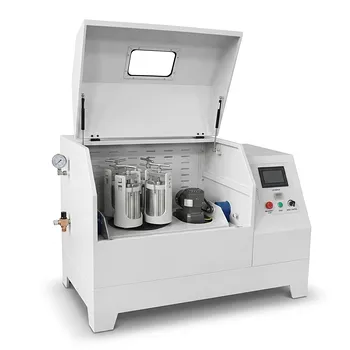
Vertical Production Planetary Ball Mill for High Throughput Powder Processing
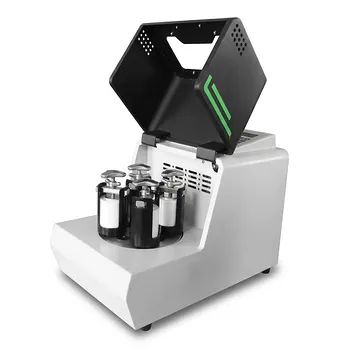
Miniature Planetary Ball Mill with Vacuum Grinding and High Efficiency for Laboratory Sample Preparation
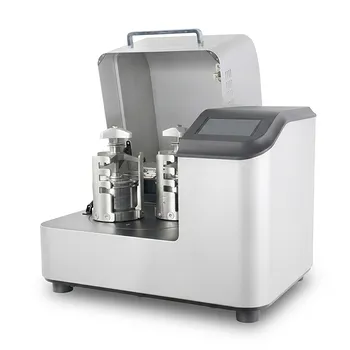
High Energy Planetary Ball Mill for Nano Scale Grinding and Mechanical Alloying