When Trace Elements Dictate Strength: Mastering the Mixing of NiTiZn Alloys for Additive Manufacturing
Sep 13, 2026
The Invisible Flaw Hiding in Perfect Layers
A materials engineer stares at a fractured impeller, fresh from the build plate. The laser scan strategy was flawless. The melt pools looked stable on the monitor. And yet the part failed at a stress level forty percent below design.
The root cause would not be found in the printer parameters. It lived further upstream—in the quiet, often overlooked step where raw elemental powders become “feedstock.” Specifically, in the mixer.
The industrial powder mixer does not merely blend. It negotiates a battle against physics and chemistry that starts long before additive manufacturing begins. For a three-element system like NiTiZn, where zinc is present in tiny fractions and carries an outsized electrochemical hunger for oxygen, the mixer is not a peripheral tool. It is the foundational architect of reliability.
The Trace Element Paradox
Why a Little Zinc Causes Big Trouble
In NiTiZn alloys, zinc is typically added at low concentrations. On a mass basis, it is almost negligible. But its influence on transformation temperatures and shape memory behavior is anything but small.
This creates a paradox: a few hundred grams of zinc must be uniformly distributed across an entire batch of nickel and titanium powder. If those zinc particles cluster—even microscopically—the printed component will contain hidden zones of altered chemistry.
Local compositional gradients sound academic until they manifest as unpredictable actuation temperatures or fracture surfaces that tell contradictory stories under a microscope. The mixer’s first job is to prevent those stories from ever being written.
The Psychological Trap of “Good Enough” Blending
Engineers often trust visual inspection. Powders look homogeneous to the naked eye. But at the particle scale, the reality is different. A mixer that tumbles for twenty minutes may leave zinc-rich pockets intact. These pockets survive atomization-like processes in the melt pool, creating islands of slightly different alloy composition. The human tendency to underestimate invisible heterogeneity is what turns “good enough” mixing into a systemic risk. Only long-duration, mechanically rigorous mixing rewrites this pattern.
The Mechanics of Micro-Uniformity
Multi-Axial Motion and the Art of Controlled Chaos
Simple rotation creates dead zones. Heavy nickel particles can settle while lighter zinc dust drifts. To defeat this, advanced industrial mixers use multi-axial, 3D motion patterns that constantly disrupt sedimentation tendencies. For eight, sixteen, even twenty-four hours, the powder mass reconfigures itself millions of times, forcing every zinc grain to meet every nickel and titanium neighbor.
This is not brute force. It is an engineered path to the homogeneity plateau—the point where composition becomes statistically identical regardless of where you sample the batch. Reaching that plateau is what separates a repeatable additive manufacturing process from one that produces intermittent mysteries.
The Fragile Boundary Between Uniformity and Damage
Every hour of mixing is a trade. Homogeneity improves. But particle surfaces are also undergoing micro-impacts. Push too far, and you get cold welding, fracturing, or subtle deformation that shifts the particle size distribution. A mixer that once delivered 15–45 µm spherical powder can, after over-processing, produce fines and irregular fragments. Those fragments ruin powder bed packing density, causing uneven layer thickness and porosity in printed parts.
The operator’s judgment call—when to stop—defines the edge between a precise alloy and a compromised one. The best mixing protocols are built on data, not guesswork.
The Atmospheric Fortress
Oxidation Is the Silent Alloy Killer
Zinc’s reactivity is both a design advantage and a contamination nightmare. Exposed to ambient air, zinc particles form surface oxide skins in minutes. These oxides do not simply vanish in the melt pool; they become inclusion sites, stress concentrators, and weak interfaces between adjacent crystalline regions.
Industrial mixers designed for reactive powders operate under a protective argon blanket. But the real discipline is in the details: seal integrity, evacuation cycles before backfilling, and continuous monitoring of residual oxygen. A mixer that leaks even a few parts per million of oxygen can quietly degrade an entire batch. No laser parameter optimization can fully redeem oxidized feedstock.
Preserving the Shape That Makes Printing Possible
Powder flowability in laser powder bed fusion is a function of sphericity. Satellite particles, rough surfaces, or deformed shapes interrupt the smooth spreading of layers. A mixer must execute its homogenization mission without causing mechanical attrition that erodes this spherical asset. This requires internal surfaces designed to minimize shear while maximizing inter-particle mixing—a delicate balance of container geometry, speed, and fill ratio.
When flowability is preserved, the printer’s recoater lays uniform layers, and the laser interacts with a consistent material bed. The result is predictable melt dynamics. The alternative is a cascade of small errors accumulating into a scrapped build.
The Complete Preparation Ecosystem
Why a Mixer Alone Is Not Enough
A powder mixer is the heart of feedstock preparation, but it lives within a broader ecosystem. Before nickel, titanium, and zinc can be mixed, they must often be sized appropriately. Jaw crushers or planetary ball mills reduce larger feedstock. Sieve shakers with precision test sieves then classify the powder, ensuring that only particles within a tight size window enter the mixer. This upstream discipline prevents the mixer from being asked to homogenize a wildly polydisperse input—an unfair task that nearly always fails.
From Mixed Powder to Verifiable Sample
After mixing, quality control demands specimen preparation. Here, the company’s hydraulic press solutions become essential. XRF pellet presses compress a small sample into a dense, analyzable pellet, enabling compositional verification before committing to a full build. Cold isostatic presses (CIP) can consolidate larger masses of powder into uniform green bodies for sintering studies. Vacuum hot presses take this further, applying heat and pressure to explore the alloy’s consolidation behavior without printing a single layer.
This end-to-end capability—from crushing and milling to mixing, sieving, and pressing—closes the loop between raw elements and certified feedstock. It transforms material preparation from a scattered collection of processes into a coherent, auditable workflow.
Building Reliability for Complex Alloys
The supply chain for advanced alloys is intolerant of guesswork. When a laboratory or production line commits to NiTiZn, it commits to a material whose properties are exquisitely sensitive to preparation history. The industrial powder mixer is the focal point where chemistry, particle mechanics, and atmosphere control converge. Get it right, and additive manufacturing delivers repeatable microstructures. Neglect its subtleties, and the printed part becomes a document of hidden failures.
We provide complete laboratory sample preparation solutions that turn this sensitivity from a liability into an engineered strength. Our powder mixers—including 3D motion systems, defoaming designs, and planetary ball mills—are built to deliver the long-duration homogeneity that reactive alloys demand. Our crushers, jet mills, and liquid nitrogen cryogenic grinders handle upstream size reduction. Our sieve shakers and test sieves enforce precise size classification. And our comprehensive line of hydraulic presses—Cold/Warm Isostatic Presses, vacuum hot presses, XRF pellet presses—carries the workflow through to verification and advanced compaction.
The invisible architecture of a successful build is laid before any laser pulse. Let us help you construct it with confidence. Contact Our Experts
Quick Links
Suggested Products
Industrial Double Cone Mixer for Powder Blending and Homogeneous Mixing Industrial Planetary Centrifugal Vacuum Defoaming Mixer for High Viscosity Paste and Powder Homogenization High Efficiency Vacuum Planetary Centrifugal Mixer and Defoaming Machine for Industrial Material Research and Precise Laboratory Powder Dispersion Multi Dimensional Universal Mixer for High Uniformity Powder Blending V-Type Powder Mixer for Uniform Blending of Dry Powders and GranulesFurther Reading
The 81:19 Gamble: Why Imperfect Mixing Silently Kills Your Optical Ceramic The Invisible Variable: Why Your Soil Test Data Is Lying to You The Mixing Fallacy: Why Your Composite Flour’s Uniform Color Is a Costly Illusion The Micrometer Trigger: Why a Laboratory Powder Mixer Defines Effervescent Tablet Success The Silent Choreographer: How 3D Powder Mixing Dictates the Purity of Ti₂SnC MAX Phases
PowderPreparation
Last updated on May 14, 2026
Related Products
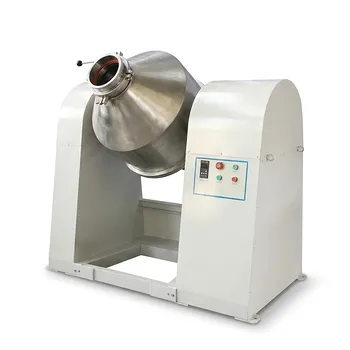
Industrial Double Cone Mixer for Powder Blending and Homogeneous Mixing
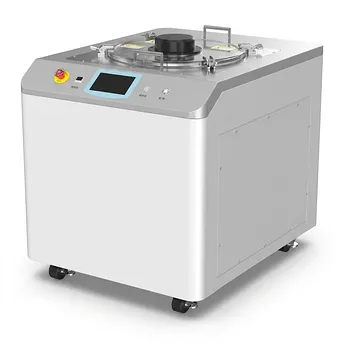
Industrial Planetary Centrifugal Vacuum Defoaming Mixer for High Viscosity Paste and Powder Homogenization
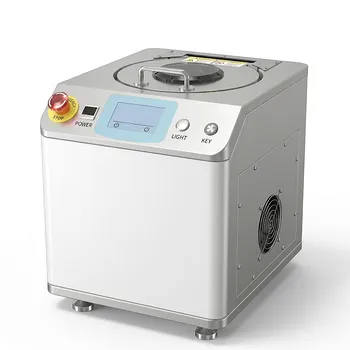
High Efficiency Vacuum Planetary Centrifugal Mixer and Defoaming Machine for Industrial Material Research and Precise Laboratory Powder Dispersion
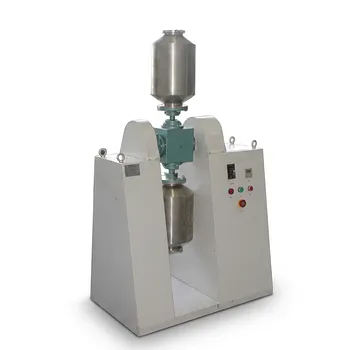
Multi Dimensional Universal Mixer for High Uniformity Powder Blending
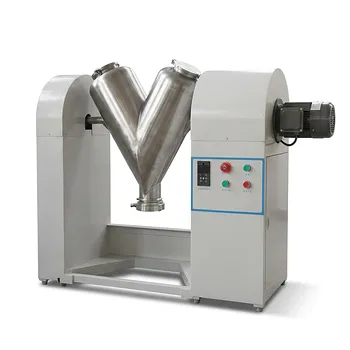
V-Type Powder Mixer for Uniform Blending of Dry Powders and Granules
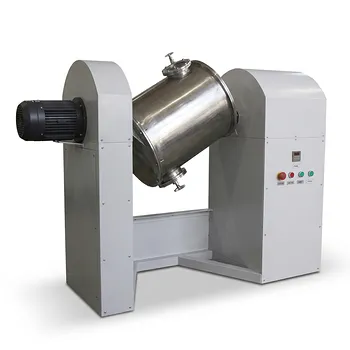
Inclined Mixer for Homogeneous Powder Blending and Grinding
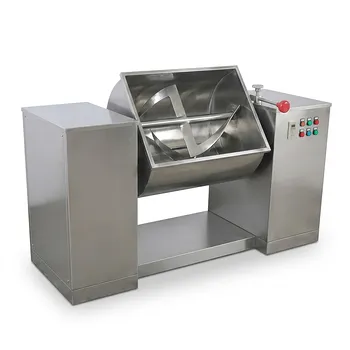
Horizontal Trough Mixer for Uniform Powder and Paste Blending
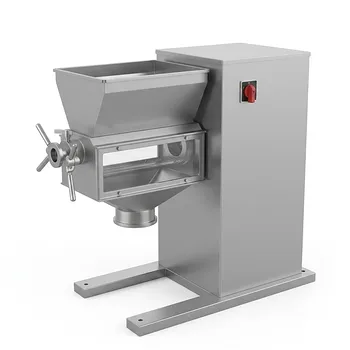
Industrial Swing Granulator for Powder Processing in Pharma Food and Chemical Industries
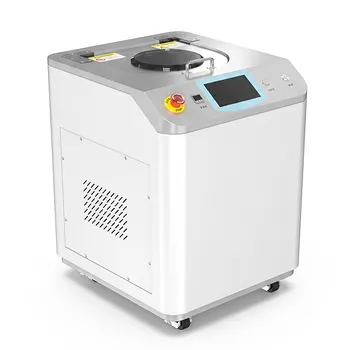
High Speed Vacuum Planetary Centrifugal Mixer and Defoamer for Industrial Paste Processing
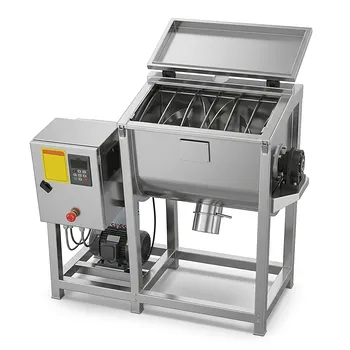
Horizontal Ribbon Mixer for Uniform Powder and Slurry Mixing
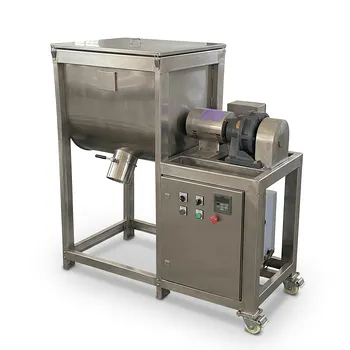
Horizontal Ribbon Mixer for Dry Powder and Slurry Blending
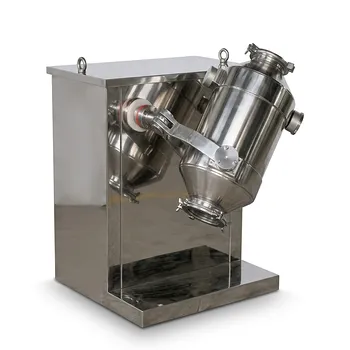
Three-Dimensional Motion Mixer for Laboratory Powder and Granule Blending
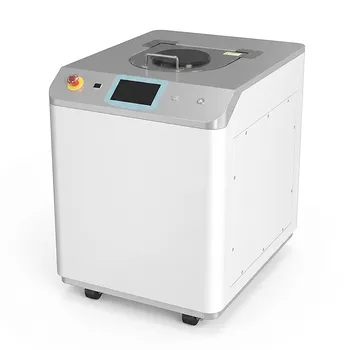
Industrial Planetary Centrifugal Vacuum Defoaming Mixer for High Viscosity Paste and Advanced Material Science
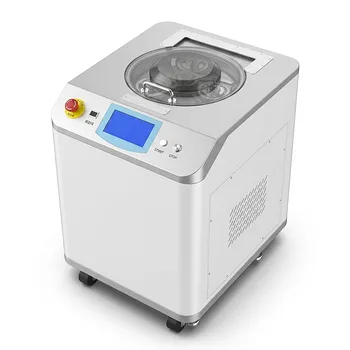
Dual Cup Vacuum Centrifugal Mixer Planetary Paste Defoaming Machine Industrial Material Processor
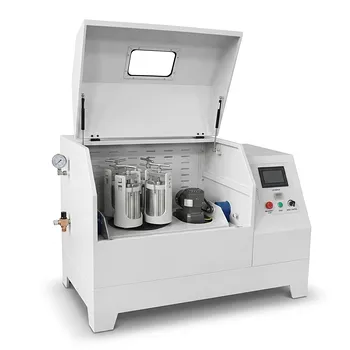
Vertical Production Planetary Ball Mill for High Throughput Powder Processing
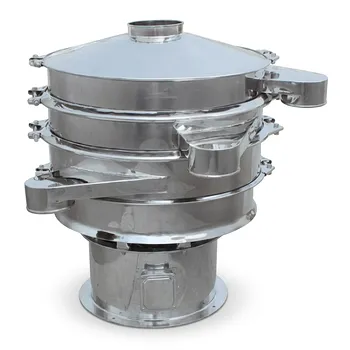
Stainless Steel Rotary Vibrating Sieve High Precision Circular Vibratory Separator Industrial Powder Grading Machine Multi Layer Sifting Equipment
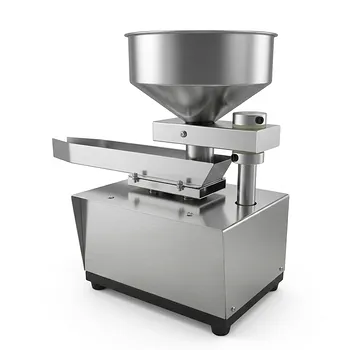
Automatic Vibrating Powder Feeder for Laboratory Material Processing Precision Vibratory Hopper Feeder for Granular and Powder Material Handling Industrial Grade Vibrating Tray Feeder for Consistent Material Sample Preparation
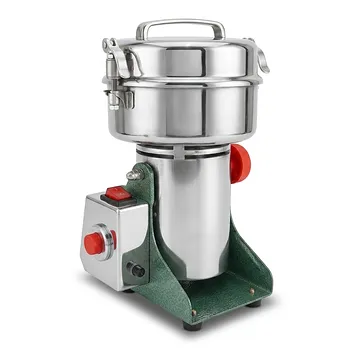
Small High-Speed Laboratory Grinder for Powder Processing
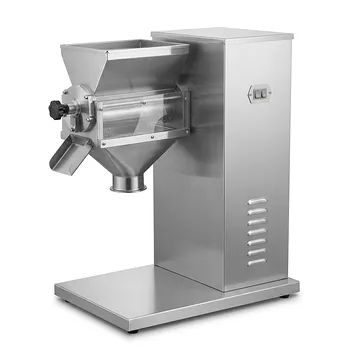
Small Swing Granulator Efficient Powder Granulation for Pharmaceutical Chemical Food Industries