The Silent Architect of Composite Performance: How Planetary Mixing Creates Flawless Al₂O₃-BN/EP Binders
Jul 02, 2026
The Trouble Starts Before the Fillers Go In
You carefully weigh out the aluminum oxide and boron nitride. You select the perfect grade of bisphenol F epoxy. You even add a silane coupling agent to bridge the organic–inorganic interface.
And still the composite underperforms. Thermal conductivity is lower than theory predicts. Flexural strength has a mysterious scatter. Under a microscope, you see the truth: tiny air pockets, resin-rich dead zones, and undispersed clumps of ceramic powder that never really bonded with the matrix.
The root cause isn’t the filler. It’s the invisible architecture of the binder system.
That binder isn’t just a liquid that carries particles around. It’s the structural nervous system of the composite. And if it’s not perfectly homogeneous and perfectly dense before the fillers arrive, no amount of sintering or post-curing can fully rescue it.
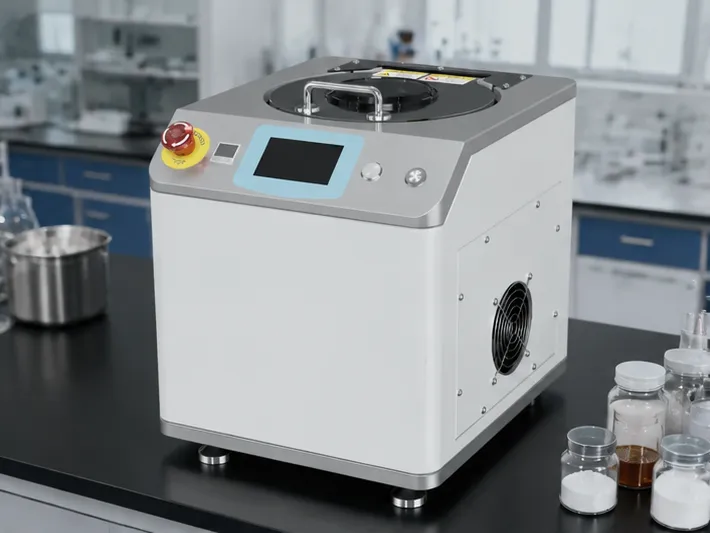
This is where the planetary gravity mixer stops being a convenience and becomes a strategic asset.
The Problem Isn’t Mixing. It’s Unmixing.
What Traditional Stirring Leaves Behind
Bladed mixers look aggressive. In reality, they tend to push high-viscosity fluids around in predictable, lazy circles. You get a well-mixed zone near the blade tip. And then you get stagnant regions—dead zones—where resin and curing agents barely interact.
With a silane coupling agent in the formula, that inconsistency becomes catastrophic. Its job is to sit precisely at the boundary between the epoxy matrix and a particle of Al₂O₃ or BN. If it pools in some places and is absent in others, the entire interface engineering strategy falls apart.
How a Planetary Mixer Thinks Differently
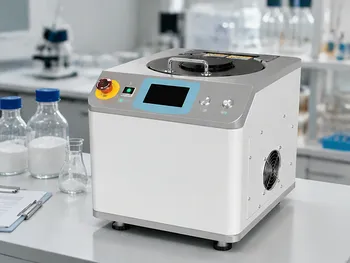
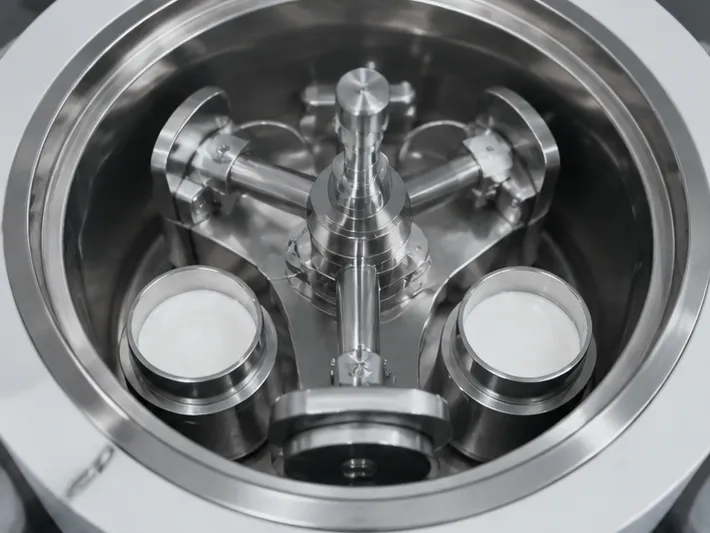
A planetary gravity mixer abandons the blade entirely. Instead, it rotates the container around two axes simultaneously.
- Revolution: The whole vessel orbits at high speed.
- Rotation: The vessel itself spins in the opposite direction.
This combination creates a shifting, high-shear field that reaches every gram of material. There are no corners to hide in. No quiet eddies where expensive silane can accumulate unreacted. The entire batch experiences the same mechanical history, which is the definition of batch-to-batch reliability.
Building the Matrix: Molecular-Level Dispersion, Not Just Stirring
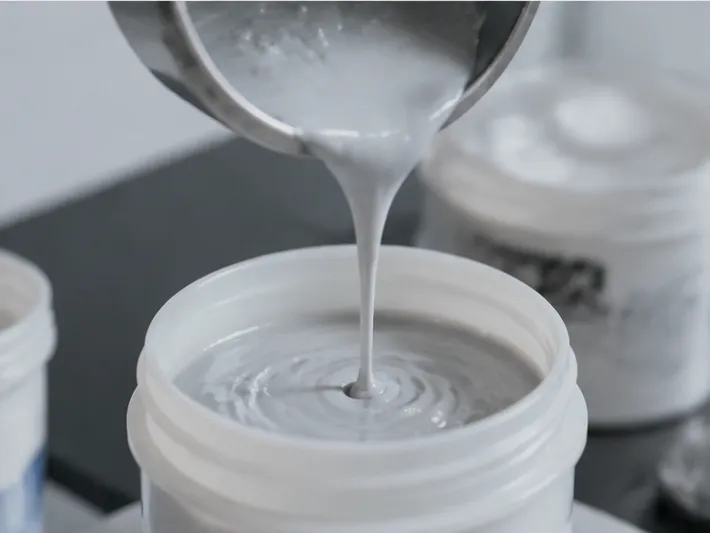
The epoxy, curing agent, and coupling agent need to meet as molecules, not as macroscopic layers. In a planetary mixer running at aggressive RPMs, the centrifugal forces push the continuous phase through a gauntlet of shear.
What that really means:
- Chemical homogeneity forms fast. Components that would need hours of gentle stirring reach molecular-level distribution in minutes.
- Wettability begins early. Even before the filler powders are added, the coupling agent is now evenly positioned to react with both the organic backbone and the inorganic surface it will later meet.
If you’ve ever struggled with inconsistent thermal conductivity across a single batch, this is one of the most common explanations: the binder itself wasn’t chemically uniform before the filler went in.
The Void Problem: Why Air Is a Thermal Insulator Disguised as Nothing
Micro-Bubbles Aren’t Just Defects. They’re Design Failures.
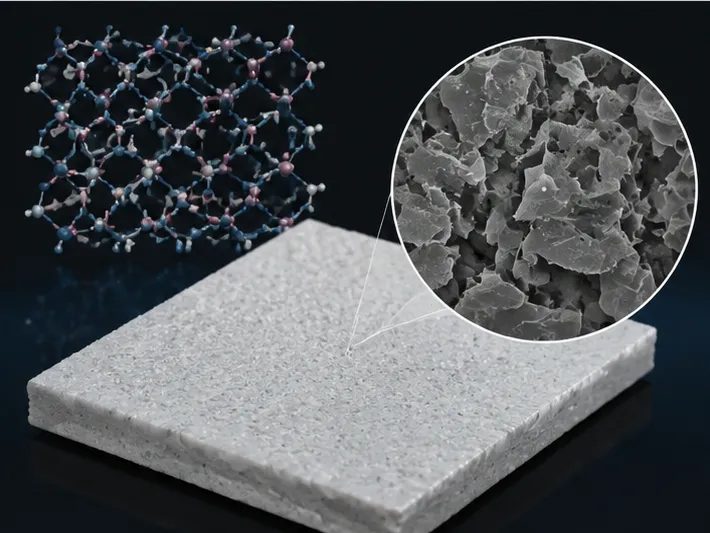
In Al₂O₃-BN/EP composites, thermal transport depends on continuous networks of ceramic particles touching one another or narrowly separated by resin. An air bubble measuring just 100 microns doesn’t just interrupt one pathway—it forces heat to detour through low-conductivity epoxy for a much longer distance.
Traditional vacuum chambers can remove some gas from the surface of a mixture. But inside a viscous epoxy loaded with nanoparticles, bubbles are mechanically trapped. They need a force that reaches inside the fluid and drives them out.
Centrifugal Defoaming as a Design Tool
A planetary gravity mixer naturally doubles as a defoaming mixer. The same centrifugal field that creates shear also creates a density gradient. Gas, having much lower density than epoxy, is driven inward toward the center of rotation, where it coalesces and escapes.
This isn’t just degassing. It’s void-proofing the binder before it ever touches a mold or a filler particle. The result is a matrix that is physically dense, thermally predictable, and mechanically tough—because micro-voids don’t exist to act as crack initiation sites.
The Hidden Enemy: Nanoparticle Agglomeration
BN and Al₂O₃ Don’t Want to Be Alone
Ceramic nanopowders have enormous surface area, and surface energy wants to minimize itself. The result is agglomerates: tight clusters of primary particles held together by van der Waals forces.
When these clusters meet epoxy, the resin wets the outside of the agglomerate but never penetrates its interior. In the final composite, that cluster behaves like a single large particle with poor interfacial bonding—exactly the opposite of what you want from a nanostructured filler.
Shear Stress Without Blades
The planetary mixer applies shear stress across the entire batch volume, not just at a blade tip. As the flow field continuously reorients, agglomerates are repeatedly stretched and broken apart.
Because there is no blade, there’s also no risk of contaminating the batch with metallic wear debris—a non-trivial concern in electronic packaging and dielectric applications where ionic contamination matters.
What the Trade-Offs Teach Us
Heat Generation: The Unavoidable Cost of Speed
High shear means friction. Friction means heat. For epoxy systems, this is a design constraint: mix too aggressively for too long, and you risk triggering premature curing or degrading the coupling agent.
The solution isn’t less mixing; it’s smarter mixing.
| Constraint | What It Means for Your Process |
|---|---|
| Temperature rise | Choose equipment with cooling jackets or pulse-cooling cycles. Monitor batch temperature in real time. |
| Viscosity evolution | Understand that as wetting progresses, the suspension’s rheology changes. Adjust RPM profiles accordingly. |
| Batch size vs. uniformity | Larger batches have steeper shear gradients. Validate consistency at scale, not just benchtop. |
Scale and Consistency Are Different Goals
A benchtop planetary mixer can deliver laboratory-scale perfection. But when you move to production volumes, the same RPM doesn’t generate the same shear field across a larger vessel. Constant linear shear rate requires deliberate parameter translation.
The manufacturers who get this right treat mixing energy per unit mass as the controlled variable, not just timer and speed dials.
Choosing Your Mixing Strategy by Objective
Your product goal should decide the mixing protocol—not the other way around.
- If you need maximum thermal conductivity: Prioritize vacuum defoaming. A void-free matrix is the only way to build uninterrupted heat conduction pathways through the Al₂O₃-BN network.
- If mechanical integrity is your KPI: Focus on the high-shear dispersion phase. Uniform distribution of the silane coupling agent will turn a weak filler–resin interface into a load-transferring bridge.
- If you’re handling high-viscosity, high-filled systems: Insist on bladeless centrifugal mixing. It’s the only approach that reliably eliminates dead zones in bisphenol F epoxy loaded with platelet-shaped BN particles.
These aren’t three different pieces of equipment. They’re three different process profiles on the same planetary gravity mixer—once you treat it as a precision instrument, not just a kitchen appliance for the lab.
What You’re Really Buying When You Upgrade Mixing
It’s tempting to see a planetary mixer as a line item on a capital equipment budget. But in the logic of material science, it’s a foundational control variable.
When your binder system is:
- Chemically homogeneous at the molecular level,
- Physically dense without micro-voids,
- And de-agglomerated down to primary particles,
then every other variable in your composite design becomes more predictable. Filler loading. Curing kinetics. Thermal impedance. You’re no longer debugging a process shadowed by invisible mixing defects.
And that changes the psychology of R&D. Instead of wondering “is this data real or a mixing artifact,” you trust the matrix. You iterate faster. You publish cleaner results.
Building the Complete Workflow
That same philosophy—control the entire sample preparation chain—applies well beyond the mixer. In our laboratories, the planetary gravity mixer sits inside a seamless sequence:
Powder Preparation
- Jaw and roll crushers for primary size reduction.
- Liquid nitrogen cryogenic grinders for heat-sensitive materials.
- Planetary ball mills, jet mills, and disc mills for fine and ultrafine grinding.
Classification and Blending
- Vibratory and air-jet sieve shakers with precision test sieves for exact particle size cuts.
- Powder mixers that pre-homogenize multi-component filler systems before they meet the resin.
Compaction and Shaping
- Manual and automatic hydraulic lab presses for green body formation.
- Cold Isostatic Presses (CIP) and Warm Isostatic Presses (WIP) for defect-free, high-density compacts.
- Vacuum hot presses for final densification under controlled atmosphere and temperature.
Every step—from the first crush to the final press—is an opportunity to either preserve or destroy the structural perfection that the planetary mixing step built.
Where the Engineering Romance Lives
There’s a quiet elegance in getting something as seemingly simple as mixing exactly right. No visible moving blade. Just a container spinning through a pattern so precise that every molecule of epoxy, every silane coupling agent, and every ceramic particle sees the same mechanical story.
That kind of uniformity doesn’t just improve a data sheet. It makes materials behave like theories predict they should. And for an engineer or a researcher, that’s the moment when the work stops fighting you and starts flowing.
We provide that precision across the entire sample preparation workflow—from crushing and milling to mixing, degassing, and final compaction. If you’re developing Al₂O₃-BN/EP composites, or any advanced material where the matrix defines the margin between failure and performance, let’s talk about the mixing strategy that makes everything else possible.
Quick Links
Suggested Products
High Efficiency Vacuum Planetary Centrifugal Mixer and Defoaming Machine for Industrial Material Research and Precise Laboratory Powder Dispersion High Viscosity Planetary Centrifugal Vacuum Mixer for Material Defoaming and Uniform Mixing High Viscosity Planetary Centrifugal Mixing and Vacuum Defoaming Machine for Laboratory Material Preparation Industrial Planetary Centrifugal Vacuum Defoaming Mixer for High Viscosity Paste and Advanced Material Science Industrial Planetary Centrifugal Vacuum Defoaming Mixer for High Viscosity Paste and Powder HomogenizationFurther Reading
The Hidden Disorder in Your Battery Slurry—and the Precision Tool That Destroys It The Invisible Architect of Failure: Why a Bubble in Your Resin-GelMA Mix Casts a Shadow on Your Entire Print The 3-Minute Transformation: How Mixing Speed Reveals the Hidden Architecture of Next-Gen Batteries When Two Extra Minutes Define a Skyscraper: The Precision Mixing Protocol That Nanomaterials Demand The Micrometer Trigger: Why a Laboratory Powder Mixer Defines Effervescent Tablet Success
PowderPreparation
Last updated on May 15, 2026
Related Products
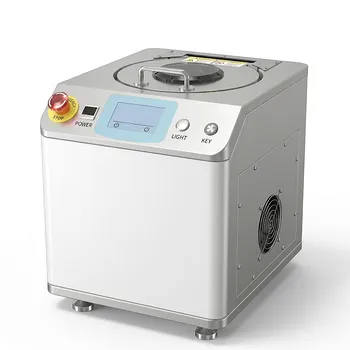
High Efficiency Vacuum Planetary Centrifugal Mixer and Defoaming Machine for Industrial Material Research and Precise Laboratory Powder Dispersion
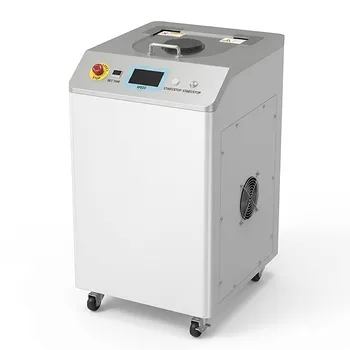
High Viscosity Planetary Centrifugal Vacuum Mixer for Material Defoaming and Uniform Mixing

High Viscosity Planetary Centrifugal Mixing and Vacuum Defoaming Machine for Laboratory Material Preparation

Industrial Planetary Centrifugal Vacuum Defoaming Mixer for High Viscosity Paste and Advanced Material Science
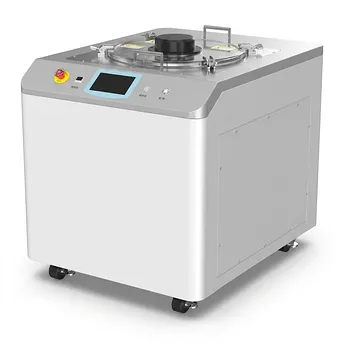
Industrial Planetary Centrifugal Vacuum Defoaming Mixer for High Viscosity Paste and Powder Homogenization

High Speed Vacuum Planetary Centrifugal Mixer and Defoamer for Industrial Paste Processing

Dual Cup Vacuum Centrifugal Mixer Planetary Paste Defoaming Machine Industrial Material Processor
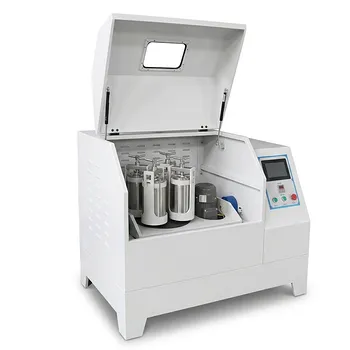
360° Rotating Omnidirectional Laboratory Planetary Ball Mill for Homogeneous Ultra-Fine Grinding and Mixing
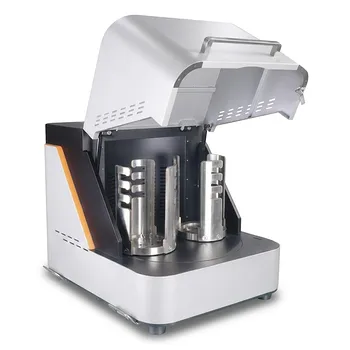
High Energy Laboratory Planetary Ball Mill for Nano Grinding and Colloidal Mixing of Hard and Brittle Materials
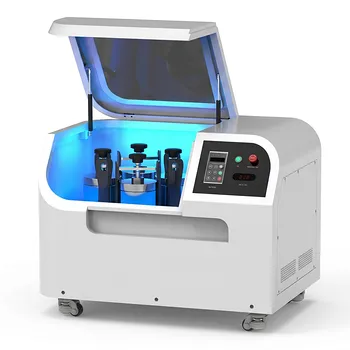
Planetary Ball Mill 12L
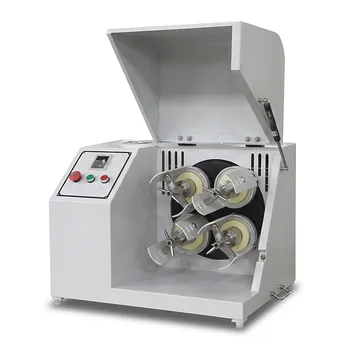
Horizontal Light Duty Planetary Ball Mill for Laboratory Sample Preparation
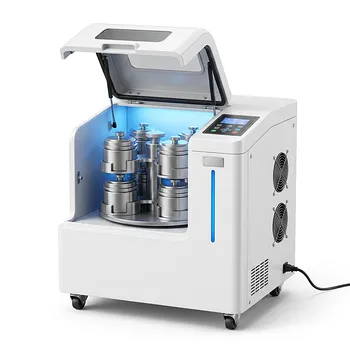
High Energy Omnidirectional Planetary Ball Mill 20L
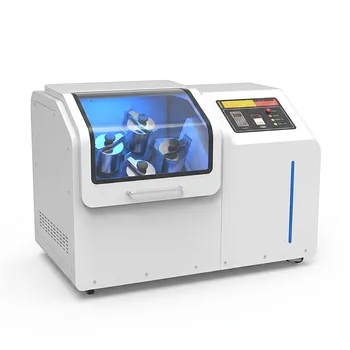
High Energy Omnidirectional Planetary Ball Mill 16L
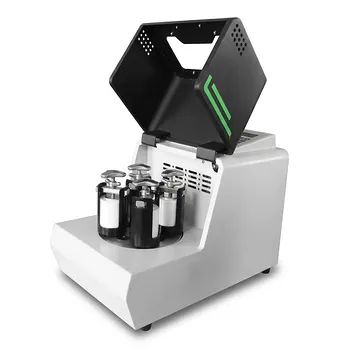
Miniature Planetary Ball Mill with Vacuum Grinding and High Efficiency for Laboratory Sample Preparation
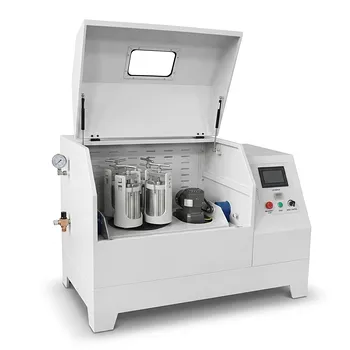
Vertical Production Planetary Ball Mill for High Throughput Powder Processing
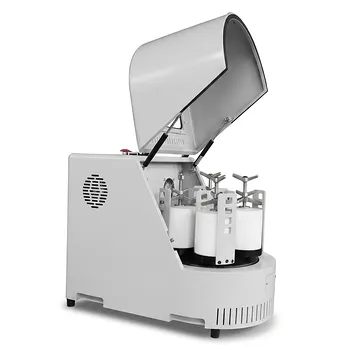
Vertical Semi Circular Planetary Ball Mill for Laboratory Precision Grinding
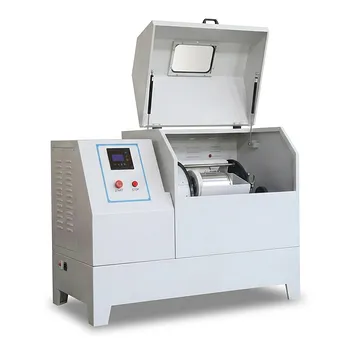
Heavy Duty Horizontal Planetary Ball Mill for Efficient Industrial Grinding and Sample Preparation

High Energy Planetary Ball Mill for Nano Scale Grinding and Mechanical Alloying
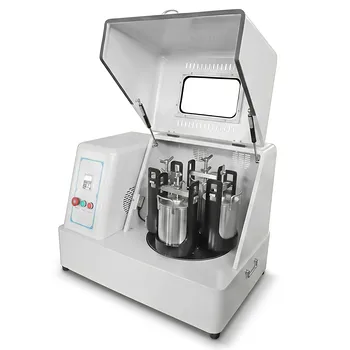
Vertical Square Planetary Ball Mill for Laboratory Sample Preparation and Nanoscale Grinding