The Most Important Mixer in Your Lab Isn’t a Mixer. It’s an Insurance Policy Against Defects.
Jun 08, 2026
The Flaw That Hides in Plain Sight
The researcher stares at the SEM image. The electrode cross-section, intended to be a dense highway for ions, looks like a lunar landscape. Pores. Cracks. A map of failure.
The materials were right. Lanthanum Strontium Manganite (LSM), a cathode workhorse. A nano-CeO₂ additive for ionic conductivity. The ratio was precise, the purity verified. Yet the structure is riddled with voids.
The problem wasn't on the chemical specification sheet. It was inside the container during mixing.
We tend to think of mixing as a solved problem. Turn a blade. Apply some energy. Wait long enough. Homogeneity, we assume, is just a function of time. But when you’re building a hetero-coagulated system—a composite of particles whose sizes differ by orders of magnitude—time becomes the enemy, and the blade becomes a liability.
You need a different kind of physics entirely.
The Nano/Micron Paradox: Two Particles, Two Sets of Rules
An LSM-CeO₂ slurry isn't a single fluid. It’s a suspension of two distinct populations trying to find each other.
The first population consists of sub-micron LSM grains. They are heavy. Gravity wants them to settle. Given enough time in a low-shear environment, they’ll form a sediment layer at the bottom of your container, exactly where you don’t want them.
The second population is the nano-CeO₂ additive. These particles are so small that gravity is almost irrelevant to them. Their world is governed by surface forces—van der Waals attractions that pull them into stubborn, micron-sized agglomerates. These clusters don't easily break apart. They act like oversized boulders that create stress concentrations and porous voids during sintering.
Traditional mixing addresses one problem while worsening the other.
A magnetic stirrer can keep the LSM suspended if you spin it fast enough, but it applies almost no shear to break the CeO₂ agglomerates. A ball mill applies high crushing force but offers no vacuum capability, potentially grinding contaminants from the media into your high-purity slurry over hours of processing.
The paradox: you need high local shear to separate the nano-clusters, but you need broad, volumetric movement to keep the micron grains suspended. These two forces rarely coexist in the same machine.
The Physics of Survival: Rotation and Revolution
A planetary centrifugal mixer doesn't use a blade. It doesn’t press media into the paste. Instead, it throws the container itself into a complex orbital dance.
The cup revolves around a central axis, much like a planet orbits the sun. Simultaneously, it rotates on its own axis. This combination generates two distinct force fields within the material.
Revolution creates strong centrifugal force—typically hundreds of Gs—that drives the heavier LSM particles through the viscous solvent. It is an active, violent suspension. The material cannot settle because the effective gravity is constantly shifting direction.
Rotation creates high-shear flow planes at the molecular level. As the viscous binder and solvent layers slide past each other under these extreme forces, nano-CeO₂ agglomerates are torn apart. Not crushed, but internally sheared until the primary nanoparticles are liberated.
One motion fights sedimentation. The other fights agglomeration. They happen simultaneously, in minutes, not hours.
Why Mechanical Purity Matters More Than You Think
There’s a subtlety here that often escapes the cost-benefit analysis.
When a blade mixer operates inside a slurry of abrasive ceramic particles, it wears. Microscopic fragments of stainless steel or polymer enter the batch. For a structural ceramic, this might be tolerable. For an electrode material where ionic conductivity depends on precise valency, metallic contamination is a performance death sentence.
A bladeless mixer eliminates this vector entirely. The cup is the only contact surface. 100% of the material experiences the same force profile—no “dead zones” near the container walls where low-shear pockets allow agglomerates to survive.
When you’re developing a material whose entire function depends on a defect-free interface between LSM and CeO₂, that uniformity isn't a luxury. It’s the entire point.
The Hidden Enemy: A Bubble is a Void Waiting to Happen
Even if the particles are perfectly dispersed, the slurry can still fail.
Most viscous mixing processes entrain air. The slurry becomes a foam of micro-bubbles, each one a future pore. During coating and sintering, these gas pockets expand and contract, leaving behind a network of cracks that destroy ionic continuity.
The elegant solution is to integrate defoaming directly into the mixing cycle. A planetary centrifugal mixer with a vacuum option doesn't just prevent bubbles—it actively removes gas from the paste under centrifugal load. The bubbles, being low-density, are driven to the center of rotation and evacuated while the high-shear mixing continues to refine the particle dispersion.
The result is a slurry with structural continuity that survives the thermal stresses of sintering intact.
The Thermal Trade-off
Let’s be honest about the limitation.
High-shear forces generate frictional heat. When you’re tearing apart CeO₂ agglomerates in a viscous NMP-based binder system, the temperature will rise. Some materials are sensitive to this. Binders can gel prematurely. Solvents can evaporate.
This isn’t a design flaw—it’s physics. The same energy that breaks agglomerates heats the fluid. The smart operator accounts for this. Step-mixing protocols, where high-shear pulses alternate with cooling periods, preserve the dispersion quality while controlling thermal build-up. Some systems integrate active cooling. You must know your material’s thermal ceiling before you start.
The point isn’t that planetary mixing has no trade-offs. The point is that the trade-offs are knowable and controllable, unlike the random defects that plague blade-mixed or ball-milled slurries.
What Drives Your Performance Target?
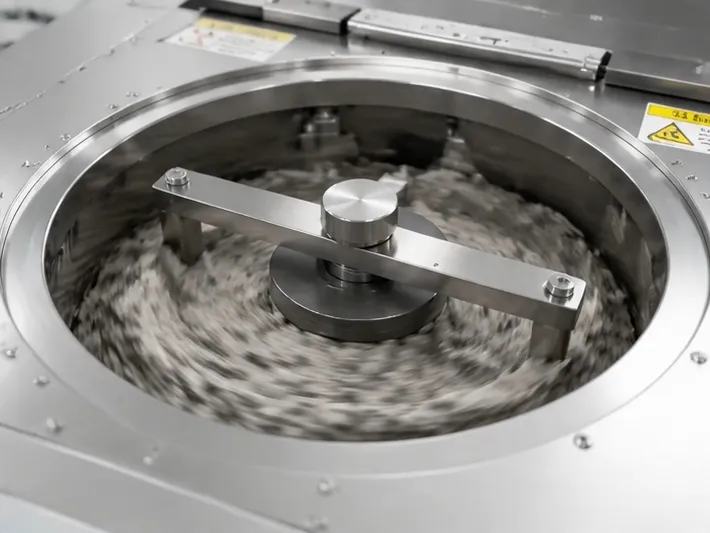
The mixing parameters you choose are a direct reflection of your development priorities.
| Primary Goal | Critical Mixing Parameter | The Physical Reason |
|---|---|---|
| Maximize Electrode Density | Vacuum level + Revolution Speed | High centrifugal force packs LSM particles tightly; vacuum eliminates interstitial voids |
| Nano-Particle Integration | Rotation Speed (Shear) | High shear is the only force capable of separating nano-CeO₂ agglomerates |
| Substrate Adhesion | Mixing Time (Rheology Control) | Optimal viscosity ensures the slurry flows smoothly but bonds firmly to the electrolyte |
| Material Purity | Container Material + Bladeless Design | Eliminates wear debris and cross-contamination from previous batches |
You don’t optimize for everything at once. You optimize for what your electrode design demands most critically. The planetary mixer simply gives you the independent levers to pull.
The Deeper Logic of the Workflow
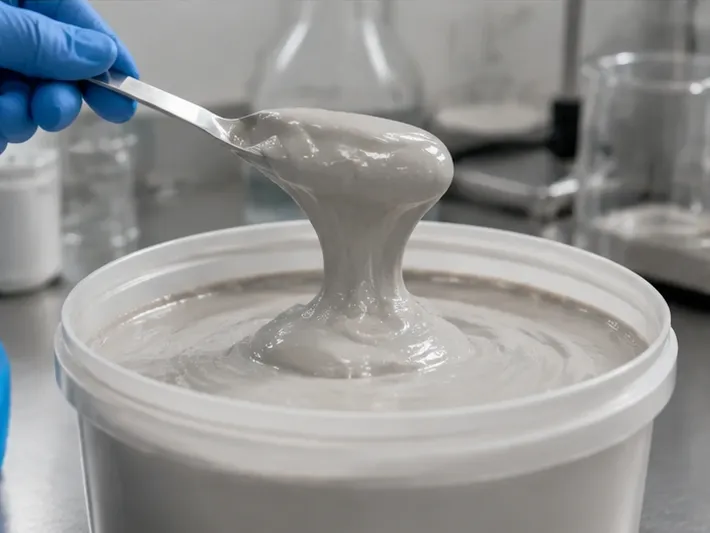
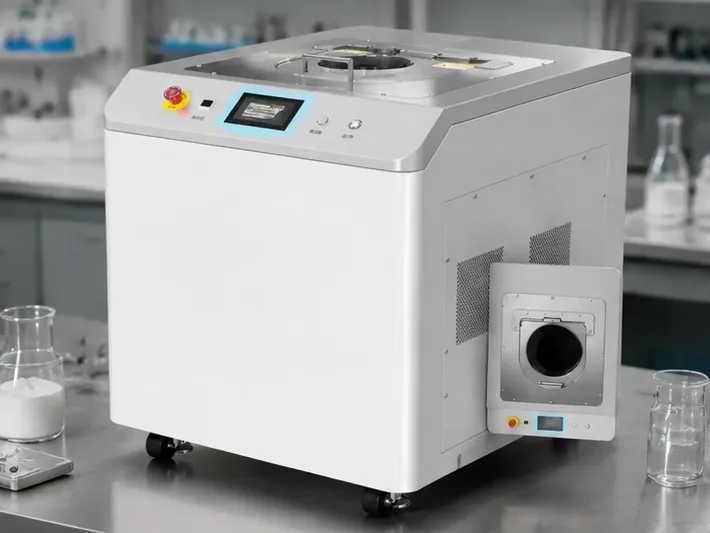
A planetary centrifugal defoaming mixer is not an isolated gadget. It is the central node in a materials development workflow. Upstream, your milling and particle sizing determine the raw powder’s initial dispersion. Downstream, your compaction—perhaps a cold isostatic press—transforms the coated layer into a structurally unified solid.
If the slurry preparation stage fails, everything downstream inherits that failure. The finest pressing equipment cannot close pores that were mixed into the slurry as air bubbles. The most sophisticated sintering profile cannot repair a coating where the nano-additive was distributed unevenly.
Investing in the mixing stage is an investment in the yield of every subsequent process step.
The High-Stakes Elegance of Making What Can’t Fail
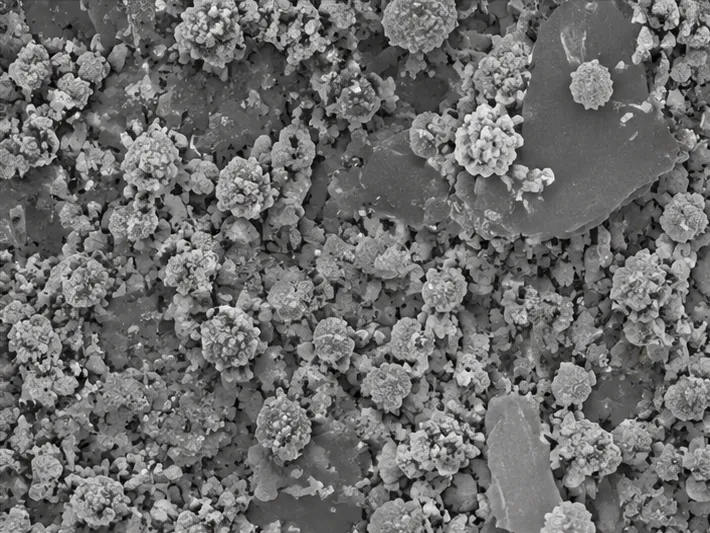
There’s a particular beauty in solving a problem before it becomes visible.
When a solid oxide fuel cell operates for thousands of hours without delamination, nobody sees the uniform dispersion of CeO₂ on the LSM grains. When the electrochemical impedance spectrum remains stable cycle after cycle, nobody applauds the absence of mixing-induced contaminants.
The success is silent. The material just works.
That silence is the product of engineering choices made early in the process—choices about how force is applied, how gas is removed, and how purity is preserved. It’s a reminder that in materials science, the most critical instrument in your lab might not be the one that measures performance, but the one that prevents failure before you even have something to measure.
Achieving this level of defect-free precision in your electrode slurries requires more than just understanding the physics—it demands equipment engineered specifically for the task. We provide complete laboratory sample preparation solutions for material science, specializing in powder processing and compaction workflows that preserve the integrity of your most critical samples. From planetary centrifugal defoaming mixers and planetary ball mills to Cold/Warm Isostatic Presses (CIP/WIP) and precision sieve shakers, our systems are designed to give you absolute control over dispersion, density, and purity at every stage. Contact Our Experts to find the precise equipment configuration your research demands.
Quick Links
Suggested Products
Industrial Planetary Centrifugal Vacuum Defoaming Mixer for High Viscosity Paste and Powder Homogenization Industrial Planetary Centrifugal Vacuum Defoaming Mixer for High Viscosity Paste and Advanced Material Science High Viscosity Planetary Centrifugal Vacuum Mixer for Material Defoaming and Uniform Mixing Dual Cup Vacuum Centrifugal Mixer Planetary Paste Defoaming Machine Industrial Material Processor High Viscosity Planetary Centrifugal Mixing and Vacuum Defoaming Machine for Laboratory Material PreparationFurther Reading
The Hidden Disorder in Your Battery Slurry—and the Precision Tool That Destroys It The Invisible Architect of Failure: Why a Bubble in Your Resin-GelMA Mix Casts a Shadow on Your Entire Print The 3-Minute Transformation: How Mixing Speed Reveals the Hidden Architecture of Next-Gen Batteries When Trace Elements Dictate Strength: Mastering the Mixing of NiTiZn Alloys for Additive Manufacturing The Silent Architect of Composite Performance: How Planetary Mixing Creates Flawless Al₂O₃-BN/EP Binders
PowderPreparation
Last updated on May 15, 2026
Related Products
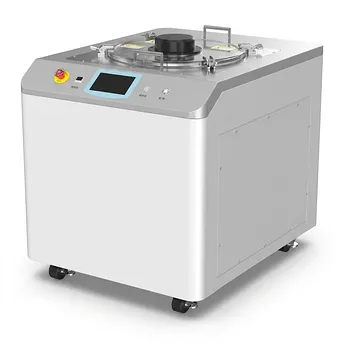
Industrial Planetary Centrifugal Vacuum Defoaming Mixer for High Viscosity Paste and Powder Homogenization
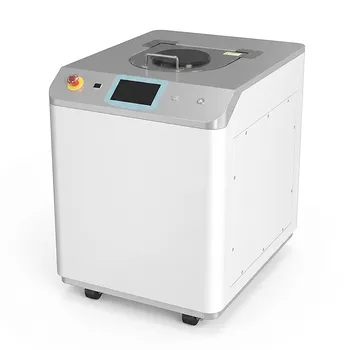
Industrial Planetary Centrifugal Vacuum Defoaming Mixer for High Viscosity Paste and Advanced Material Science
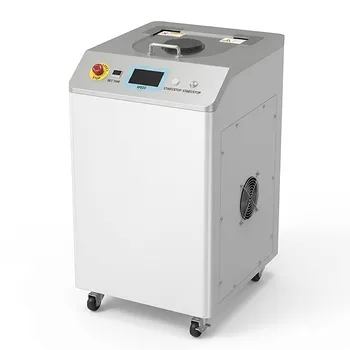
High Viscosity Planetary Centrifugal Vacuum Mixer for Material Defoaming and Uniform Mixing
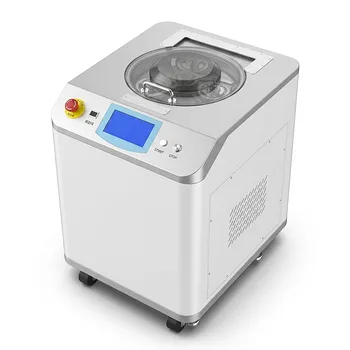
Dual Cup Vacuum Centrifugal Mixer Planetary Paste Defoaming Machine Industrial Material Processor
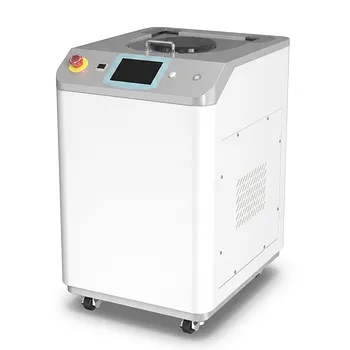
High Viscosity Planetary Centrifugal Mixing and Vacuum Defoaming Machine for Laboratory Material Preparation
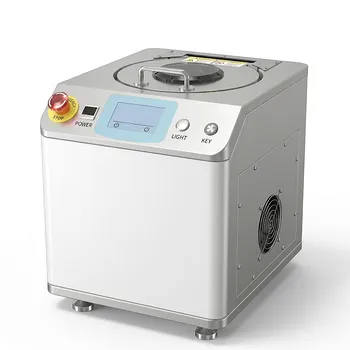
High Efficiency Vacuum Planetary Centrifugal Mixer and Defoaming Machine for Industrial Material Research and Precise Laboratory Powder Dispersion
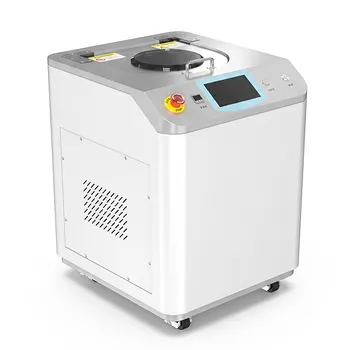
High Speed Vacuum Planetary Centrifugal Mixer and Defoamer for Industrial Paste Processing
非介入式材料均质机真空脱泡行星搅拌高粘度混合设备
Inclined Mixer for Homogeneous Powder Blending and Grinding
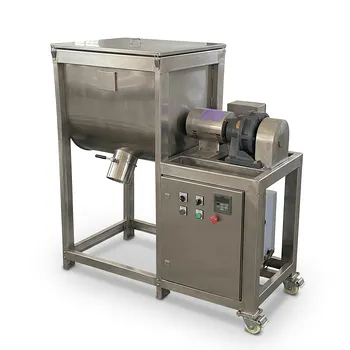
Horizontal Ribbon Mixer for Dry Powder and Slurry Blending
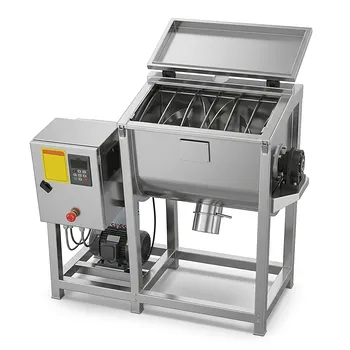
Horizontal Ribbon Mixer for Uniform Powder and Slurry Mixing
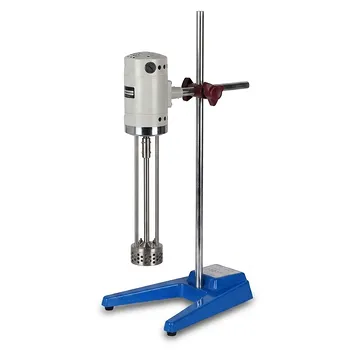
High Shear Laboratory Emulsifier for Mixing and Homogenization
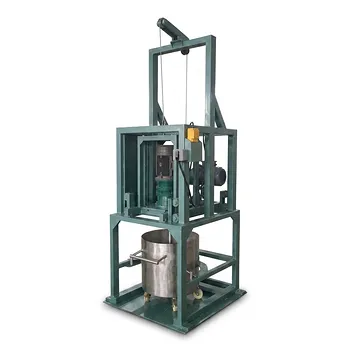
High-Speed Simple Disperser for Efficient Mixing, Dispersion, and Emulsification
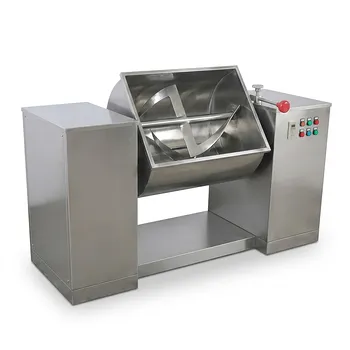
Horizontal Trough Mixer for Uniform Powder and Paste Blending
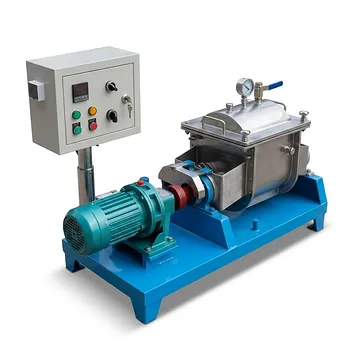
Industrial Vacuum Kneader for High-Viscosity Silicone, Rubber, and Compound Mixing
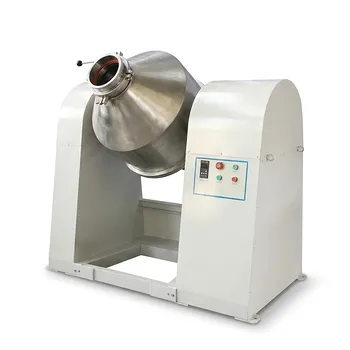
Industrial Double Cone Mixer for Powder Blending and Homogeneous Mixing
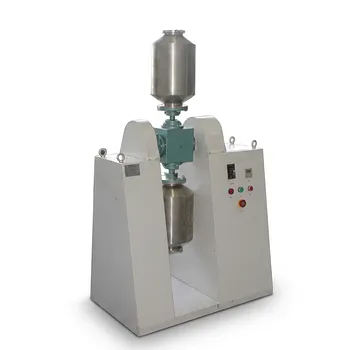
Multi Dimensional Universal Mixer for High Uniformity Powder Blending
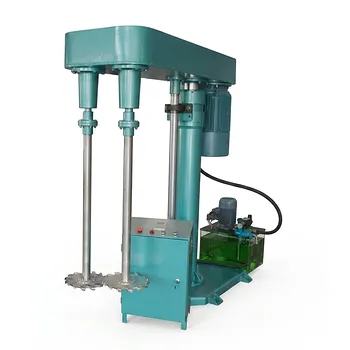
Hydraulic Double Shaft Disperser for High Viscosity Liquid Mixing and Dispersion
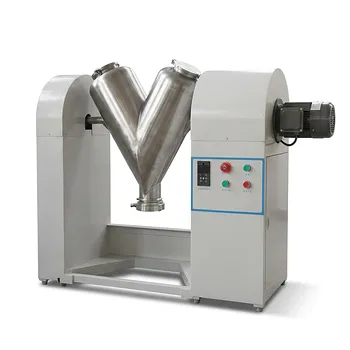
V-Type Powder Mixer for Uniform Blending of Dry Powders and Granules