The Hidden Disorder in Your Battery Slurry—and the Precision Tool That Destroys It
Jun 01, 2026
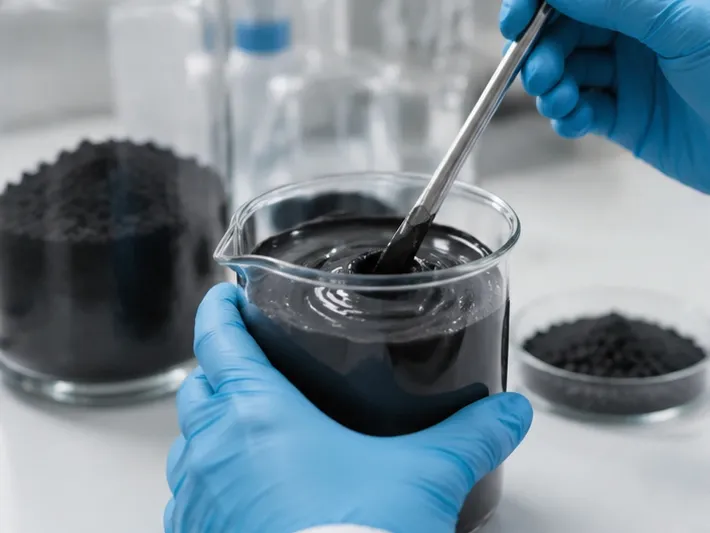
The moment a slurry fails
A battery researcher stares at a coated electrode under a microscope. Pinholes. Uneven thickness. Agglomerates of carbon black hiding between larger hard carbon particles, killing conductivity in patches too small to see with the naked eye. The slurry looked perfect in the beaker. It flowed. It coated. But inside, invisible gas pockets and unwetted clusters of conductive additive had already written the failure story in invisible ink.
This is the quiet heartbreak of anode development.
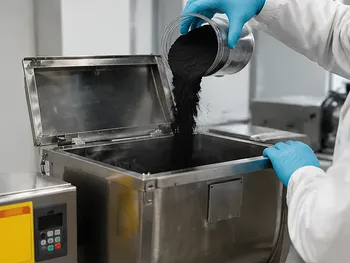
You can fix the chemistry. You can choose the perfect biomass-derived hard carbon. You can optimize the electrolyte. But if your slurry carries microscopic disorder—bubbles, agglomerates, metallic contamination—the cell will never reach its theoretical capacity.
The problem isn’t the materials. It’s the mixing.
And the solution is a machine that doesn’t touch the slurry at all.
Why traditional mixing hides failure
Most people think of mixing as brute force. A paddle spins. Particles move. Done.
In high-viscosity electrode slurries, that mental model breaks down.
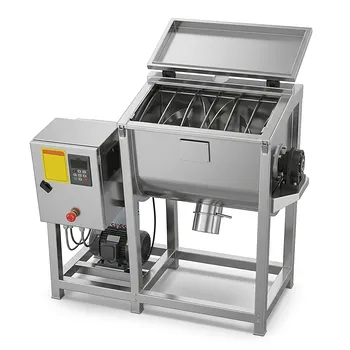
A traditional blade mixer creates “dead zones” near the vessel walls and corners. It introduces air. It adds shear that can fracture fragile hard carbon particles, creating fresh, jagged surfaces that consume electrolyte in unwanted side reactions. The blade itself wears, shedding microscopic metal into your anode material—a contamination disaster no one measures until capacity fades early in cycle life.
The slurry looks uniform when it’s not. That’s the psychology of the problem: visible homogeneity masks microscopic failure.
To solve this, you need to stop pushing particles around and start applying force fields that act on every single particle simultaneously. This is where a planetary centrifugal mixer enters the scene—not as a better blender, but as a physics engine that rewrites the rules of slurry preparation.
What a planetary centrifugal mixer actually does
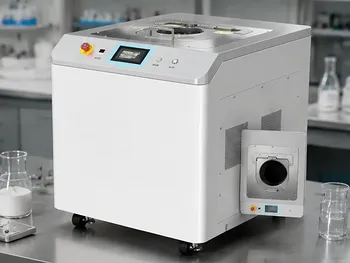
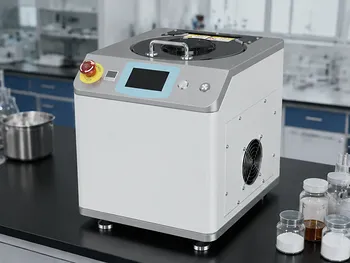
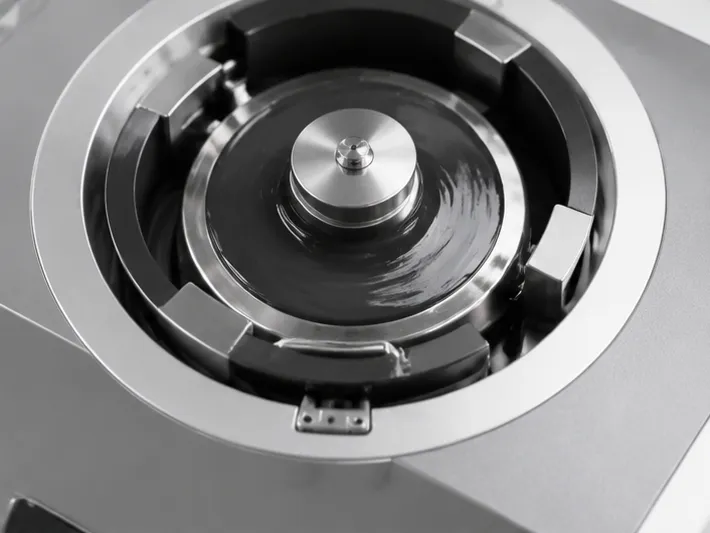
A planetary centrifugal mixer performs three core functions simultaneously: high-energy dispersion, integrated degassing, and non-contact homogenization. There are no blades. No paddles. Only controlled dual-axis motion—revolution and rotation—that subjects every gram of material to identical forces.
Function 1: Breaking agglomerates at the nano-scale
Hard carbon and conductive carbon black love to clump. These agglomerates create local islands of high resistance that block electron pathways. In charge-discharge cycles, those spots breed uneven lithium plating and early failure.
The mixer’s dual-axis motion generates intense internal shear forces directly inside the slurry. These forces pull agglomerates apart from every direction—no mechanical impact, just acceleration and counter-acceleration—until carbon black particles separate and wrap around hard carbon particles. The result is a nano-scale conductive network that forms without destroying particle morphology.
Think of it as millions of tiny collisions where every particle finds its place, not because a blade smacked it, but because physics demanded it.
Function 2: Removing the bubbles you can’t see
Trapped air in slurry behaves like a time bomb. During coating, a micro-bubble becomes a pinhole. During calendaring, that pinhole becomes a crack. During cycling, that crack becomes a hotspot for lithium plating.
Centrifugal force solves this elegantly. The heavier slurry phase is forced outward while lighter gas migrates inward toward the center, where it collapses. The mixer performs simultaneous mixing and degassing, so bubbles never survive to reach the coater. No separate vacuum chamber. No waiting. Just clean, dense slurry with stable viscosity and flow properties.
Function 3: The purity of not touching
Hard carbon anodes for next-generation batteries live or die by purity. A few parts per million of metallic contamination from blade wear can catalyze electrolyte decomposition and shorten cycle life by hundreds of cycles.
Because the mixing force is transferred through the container walls—not through a rotating shaft in direct contact with the slurry—there is zero contamination risk from wear parts. The materials see only the chemistry you designed, not the machine you bought.
This is where the romantic side of engineering shows: a clean room of forces acting on invisible particles, preserving their integrity, guarding their electrochemical destiny. Nothing added. Nothing destroyed. Only order imposed.
The hard limits you still have to manage
No technology is perfect. A planetary centrifugal mixer has trade-offs that any honest engineer will map before they scale.
Heat buildup in high-viscosity systems
Kinetic energy becomes heat. In highly viscous hard carbon slurries using certain binders, the temperature can rise during extended mixing. Temperature-sensitive components—some PVDF-based binders, certain solvents—can degrade if the process isn’t monitored. The solution is pulsed mixing cycles or active cooling accessories that remove heat while maintaining dispersion quality.
Batch size versus throughput
These mixers prioritize precision over volume. A single unit may handle 200 grams to 2 kilograms, not 200 liters. That’s fine for R&D and pilot lines, but high-volume production requires a scale-out strategy—multiple units running in parallel, each producing identically high-quality slurry. The trade-off is real, but the consistency gain often justifies the capex.
The bigger picture: from powder to electrode
Perfect mixing is only one link in the chain. If the hard carbon powder arrives with inconsistent particle size, or if the precursor isn’t milled properly, even a flawless mixing step can’t rescue the anode.
That’s where a complete laboratory sample preparation workflow becomes essential. It starts with jaw crushers and roll crushers for coarse pre-crushing of hard carbon precursors. Then moves to planetary ball mills, jet mills, or disc mills for fine grinding and mechanical activation. For heat-sensitive or oxidation-prone materials, liquid nitrogen cryogenic grinders preserve the structural integrity that later determines lithium storage capacity.
After milling, vibratory sieve shakers and air-jet sieves with precision test sieves ensure the particle size distribution matches your design. A narrow particle size distribution means more predictable slurry rheology and better coating uniformity.
Then comes the mixing step—the planetary centrifugal mixer with its defoaming capability—followed by powder blending in specialized mixers if pre-dry mixing is required.
Finally, the prepared powder or slurry goes to pressing: XRF pellet presses for quality control analysis, standard lab presses for electrode fabrication, or advanced systems like Cold Isostatic Presses (CIP) and Warm Isostatic Presses (WIP) to densify powder compacts with uniform pressure from all directions. For high-temperature processing, hot presses and vacuum hot presses consolidate materials under controlled atmospheres.
Every step—crushing, milling, sieving, mixing, pressing—either preserves or destroys the electrode’s potential. The beauty of a complete solution is that the same quality philosophy applies end to end. No handoff between incompatible machine paradigms. No black boxes where the powder goes in and hope comes out.
The psychology of trusting your slurry
Why do battery engineers fall in love with planetary centrifugal mixing? Because it eliminates a cognitive burden.
With traditional mixing, you never fully know if a coating defect came from the slurry, the coater, the drying profile, or the blade wear. You chase ghosts. You run the same experiment five times and get four different results.
With a blade-free, dual-axis system, the mixing step becomes deterministic. The forces are calculable. The process is repeatable. You can vary rotation speed, ratio, and time—and map outcomes directly to electrochemical results.
That clarity is rare in materials R&D. It’s what turns a craft process into a reproducible science.
You stop guessing, and you start trusting your slurry. That trust scales from 10 grams to 10 kilograms to 10 tons, because the physics don’t change—only the number of units running in parallel.
Optimize for what matters
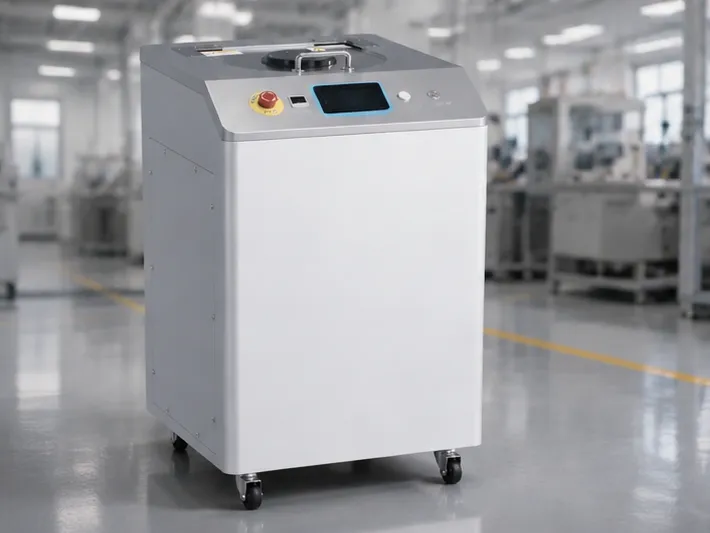
The mixer’s settings are levers you pull based on what’s failing:
- If your bottleneck is conductivity, push high rotation speeds to maximize shear and wrap carbon black around hard carbon particles until you see impedance drop.
- If your bottleneck is surface quality, extend the lower-speed degassing phase until the slurry flows without pinholes under the doctor blade.
- If your bottleneck is purity, lean into the non-contact design—replace metal containers with chemically resistant liners, and stop worrying about blade wear entirely.
These aren’t abstract settings. They’re answers to the specific failure modes that keep you awake at night.
Where the engineer’s mind meets the machine’s soul
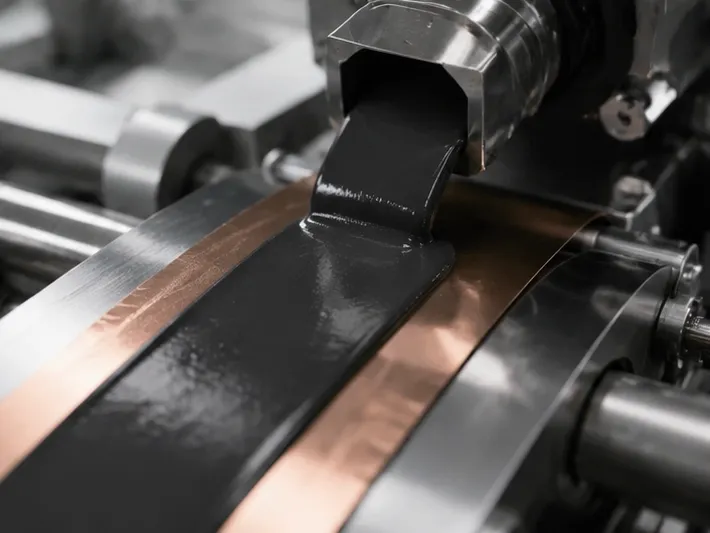
There’s a quiet satisfaction in watching a degassed, homogeneous slurry coat perfectly onto copper foil, dry into a pristine black film, and test out at near-theoretical capacity. It didn’t happen by luck. It happened because forces you controlled—revolution, rotation, centrifugal acceleration—organized chaos into structure.
A planetary centrifugal mixer is the centerpiece of that story, but the story starts earlier, with powder preparation and size reduction, and ends later, with pressing and densification. When the whole workflow is designed for consistency, the result isn’t just a good electrode. It’s a predictable platform for the next breakthrough.
That’s the romance of it: particles so small they’re invisible, forces so precise they leave no mark, and a battery that finally does what the math said it could.
The right equipment doesn’t just mix, mill, or press. It makes your science reproducible. And reproducibility is the only path from a promising coin cell to a world-scale energy future.
Quick Links
Suggested Products
High Viscosity Planetary Centrifugal Vacuum Mixer for Material Defoaming and Uniform Mixing High Efficiency Vacuum Planetary Centrifugal Mixer and Defoaming Machine for Industrial Material Research and Precise Laboratory Powder Dispersion Industrial Planetary Centrifugal Vacuum Defoaming Mixer for High Viscosity Paste and Powder Homogenization High Viscosity Planetary Centrifugal Mixing and Vacuum Defoaming Machine for Laboratory Material Preparation High Speed Vacuum Planetary Centrifugal Mixer and Defoamer for Industrial Paste ProcessingFurther Reading
The Invisible Architect of Failure: Why a Bubble in Your Resin-GelMA Mix Casts a Shadow on Your Entire Print The 3-Minute Transformation: How Mixing Speed Reveals the Hidden Architecture of Next-Gen Batteries The Most Important Mixer in Your Lab Isn’t a Mixer. It’s an Insurance Policy Against Defects. The Silent Architect of Composite Performance: How Planetary Mixing Creates Flawless Al₂O₃-BN/EP Binders When Two Extra Minutes Define a Skyscraper: The Precision Mixing Protocol That Nanomaterials Demand
PowderPreparation
Last updated on May 15, 2026
Related Products
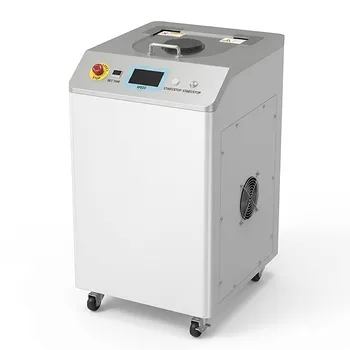
High Viscosity Planetary Centrifugal Vacuum Mixer for Material Defoaming and Uniform Mixing
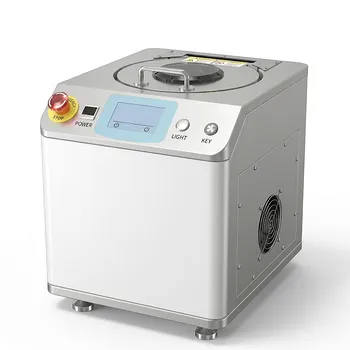
High Efficiency Vacuum Planetary Centrifugal Mixer and Defoaming Machine for Industrial Material Research and Precise Laboratory Powder Dispersion
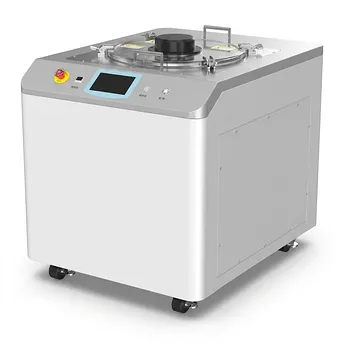
Industrial Planetary Centrifugal Vacuum Defoaming Mixer for High Viscosity Paste and Powder Homogenization
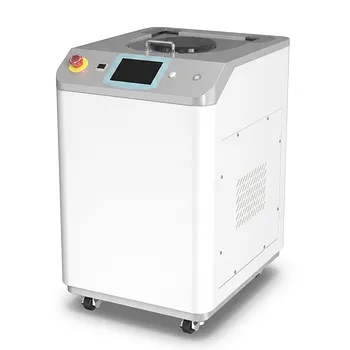
High Viscosity Planetary Centrifugal Mixing and Vacuum Defoaming Machine for Laboratory Material Preparation
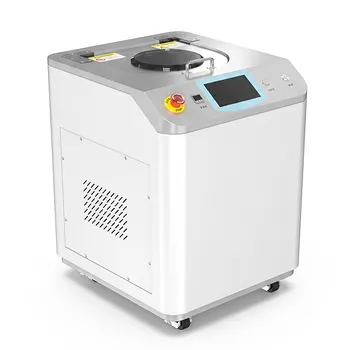
High Speed Vacuum Planetary Centrifugal Mixer and Defoamer for Industrial Paste Processing
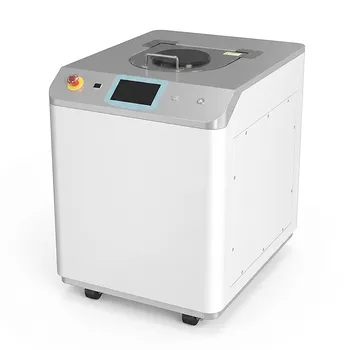
Industrial Planetary Centrifugal Vacuum Defoaming Mixer for High Viscosity Paste and Advanced Material Science
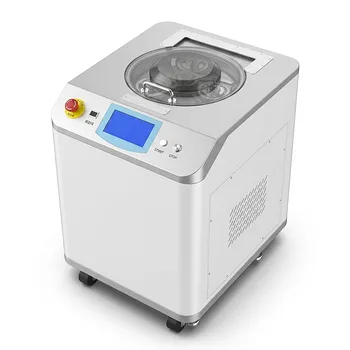
Dual Cup Vacuum Centrifugal Mixer Planetary Paste Defoaming Machine Industrial Material Processor
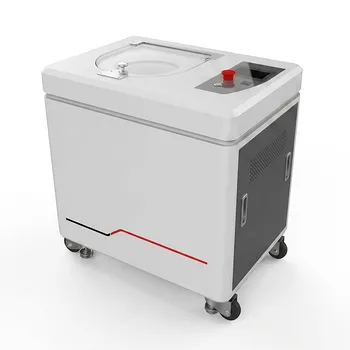
非介入式材料均质机真空脱泡行星搅拌高粘度混合设备
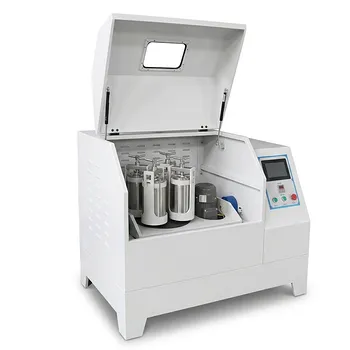
360° Rotating Omnidirectional Laboratory Planetary Ball Mill for Homogeneous Ultra-Fine Grinding and Mixing
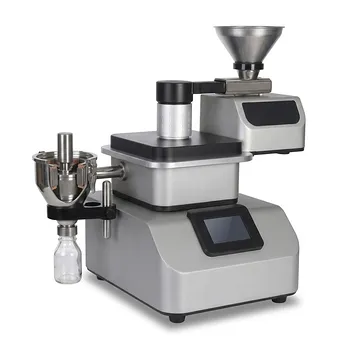
Ultra Centrifugal Mill for Rapid Laboratory Sample Preparation and Fine Powder Grinding
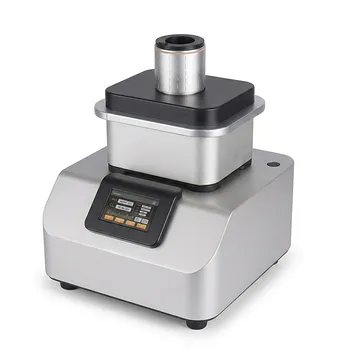
Ultra Centrifugal Mill High Speed Laboratory Grinder for Fibrous and Brittle Sample Preparation
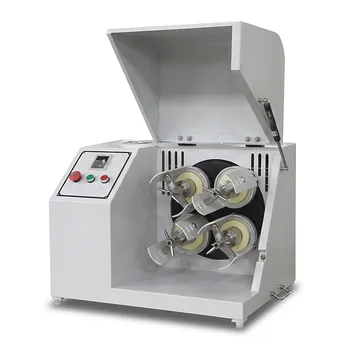
Horizontal Light Duty Planetary Ball Mill for Laboratory Sample Preparation
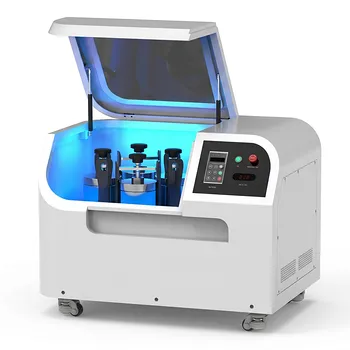
Planetary Ball Mill 12L
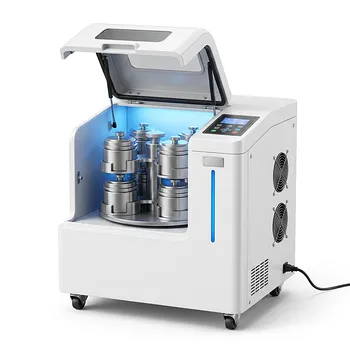
High Energy Omnidirectional Planetary Ball Mill 20L
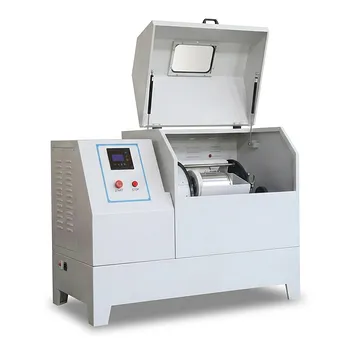
Heavy Duty Horizontal Planetary Ball Mill for Efficient Industrial Grinding and Sample Preparation
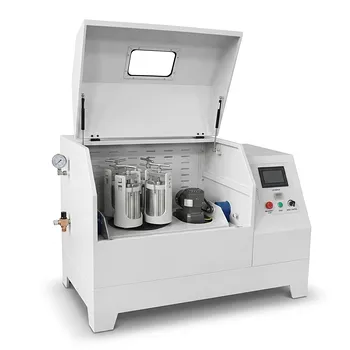
Vertical Production Planetary Ball Mill for High Throughput Powder Processing
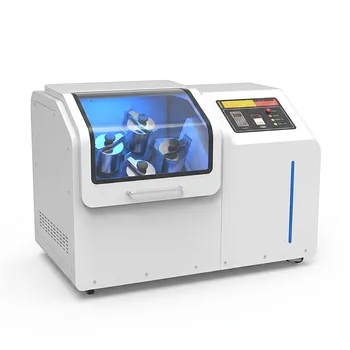
High Energy Omnidirectional Planetary Ball Mill 16L
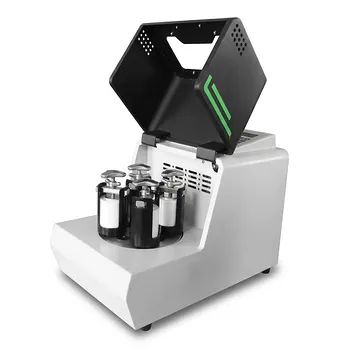
Miniature Planetary Ball Mill with Vacuum Grinding and High Efficiency for Laboratory Sample Preparation
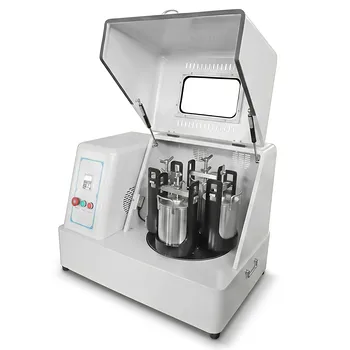
Vertical Square Planetary Ball Mill for Laboratory Sample Preparation and Nanoscale Grinding