The Invisible Architect: How Compaction Psychology Shapes Your LSM Ceramic’s Fate
Oct 06, 2026
The Moment Before the Fire
There is a quiet, almost reverent pause before a researcher places an LSM green body into the furnace. The powder has been mixed, calcined, perhaps ball-milled for hours. Now, a pale gray disc rests in the palm of a gloved hand. It looks perfect. It feels solid.
And for many, it will fail anyway.
Not because of the 1400 °C sintering profile, not because of a wrong stoichiometry, but because of a story written into the compact during those few seconds of pressing. The invisible architect of every La0.7Sr0.3MnO3 ceramic is not the furnace. It is the hydraulic press—and the mindset of the person operating it.
The Green Body Is a Promise
From Loose Grains to a Coherent Whole
Before pressing, LSM powder is a crowd of disconnected particles. Each grain contains the right elements, but they share no bond. The laboratory hydraulic press forces a transformation. Under uniaxial load, that loose collection becomes a green body—a fragile but coherent solid that can be handled, measured, and most importantly, believed in.
This is structural integrity born from pure compaction. It is a promise that the atoms will have intimate neighbors, ready to diffuse and build grain boundaries when the heat arrives.
The Contact That Becomes a Crystal
Sintering at 1400 °C does not magically fuse distant particles. It requires proximity. The press does not just sculpt geometry; it creates the initial conditions for every subsequent atomic dance. Poorly packed particles mean poor diffusion paths. Good compaction, on the other hand, sets the stage for uniform grain growth and the dense microstructure that grants LSM its electronic and ionic conductivity.
Even the geometry matters. The precise steel molds that shape powder into discs, cylinders, or bars do more than create a pleasant shape. They ensure that heat reaches every region evenly, preventing warping and localized over-sintering. A consistent shape is a consistent thermal history.
The Density Deception
We Trust What We See, But Defects Hide
A newly pressed green body has the density feel of chalk. It holds its form. The temptation is to think the job is done. This is the first psychological trap: we confuse apparent solidity with actual uniformity.
A standard uniaxial press applies force from one direction. Powder under the moving plunger compacts more than powder near the static die wall. Friction gradients form. The center of the pellet can be significantly less dense than the surfaces. You cannot see this. You can only see its ghost later—a cracked sintered puck or a core of abnormal porosity.
The Internal Map of Stress
Imagine the particle arrangement inside that innocent-looking disc. Near the top, where pressure first meets powder, packing is excellent. Near the bottom, depending on wall friction, it may also be good. But in the geometric middle, a low-density island often survives.
This gradient is a structural lie. During sintering, regions densify at different rates. Tension builds where the boundaries meet. And then, at temperature, the ceramic fractures along lines that were drawn weeks earlier in the pressing room. The fault was never in the furnace. It was in the invisible architecture of the green body.
Micro-Cracks and the Patience We Lack
The Speed of Force
There is another psychological tendency: the belief that if some pressure is good, faster pressure is better. But powders are not liquids. They compress through particle rearrangement and, at higher loads, through brittle fracture and plastic deformation. Apply pressure too rapidly, and air pockets get trapped. Release it too fast, and the stored elastic energy rebounds violently, creating delaminations.
Delamination is the stealthy killer. A micro-crack so fine it cannot be seen by the naked eye will open into a fracture plane when the material expands during sintering. The resulting failure is blamed on a “bad batch” of powder, but the real culprit was a hydraulic press operated with a hurried hand.
Precision as a State of Mind
The finest hydraulic press in the world cannot compensate for impatience. But a precision instrument can guide you toward better habits. When the pressure ramps are controlled—through a well-designed hydraulic system with smooth valves and a readable gauge—the operator becomes part of a slower, more deliberate feedback loop. The tool teaches the person.
This is where laboratory equipment transcends mere function. It becomes a medium for a careful state of mind.
Beyond Uniaxial: The System That Erases Gray Zones
The Technology of Uniform Pressure
If uniaxial pressing has inherent limits, what eliminates them? The answer is isostatic pressing. In a Cold Isostatic Press (CIP), the powder is sealed in a flexible mold and submerged in a fluid pressurized uniformly from all directions. There is no “plunger side” vs. “die wall” side. The density becomes isotropic, erasing internal gradients entirely.
For researchers developing advanced LSM ceramics, a CIP is not an extravagance. It is the logical next step when uniaxial green bodies keep betraying you with hidden heterogeneity. The same holds for Warm Isostatic Pressing (WIP), which adds moderate heat to enhance particle deformation and further homogenize density.
As part of a complete laboratory sample preparation suite, these presses work alongside standard hydraulic presses, XRF pellet presses, and even vacuum hot presses for advanced sintering. The common thread is control—not just of the material, but of the very forces that build it from powder to component.
The Full Chain of Compaction Clarity
What Comes Before the Press Shapes What Happens Inside It
It is tempting to isolate the pressing stage. But no hydraulic press can fix a poorly prepared powder. If the particle size distribution is too broad, the green body will pack inefficiently no matter the pressure. If agglomerates survive milling, they become seeds of failure.
This is why planetary ball mills, jet mills, and cryogenic grinders are not separate tools; they are the preface to a press’s story. Milling LSM calcines to sub-micron uniformity ensures that when pressure comes, particles slide and compact into a dense, homogeneous arrangement. It is the difference between a random stack of bricks and a carefully interlocked wall.
Even the defoaming mixer has its role. Air entrained during powder handling becomes the micropores that the press must eliminate. By removing air before compaction, you simplify the press’s job and improve final integrity.
The Press as Part of a Philosophy
From jaw crushers that break initial chunks to vibratory sieve shakers that classify fines, each device in the sample preparation workflow influences the final ceramic. But the hydraulic press—the moment of compression—remains the psychological nexus. It is the last physical touch before the fire takes over. It is the point where human decision (pressure, dwell time, release rate) meets material fate.
Reclaiming the Invisible Architect
We often search for sophistication in temperatures and dwell times, in doping levels and atmosphere controls. Those matter. But the deepest lever of reliability is older and less glamorous: it is the deliberate application of steady, clean pressure to create a green body that tells the truth about its own density.
The next time an LSM pellet cracks after sintering, resist the urge to blame the furnace. Look back at the press. Ask yourself: Was the pressure truly uniform? Was the release gentle enough? Did the powder have the right particle distribution to accept that compaction gracefully?
When the answer is yes—when the hydraulic press and all the preparation steps behind it form a coherent system—the ceramic rewards you with density, conductivity, and quiet integrity. It is the kind of reliability that feels almost romantic in its precision, an engineer’s quiet triumph over invisible defects.
For those who want to stop chasing micro-cracks and start building confidence, the solution lies in a complete laboratory sample preparation ecosystem—from planetary ball mills and jet mills that perfect your powder to hydraulic presses, CIP/WIP systems, and vacuum hot presses that sculpt it into flawless green bodies. The tools do not just shape material; they shape outcomes.
Ready to design reproducibility into your material workflow? Contact Our Experts
Quick Links
Suggested Products
5 Ton Single Punch Tablet Press Laboratory Small Batch Production Manual Tablet Press with Dual Scale Pressure Gauge for Pharmaceutical Food Chemical Laboratory Sample Preparation 6 Ton Variable Frequency Single Punch Tablet Press 6-Ton Small Single-Punch Tablet Press — Laboratory Powder & Granule Tableting Equipment / Tablet Forming Machine Sealed Hammer Crusher for Laboratory Coal Sample Preparation Adjustable Output SizeFurther Reading
From Dust to Data: How Precision Laboratory Presses Forge Truth in Mineral Testing The Hidden Fracture: Why Ceramic Feed Rods Fail Before the First Melt The Layers That Wouldn’t Lie Flat: Why Nine Sheets of Ceramic Demand a Laboratory Press That Thinks in Microns The Invisible Architect of Powder: How a Single Additive Saves Ductile Metals from Themselves The Art of Persuading Wood: How a Laboratory Hot Press Solves the Flaw in Nature’s Blueprint
PowderPreparation
Last updated on May 14, 2026
Related Products
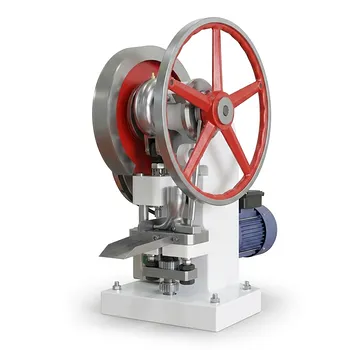
5 Ton Single Punch Tablet Press Laboratory Small Batch Production
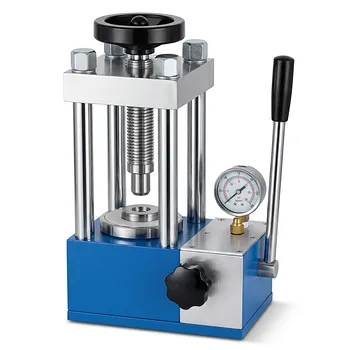
Manual Tablet Press with Dual Scale Pressure Gauge for Pharmaceutical Food Chemical Laboratory Sample Preparation
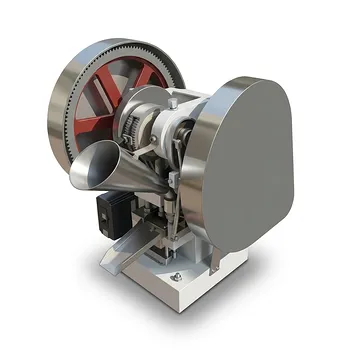
6 Ton Variable Frequency Single Punch Tablet Press
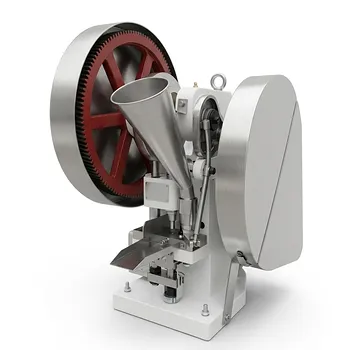
6-Ton Small Single-Punch Tablet Press — Laboratory Powder & Granule Tableting Equipment / Tablet Forming Machine
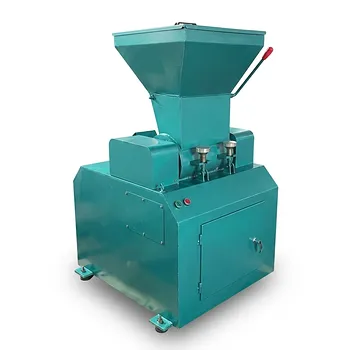
Sealed Hammer Crusher for Laboratory Coal Sample Preparation Adjustable Output Size
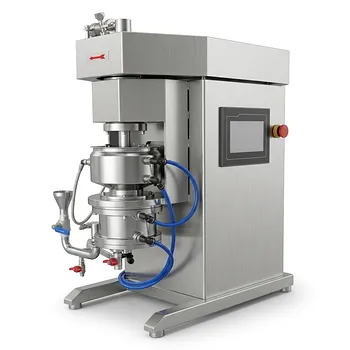
Small Ceramic Structure Laboratory Sand Mill Nanoscale Grinding Dispersion Equipment Seal-less Screen-less Design
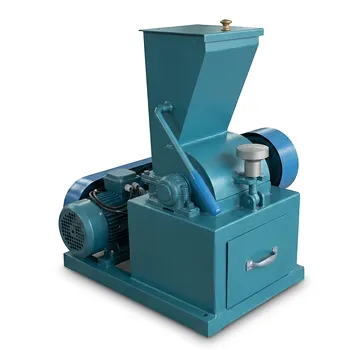
Small Hammer Crusher for Brittle Material Crushing in Mining Metallurgy and Lab Sample Preparation
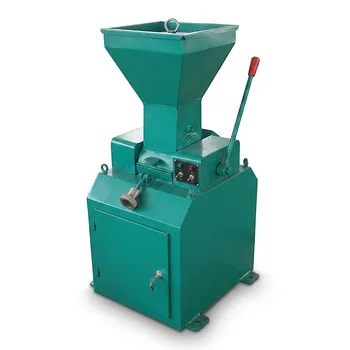
Laboratory Sealed Hammer Crusher for Coal and Mineral Sample Preparation
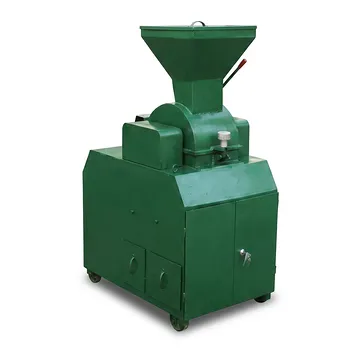
Industrial Sealed Hammer Knife Crusher for Mining Ore and Coal Sample Preparation
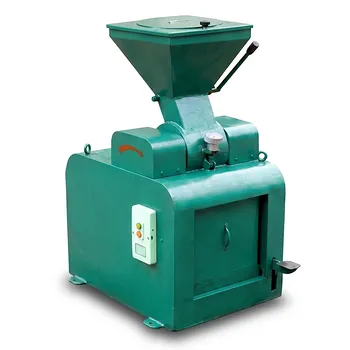
Laboratory Sealed Hammer Crushers for Coal Sample Preparation and Medium Strength Material Crushing
Laboratory Sealed Hammer Blade Crusher Divider for High Hardness Sample Preparation
Customized Sealed Laboratory Hammer Crusher for Coal and Medium Hardness Sample Preparation
Custom Explosion-Proof Sealed Jaw Crusher for Laboratory and Industrial Sample Preparation
Vertical Production Planetary Ball Mill for High Throughput Powder Processing
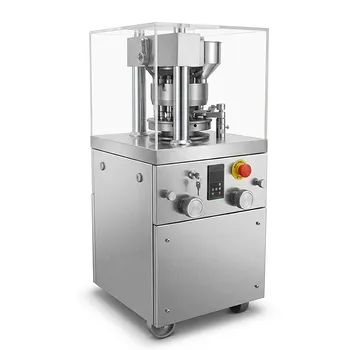
Ordinary Type Rotary Tablet Press for Pharmaceutical Chemical Food Electronic Industries
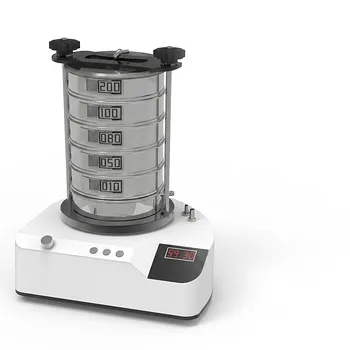
Heavy Duty Dry Three Dimensional Vibratory Sieve Shaker for Particle Separation
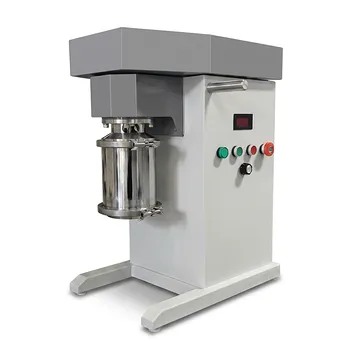
Nano Laboratory Bead Mill Desktop Sub Micron Sand Mill Screenless Seal Less Powder Grinder
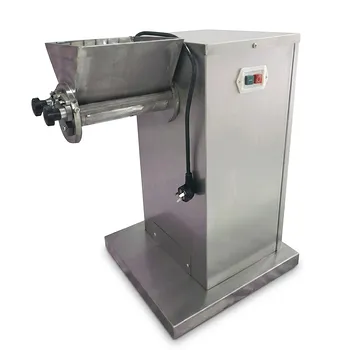
Small Laboratory Oscillating Granulator for Wet and Dry Granulation Processing
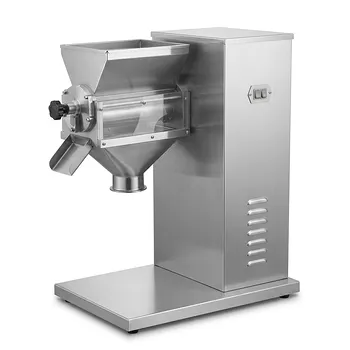
Small Swing Granulator Efficient Powder Granulation for Pharmaceutical Chemical Food Industries