The Hidden Fracture: Why Ceramic Feed Rods Fail Before the First Melt
Aug 17, 2026
You spent weeks preparing the ceramic powder.
The composition was checked. The mixing was meticulous. You loaded the green feed rod into the directional solidification furnace, sealed the chamber, and initiated the thermal cycle.
Then, somewhere before the first true melt, a subtle anomaly flickered in the temperature profile. After cooling, you extracted a rod that was bent like a ripe banana — or worse, riddled with internal cracks that made it structurally useless.
The lost experiment stings. But the deeper wound is psychological: we tend to blame the furnace, the gradient, or the chemistry, when the fatal flaw was often introduced much earlier.
In the quiet, unglamorous moment of pressing the powder.
The Green Body’s Secret Life
A ceramic feed rod destined for directional solidification begins as loose particles. Those particles must become a self-supporting shape that can survive handling, steep thermal gradients, and the atomic-scale dance of sintering.
Failure doesn’t announce itself at the press. It hides. A density gradient of just a few percent. A hairline delamination invisible to the naked eye. A cluster of pores trapped near the centerline.
Inside the furnace, those hidden defects become levers of destruction. Uneven density means uneven shrinkage. Trapped gas expands. Micro-cracks propagate like stress lightning.
What the laboratory press does — or fails to do — writes the script for everything that follows.
The Press as Architect: Forming the Foundation
The first role of the press is deceptive in its simplicity: turn powder into a cohesive green body. But this isn’t just compaction. It’s the act of giving a loose collection of grains enough mechanical integrity to be handled, machined, and positioned in a furnace without disintegrating.
The Geometry of Trust
Directional solidification setups demand feed rods with precise dimensions. A millimeter of misfit can alter heat transfer, change the solidification front, and kill reproducibility. The press and its mold define that geometry with near-zero tolerance.
If the rod doesn’t fit the furnace perfectly, the entire thermal profile becomes a guess.
Density: The First Bridge to Bonding
Look at a green rod’s cross-section under a microscope, and what you don’t see matters most: the space between particles. The press applies controlled mechanical force — often reaching pressures of 35 MPa or higher — to push particles into intimate contact.
This packing density isn’t just a number. It’s a probability map of whether atoms will find each other when the heat arrives.
The Physics of a Second Life: Why Pressing Enables Sintering
Sintering is the process that transforms compacted powder into a dense, high-strength ceramic. But sintering can’t fix what the press got wrong.
Porosity: The First Enemy
Air pockets inside a feed rod are time bombs. During high-temperature processing, trapped gases expand. If the surrounding material hasn’t been compacted enough to allow gas escape channels to close in a controlled way, the rod cracks — or explodes.
The laboratory press, by eliminating most of that internal porosity early, removes the fuel for later catastrophe.
The Atomic Handshake
Grains need to be close enough for atomic diffusion to take over. The press ensures particle surfaces are touching, or nearly touching, so that thermal energy can drive neck formation and grain growth. A poorly pressed rod keeps grains socially distant, and sintering becomes an incomplete promise.
The War Against Gradients
Perfectly uniform pressure is a fantasy. But the closer you get, the more you minimize density gradients — region-to-region variations in compaction. A rod with a dense skin and a soft core will shrink unevenly. The result is a bent, warped, or banana-shaped specimen that reflects not material failure, but pressing failure.
When the Press Betrays You: The Hidden Trade-offs
The relationship between pressure and success is not linear. It’s a curve with sharp edges.
The Delamination Paradox
Push too hard, too fast, or release the load abruptly, and the green body may develop internal micro-cracks through a phenomenon called springback. The stored elastic energy in the particles releases destructively. The rod looks fine after pressing, but post-sintering X-ray or CT reveals a shattered interior.
High pressure is necessary — until it becomes the enemy.
The Wall Friction Trap
Powder doesn’t slide into a mold without friction. As pressure is applied axially, much of the force is dissipated against the die walls. This creates a pressure profile where regions near the punch faces are denser than the middle. The rod that emerges is structurally asymmetric.
In directional solidification, that asymmetry translates directly into warped growth.
The Limits of Simple Shapes
Uniaxial dry pressing loves cylinders. It tolerates discs. But as soon as you need internal cooling channels, complex cross-sections, or near-net shapes, the simple punch-and-die approach shows its seams. Alternative or complementary forming methods become necessary.
Calibrating Your Process for the Thermal Crucible
Optimizing feed rod preparation means matching pressing parameters to your material’s personality and your experiment’s goals.
If your primary focus is structural uniformity:
- Use a slow loading rate.
- Extend the pressure holding time.
- Let particles rearrange and trapped air find its escape path.
If your primary focus is maximum density:
- Reach high compaction pressures (35 MPa and above).
- Introduce a lubricant to cut wall friction and allow deeper particle repacking.
If your primary focus is preventing sintering cracks:
- Start with an exceptionally homogeneous powder (milling and mixing matter).
- Aim for a green density distribution that is as flat as the topography of a calm lake.
The Systems Thinking Behind a Perfect Rod
A press doesn’t stand alone. It’s the centerpiece of a larger sample preparation workflow. What happens before the powder reaches the die — mixing, de-agglomeration, particle size distribution — is just as decisive as the pressing cycle itself.
Our laboratory presses are built with this systems reality in mind. We offer a complete spectrum of hydraulic presses, from standard units for XRF pellet preparation to advanced hot presses and vacuum hot presses for demanding ceramic applications. But we also understand that some geometries and density requirements exceed what uniaxial pressing can deliver.
That’s where Cold Isostatic Pressing (CIP) and Warm Isostatic Pressing (WIP) enter the picture. By applying pressure uniformly from all directions through a fluid medium, isostatic pressing virtually eliminates wall friction effects and all but erases density gradients. For feed rods where “banana” deformation is a recurring nightmare, CIP is often the waking answer.
And before any pressing happens, our planetary ball mills, jet mills, and specialized defoaming mixers prepare powders that flow, pack, and densify predictably. That upstream control makes the press’s job less mysterious and more repeatable.
Key Press Functions and Their Direct Impact
| Key Function | Engineering Benefit | Impact on Solidification |
|---|---|---|
| **Compaction** | Creates a stable “green body” | Ensures structural integrity during handling |
| **High-Pressure Molding** | Increases packing density | Facilitates atomic diffusion and bonding |
| **Gas Expulsion** | Reduces internal porosity | Prevents cracking or explosion at high temperatures |
| **Geometric Control** | Precise dimensions and shapes | Ensures standardized fit in thermal gradients |
| **Uniform Pressure Distribution** | Minimizes density gradients | Eliminates bending and warping during sintering |
The Romance of the Unseen
There is something profoundly elegant in the press’s role. It bridges two worlds: the world of loose, chaotic powder and the world of structured, predictable ceramic. It imposes order on the microscopic so that the macroscopic experiment can succeed.
A feed rod that survives directional solidification is a quiet triumph of preparation. It’s proof that someone paid attention to the hidden variables — to the slow dwell time, the die wall lubrication, the uniform packing — long before the furnace ever glowed.
When your research depends on eliminating those invisible fractures, the line between success and another broken rod runs straight through the pressing room. Our complete range of laboratory presses, isostatic systems, and powder preparation equipment is designed to help you walk that line with confidence.
Quick Links
Suggested Products
Manual Tablet Press with Dual Scale Pressure Gauge for Pharmaceutical Food Chemical Laboratory Sample Preparation 6-Ton Small Single-Punch Tablet Press — Laboratory Powder & Granule Tableting Equipment / Tablet Forming Machine 5 Ton Single Punch Tablet Press Laboratory Small Batch Production 6 Ton Variable Frequency Single Punch Tablet Press Universal Laboratory Pulverizer Grinder for Small Batch Powder Processing and Material Science ResearchFurther Reading
The Layers That Wouldn’t Lie Flat: Why Nine Sheets of Ceramic Demand a Laboratory Press That Thinks in Microns From Dust to Data: How Precision Laboratory Presses Forge Truth in Mineral Testing The Crack in the Crucible: A Systems Approach to Perfect Bismuth Ferrite Targets and the Hidden Physics of Powder Compaction The Invisible Architect: How Compaction Psychology Shapes Your LSM Ceramic’s Fate The Invisible Architect of Powder: How a Single Additive Saves Ductile Metals from Themselves
PowderPreparation
Last updated on May 14, 2026
Related Products
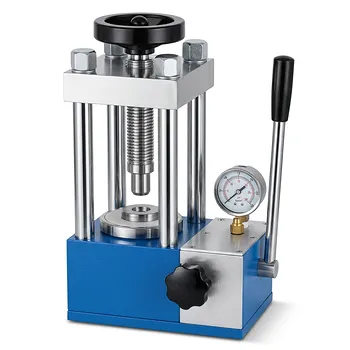
Manual Tablet Press with Dual Scale Pressure Gauge for Pharmaceutical Food Chemical Laboratory Sample Preparation
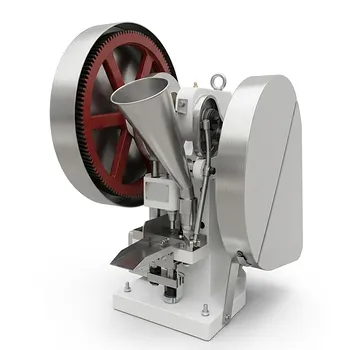
6-Ton Small Single-Punch Tablet Press — Laboratory Powder & Granule Tableting Equipment / Tablet Forming Machine
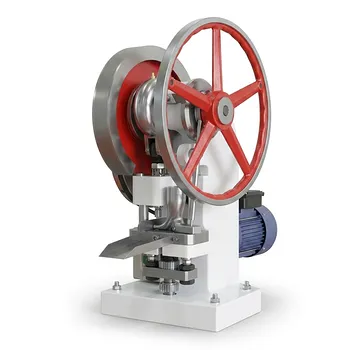
5 Ton Single Punch Tablet Press Laboratory Small Batch Production
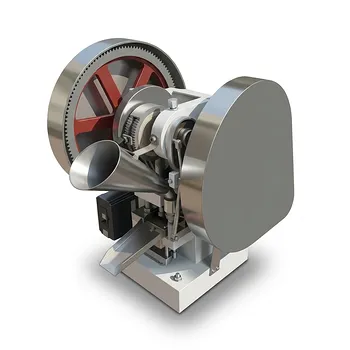
6 Ton Variable Frequency Single Punch Tablet Press
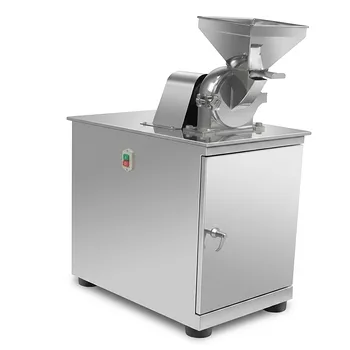
Universal Laboratory Pulverizer Grinder for Small Batch Powder Processing and Material Science Research
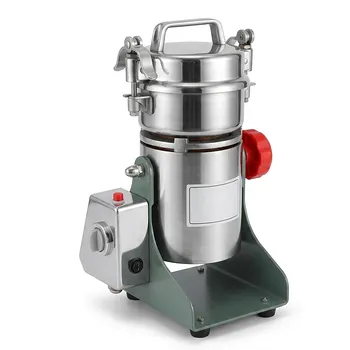
High Speed Swing Type Laboratory Pulverizer for Fine Powder Grinding and Sample Preparation
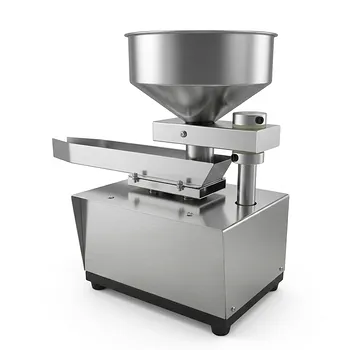
Automatic Vibrating Powder Feeder for Laboratory Material Processing Precision Vibratory Hopper Feeder for Granular and Powder Material Handling Industrial Grade Vibrating Tray Feeder for Consistent Material Sample Preparation
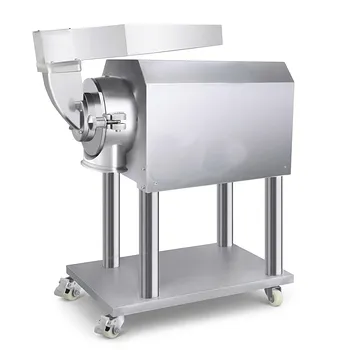
High Speed Small Laboratory Crusher for Dry Material Sample Preparation
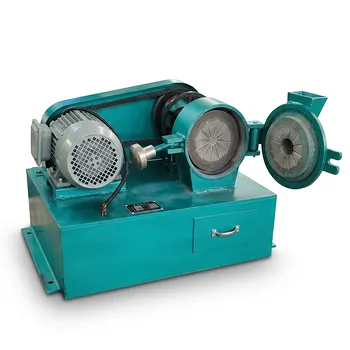
Laboratory Disc Mill Medium Hard Material Grinding Coal Coke Ore Pulverizer
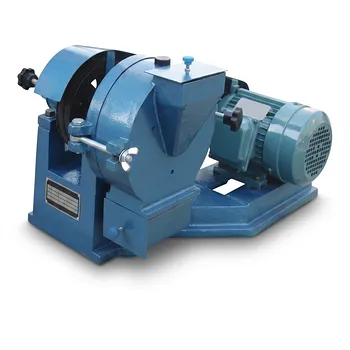
Laboratory Disc Mill for Ore and Mineral Sample Preparation
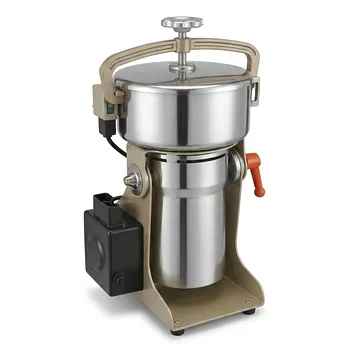
Multifunctional High Efficiency High Speed Laboratory Grinder
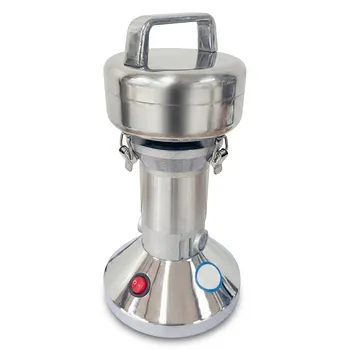
Small Trace Sample High Speed Pulverizer Grinder Laboratory Powder Mill
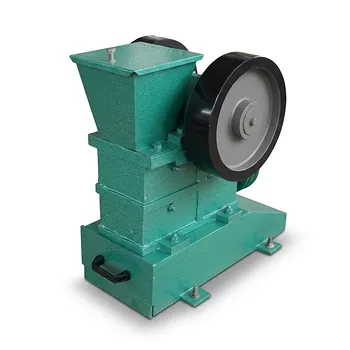
Laboratory Small Jaw Crusher 100x60mm
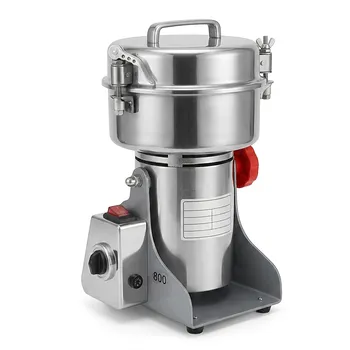
Small High-Speed Laboratory Grinder for Rapid Sample Preparation
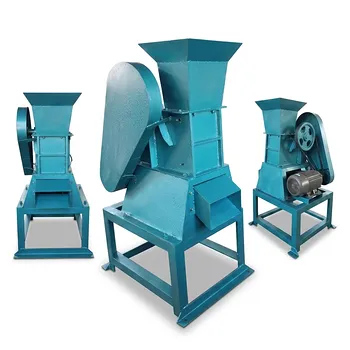
Custom Raised Height Laboratory Jaw Crusher for Precision Sample Preparation in Material Science
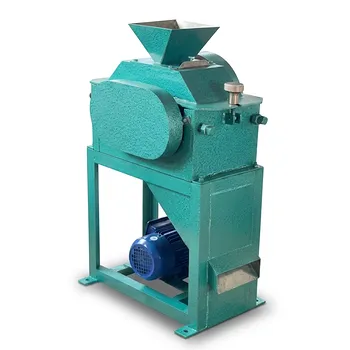
Laboratory Double Roll Crusher for Medium Hardness Materials Coal Ore Sample Preparation
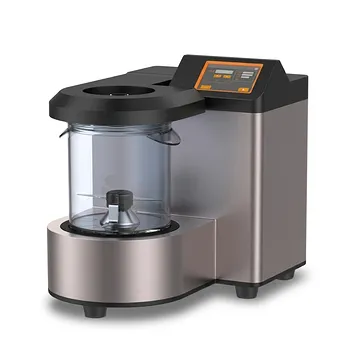
Laboratory Knife Mill for Large Volume Sample Homogenization and Food Preparation
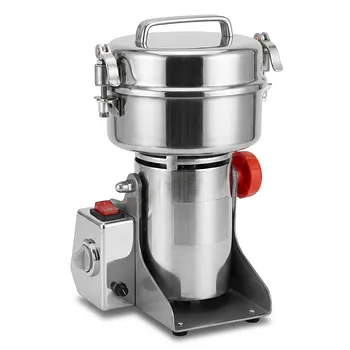
High Speed Laboratory Powder Grinder Small Batch Sample Preparation Mill
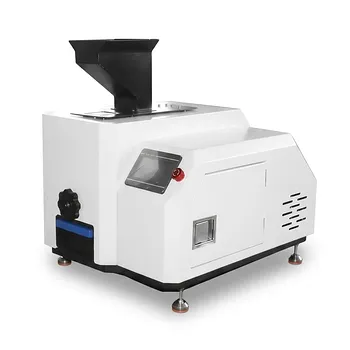
Laboratory Jaw Crusher 2025 Model for Ore and Brittle Material Crushing