The Layers That Wouldn’t Lie Flat: Why Nine Sheets of Ceramic Demand a Laboratory Press That Thinks in Microns
May 17, 2026
The Silent Fracture in the Furnace
You open the sintering furnace expecting a monolithic ceramic. Instead you find a book that fell apart in the fire—layers peeling, edges feathered with micro-cracks. No one saw it coming. The green body looked perfect. But perfection at room temperature is an illusion that high heat quickly shatters.
The problem began hours earlier, inside a laboratory press that lied about how hard it was pushing.
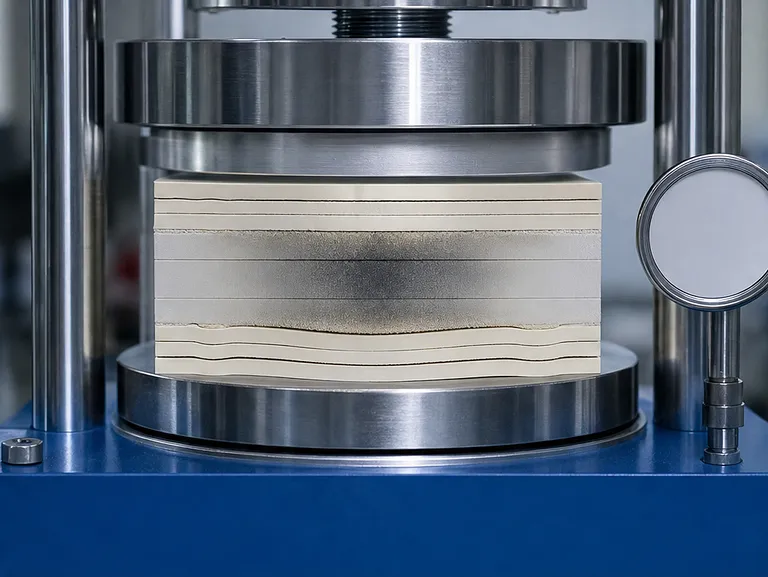
Most failures in multi-layer ceramics are not material failures. They are control failures. They happen because a press applied pressure unevenly, leaving behind density ghosts that only become visible when the part shrinks at 1600°C.
Nine Sheets, One Breath
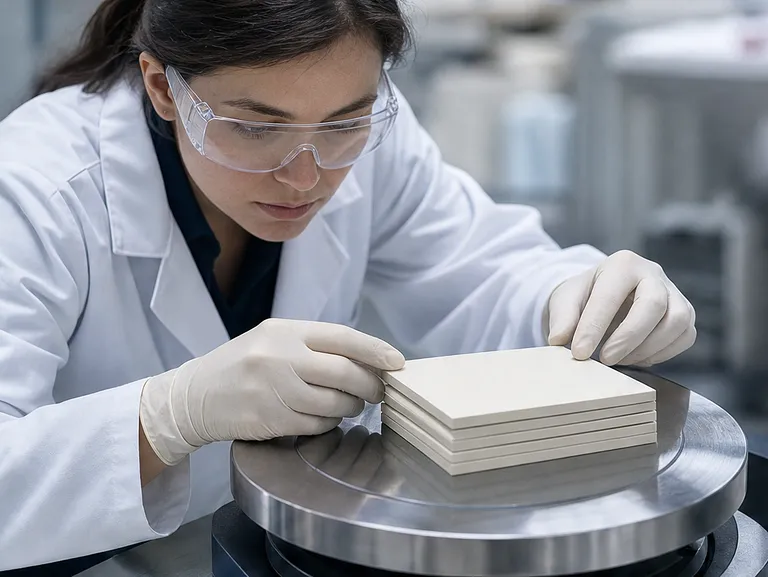
An Alumina-Mullite-Zirconia (AMZ) laminate is not a single object. It’s a stack of nine separate identities—each layer a mere 35 to 40 micrometers thick—bound together by a promise of uniform pressure. The promise is simple: Every particle in every layer shall feel the same force.
The human eye cannot see a 40-micron sheet. It’s thinner than a dust mote floating in afternoon light. Yet inside that gossamer layer lives the entire mechanical future of a high-performance ceramic. If the press pushes harder on the left edge than the right, the layers on the left compact more. They shrink less during sintering. The right side shrinks more. The resulting stress doesn’t announce itself until the furnace cools and the laminate remembers it was never really one thing.
This is the psychology of precision engineering: we build trust into invisible dimensions.
Density Gradients Are a Liquid That Thinks It’s a Solid
What the Ram Actually Does
When a hydraulic press descends onto a powder or a stack of tape-cast sheets, it isn’t simply “squashing” them. It’s orchestrating a slow-motion avalanche. Particles slide, rotate, and re-pack. Voids collapse. Binders soften and redistribute. This dance requires time and, above all, uniformity.
A press that delivers a momentary spike of force creates a skin of high density over a soft interior. A press that drifts 2% in pressure between cycles introduces 2% more uncertainty into the sintered dimensions. In research, that 2% erodes statistical significance. In production, it erodes margins.
The Hidden Failure Mode
Even when layers bond initially, uneven compaction stores elastic energy. During organic burnout—when binders vaporize—those stressed regions release like tiny springs. The result is delamination that looks like a manufacturing defect but is actually a pressing defect, displaced in time.
The psychological cost of an inconsistent press is doubt. You stop trusting your results. You add replicates. You tighten every other variable, not realizing the press itself is the variable.
Why Pressure Needs a Memory
Dwell Time as a Negotiation
A grain of ceramic powder doesn’t instantly find its ideal position. It needs a moment to settle—a dwell time at peak load—where the press holds steady and lets the particle network relax. This is not idle time. It’s active negotiation between force and friction.
Laboratory presses with digital pressure monitoring make this negotiation visible. You see the load stabilize, watch the curve flatten, and know the microstructure is reaching equilibrium. That knowledge replaces guesswork with evidence.
The Slow-Loading Imperative
For ultra-thin AMZ sheets, loading rate becomes a survival parameter. Ram too fast, and air trapped between layers cannot escape. It compresses, then expands upon release, creating lenticular voids. A high-precision press capable of slow, deliberate ramping—often down to fractions of a millimeter per second—transforms a mechanical operation into a breathing exercise.
The Table That Explains Failure
Here is what the press must deliver, and what it prevents:
| Key Requirement | Benefit for AMZ Laminates | Psychological Relief It Provides |
|---|---|---|
| Uniform Pressure Distribution | Seamless bonding across 35–40 μm layers | Certainty that every edge sees the same future |
| Precise Pressure Control | Eliminates internal density gradients | Freedom from the fear of hidden warping |
| High Packing Density (>85% theoretical) | Maximizes particle rearrangement | Confidence in final mechanical strength |
| Digital Monitoring & Drift Correction | Identical conditions batch-to-batch | Trust in the repeatability of your own work |
| Slow-Loading Capability | No air entrapment between gossamer layers | Peace of mind when you close the furnace door |
The Romance of the Ram
There is an engineer’s romance in a machine that can press with the force of a small car, yet regulate itself within a few tens of Newtons. It speaks to something deep: the desire to control what cannot be seen.
A high-precision laboratory hydraulic press does more than form ceramics. It forms a bond between the scientist and the outcome. It turns a stochastic process—particle compaction—into a deterministic art. When the nine-layer AMZ laminate emerges from sintering flat and whole, it’s not magic. It’s the memory of uniform pressure, encoded into every grain.
Building a Complete Ecosystem for the Green Body
Of course, the press is never alone in its task. It sits downstream of every other preparation step. The purity of the powder, the particle size distribution from ball milling or jet milling, the homogeneity introduced by a de-foaming mixer—all converge at the moment of pressing.
Our approach is to treat sample preparation not as a sequence of isolated tools, but as a system with a single goal: a green body so homogeneous it seems to have no internal boundaries. From cryogenic grinders that keep heat-sensitive phases intact to jaw crushers that initiate the size-reduction cascade, every piece of equipment preserves the option for precision when the ram finally descends.
Whether the application demands a standard lab press, a Cold or Warm Isostatic Press (CIP/WIP) to surround the part with fluid-like pressure, or a vacuum hot press that combines compaction with sintering, the architecture of control remains the same.
Choosing Your Pressure Philosophy
- If your obsession is structural reliability, select a press that can maintain a stable dwell time—minutes of unblinking force.
- If your obsession is dimensional precision, demand digital pressure monitoring that logs every cycle, so no batch stands alone.
- If your obsession is thin-film laminates, insist on programmable slow-loading rates that treat 40 microns as a territory, not an afterthought.
A Final Compact
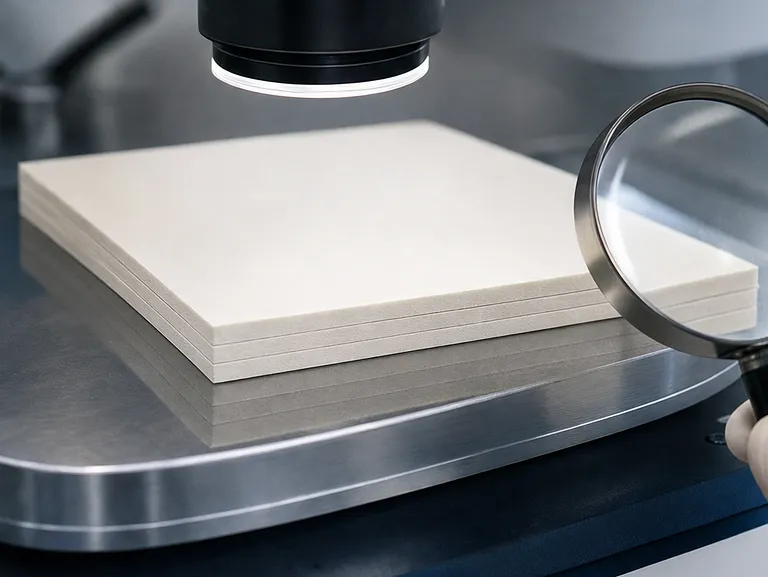
Ceramics break when stress concentrates. Green bodies break when pressure concentrates. Both failures share a root cause: a lack of uniformity.
The nine-layer AMZ laminate is a test. It asks: Can you press gently enough to preserve the layers, yet firmly enough to make them one thing? The answer lies not in force alone, but in control. When you have a press that remembers what it did last time and does it again with digital precision, you stop fighting variability and start building reliability.
Your next green body can emerge from the furnace as a monument to precision, or as another fractured mystery. The difference lives in the micron-scale decisions made long before the heat touches the ceramic.
Quick Links
Suggested Products
Manual Tablet Press with Dual Scale Pressure Gauge for Pharmaceutical Food Chemical Laboratory Sample Preparation 6-Ton Small Single-Punch Tablet Press — Laboratory Powder & Granule Tableting Equipment / Tablet Forming Machine 5 Ton Single Punch Tablet Press Laboratory Small Batch Production 6 Ton Variable Frequency Single Punch Tablet Press Universal Laboratory Pulverizer Grinder for Small Batch Powder Processing and Material Science ResearchFurther Reading
The Hidden Fracture: Why Ceramic Feed Rods Fail Before the First Melt From Dust to Data: How Precision Laboratory Presses Forge Truth in Mineral Testing The Crack in the Crucible: A Systems Approach to Perfect Bismuth Ferrite Targets and the Hidden Physics of Powder Compaction The Invisible Architect: How Compaction Psychology Shapes Your LSM Ceramic’s Fate The Invisible Architect of Powder: How a Single Additive Saves Ductile Metals from Themselves
PowderPreparation
Last updated on May 14, 2026
Related Products
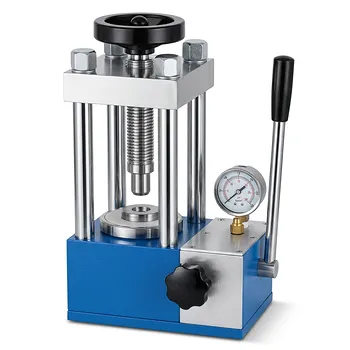
Manual Tablet Press with Dual Scale Pressure Gauge for Pharmaceutical Food Chemical Laboratory Sample Preparation
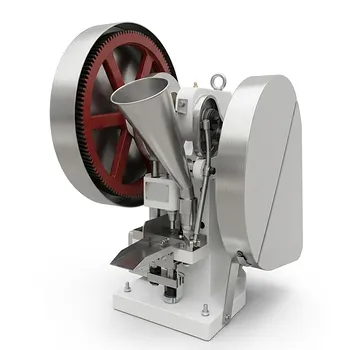
6-Ton Small Single-Punch Tablet Press — Laboratory Powder & Granule Tableting Equipment / Tablet Forming Machine
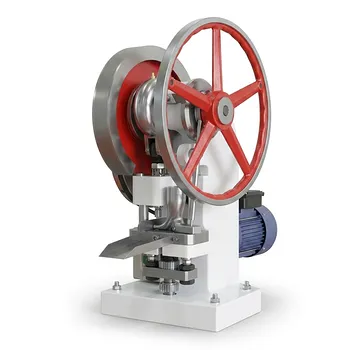
5 Ton Single Punch Tablet Press Laboratory Small Batch Production
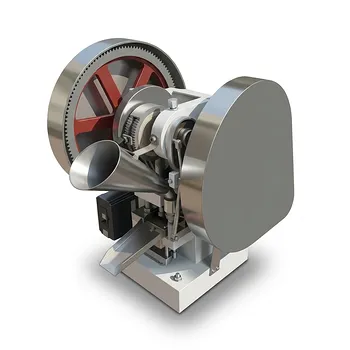
6 Ton Variable Frequency Single Punch Tablet Press
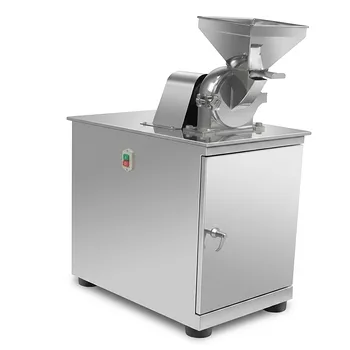
Universal Laboratory Pulverizer Grinder for Small Batch Powder Processing and Material Science Research
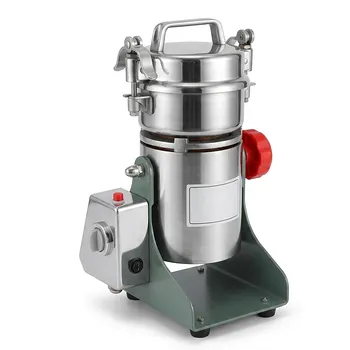
High Speed Swing Type Laboratory Pulverizer for Fine Powder Grinding and Sample Preparation
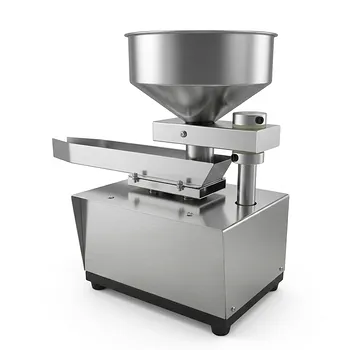
Automatic Vibrating Powder Feeder for Laboratory Material Processing Precision Vibratory Hopper Feeder for Granular and Powder Material Handling Industrial Grade Vibrating Tray Feeder for Consistent Material Sample Preparation
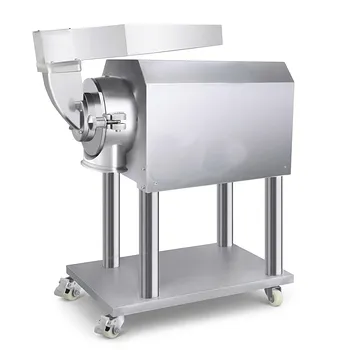
High Speed Small Laboratory Crusher for Dry Material Sample Preparation
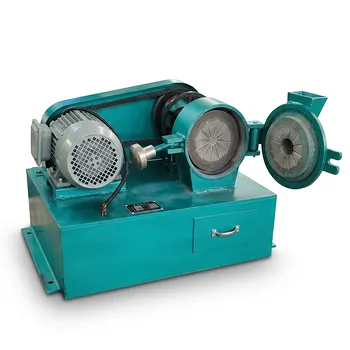
Laboratory Disc Mill Medium Hard Material Grinding Coal Coke Ore Pulverizer
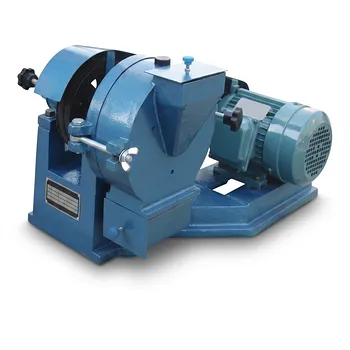
Laboratory Disc Mill for Ore and Mineral Sample Preparation
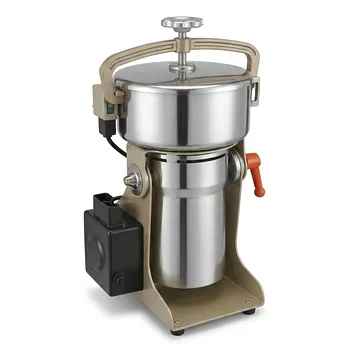
Multifunctional High Efficiency High Speed Laboratory Grinder
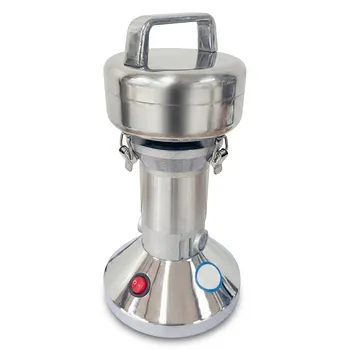
Small Trace Sample High Speed Pulverizer Grinder Laboratory Powder Mill
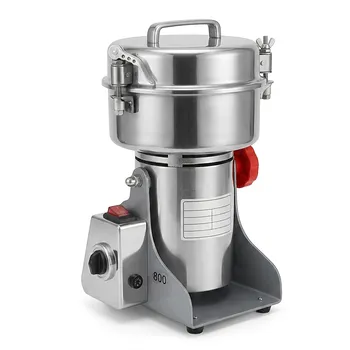
Small High-Speed Laboratory Grinder for Rapid Sample Preparation
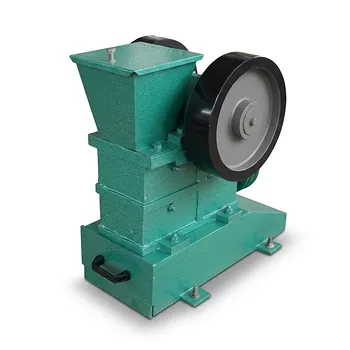
Laboratory Small Jaw Crusher 100x60mm
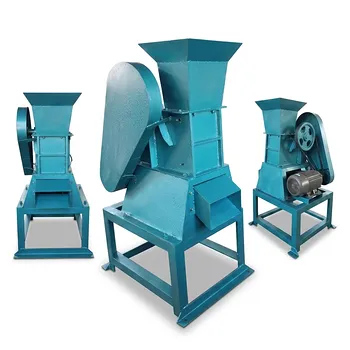
Custom Raised Height Laboratory Jaw Crusher for Precision Sample Preparation in Material Science
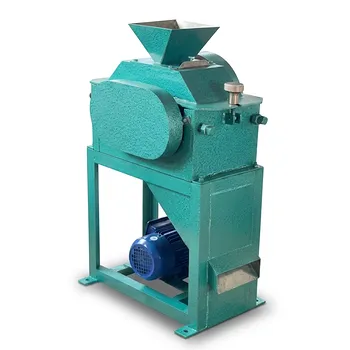
Laboratory Double Roll Crusher for Medium Hardness Materials Coal Ore Sample Preparation
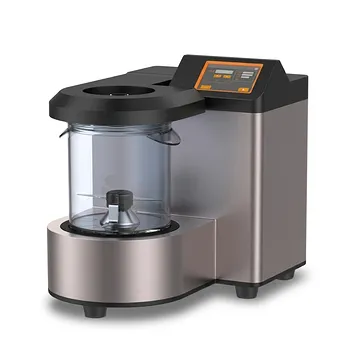
Laboratory Knife Mill for Large Volume Sample Homogenization and Food Preparation
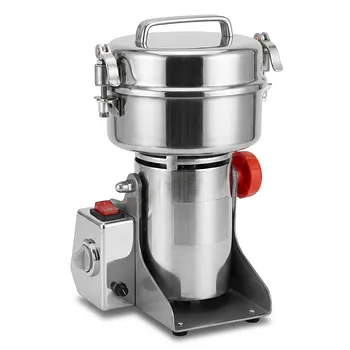
High Speed Laboratory Powder Grinder Small Batch Sample Preparation Mill
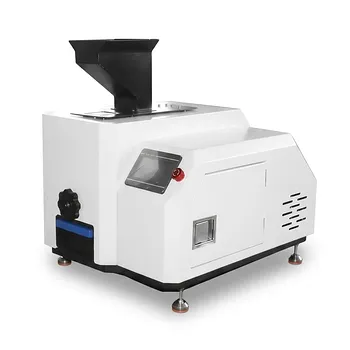
Laboratory Jaw Crusher 2025 Model for Ore and Brittle Material Crushing