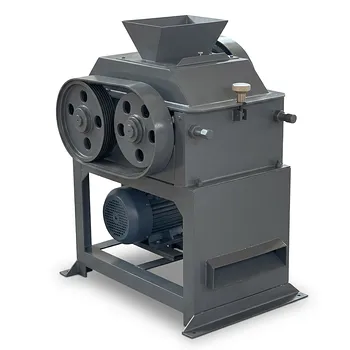
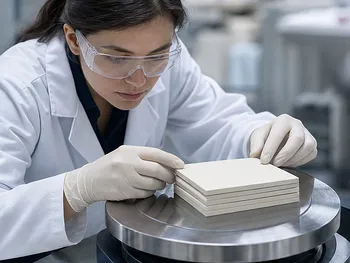
The Art of Persuading Wood: How a Laboratory Hot Press Solves the Flaw in Nature’s Blueprint
Jul 30, 2026
The Problem Hiding Inside a Perfectly Good Piece of Pine
Every piece of wood tells a story of quiet compromise. Under a microscope, you see it—a honeycomb of hollow cells, each one a tiny cavity that makes the tree light enough to stand but too weak to resist a heavy load. Nature optimized for survival, not for flooring or structural beams. The researcher staring at a timber sample knows this. They see not a material but a problem: how do you collapse those cavities without breaking the walls that give wood its soul?
The answer isn’t to fight the wood. It’s to persuade it.
Thermo-Hydro-Mechanical (THM) processing is that persuasion, and the high-performance laboratory hot press is the instrument that delivers it. It is not a simple clamp. It is a stage where heat, pressure, and time perform a synchronized choreography that rewrites the material’s internal contract with itself.
The Psychology of a Reproducible Squeeze
Ask any lab manager about their deepest frustration. It’s rarely the complicated theory. It’s the “almost identical” sample that behaves differently for no visible reason. One press cycle yields a dense, stable slab. The next, pulled from the same batch, warps overnight. The data crumbles.
That variability is not random—it’s a failure of control. A high-performance hot press solves this by becoming a memory device for physical parameters. It remembers the exact distance the plates must travel, the dwell time at the lignin glass transition point, and the cooling rate that locks the new shape. When a machine can reproduce those steps to the micron and the degree, the researcher stops fighting ghosts and starts building knowledge.
What Actually Happens Inside the Press
The Moment Lignin Lets Go
Lignin is the stubborn glue that holds wood fibers together. At room temperature, it’s brittle. Near 190°C, it softens into a viscous state, like glass on the verge of flowing. The hot press applies heat not to destroy, but to coax lignin into a receptive mood. This is the thermal half of THM—a precise, even warmth that transforms rigidity into possibility.
A press with poor temperature uniformity creates a split personality in the wood. One zone relaxes; another stays rigid. Cracks start at the boundary. The smart press keeps the entire surface within a degree or two of the target, making the whole sample willing to change together.
The Crush That Builds, Not Breaks
Once the wood is listening, pressure steps in. The platens close, slowly reducing the thickness by 30%, 50%, even 70%. Those hollow cell lumens collapse. The material’s density spikes. But the trick is not raw force—it’s control. Too fast, and the cell walls buckle like crushed straws, ruining the fiber architecture that gives strength. Too slow, and the process becomes economically meaningless.
A precision hot press lets you program that compression curve. You can mimic the squeeze of an industrial continuous line or explore a gentle ramp that favors certain wood species. The result is a high-density material that feels almost synthetic in its uniformity, yet retains the fibrous grace of real wood.
The Devil Named Springback
Here is the psychological trap of THM: the wood wants to rebel. Hours after you release the pressure, it pushes back—elastic recovery, or “springback”—and your carefully densified panel returns partway to its original thickness. It’s enough to erode trust in the entire process.
The press’s secret weapon against springback is the cooling-while-compressed step. By holding the wood under that intimate pressure as it cools below the lignin glass transition, you freeze the new structure in place. The fibers forget their old expansion habits. The press becomes a mold, not just a crusher.
Degassing: The Void’s Quiet Sabotage
Moisture and trapped gases are the invisible enemies. As wood heats, water vapor expands, searching for an escape route. If it finds none, it creates internal blisters, weakening the final product. A press equipped with degassing cycles opens brief breathing intervals—tiny pressure releases that let steam flee without losing the consolidation progress. It’s a rhythmic pulse: compress, breathe, compress, breathe. That rhythm prevents the voids that ruin mechanical tests and embarrass researchers during peer review.
When Resin Enters the Scene
For engineered composites, wood alone is not enough. Resins—pMDI, urea-formaldehyde, bio-based adhesives—must cross-link into a three-dimensional network. The hot press transforms into a chemical reactor. Its heat triggers initiators. Its pressure forces the liquid resin into every capillary, every crevice of the fiber mat.
The difference between a failed panel and a structural one often comes down to a single variable: the pressing factor, measured in seconds per millimeter of thickness. A press capable of achieving factors as low as 7.5 s/mm doesn’t just prove a concept; it proves that a concept can scale to factory floors without losing money. That’s the moment science becomes business.
Choosing a Press That Thinks Like a Scientist
The market offers many metal frames with heated plates. The distinction is in the intelligence that governs them. Ask these questions before you trust your next experiment to a press:
- Can you program multi-step pressure and temperature profiles, or are you limited to one basic on/off cycle?
- Does the platen temperature map show less than ±2°C variation across the working area?
- Is there a degassing sequence, and can you control the number and duration of breathing phases?
- How stiff is the frame under load? Micron-level deflection during holding can create density gradients that ruin mechanical data.
A press that offers these capabilities doesn’t just process samples; it becomes a research partner, faithfully executing the protocol you designed while you work on the next breakthrough.
The Bigger Picture: From Powder to Performance
A hot press rarely works alone. The wood powder, the fibers, the resin mix—they arrive at the press carrying the history of their preparation. Particle size distribution from a planetary ball mill. Homogeneity from a powder mixer. Moisture content from drying protocols. All those steps upstream determine how well the press can do its job.
That’s why a complete sample preparation ecosystem matters. When your lab includes jaw crushers for rough breakdown, cryogenic grinders that embrittle fibers without heat damage, and sieve shakers that certify your particle fractions, you control the entire chain. The hot press becomes the final, decisive stage in a process where every variable is known and every result is traceable.
| Key Process Step | What the Hot Press Does | Why It Matters Emotionally |
|---|---|---|
| Lignin softening | Delivers uniform heat up to 190°C | Moves wood from rigid history to willing future |
| Cell collapse | Applies programmable mechanical pressure | Increases density without destroying architectural integrity |
| Springback prevention | Holds pressure during controlled cooling | Removes the anxiety of overnight shape-shifting |
| Resin activation | Triggers polycondensation at precise temperatures | Transforms a wet layup into a permanent solid |
| Void elimination | Breathe/de-gassing rhythm | Creates the silent confidence of a flawless internal structure |
The Engineer’s Romance of Doing It Right
There is a quiet thrill in watching a press close over a stack of veneer layers. The operator knows that inside that steel cocoon, lignin molecules are rotating, unlocking, finding new partners. Water is leaving. Interfaces are fusing. It’s a miniature geological event, compressed from eons into minutes.
But the deeper romance is in reproducibility. A machine that gives you the same density, same bond strength, same flatness every single time lets you fall in love with the data. It lets you publish without asterisks. It lets you take a fragile, porous natural material and turn it into something the engineering world respects.
That’s the promise of a high-performance laboratory hot press, and it’s a promise we take seriously. From cold isostatic presses to vacuum hot presses, from the crushers that start the journey to the ball mills that refine the powder, our equipment is designed for the researcher who refuses to let equipment noise pollute the signal of discovery.
When you’re ready to tame the variables and produce wood-based materials that stay where you put them, reach out. The right press changes more than the wood—it changes what you can prove.
Contact Our Experts
Quick Links
Suggested Products
6-Ton Small Single-Punch Tablet Press — Laboratory Powder & Granule Tableting Equipment / Tablet Forming Machine 5 Ton Single Punch Tablet Press Laboratory Small Batch Production Manual Tablet Press with Dual Scale Pressure Gauge for Pharmaceutical Food Chemical Laboratory Sample Preparation 6 Ton Variable Frequency Single Punch Tablet Press High Speed Swing Type Laboratory Pulverizer for Fine Powder Grinding and Sample PreparationFurther Reading
The Layers That Wouldn’t Lie Flat: Why Nine Sheets of Ceramic Demand a Laboratory Press That Thinks in Microns From Dust to Data: How Precision Laboratory Presses Forge Truth in Mineral Testing The Hidden Fracture: Why Ceramic Feed Rods Fail Before the First Melt The Invisible Architect of Powder: How a Single Additive Saves Ductile Metals from Themselves The Crack in the Crucible: A Systems Approach to Perfect Bismuth Ferrite Targets and the Hidden Physics of Powder Compaction
PowderPreparation
Last updated on May 14, 2026
Related Products
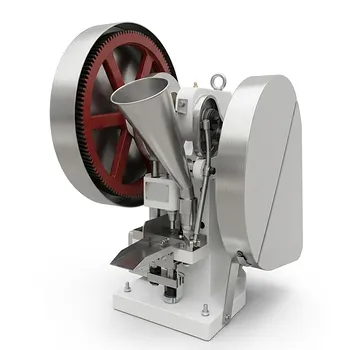
6-Ton Small Single-Punch Tablet Press — Laboratory Powder & Granule Tableting Equipment / Tablet Forming Machine
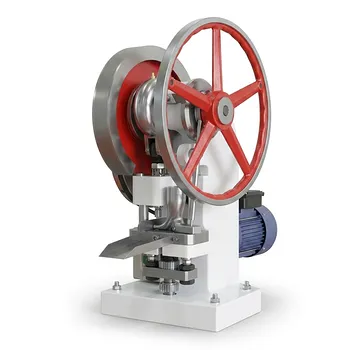
5 Ton Single Punch Tablet Press Laboratory Small Batch Production
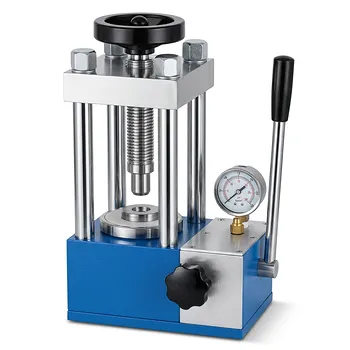
Manual Tablet Press with Dual Scale Pressure Gauge for Pharmaceutical Food Chemical Laboratory Sample Preparation
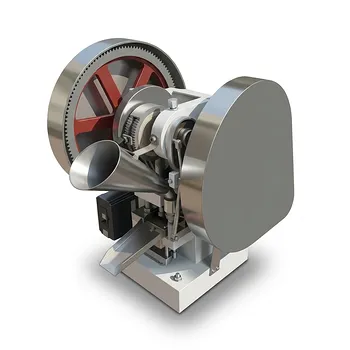
6 Ton Variable Frequency Single Punch Tablet Press
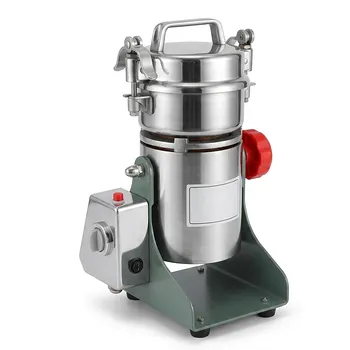
High Speed Swing Type Laboratory Pulverizer for Fine Powder Grinding and Sample Preparation

Small Trace Sample High Speed Pulverizer Grinder Laboratory Powder Mill
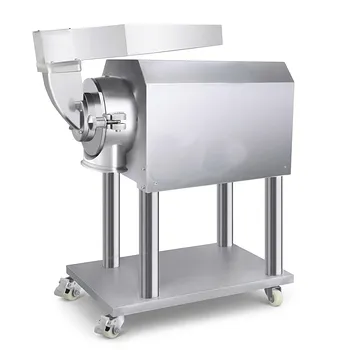
High Speed Small Laboratory Crusher for Dry Material Sample Preparation
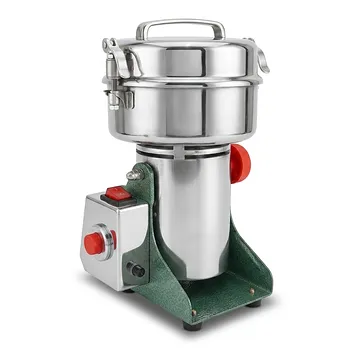
Small High-Speed Laboratory Grinder for Powder Processing
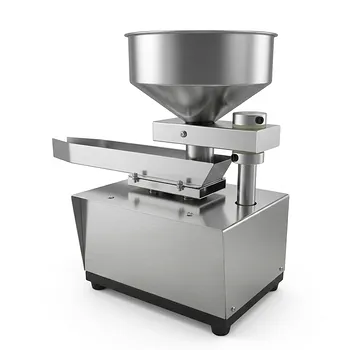
Automatic Vibrating Powder Feeder for Laboratory Material Processing Precision Vibratory Hopper Feeder for Granular and Powder Material Handling Industrial Grade Vibrating Tray Feeder for Consistent Material Sample Preparation
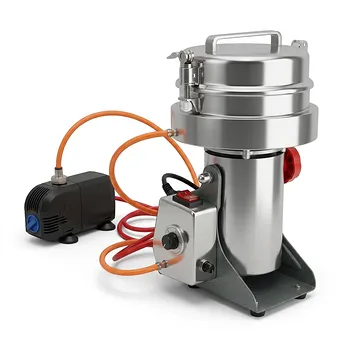
Water Cooled High Speed Grinder with Cryogenic Option for Laboratory Sample Preparation
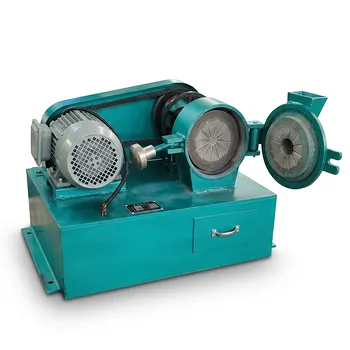
Laboratory Disc Mill Medium Hard Material Grinding Coal Coke Ore Pulverizer
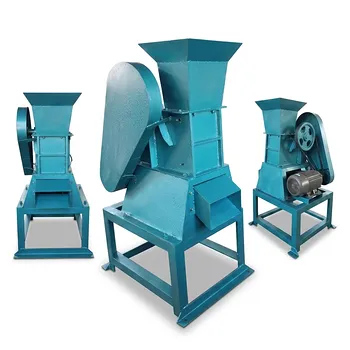
Custom Raised Height Laboratory Jaw Crusher for Precision Sample Preparation in Material Science
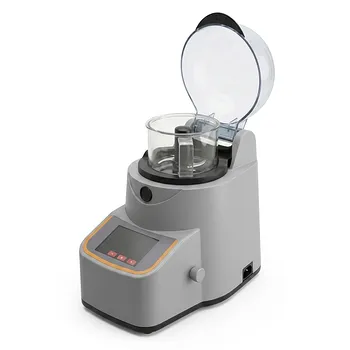
Industrial Knife Mill for Food and Biological Sample Preparation High Speed Laboratory Homogenizer
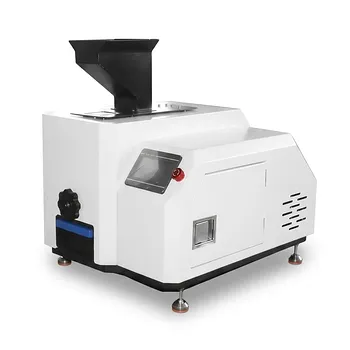
Laboratory Jaw Crusher 2025 Model for Ore and Brittle Material Crushing
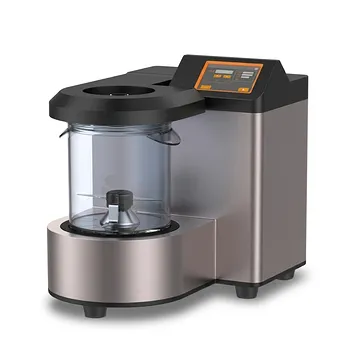
Laboratory Knife Mill for Large Volume Sample Homogenization and Food Preparation
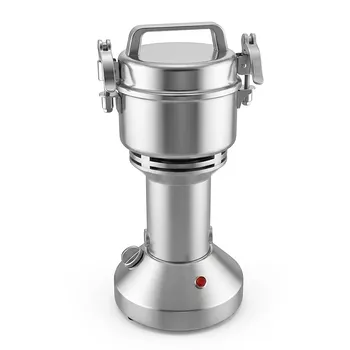
Small High Speed Upright Grinder for Laboratory Sample Preparation
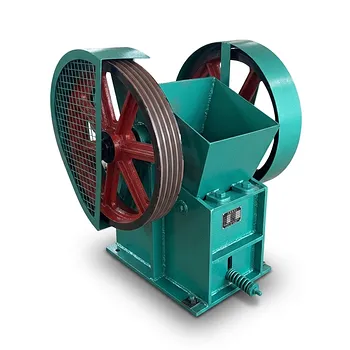
150x250mm Laboratory Jaw Crusher for Medium Hard Material Crushing and Sample Preparation
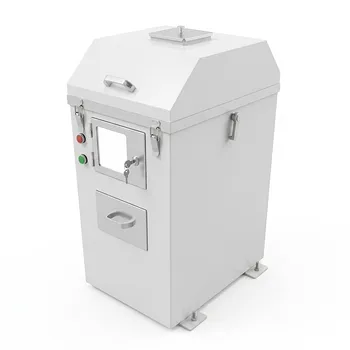
Sealed Double Roll Crusher for Laboratory Sample Preparation of Medium Hardness Materials
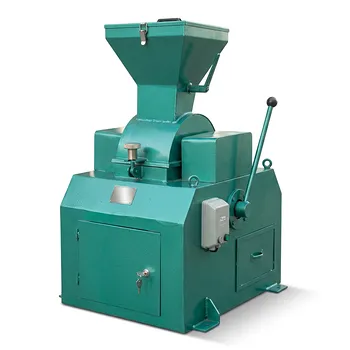
Laboratory Sealed Hammer Blade Crusher Divider for High Hardness Sample Preparation