From Dust to Data: How Precision Laboratory Presses Forge Truth in Mineral Testing
Jul 24, 2026
The Trouble with Powder
A geologist brings a bag of ore back from the field. The rocks are ancient, valuable, full of clues about formation and industrial value. She grinds them to powder, loads them into a testing machine, and waits for the numbers.
The porosity result comes back. It looks wrong.
She repeats the test. The number shifts. A third run. Different again.
The problem isn’t the mineral. It’s not even the instrument. The problem is the invisible chaos inside that small scoop of powder.
If you look at loose mineral grains under a microscope, you see a universe of variety: sharp edges, rounded corners, air pockets trapped between particles. When you pour that powder into a test fixture, you are not presenting a single material. You are presenting a random arrangement of voids and contacts.
To measure a material’s true physical character — its strength, its porosity, its sintering potential — you must first remove the randomness. You have to create something that does not exist in nature: a specimen that is exactly the same as every other specimen you will ever test.
That’s where precision laboratory presses enter the story.
The Quest for a Perfect Twin
Every physical property test is essentially a question: How does this material behave under defined conditions? But if the starting condition of the specimen varies — its density, its geometry, its internal flaw distribution — then you are not asking one question. You are asking a different question each time.
Precision pellet pressing answers this by manufacturing identical starting points. It takes loose, chaotic powder and forces it into a rigid, reproducible form.
The goal is not just a pellet. The goal is a twin. A structural duplicate of every pellet that came before it and every pellet that will come after.
This isn’t about neatness. It’s about the fundamental logic of science: isolate the variable. If you can hold the specimen constant, any difference you measure must belong to the material itself, not to your preparation.
Geometry as a Control Variable
Consider a simple measurement: water absorption. The amount of water a pellet absorbs depends not only on the mineral’s affinity for water but also on the exposed surface area. If one pellet has a slightly smaller diameter or a chipped edge, its geometric surface area changes. The data shifts. You have introduced a mathematical error before the experiment even begins.
Precision presses use hardened steel molds with tightly controlled diameters — often a standard like 12.92 mm. Each pellet is formed under identical containment. The volume, the flatness, the edge sharpness: all constant.
This geometric discipline transforms absorption and shrinkage measurements from rough estimates into legible, comparable numbers.
Density: The Hidden Confounder
Loose powder carries air. In fact, as much as 30 to 50 percent of its volume is empty space. When you begin a physical test with a loosely packed bed of particles, internal density gradients act like invisible fault lines.
A compression test doesn’t just compress material; it first collapses these variable pore networks. The result mixes two processes: pore collapse and material deformation. You can’t separate them.
A hydraulic press, applying a steady force of 50 to 200 kN, expels that air. It crushes the inter-particle voids and produces a pellet whose density is uniform and repeatable. The internal structure becomes a continuum, not a chaotic aggregate.
Now, when you measure bulk density or apparent porosity, you are measuring the material’s own closed porosity, not the accidental gaps you left in.
The Surface That Speaks for Itself
For X-ray chemical analysis, the surface of the pellet is the only surface the beam will ever know. A rough, uneven surface scatters the beam, introduces noise, and makes quantitative analysis a guessing game.
Here, the press acts like a nanoscale finisher. It moulds the powder against a polished die face, creating a surface that is flat to within microns. The X-ray photons now encounter a uniform interface. Their interactions are determined solely by the mineral’s chemistry, not by topography.
The data sharpens. The sense of confidence deepens.
The Psychology of Uniformity
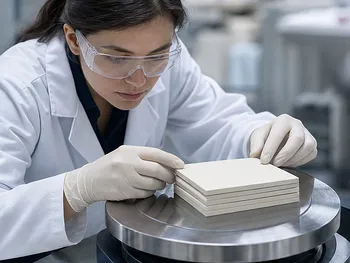
There is something deeply satisfying about pressing a pellet. You take disorder — grains that have tumbled for millennia — and you bind them, in seconds, into a small, perfect cylinder. It is tactile evidence that the world can be made predictable.
Human reasoning depends on pattern and repeatability. When a laboratory technician produces a pellet that looks and feels identical to the last hundred, the cognitive load drops. The mind can focus on the scientific question because the sample preparation has become a solved constant.
This psychological clarity is not trivial. It prevents second-guessing and reduces the subtle drift in technique that haunts manual processes. The machine becomes an anchor of trust.
Simulating Industry in a Thimble
Precision pressing also serves a prophetic function. The pellet you make today in a 20-ton lab press is a miniature of the briquette a factory will produce tomorrow.
By adjusting pressure in small steps, researchers map the relationship between compaction force and final strength. They find the sweet spot where the pellet is strong enough to survive handling but not so over-pressed that internal particle crushing occurs.
This sweet spot has economic meaning. It tells a plant manager the lowest energy input required to achieve a saleable product. It translates laboratory refinement into profit margin and sustainability.
Avoiding the Two Great Traps
Even the finest press cannot rescue poor upstream preparation.
The first trap is inhomogeneous binder distribution. If your wax or cellulose binder isn’t evenly dispersed through the powder, no amount of pressure can compensate. Local weak spots will form, and strength tests will read those defects, not the mineral.
The second trap is over-compaction. Press too hard, and the pellet may cap — delaminating in a clean horizontal split as it exits the die. The sample is ruined, and the data is lost.
Precision, in other words, is not just about applying force; it’s about knowing the limits.
This is why a successful pressing workflow rarely stands alone. It is the final act in a chain that begins with crushing, grinding, sieving, and mixing. Uniform particles, blended consistently, feed the press. The press does its work, but it relies on the quality of what it receives.
Selecting the Right Press for Your Purpose
The decision tree branches based on your primary data concern:
- Chemical/X-ray Analysis: Prioritize surface flatness and thickness consistency. A dedicated XRF pellet press, designed to deliver uniform briquettes with minimal binder interference, keeps the beam path constant.
- Mechanical Strength Testing: Choose a press with a wide, programmable load range. The ability to dial in forces from light compaction to full industrial loads lets you replicate real-world briquetting conditions in the lab.
- Comparative Research: Standardization is everything. A press that accepts precision-ground dies (like 12.92 mm) ensures that every specimen, across every project, starts from the same dimensional baseline.
- Advanced Research: If you need to eliminate anisotropic density gradients entirely, Cold or Warm Isostatic Pressing (CIP/WIP) applies pressure uniformly in all directions through a fluid medium, producing billets of unmatched homogeneity.
The Full Chain of Trust
A press’s ultimate value is not the tonnage on its gauge. It is the trust it builds between the raw earth and the final data set. That trust is earned through a system of sample preparation that respects the entire powder lifecycle.
From the moment a mineral enters the lab, it passes through a discipline of size reduction — jaw crushers and planetary ball mills that reduce it to a controlled particle size. Air-jet sieve shakers confirm that distribution. Mixers and defoaming units ensure homogeneity. Only then does the powder meet the precision press.
At KINTEK, we build that entire chain. Our laboratory solutions span crushers, cryogenic grinders, sieve shakers, and high-efficiency mixers, feeding into a full spectrum of hydraulic presses: XRF pellet presses for analytical precision, standard lab presses for routine work, and Cold/Warm Isostatic Presses and vacuum hot presses for the most demanding research. Every instrument is engineered to eliminate one more variable, to close one more gap between raw material and reproducible truth.
When the pellet ejects cleanly, when the X-ray spectrum resolves its peaks without noise, when the strength curve matches theory — that is the moment preparation becomes invisible. The material speaks for itself.
Quick Links
Suggested Products
Manual Tablet Press with Dual Scale Pressure Gauge for Pharmaceutical Food Chemical Laboratory Sample Preparation 6-Ton Small Single-Punch Tablet Press — Laboratory Powder & Granule Tableting Equipment / Tablet Forming Machine 5 Ton Single Punch Tablet Press Laboratory Small Batch Production 6 Ton Variable Frequency Single Punch Tablet Press Universal Laboratory Pulverizer Grinder for Small Batch Powder Processing and Material Science ResearchFurther Reading
The Layers That Wouldn’t Lie Flat: Why Nine Sheets of Ceramic Demand a Laboratory Press That Thinks in Microns The Hidden Fracture: Why Ceramic Feed Rods Fail Before the First Melt The Crack in the Crucible: A Systems Approach to Perfect Bismuth Ferrite Targets and the Hidden Physics of Powder Compaction The Invisible Architect: How Compaction Psychology Shapes Your LSM Ceramic’s Fate The Invisible Architect of Powder: How a Single Additive Saves Ductile Metals from Themselves
PowderPreparation
Last updated on May 14, 2026
Related Products
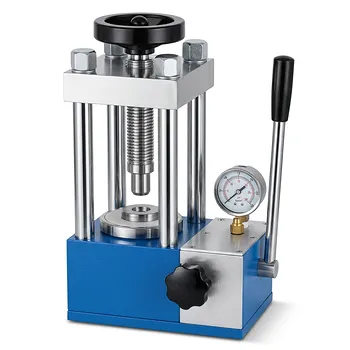
Manual Tablet Press with Dual Scale Pressure Gauge for Pharmaceutical Food Chemical Laboratory Sample Preparation
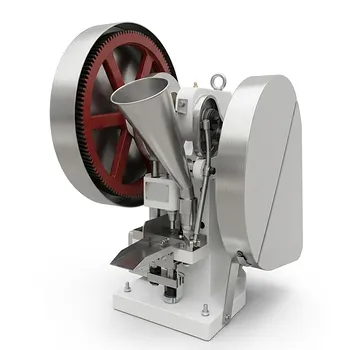
6-Ton Small Single-Punch Tablet Press — Laboratory Powder & Granule Tableting Equipment / Tablet Forming Machine
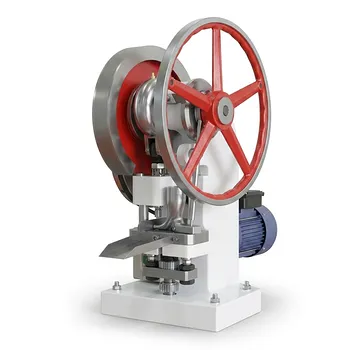
5 Ton Single Punch Tablet Press Laboratory Small Batch Production
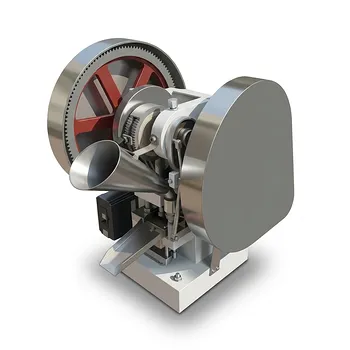
6 Ton Variable Frequency Single Punch Tablet Press
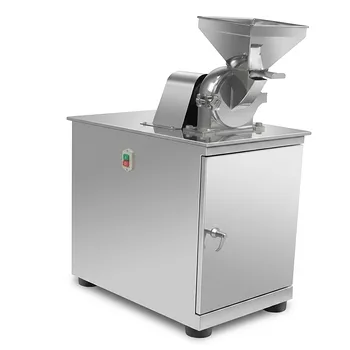
Universal Laboratory Pulverizer Grinder for Small Batch Powder Processing and Material Science Research
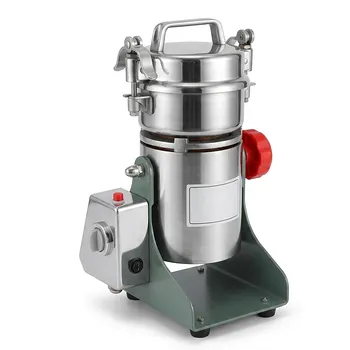
High Speed Swing Type Laboratory Pulverizer for Fine Powder Grinding and Sample Preparation
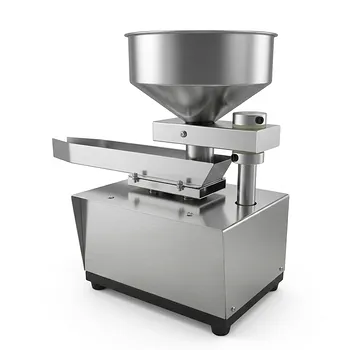
Automatic Vibrating Powder Feeder for Laboratory Material Processing Precision Vibratory Hopper Feeder for Granular and Powder Material Handling Industrial Grade Vibrating Tray Feeder for Consistent Material Sample Preparation
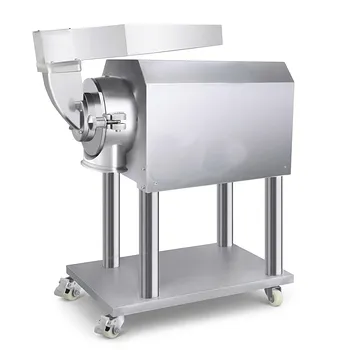
High Speed Small Laboratory Crusher for Dry Material Sample Preparation
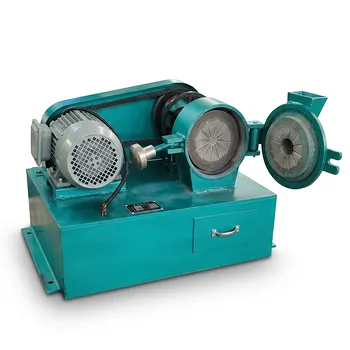
Laboratory Disc Mill Medium Hard Material Grinding Coal Coke Ore Pulverizer
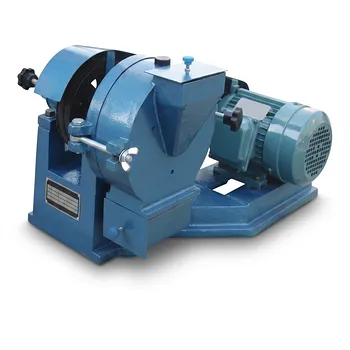
Laboratory Disc Mill for Ore and Mineral Sample Preparation
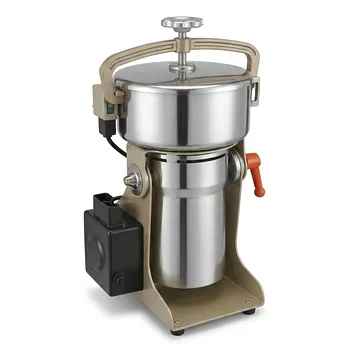
Multifunctional High Efficiency High Speed Laboratory Grinder
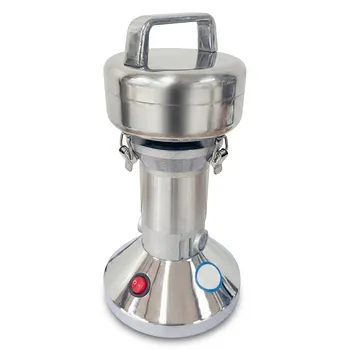
Small Trace Sample High Speed Pulverizer Grinder Laboratory Powder Mill
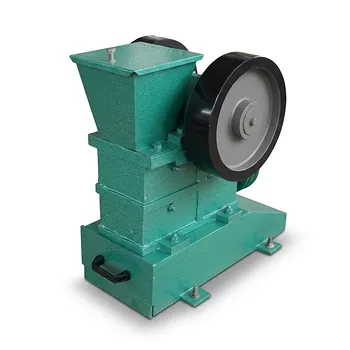
Laboratory Small Jaw Crusher 100x60mm
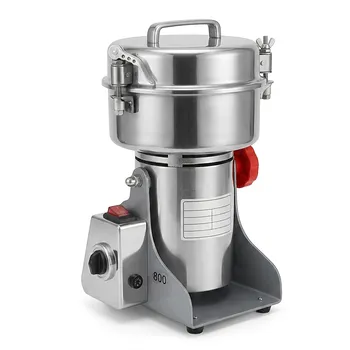
Small High-Speed Laboratory Grinder for Rapid Sample Preparation
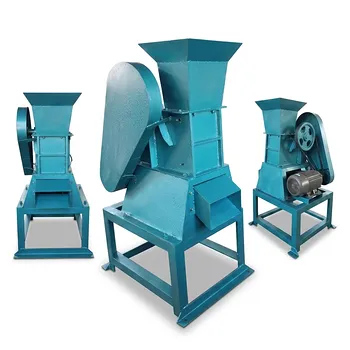
Custom Raised Height Laboratory Jaw Crusher for Precision Sample Preparation in Material Science
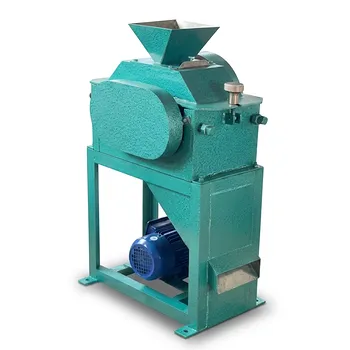
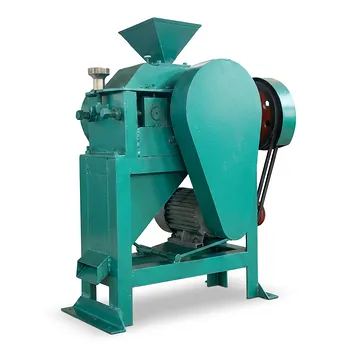
Laboratory Double Roll Crusher for Medium Hardness Materials Coal Ore Sample Preparation
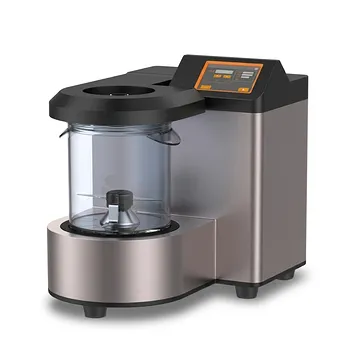
Laboratory Knife Mill for Large Volume Sample Homogenization and Food Preparation
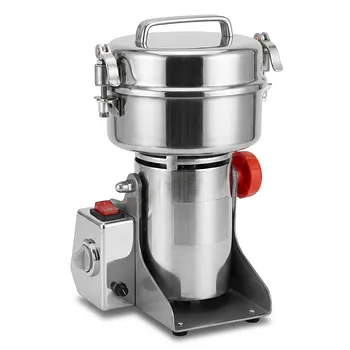
High Speed Laboratory Powder Grinder Small Batch Sample Preparation Mill
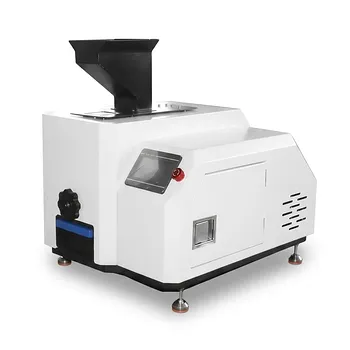
Laboratory Jaw Crusher 2025 Model for Ore and Brittle Material Crushing