The Invisible Enemy in Self‑Lubricating Tools: Why Mixing Is Harder Than You Think
Jul 14, 2026
The Prototype That Should Have Won
It was a Thursday when the lab results came back. The self‑lubricating cutting insert—a cautious marriage of alumina and hexagonal boron nitride—had turned two bars of Inconel into confetti. Then, at bar three, everything collapsed. The flank wear curve went vertical, the surface finish cratered, and the tool failed with the kind of ragged unpredictability that makes a researcher’s stomach drop.
The team dissected the insert. Under the microscope, the answer was hiding in plain sight: pockets of pure lubricant. Soft islands in a hard sea. Localized weaknesses that had lain in wait since the very first mixing step.
They had not made a homogeneous composite. They had made a geological artifact. And geology is not what you want inside a cutting edge.
This is the moment a lot of powder‑based innovation stalls. It does not come from bad chemistry. It comes from a mixing problem that is partly physical, partly psychological. The physical part is agglomeration. The psychological part is the illusion of adequate mixing—our natural tendency to believe that if we shook something long enough, it must be uniform.
The Illusion of Mixing
We trust our tools to do what we ask. Put powder in a jar, rotate it for four hours, and the contents should be random and blended, the way cream swirls into coffee. But powders are not liquids. They are discrete solids with surface energies, van der Waals forces, and size distributions that conspire against randomness.
Solid lubricants like graphite, MoS₂, or h‑BN are prime offenders. They form micro‑agglomerates—tiny clusters that survive conventional grinding intact. To the naked eye, the powder looks smooth. To an SEM, it is a mosaic of defect sites waiting to nucleate failure.
The psychology here is subtle. As Morgan Housel might point out, the most dangerous risks are the ones you cannot see and therefore stop thinking about. When a blend pours evenly from a vial, the human brain stamps it homogeneous. That stamp is a cognitive shortcut. In self‑lubricating tools, the bill for that shortcut arrives as chipping, thermal shock, or a wear rate that makes no sense.
Closing the gap between “looks mixed” and “is mixed at the sub‑micron scale” requires a different kind of motion. It demands energy densities that do not just nudge particles—they shatter their self‑assembled cliques.
How a Dual‑Jar Planetary Mill Rewrites the Physics
The Geometry of Collision
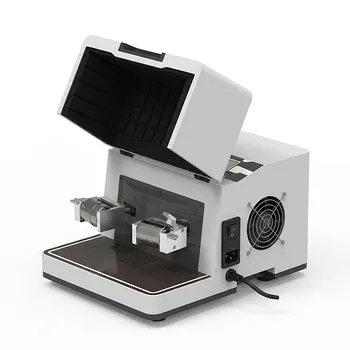
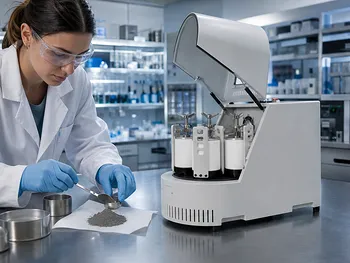
A planetary ball mill does not just spin. It generates three simultaneous force fields: centrifugal acceleration from the main disc rotation, Coriolis‑style forces from the jar’s own revolution, and violent impact‑shear events as grinding balls ricochet inside the jar. This is synchronized chaos—the jars orbit one way while rotating the opposite, creating a field that can exceed 30 g.
The effect is not simply “more grinding.” It is a fundamentally different regime. In a standard gravity mill, a ball falls. In a planetary mill, a ball is thrown against the jar wall with enough energy to crack ceramic grains along crystallographic boundaries. That is the kind of stress that turns aggregates into individuals.
The Nanoscale Promise
Self‑lubricating cutting tools live and die by grain size. Hardness climbs as the matrix refines. Wear resistance does the same. A dual‑jar planetary mill can drive dry precursors down to 0.1 µm—below the threshold where Hall‑Petch strengthening really begins to sing.
This is not a trivial aesthetic. When the matrix grain size shrinks, each lubricant inclusion becomes a smaller, more numerous discontinuity. Instead of a few catastrophic voids, you get a three‑dimensional network of evenly spaced lubrication points. The tool wears like marble, not like sandstone.
Killing Clusters Before They Kill Your Tool
The hardest thing to mix is a soft phase in a hard matrix. The soft phase deforms, agglomerates, and floats in clusters. The hard phase fractures. A planetary mill, with its high‑frequency impact regime, rips those clusters apart mechanically and repeatedly until they cannot re‑form.
I think of it as a forced divorce. Two powders that want to stay separate are beaten into a single destiny. The result is a composite where every cubic micron contains roughly the same ratio of lubricant to matrix. That uniformity is what lets a cutting tool survive the thermal gradient from 800 °C at the rake face to ambient only millimeters away.
The “Cocktail Effect” and Atomic‑Level Mixing
High‑entropy cutting tools—those with five or more principal elements—depend on something called the cocktail effect. The idea is that local compositional variations kill the entropy‑stabilized single‑phase structure. You need homogeneity not just at the microscale, but near the atomic scale.
A dual‑jar planetary mill enables this through mechanical alloying. Repeated cold welding and fracturing cycles diffuse elements into each other without melting. Programmable cycles allow you to introduce rest periods that prevent premature phase separation, something you learn to respect the first time a batch overheats and precipitates a fragile intermetallic right before your eyes.
The Psychology of Repeatability
Material scientists do not just want a good batch. They want the same good batch ten times in a row. That craving for repeatability is psychological as much as methodological. It builds confidence that a hypothesis is real, not a fluke.
Planetary mills feed this need through programmable control: rotation speed, milling time, cycle count, and reversal intervals. When you return to the same parameter file and get the same particle‑size distribution within 0.2 µm, you trust your results. That trust is the currency of materials development.
The dual‑jar configuration doubles down on this. Two jars run simultaneously under identical conditions, doubling sample mass and giving you a built‑in replicate. If both jars deliver matching diffraction patterns, you sleep better. If they diverge, you caught a process drift before it contaminated a week’s worth of experiments.
The Trade‑offs You Have to Manage
Heat: The Silent Saboteur
High‑energy milling is exothermic by nature. Jar temperatures can spike, and with them, the risk of thermal degradation of sensitive solid lubricants. MoS₂, for instance, begins to oxidize around 350 °C. If your jar hits that threshold for even a few minutes, you are no longer depositing MoS₂ into the matrix; you are embedding molybdenum oxide, which is not a lubricant.
The solution lies in programmed cooling cycles and, when necessary, cryogenic grinding. That is where a liquid nitrogen cryogenic grinder becomes the planetary mill’s natural partner—embrittling the material before milling so that particle reduction outpaces heat accumulation.
Media Wear and Purity
Even tungsten carbide jars wear down. Over hundreds of cycles, sub‑micron debris from the media itself enters the powder. For cutting tools that demand thermal stability and hardness, that contamination is a silent variable. Monitoring media mass, changing jars at documented intervals, and selecting chemically compatible materials (zirconia for reactive matrices, tungsten carbide for maximum hardness) are not afterthoughts. They are part of the method.
Laboratory to Industry
A planetary mill is a laboratory hero. But its parameters do not scale linearly. The energy density that works in a 100 ml jar will not directly translate to a 5‑liter industrial attritor. The job of the lab mill is to define the materials science—the phase composition, the doping levels, the lubricant fraction. Once that science is locked in, scaling becomes an engineering problem, not a science problem.
This is a healthy division of labor. The dual‑jar planetary mill gives you the scientific confidence to hand a well‑characterized powder to a process engineer and say, “This works. Make more of it.”
Choosing Your Milling Strategy
Good decisions come from matching the grinding philosophy to the material goal. Here is a simplified decision framework, viewed through the lens of what you actually need the tool to do.
| Primary Goal | Milling Strategy | Why It Works |
|---|---|---|
| Maximum Hardness | High‑speed, short‑duration cycles with tungsten carbide media | Minimizes grain growth; WC contamination is often harmless in carbide‑based matrices |
| Perfect Lubricant Dispersion | Moderate speed, extended duration with frequent reversal | Breaks agglomerates without over‑amorphizing the matrix; reversal prevents dead zones |
| High‑Entropy Alloy Stability | Programmed cycles with cooling pauses; zirconia media | Prevents heat‑driven phase separation and iron contamination from WC |
| Thermally Sensitive Systems | Cryogenic pre‑treatment + low‑energy intervals | Embrittles the matrix before milling so less energy is needed, protecting the lubricant |
The Bigger Picture: From Powder to Performance
A milling result is only as valuable as the compaction step that follows. A perfectly homogenized powder can be ruined by a pressing cycle that leaves density gradients, just as a meticulous pressing can be wasted on a poorly milled powder. The two steps are one process.
That is why a complete laboratory solution includes not just planetary mills, but the presses that turn powder into bodies. Cold and Warm Isostatic Presses (CIP/WIP) apply uniform pressure from all directions, eliminating the density variations that uniaxial pressing leaves behind. For self‑lubricating tools destined for vacuum sintering, a vacuum hot press consolidates powder at temperature, reducing porosity without damaging the lubricant phase. An XRF pellet press verifies composition in minutes, closing the loop between mixing and measurement.
The dual‑jar planetary ball mill is the beginning of that chain—the place where atomic‑scale mixing meets human‑scale control. It turns the invisible enemy of agglomeration into a solved problem, one jar rotation at a time.
From crushers that reduce coarse feed to jet mills that polish particles with compressed air, from sieve shakers that classify with precision to defoaming mixers that remove the tiniest trapped bubbles, the aim is the same: to give researchers a reproducible path from raw powder to testable truth. In a field where a few microns of inhomogeneity can mean the difference between a tool that cuts and a tool that crumbles, that path is worth protecting.
When your next prototype fails early, don’t just blame the sintering cycle. Walk upstream. Look at your powder. And ask whether your mixing step sees what you think it sees. The answer might change everything.
Quick Links
Suggested Products
Dual Station Planetary Ball Mill 24L High Energy Laboratory Planetary Ball Mill for Nano Grinding and Colloidal Mixing of Hard and Brittle Materials High Energy Omnidirectional Planetary Ball Mill 16L Heavy Duty Horizontal Planetary Ball Mill for Efficient Industrial Grinding and Sample Preparation Vertical Semi Circular Planetary Ball Mill for Laboratory Precision GrindingFurther Reading
The Energy Budget of a Single Impact: How the Ball-to-Powder Ratio Shapes Nanocrystalline Reality The Gentle Violence of a Planetary Mill: Why the Most Critical Moment in SiC–VC Composites Happens Before Any Heat The High-Energy Gamble: What SiBCN-rGO Fibers Teach Us About Perfect Homogenization The 65-Micron Gate: Unlocking the True Isotopic Fingerprint of Portland Cement The Unseen Razor: How Planetary Ball Mills Sculpt the World’s Sharpest Abrasives
PowderPreparation
Last updated on May 14, 2026
Related Products
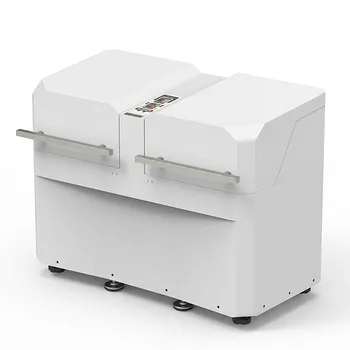
Dual Station Planetary Ball Mill 24L
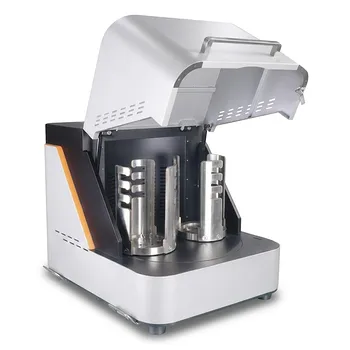
High Energy Laboratory Planetary Ball Mill for Nano Grinding and Colloidal Mixing of Hard and Brittle Materials

High Energy Omnidirectional Planetary Ball Mill 16L
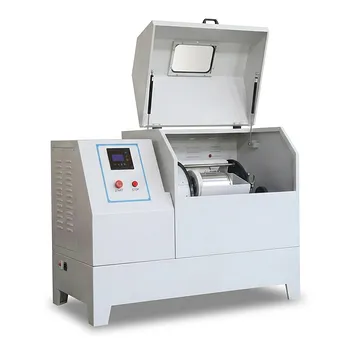
Heavy Duty Horizontal Planetary Ball Mill for Efficient Industrial Grinding and Sample Preparation
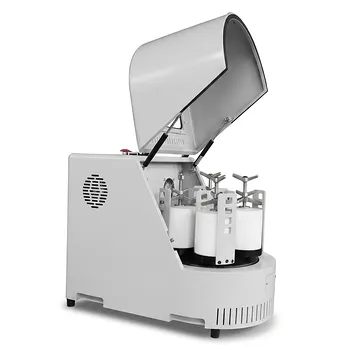
Vertical Semi Circular Planetary Ball Mill for Laboratory Precision Grinding
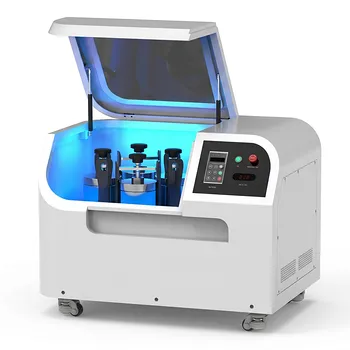
Planetary Ball Mill 12L

360° Rotating Omnidirectional Laboratory Planetary Ball Mill for Homogeneous Ultra-Fine Grinding and Mixing
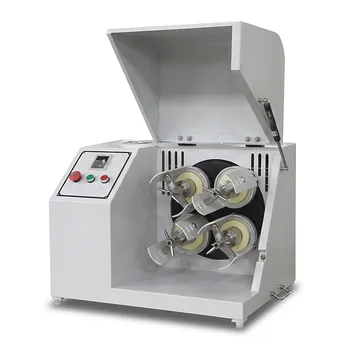
Horizontal Light Duty Planetary Ball Mill for Laboratory Sample Preparation
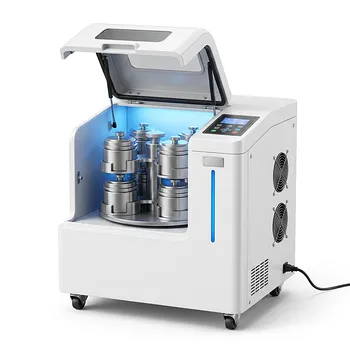
High Energy Omnidirectional Planetary Ball Mill 20L

Vertical Square Planetary Ball Mill for Laboratory Sample Preparation and Nanoscale Grinding

Vertical Production Planetary Ball Mill for High Throughput Powder Processing

Miniature Planetary Ball Mill with Vacuum Grinding and High Efficiency for Laboratory Sample Preparation

High Energy Planetary Ball Mill for Nano Scale Grinding and Mechanical Alloying

8L Planetary Ball Mill for Laboratory Grinding and Sample Preparation
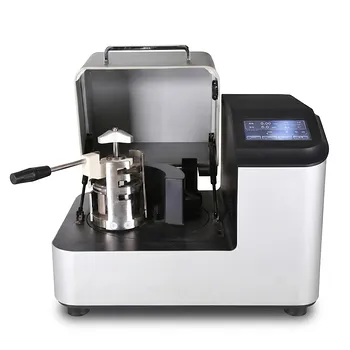
High Energy Laboratory Planetary Ball Mill for Nano Grinding and Material Science Sample Preparation
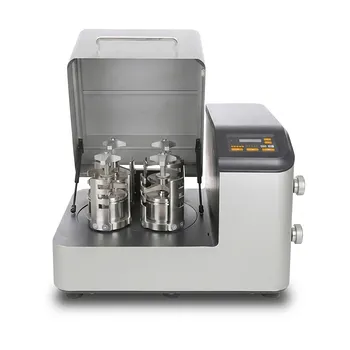
High Energy Planetary Ball Mill for Nano Scale Grinding and Colloidal Mixing in Material Science Research
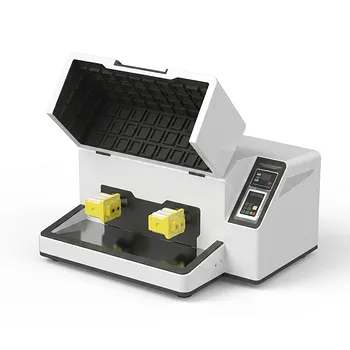
Multi-Platform Nanoscale High-Energy Vibratory Ball Mill

Industrial Planetary Centrifugal Vacuum Defoaming Mixer for High Viscosity Paste and Advanced Material Science
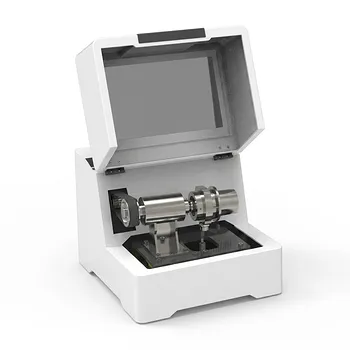
Single Tank High Energy Vibratory Ball Mill for Laboratory Grinding and Mixing