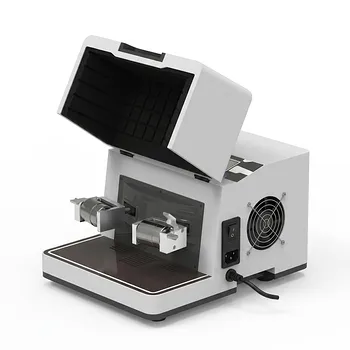
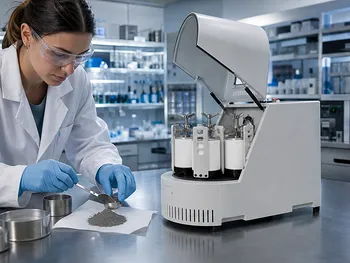
The Gentle Violence of a Planetary Mill: Why the Most Critical Moment in SiC–VC Composites Happens Before Any Heat
Oct 03, 2026
The Afternoon the Microscope Told a Lie
The lab had done everything right. The sintering curve was textbook. The hot press ramped with surgical precision. And yet, the polished cross-section under the microscope told a different story—dark islands of vanadium carbide clustered like forgotten punctuation in a silicon carbide sea.
The failure wasn’t thermal. It wasn’t mechanical. It happened before the heat, in a stage so mundane it rarely gets a second thought: powder mixing.
That afternoon reshaped an entire research program, not because the team discovered a new material, but because they rediscovered an old truth. In powder metallurgy, the quality of the final composite is largely encoded in the first step.
Those few minutes inside a planetary ball mill are the quiet custodians of everything that comes after.
The Unseen Architecture of a Composite
Why “Mixing” Is the Wrong Word
We call it mixing, but that’s a dangerous understatement. Traditional mixing arranges ingredients. What a planetary ball mill does is closer to architecting—forcing dissimilar particles into a new spatial reality where distribution, surface energy, and defect populations are intentionally redesigned.
For an SiC–VC composite, the goal is not proximity. It’s micron-level intimacy. Every VC reinforcement particle must sit exactly where it can pin a grain boundary, suppress abnormal growth, and transfer load. Loose clustering means loose performance.
The Problem Powder Never Announces
Fine ceramic powders arrive with a secret: they cling to themselves. Van der Waals forces turn them into soft agglomerates that behave like large, treacherous grains during sintering. If these clusters survive, they become structural time bombs—regions of low density, stress concentration, and unpredictable failure.
The planetary ball mill is the tool that forces this secret into the open, then eliminates it.
How a Planetary Mill Thinks
It doesn’t think, of course. But it enforces a physical logic that engineers can harness.
Planetary Motion as a Design Language
Inside the jar, the balls don’t just tumble. The sun wheel rotates one way, the jar rotates the other, and the combined motion creates high-energy collisions that are part hammer blow, part sideways shear. This dual action does two things simultaneously:
- Impact shatters brittle agglomerates into their constituent particles.
- Shear smears and coats SiC surfaces with VC, distributing the reinforcement phase at a scale no static mixer can approach.
The result is not a mixture, but a composite on pause—waiting for the heat that will lock it into place.
Reactivity Is Not a Chemical Gift; It’s Engineered
Mechanical energy doesn’t just break things. It creates fresh surfaces, jagged edges, and a hunger for bonding. This is why well-milled powders sinter so much more readily. The increased specific surface area lowers the activation barrier for diffusion, allowing densification to begin earlier and proceed more uniformly.
In plain terms: the mill pre-pays some of the energy debt that sintering would otherwise have to settle alone.
The Psychology of Trade-offs Inside a Milling Jar
Here’s where the story gets deeply human. The same high energy that perfects a powder can also poison it. Every operator faces a three-headed dilemma, and the best decisions come from understanding, not avoiding, the trade-offs.
1. Contamination: The Silent Doping
The grinding media wear. Zirconia, alumina, tungsten carbide—each donates microscopic fragments to the batch. At parts-per-million, this is noise. At tenths of a percent, it becomes a property modifier you never asked for.
Engineers who obsess over sintering profiles often neglect this upstream chemistry. The answer isn’t zero wear (that’s physically impossible), but wear-matching: choosing jar and ball materials that align with the matrix composition. SiC linings for SiC–VC work, for example.
2. Heat: The Invisible Reactant
High rpm means friction, and friction means temperature. Inside an un-cooled jar, local hotspots can oxidize powders prematurely or trigger phase changes that shouldn’t happen until sintering. What begins as mechanical blending can drift into unintended thermochemistry.
The solution isn’t always slower speeds. Sometimes it’s pulsed milling—interspersing bursts of energy with deliberate cooling periods. This respects the material’s thermal boundaries while still delivering the required mechanical dose.
3. The Trap of “Just a Little More”
Over-milling is the most seductive mistake. The particle size curve flattens, specific surface area plateaus, and yet the mill keeps running. At this stage, fines begin to weld onto larger particles, forming new agglomerates that are mechanically cold-welded, not loosely clumped. You end up with a powder that is worse than when you started—and you paid for the privilege in time, media, and electricity.
Recognizing this point of diminishing returns requires data, not instinct. Particle size analysis. BET surface area measurements. SEM images that don’t lie. The best milling protocols have a stopping rule, not just a timer.
The Engineer’s Checklist for Powder Truth
When a lab approaches us with a powder processing challenge, the conversation often starts with a simple set of goals. The planetary ball mill becomes the decision hub, but the logic applies across the entire material preparation workflow.
| Your Core Goal | How the Planetary Mill Delivers | What to Watch Closely |
|---|---|---|
| Maximum final density | High reactivity through extended surface area generation | Over-milling, which can cause re-agglomeration and contamination |
| Maximum chemical purity | Matched jar/ball materials (e.g., SiC-lined) | Trace element pickup from media; plan for regular media replacement |
| Structural uniformity | Optimized ball-to-powder ratio and rotational speed | Heat buildup; consider intermittent cooling cycles |
| Process reproducibility | Fixed protocols with particle size checkpoints | Variability in raw powder lots; validate each batch |
From Mill to Monolith: Why It Takes a System
A planetary ball mill alone is like a perfectly tuned engine without a chassis. The powder it produces still needs to be handled, formed, and consolidated. This is where the entire upstream philosophy meets downstream equipment.
The Powder-to-Press Continuum
After milling, the high-reactivity powder is sensitive. It can pick up moisture, segregate, or partially oxidize if handled carelessly. That’s why powder mixers, sieve shakers, and controlled-atmosphere transfer aren’t accessories—they’re continuity.
And when the moment comes to consolidate, the ultra-homogeneous powder must meet a press that matches its ambition. Cold Isostatic Pressing (CIP) applies uniform pressure in all directions, preserving the delicate distribution the mill created. For advanced ceramics, vacuum hot pressing goes further, simultaneously removing adsorbed gases while driving densification.
The Quiet Integration
At our facility, we design and manufacture this entire chain:
- Planetary ball mills, jet mills, and cryogenic grinders for the initial transformation from coarse powder to reactive fine precursor.
- Air-jet sieve shakers and test sieves to validate that particle size distribution hasn’t drifted.
- Hydraulic presses—CIP, WIP, vacuum hot presses, XRF pellet presses—that carry the mill’s work into a dense, testable solid.
This integration matters because material science projects rarely fail in the way an FEM simulation predicts. They fail in the gaps between processing steps, where assumptions go unexamined and powder properties quietly regress.
The Poetry of Controlled Force
There’s an engineer’s romance in watching a planetary mill spin against the backdrop of a larger project. Those rotating jars contain a contradiction: violent enough to fracture crystal lattices, precise enough to build the foundation of a turbine blade, an armor tile, or a new generation of solid-state conductors.
Every rotation widens the window for what’s possible in the sintering furnace. The mill doesn’t just prepare powder. It prepares potential.
And potential, well-managed, is what turns a mixture of SiC and VC into a material that survives extremes no monolithic ceramic ever could.
When your next composite development hinges on the quality of its starting powder, the conversation shouldn’t start with the sintering curve. It should start with the mill—and the system around it. Contact Our Experts
Quick Links
Suggested Products
Vertical Semi Circular Planetary Ball Mill for Laboratory Precision Grinding High Energy Planetary Ball Mill for Nano Scale Grinding and Mechanical Alloying Heavy Duty Horizontal Planetary Ball Mill for Efficient Industrial Grinding and Sample Preparation Vertical Production Planetary Ball Mill for High Throughput Powder Processing 360° Rotating Omnidirectional Laboratory Planetary Ball Mill for Homogeneous Ultra-Fine Grinding and MixingFurther Reading
The 65-Micron Gate: Unlocking the True Isotopic Fingerprint of Portland Cement The Energy Budget of a Single Impact: How the Ball-to-Powder Ratio Shapes Nanocrystalline Reality The High-Energy Gamble: What SiBCN-rGO Fibers Teach Us About Perfect Homogenization The Forge at 10,000 g: How a Planetary Ball Mill Designs Self-Lubricating Composites Atom by Atom The Alchemist's Hammer: How a Planetary Ball Mill Solves the Diffusion Dilemma in Rare-Earth Doped Ceramics
PowderPreparation
Last updated on May 14, 2026
Related Products
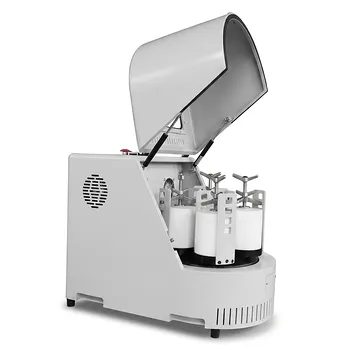
Vertical Semi Circular Planetary Ball Mill for Laboratory Precision Grinding

High Energy Planetary Ball Mill for Nano Scale Grinding and Mechanical Alloying
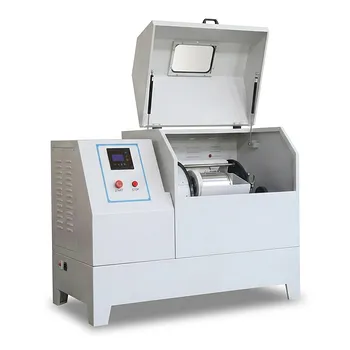
Heavy Duty Horizontal Planetary Ball Mill for Efficient Industrial Grinding and Sample Preparation
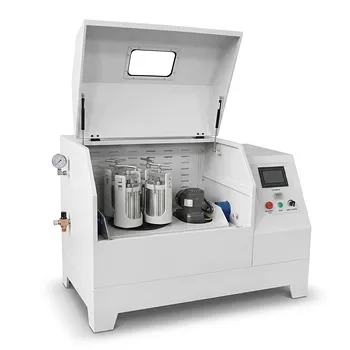
Vertical Production Planetary Ball Mill for High Throughput Powder Processing
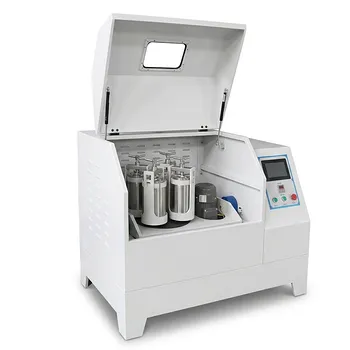
360° Rotating Omnidirectional Laboratory Planetary Ball Mill for Homogeneous Ultra-Fine Grinding and Mixing
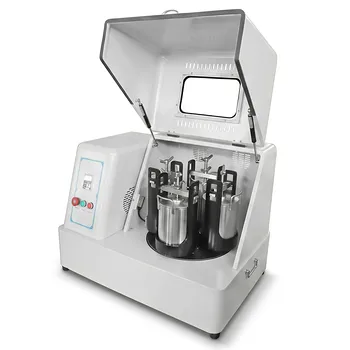
Vertical Square Planetary Ball Mill for Laboratory Sample Preparation and Nanoscale Grinding
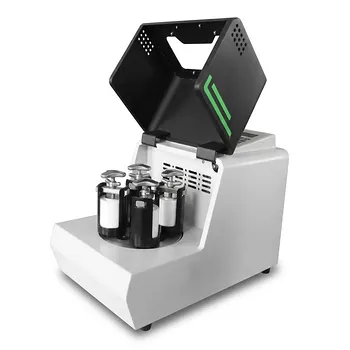
Miniature Planetary Ball Mill with Vacuum Grinding and High Efficiency for Laboratory Sample Preparation
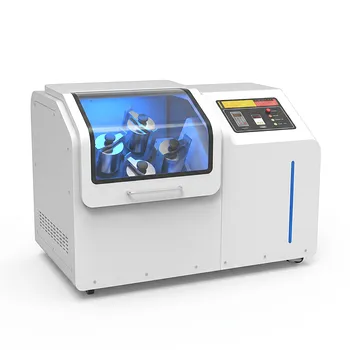
High Energy Omnidirectional Planetary Ball Mill 16L
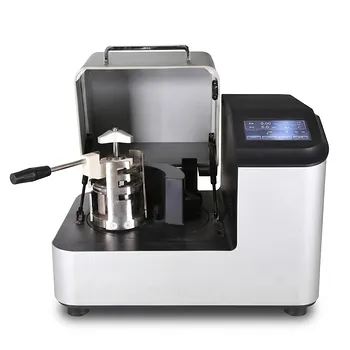
High Energy Laboratory Planetary Ball Mill for Nano Grinding and Material Science Sample Preparation
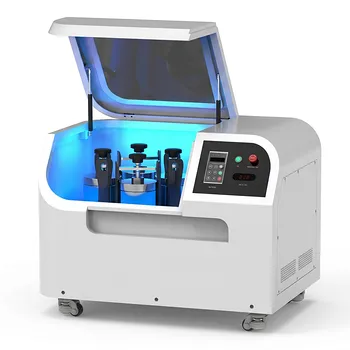
Planetary Ball Mill 12L
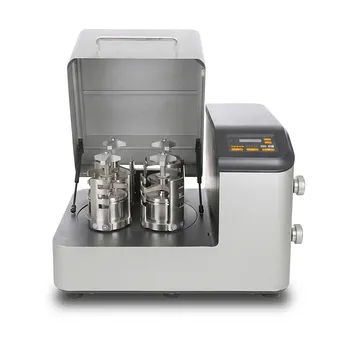
High Energy Planetary Ball Mill for Nano Scale Grinding and Colloidal Mixing in Material Science Research
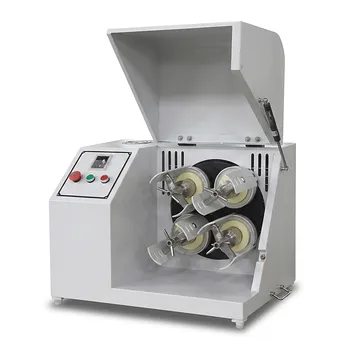
Horizontal Light Duty Planetary Ball Mill for Laboratory Sample Preparation
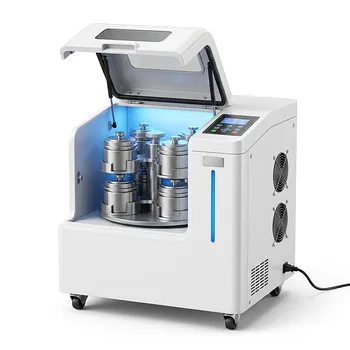
High Energy Omnidirectional Planetary Ball Mill 20L
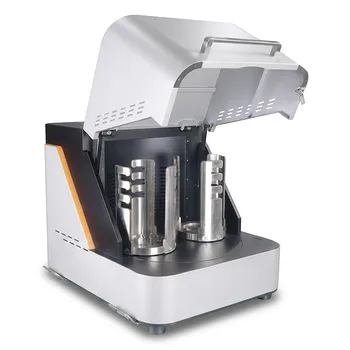
High Energy Laboratory Planetary Ball Mill for Nano Grinding and Colloidal Mixing of Hard and Brittle Materials

8L Planetary Ball Mill for Laboratory Grinding and Sample Preparation
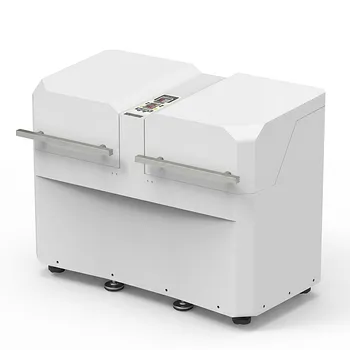
Dual Station Planetary Ball Mill 24L

Multi-Platform Nanoscale High-Energy Vibratory Ball Mill

Nano High Energy Vibratory Ball Mill for Laboratory Sample Preparation
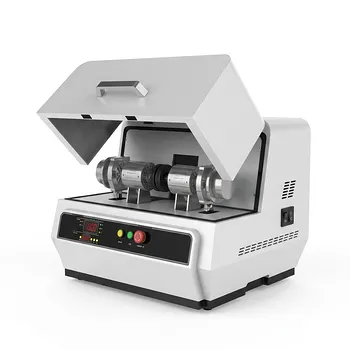
Dual Jar High Energy Vibratory Ball Mill