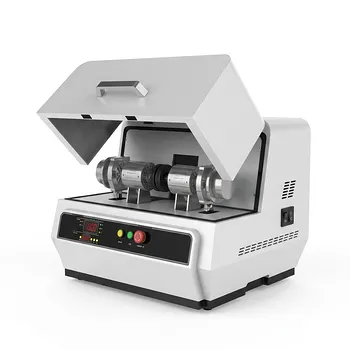
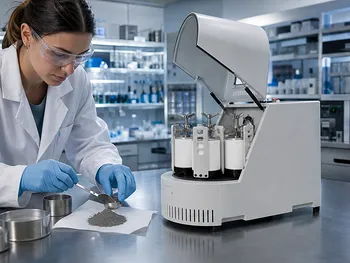
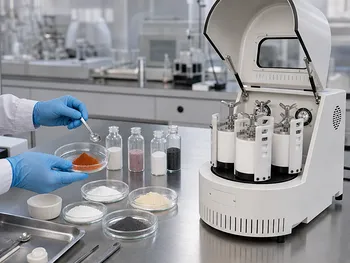
The Fragile Art of Separation: Why Ball Milling Silicon Nitride Whiskers Demands More Than Just Grinding
Oct 07, 2026
The Morning a Whole Batch Failed
The slurry looked right. It poured smoothly into the gel-casting mold. The viscosity numbers matched the spec sheet. But three weeks later, after sintering, the cross-section revealed a catastrophe: microscopic agglomerates scattered like pebbles in clay, each one a potential crack initiation point. The whiskers had never truly separated.
That engineer didn't have a "mixing problem." He had a dispersion problem — one of the most misunderstood processes in advanced ceramics. And it starts with a simple ball mill.
The primary function of ball milling in silicon nitride whisker (Si₃N₄w) preform slurries isn’t just to mix. It’s to de-agglomerate. To take a tangled nest of high-aspect-ratio needles and gently convince them to float apart, surround themselves with chemistry, and stay that way, hour after hour, without breaking them.
This is a story about a mechanical process that’s simultaneously blunt and delicate — and why choosing the right equipment determines whether you make a breakthrough or a paperweight.
The Illusion of "Mixed"
Whiskers Love to Clump
Silicon nitride whiskers arrive not as lonely individuals, but as clusters. Van der Waals forces, electrostatic charges, and the sheer physical entanglement of their needle-like shape create agglomerates that look unified but are actually hiding weak interfaces.
Ball milling works by applying high-frequency impact and shear. In a properly loaded mill, the grinding media cascade onto the powder and the liquid, transferring energy that breaks those clusters apart without relying on mere turbulence.
What "Uniform" Really Means
Uniform dispersion is not about averages. It's about per-particle isolation. If nine whiskers are perfect and one is a ten-whisker clump, you don’t have a uniform slurry — you have a suspension with a structural time bomb.
Milling prevents the localized concentration zones that survive into the green body. In a gel-casting or molding operation, those dense spots create differential shrinkage during sintering, leading to warpage or outright cracks. The mechanical force of the mill distributes the reinforcement phase down to the microscopic level.
The Chemistry Waits for the Physics
You don't add monomers and crosslinking agents to an unmilled suspension and hope for the best. When whiskers are first fully dispersed, every subsequent chemical addition coats the surfaces evenly. The gelation reaction then forms a uniform three-dimensional network around each whisker, instead of around agglomerates. Physics sets the stage; chemistry plays upon it.
The Viscosity Paradox
Low Viscosity Isn’t Just Convenience
We chase low-viscosity slurries not because they pour nicely, but because they escape trapped air and fill intricate mold cavities without leaving voids. Ball milling controls this internal friction by preventing whiskers from interlocking into high-viscosity networks. Dispersants help, but the mill's mechanical separation is the prerequisite.
The Specific Surface Area Effect
Every time a ball strikes a whisker, the mechanical energy can increase its specific surface area and reactivity. The goal is to expose more surface to sintering additives like alumina or yttria — not to pulverize the whisker. Intimate contact between the reinforcement and the liquid phase is the secret to dense, tough silicon nitride.
Stability Through Motion
A well-milled slurry doesn't just look homogeneous at t=0. It remains a stable suspension, resisting the sedimentation that would otherwise skew the solid content from top to bottom of a mold. When your process requires 55–65% solid loading, stability isn't optional. It's structural.
The Three Traps Even Experts Fall Into
The psychology of milling is dangerous. We assume longer is better. More energy, faster results. But for whiskers, that logic backfires.
Trap 1: The Broken Needle
Excessive milling chops the whiskers into shorter segments. The aspect ratio — the very reason you chose whiskers over powder — drops. Your toughening mechanism, based on crack deflection and bridging by long needles, silently evaporates. You won’t see the damage until the flexural strength numbers come back and they’re 15% lower. You blame the sintering; the mill did it.
Trap 2: The Contamination Creep
High-energy impacts between grinding balls and the slurry inevitably wear the media. A microscopic amount of material from the balls — alumina, zirconia, steel — enters your mixture. For structural ceramics demanding dielectric purity, this contamination is a ghost error. You measure it late, trace it back to a mill jar, and realize you’ve been doping your silicon nitride for weeks.
Trap 3: The Time Sink
Extending milling duration from one week to two can reduce particle size and improve homogeneity. But it also doubles energy consumption and ties up production. There’s a diminishing return curve that many teams ignore because they’re afraid of under-milling. Precise process control isn’t about maxing out the timer; it’s about finding the knee of the curve.
Practical Paths for Different Outcomes
How you apply ball milling depends on what you want your ceramic to become. Matching the milling strategy to the fabrication route prevents over-processing and under-dispersion.
| Fabrication Goal | Milling Strategy | Equipment Requirement |
|---|---|---|
| Gel-Casting High-Quality Preforms | Long-duration, low-speed milling to de-agglomerate without fracturing. Maintain low viscosity for complex molds. | High-torque mill with controlled rpm, ceramic-lined jars, and gentle media selection. |
| DLP 3D Printing Slurries | Sub-micron dispersion, extremely stable, no sedimentation. Prevent nozzle clogging during high-resolution printing. | Mill capable of ultra-fine grinding with temperature control; coupled with vacuum defoaming. |
| Reaction Bonding for Thick Components | High-energy milling to reduce raw silicon powder size, facilitating complete nitridation. | High-impact planetary ball mill with heavy grinding media to overcome ductility of silicon. |
The universal truth: you establish fundamental material uniformity at the milling stage. No downstream process can fix an agglomerated slurry.
The Equipment Actually Matters
Ball milling for advanced ceramics is not a commodity operation. The mill, the jar material, the ball size, the speed — they’re all variables that directly control whisker integrity, contamination risk, and slurry rheology.
A laboratory that treats its mill as a black box will lose whiskers and introduce impurities. A laboratory that treats milling as a science will produce repeatable, high-performance silicon nitride.
For de-agglomeration without fracture, planetary ball mills with adjustable speed ratios let you dial in the shear rather than relying on impact alone. For contamination-sensitive batches, jars and balls made from silicon nitride or stabilized zirconia minimize the chemical noise. For preventing slurry settlement before casting, powder mixers and defoaming equipment integrated into the workflow ensure stability and remove air bubbles.
And when the green body is cast, the consolidation step — cold isostatic pressing, warm isostatic pressing, or vacuum hot pressing — locks in that uniform microstructure with uniform pressure, preventing density gradients that would otherwise undo the milling effort.
Designing the Process from Dispersion to Density
[Company Name] builds equipment for laboratories that understand this tight coupling between powder processing and final ceramic performance. Our lines include planetary ball mills, jet mills, and rotor mills engineered to give you control over energy input and contamination. We support the full chain: sieve shakers for particle size verification, powder mixers and defoaming mixers for slurry stability, and a full spectrum of hydraulic presses — from cold/warm isostatic presses to standard lab presses and vacuum hot presses — so that your meticulously milled suspension becomes a fully dense, high-toughness component.
Ball milling is a quiet trade-off between dispersion and destruction. It asks you to be gentle enough to preserve a whisker’s length and aggressive enough to break its bonds. The right equipment doesn’t just grind; it listens to the material.
When you’re ready to stop guessing at your milling parameters and start engineering your slurries, Contact Our Experts for a solution that respects both the science of silicon nitride and the fragility of a single whisker.
Quick Links
Suggested Products
Heavy Duty Horizontal Planetary Ball Mill for Efficient Industrial Grinding and Sample Preparation Vertical Semi Circular Planetary Ball Mill for Laboratory Precision Grinding Vertical Square Planetary Ball Mill for Laboratory Sample Preparation and Nanoscale Grinding High Energy Planetary Ball Mill for Nano Scale Grinding and Mechanical Alloying Vertical Production Planetary Ball Mill for High Throughput Powder ProcessingFurther Reading
The Energy Budget of a Single Impact: How the Ball-to-Powder Ratio Shapes Nanocrystalline Reality The Gentle Violence of a Planetary Mill: Why the Most Critical Moment in SiC–VC Composites Happens Before Any Heat The 65-Micron Gate: Unlocking the True Isotopic Fingerprint of Portland Cement The High-Energy Gamble: What SiBCN-rGO Fibers Teach Us About Perfect Homogenization The Alchemist's Hammer: How a Planetary Ball Mill Solves the Diffusion Dilemma in Rare-Earth Doped Ceramics
PowderPreparation
Last updated on May 14, 2026
Related Products
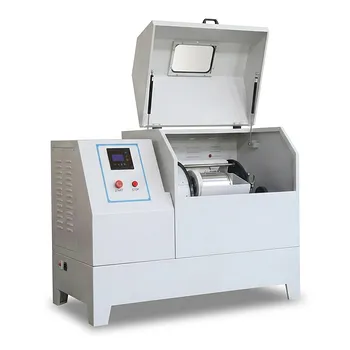
Heavy Duty Horizontal Planetary Ball Mill for Efficient Industrial Grinding and Sample Preparation
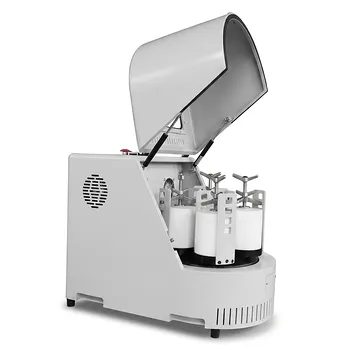
Vertical Semi Circular Planetary Ball Mill for Laboratory Precision Grinding
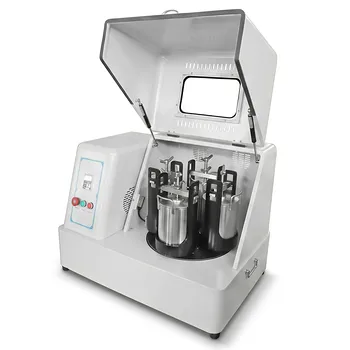
Vertical Square Planetary Ball Mill for Laboratory Sample Preparation and Nanoscale Grinding
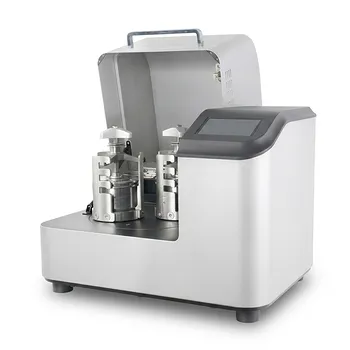
High Energy Planetary Ball Mill for Nano Scale Grinding and Mechanical Alloying
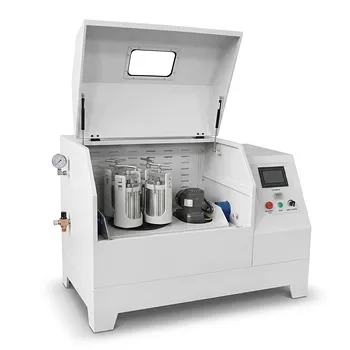
Vertical Production Planetary Ball Mill for High Throughput Powder Processing
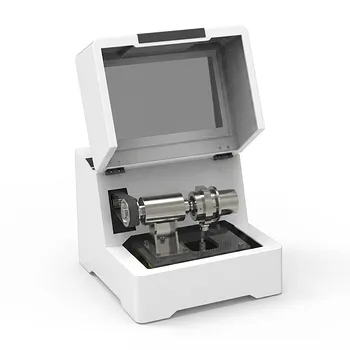
Single Tank High Energy Vibratory Ball Mill for Laboratory Grinding and Mixing
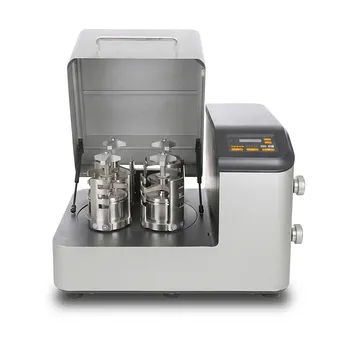
High Energy Planetary Ball Mill for Nano Scale Grinding and Colloidal Mixing in Material Science Research
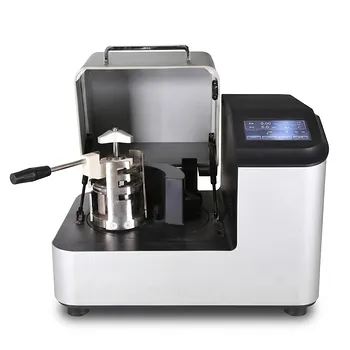
High Energy Laboratory Planetary Ball Mill for Nano Grinding and Material Science Sample Preparation
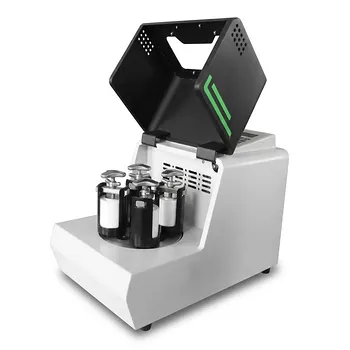
Miniature Planetary Ball Mill with Vacuum Grinding and High Efficiency for Laboratory Sample Preparation
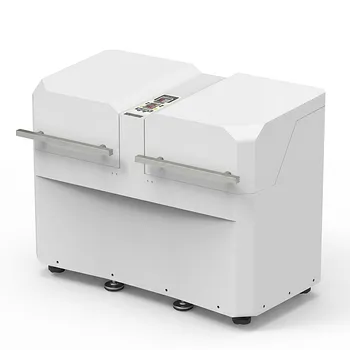
Dual Station Planetary Ball Mill 24L
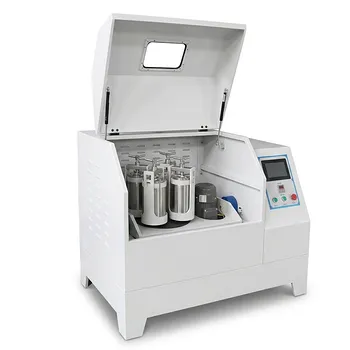
360° Rotating Omnidirectional Laboratory Planetary Ball Mill for Homogeneous Ultra-Fine Grinding and Mixing
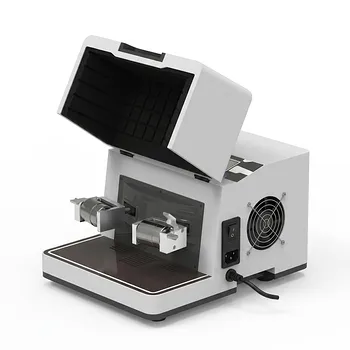
High Energy Hybrid Vibratory Ball Mill for Grinding Mixing and Cell Disruption
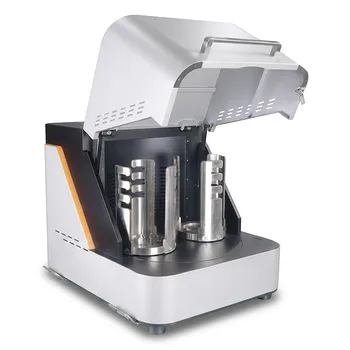
High Energy Laboratory Planetary Ball Mill for Nano Grinding and Colloidal Mixing of Hard and Brittle Materials
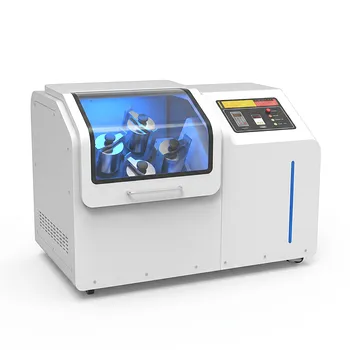
High Energy Omnidirectional Planetary Ball Mill 16L
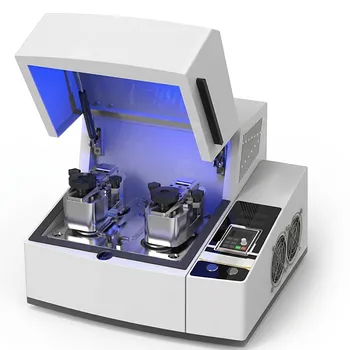
Laboratory Nano High Energy Ball Mill Ultrafine Grinding Mechanical Alloying
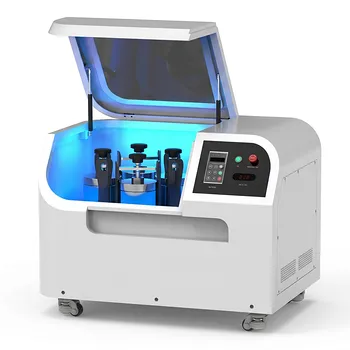
Planetary Ball Mill 12L

High Throughput Micro Ball Mill for Cryogenic Grinding and Laboratory Cell Disruption

8L Planetary Ball Mill for Laboratory Grinding and Sample Preparation
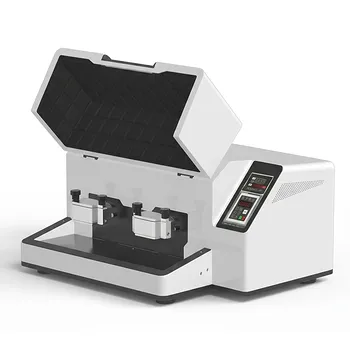
Nanoscale High-Energy Vibratory Ball Mill for Laboratory Sample Preparation, Mechanochemistry, and Mechanical Alloying