The Stress Engineer's Paradox: Why Mastering Ceramic Chaos Requires a Planetary Ball Mill
Jun 05, 2026
The Beauty of a Controlled Crack
There is a specific kind of heartbreak in ceramics engineering. You spend weeks calculating thermal expansion coefficients. You design a laminate architecture that should, in theory, resist fracture through a cascade of elegant micro-cracks. And then, in the kiln, it warps. Or a corner simply falls away. The residual stress you were trying to design became a residual stress that designed its own failure.
The difference between a masterpiece and a mess is rarely the sintering curve. It is, almost always, what happened hours earlier in a dark, spinning chamber: the mill. The high-performance planetary ball mill is not just a grinding tool. It is the first architect of the stress profile. And to understand why, we must look at the information hidden inside every pile of raw powder.
The Information Problem in a Jar of Dust
Imagine you are holding three white powders: alumina, mullite, and zirconia. To the naked eye, they are indistinguishable. But their thermal souls are completely different. Zirconia wants to shrink. Alumina wants to expand. Mullite sits somewhere in between, trying to keep the peace.
If you simply stir these powders together, you have not created a material. You have created a geological lottery. Each particle is a micro-continent of a single phase. When the heat rises during sintering, these continents pull against each other unpredictably. The stress concentrates at random boundaries.
Why Simple Mixing is a Trap
Agglomerates are false promises. A cluster of zirconia particles acts like a single, oversized grain. It doesn't reinforce the alumina matrix; it punctures it. The high-energy impact and friction of a planetary ball mill solve this by delivering a specific kind of violence.
The Physics of Forced Intimacy
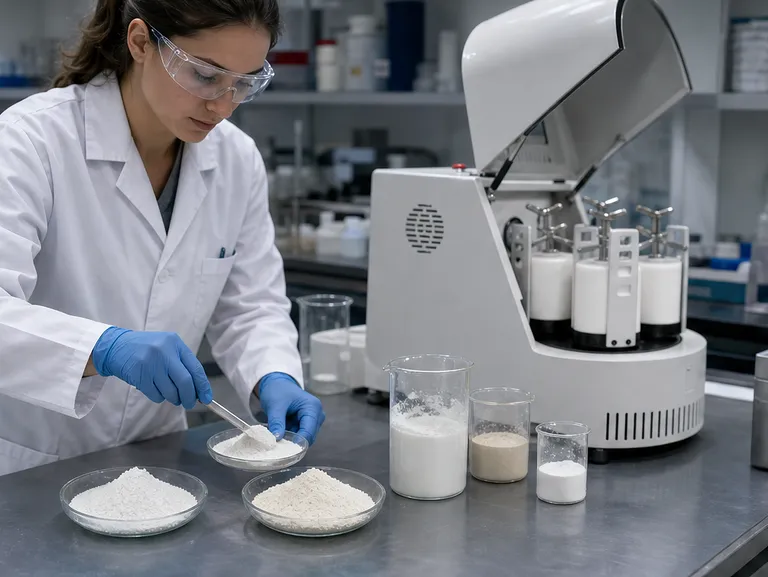
The mill’s sun wheel spins one way. The jar spins the other. The result is not just blending. It is a micro-scale collision cascade. Milling balls smash agglomerates into their primary particles not through pressure, but through shear and impact energy that targets the weak interfaces where powders cling together.
This act transforms the physical landscape. The specific surface area skyrockets. A gram of powder that once had the surface area of a desk expands to the surface area of a football field. And surface area is not just a geeky metric. It is stored reactivity—a reservoir of energy waiting to be released in the kiln to drive densification.
Designing Stress, Not Just Relieving It
We usually think of engineering as the fight against chaos. We flatten surfaces. We balance rotors. We eliminate vibration. But with AMZ laminates, the goal is inverted. You want to embed a precise, engineered map of residual stress into the ceramic.
Here is the psychology of the high-performance ceramic engineer, according to the Morgan Housel lens: we crave control in systems that are fundamentally chaotic. We want a predictable outcome from a firing process that involves phase transformations, glassy phase migration, and atomic diffusion. The only way to satisfy this craving is to front-load the complexity.
The Mill as a Pre-Processor of Order
The planetary ball mill allows you to write the stress code before the firing. How?
- Micro-scale distribution of zirconia: By dispersing the tetragonal zirconia polycrystals uniformly through the alumina/mullite matrix, the mill ensures that when cracks inevitably start, they hit a zirconia particle that will absorb energy by transforming phases. This transformation toughens the material—but only if the zirconia isn't hiding in a corner.
- Mechanical alloying: Under high-energy conditions, the milling doesn't just mix phases. It can embed nano-zirconia directly into soft alumina particles. This creates intragranular structures—reinforcements inside each grain. It is like strengthening the bricks of a wall instead of just the mortar.
This is the engineer's romantic dream: building the architecture of the material from the inside out, atom by atom, layer by layer.
The Hidden Risks in the Pursuit of Perfection
But the romance has a catch. Every process that gives you control also gives you a new set of sharp-edged trade-offs. The high-performance planetary ball mill is a powerful beast, and power invites mistakes.
Contamination: The Silent Poisoner
Grinding is sacrifice. To break a solid, you must apply something harder. Often, that means steel media. But in a ceramic designed for high purity, a few parts per million of iron is a disaster. It can form low-melting-point glass phases at grain boundaries, destroying the high-temperature strength you worked so hard to create.
The solution is a form of self-sacrifice: grinding alumina with alumina, zirconia with zirconia. You accept some wear on the milling tools, but what wears off is the same material as your product. No foreign metal, no poisoned boundaries.
The Thermodynamic Cost of Size Reduction
Energy is never free. As you drive the mill at 600, 700, 800 RPM, the kinetic energy of the balls converts to heat. In wet milling, your dispersion medium—perhaps anhydrous ethanol—can vaporize. Pressure builds. Organic dispersants can degrade in the thermal bath.
The mind tends to favor more: more speed, more time, finer particles. But the engineer must resist this urge. Push too far, and you cross the point of diminishing returns. Particles become so fine they re-agglomerate. You are now milling the agglomerates you just broke. It is a Sisyphean cycle that wastes energy and burns through your budget.
How to Choose Your Milling Parameters
Your goal defines your path. There is no universal "best setting" on a planetary ball mill. There are only aligned decisions.
| If Your Ultimate Goal Is... | You Should Prioritize... | The Trade-off to Accept |
|---|---|---|
| Maximum Mechanical Strength | Long duration, high speed to embed nano-zirconia into the lattice. | Higher wear on media; slight risk of powder over-refinement. |
| Dimensional Precision | Perfect stoichiometric distribution of mullite and alumina for predictable sintering shrinkage. | Meticulous process control and possible longer mixing steps. |
| Material Purity | High-purity alumina jars and balls, controlled wet-milling atmosphere. | Lower impact energy if not using denser media; strict cleaning protocols between batches. |
These are not just technical choices. They are risk-management decisions. And they are made visible in the final, dense ceramic laminate that emerges from the furnace.
From Powder Integrity to Compaction
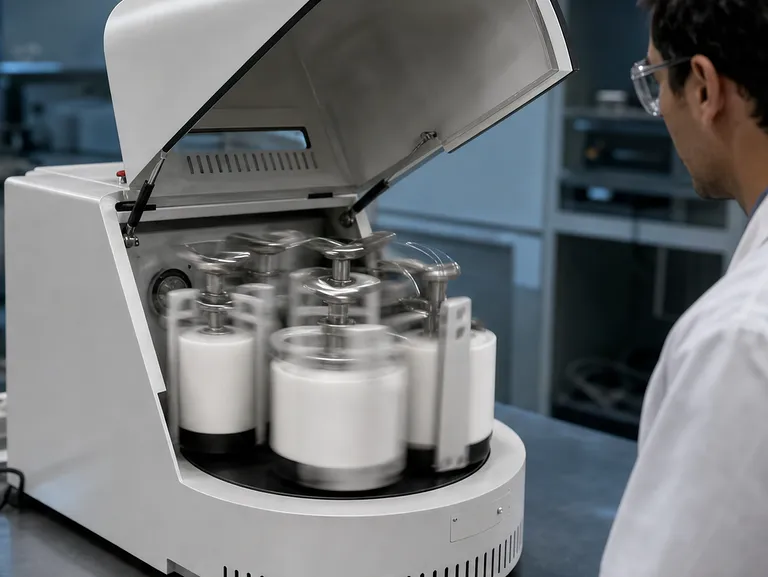
Once the planetary ball mill has written the chemical and physical script for your AMZ laminate, the story must be preserved through the next step: compaction. Here, another family of tools takes over.
If the mill promised homogeneity, the press must deliver that homogeneity without segregation. Cold Isostatic Pressing (CIP) applies uniform pressure from all sides, preserving the random, well-mixed orientation you built in the mill. Warm Isostatic Pressing (WIP) adds a thermal kick that softens organic binders, allowing the powder to flow and pack even more densely.
The mill and the press are not separate units. They are two chapters of the same book. One creates the blueprint. The other freezes it into a green body that can survive the kiln’s thermal journey without warping.
The Complete Laboratory Ecosystem
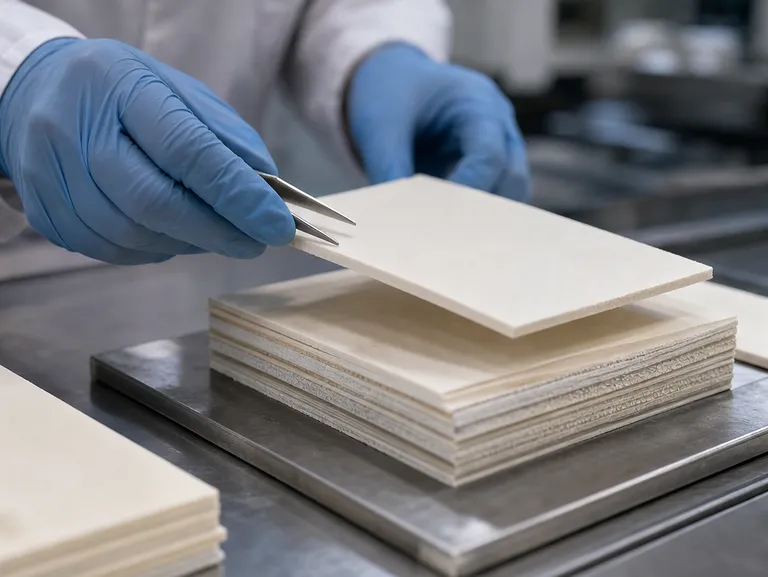
Standing in a well-equipped materials laboratory, you see a family of machines that speak the same language of precision:
- Crushing and milling: Jaw crushers and jet mills reduce raw chunks to engineerable powders. Liquid nitrogen cryogenic grinders handle the most sensitive, elastic materials.
- Size control: Vibratory and air-jet sieve shakers confirm that your powder distribution matches the target—because reliability without verification is just hope.
- Mixing and defoaming: Powder mixers and defoaming mixers ensure the slurry you send to pressing is bubble-free and uniform.
- Compaction: From standard lab presses for early trials to XRF pellet presses for analytical consistency, and all the way up to vacuum hot presses for high-end densification.
This ecosystem doesn't just provide equipment. It provides the ability to craft a microstructure with intention.
The Psychology of the Prepared Sample
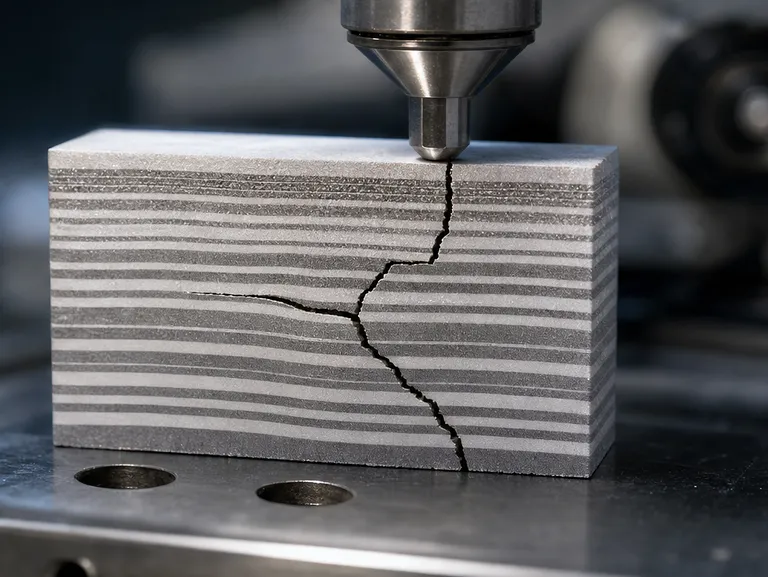
Every great ceramic result begins not in the kiln, but at the bench. The moment you load your AMZ precursors into a high-performance planetary ball mill, you are making a bet that controlled mechanical chaos can create a more perfect order.
You are betting that by breaking things—agglomerates, grains, phase boundaries—you can build something that refuses to break when it matters. The well-prepared sample is a promise made material. And the tools that enable it deserve the same care you put into your hypothesis.
To move from frustration to predictability, from warp to flatness, from cracking to engineered crack deflection, you need the right partner in chaos.
Quick Links
Suggested Products
Vertical Semi Circular Planetary Ball Mill for Laboratory Precision Grinding High Energy Planetary Ball Mill for Nano Scale Grinding and Mechanical Alloying Vertical Production Planetary Ball Mill for High Throughput Powder Processing Heavy Duty Horizontal Planetary Ball Mill for Efficient Industrial Grinding and Sample Preparation 360° Rotating Omnidirectional Laboratory Planetary Ball Mill for Homogeneous Ultra-Fine Grinding and MixingFurther Reading
The 65-Micron Gate: Unlocking the True Isotopic Fingerprint of Portland Cement The Energy Budget of a Single Impact: How the Ball-to-Powder Ratio Shapes Nanocrystalline Reality The High-Energy Gamble: What SiBCN-rGO Fibers Teach Us About Perfect Homogenization The Gentle Violence of a Planetary Mill: Why the Most Critical Moment in SiC–VC Composites Happens Before Any Heat The Forge at 10,000 g: How a Planetary Ball Mill Designs Self-Lubricating Composites Atom by Atom
PowderPreparation
Last updated on May 15, 2026
Related Products
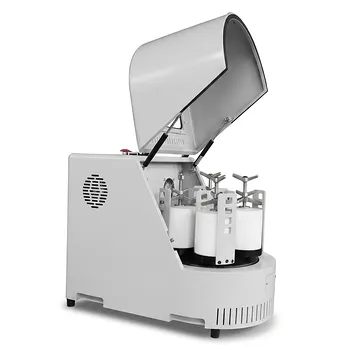
Vertical Semi Circular Planetary Ball Mill for Laboratory Precision Grinding
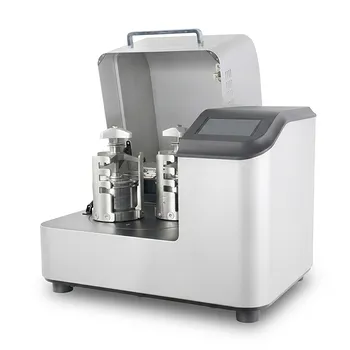
High Energy Planetary Ball Mill for Nano Scale Grinding and Mechanical Alloying
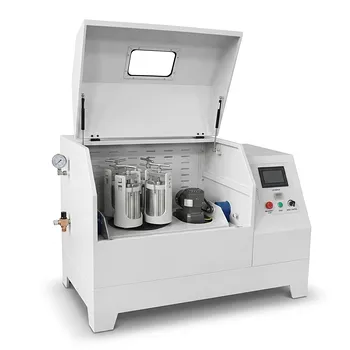
Vertical Production Planetary Ball Mill for High Throughput Powder Processing
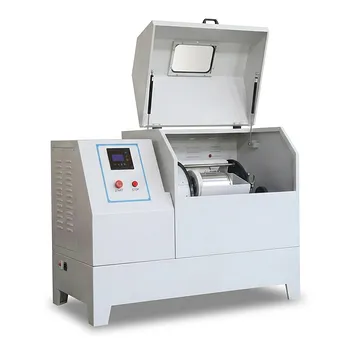
Heavy Duty Horizontal Planetary Ball Mill for Efficient Industrial Grinding and Sample Preparation
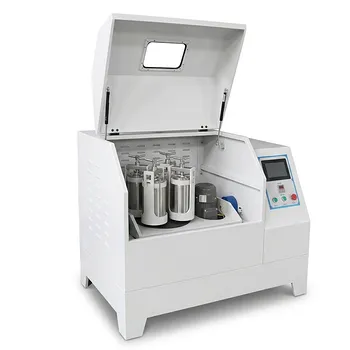
360° Rotating Omnidirectional Laboratory Planetary Ball Mill for Homogeneous Ultra-Fine Grinding and Mixing
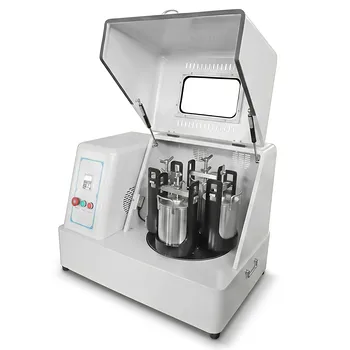
Vertical Square Planetary Ball Mill for Laboratory Sample Preparation and Nanoscale Grinding
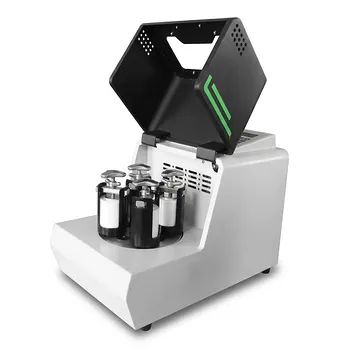
Miniature Planetary Ball Mill with Vacuum Grinding and High Efficiency for Laboratory Sample Preparation
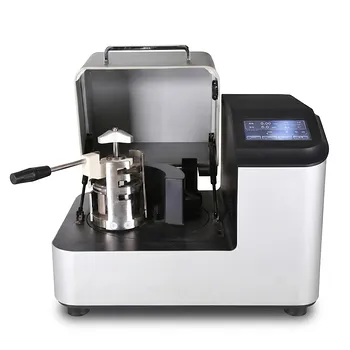
High Energy Laboratory Planetary Ball Mill for Nano Grinding and Material Science Sample Preparation
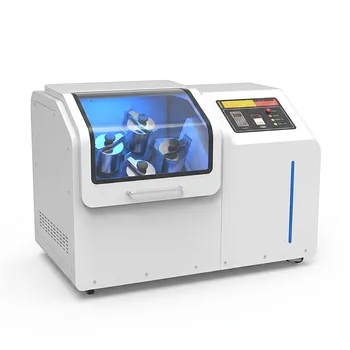
High Energy Omnidirectional Planetary Ball Mill 16L
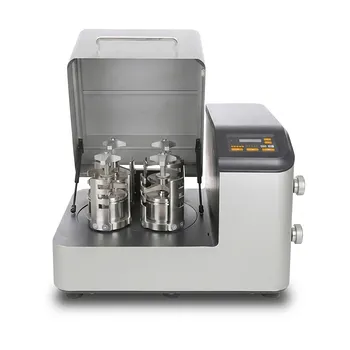
High Energy Planetary Ball Mill for Nano Scale Grinding and Colloidal Mixing in Material Science Research
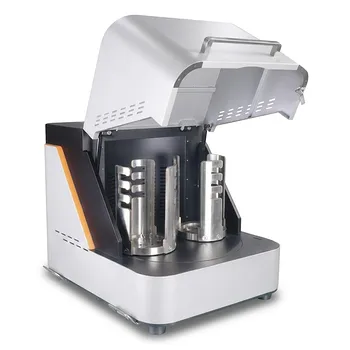
High Energy Laboratory Planetary Ball Mill for Nano Grinding and Colloidal Mixing of Hard and Brittle Materials
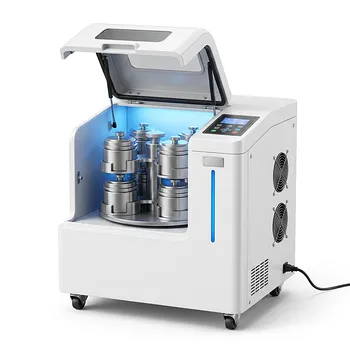
High Energy Omnidirectional Planetary Ball Mill 20L
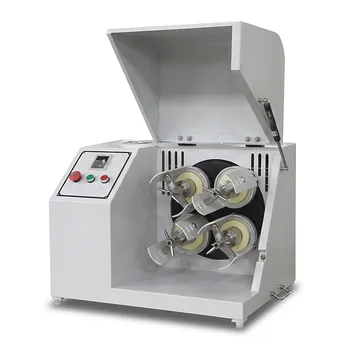
Horizontal Light Duty Planetary Ball Mill for Laboratory Sample Preparation
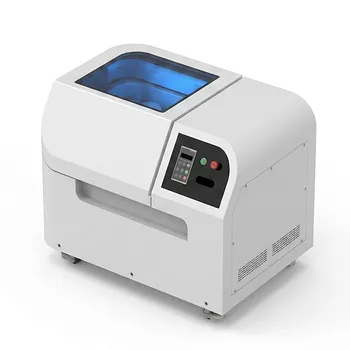
8L Planetary Ball Mill for Laboratory Grinding and Sample Preparation
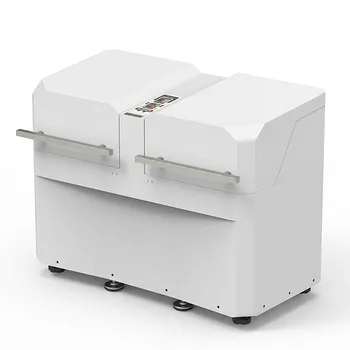
Dual Station Planetary Ball Mill 24L
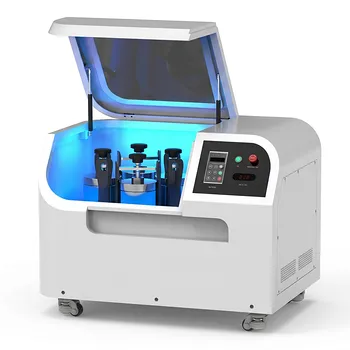
Planetary Ball Mill 12L

Nano High Energy Vibratory Ball Mill for Laboratory Sample Preparation
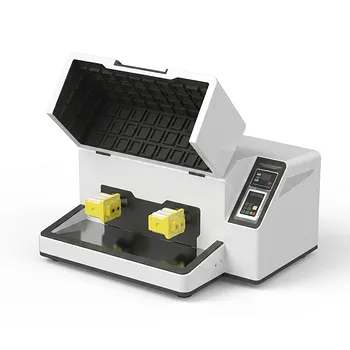
Multi-Platform Nanoscale High-Energy Vibratory Ball Mill
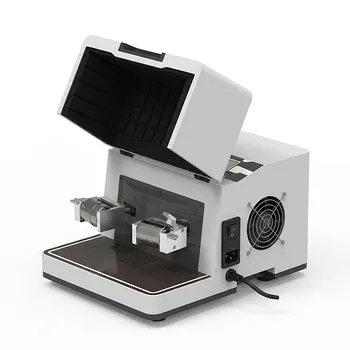
High Energy Hybrid Vibratory Ball Mill for Grinding Mixing and Cell Disruption