The Contamination Tax: Why Your Ball Mill Jar Is the Decisive Factor in SiC-MoSi₂ Composite Performance
Jul 26, 2026
The Silence Inside the Jar
The lab looked perfect. Weighing stations clean. Glove box humming. The planetary ball mill ran its cycle exactly as programmed, 400 rpm, 8 hours.
But inside the jar, a quiet catastrophe was unfolding. Every rotation scraped invisible steel particles into a powder mixture worth thousands of dollars per kilogram. The batch would later fail during high-temperature sintering—not with a dramatic crack, but with a subtle, maddening inconsistency in resistivity.
No alarm sounded. The machine never stopped. The real cost wouldn't appear until the final characterization, weeks later.
This is how contamination hides. And in SiC-MoSi₂ composite ceramics, it hides exceptionally well—until it doesn't.
Two of the Hardest Materials You'll Ever Love
Silicon carbide (SiC) and molybdenum disilicide (MoSi₂) form a composite system prized for high-temperature heating elements, oxidation-resistant coatings, and structural ceramics that must survive beyond 1400°C.
They also happen to be brutally hard.
- SiC sits around 9.5 on the Mohs scale, right next to diamond and boron carbide.
- MoSi₂, while slightly softer in pure form, becomes aggressively abrasive when alloyed and processed into fine powder.
Together, they don't just mix. They grind back against your equipment.
The Real Danger Isn't Visible Wear
A standard stainless steel grinding jar doesn't burst open. It doesn't crack. It simply sheds. Particle by particle, the jar's interior surface becomes part of the batch.
You won't see the contamination in a quick visual inspection. But spectrographic analysis will reveal rising iron, chromium, and nickel counts—foreign atoms that didn't belong in your formulation.
The Sintering Sabotage
The damage travels downstream fast.
Where Metallic Impurities Go During Densification
In the high-temperature, high-pressure environment of spark plasma sintering or hot pressing, those stray metal particles become active participants. They don't sit idle.
Iron, for example, forms low-melting-point liquid phases with silicon. This creates localized pools of eutectic that disrupt grain boundary movement. The result?
- Non-uniform grain growth
- Residual porosity
- Internal stress concentrations
- Unpredictable electrical conductivity
For a material like SiC-MoSi₂, where every atom counts toward oxidation resistance and semiconducting behavior, “a little bit of iron” isn't a minor impurity. It's a functional defect.
The Batch That Loses Its Identity
One aerospace research group I've spoken with described the problem this way: “We designed the composite to have 30% MoSi₂. After processing, we had maybe 28% plus some iron-silicide phases that shouldn't exist. We weren't testing our material anymore. We were testing our milling jar's contribution.”
That statement reveals the deepest psychological trap: you think you're refining your material, but you're actually corrupting it.
The Psychology of the Cheaper Jar
This is where the engineer's mind and the budget's instinct collide.
The “We'll Just Run It Slower” Fallacy
Faced with the cost of a tungsten carbide jar, a natural reaction emerges: “Can we use stainless steel and reduce the milling time or speed?”
It's a reasonable question. Financially, a WC jar costs 5–10 times more upfront. But the physics doesn't care about your budget.
SiC's hardness doesn't soften at 200 rpm. The abrasive wear mechanism isn't purely velocity-dependent—it's surface-hardness-dependent. A softer jar loses material across a wide spectrum of milling energies. Slowing down mainly reduces throughput; it barely touches contamination rates.
Sunk Costs Wearing a Friendly Grin
Batch failures late in the development cycle are extraordinarily expensive. Not just in raw materials, but in researcher time, furnace runtime, and—cruelly—lost confidence. A contaminated result can send a team down rabbit holes of parameter adjustment when the only variable that mattered was inside the milling jar.
The upfront premium for hardened media isn't a cost. It's insurance against cascading failure.
Choosing the Right Shield: Hardened Mill Jars and Grinding Balls
The solution isn't merely “harder metal.” It's a strategic selection of surfaces that align with your composite's chemical identity and performance requirements.
Three Paths to Purity
| Jar and Media Material | Core Advantage | When to Choose It |
|---|---|---|
| Tungsten Carbide (WC) | Extreme hardness, massive kinetic energy transfer | You need aggressive size reduction to nano-levels; you can accept a tiny amount of WC wear if it doesn't harm your chemistry. |
| Silicon Nitride (Si₃N₄) | High wear resistance, electrically insulating | Your composite must maintain stable electrical properties; metallic contamination would distort conductivity or dielectric behavior. |
| Silicon Carbide (SiC) | Zero foreign impurity introduction | Absolute purity is the project's north star; any shed material is chemically identical to the reinforcement phase. |
| Standard Steel (Fe-Cr-Ni) | Low up-front purchase cost | Not recommended. Introduces high metallic contamination that compromises both sintering and final properties. |
The “Self-Contamination” Trick
Here's a beautiful engineer's hack: use milling media made of the same material as your reinforcement phase.
If you're building an SiC-MoSi₂ composite, equip your planetary ball mill with an SiC-lined jar and SiC grinding balls. The jar still wears. Microscopic SiC particles still enter the batch. But they're indistinguishable from the SiC you deliberately added. The chemistry stays clean. The sintering kinetics remain predictable.
This isn't eliminating wear. It's making wear irrelevant. That's the elegance of the approach.
Beyond the Jar: Closing the Loop with Pressure
Clean, homogeneous powder is only half the promise. Advanced ceramics demand advanced consolidation.
From Nanopowder to Dense Solid
After you've achieved uniform mixing in a hardened jar, the next challenge is applying uniform pressure without introducing gradients that cause warping or density variation. This is where the press becomes a philosophical partner to the mill.
- Cold Isostatic Pressing (CIP) : applies pressure uniformly from all directions via liquid medium, locking in the homogeneous particle arrangement you fought to create. No density variations. No “memory” of uneven pressure.
- Vacuum Hot Pressing: removes trapped gases while simultaneously applying heat and uniaxial pressure, critical for achieving near-theoretical density in SiC-MoSi₂ systems.
When you pair a hardened planetary ball mill with an isostatic press, you've created a workflow that preserves purity from the first grind to the final grain.
The Complete Sample Preparation Ecosystem
Advanced ceramics don't need a single piece of equipment. They need a coherent process chain where each step respects the fragility of chemical identity.
That's why we've built our laboratory solutions around this philosophy: contamination control at the powder level, uncompromised consolidation at the pressing stage.
Our high-energy planetary ball mills accept hardened jars in WC, Si₃N₄, and SiC configurations. They deliver the intense mechanical forces required to break agglomerates in nanopowder systems while the jar walls refuse to become part of the sample.
For powders that demand gentler refinement, our jet mills use particle-to-particle collision—zero metal contact, zero contamination.
And when it's time to densify, our Cold Isostatic Presses (CIP) and vacuum hot presses extend the same purity logic into three-dimensional solid form.
The Jar Remembers
Every ceramic microstructure contains the memory of its powder state. If contamination entered the system during milling, it will announce itself during sintering. There is no repair stage. There is no washing away what the jar contributed.
The extraordinary thing about SiC-MoSi₂ composites is that they are designed for extremes—temperatures that would destroy lesser materials, electrical environments where a few parts per million of impurity shift the function. They demand that we, as process engineers and researchers, respect their starting point.
A hardened jar is not an expensive accessory. It's an acknowledgment that the most powerful variable in your experiment is the surface you can't easily see.
Start your next advanced ceramic project with the purity it deserves. Contact Our Experts to configure the right planetary ball mill, hardened jar, and pressing solution for your SiC-MoSi₂ and other high-performance composite needs.
Quick Links
Suggested Products
High Energy Omnidirectional Planetary Ball Mill 16L High Energy Laboratory Planetary Ball Mill for Nano Grinding and Colloidal Mixing of Hard and Brittle Materials Heavy Duty Horizontal Planetary Ball Mill for Efficient Industrial Grinding and Sample Preparation Vertical Square Planetary Ball Mill for Laboratory Sample Preparation and Nanoscale Grinding 8L Planetary Ball Mill for Laboratory Grinding and Sample PreparationFurther Reading
The 65-Micron Gate: Unlocking the True Isotopic Fingerprint of Portland Cement The High-Energy Gamble: What SiBCN-rGO Fibers Teach Us About Perfect Homogenization The Energy Budget of a Single Impact: How the Ball-to-Powder Ratio Shapes Nanocrystalline Reality The Silence Inside the Jar: What a Ball Mill Really Does for Doped Bismuth Ferrite The Forge at 10,000 g: How a Planetary Ball Mill Designs Self-Lubricating Composites Atom by Atom
PowderPreparation
Last updated on May 14, 2026
Related Products

High Energy Omnidirectional Planetary Ball Mill 16L
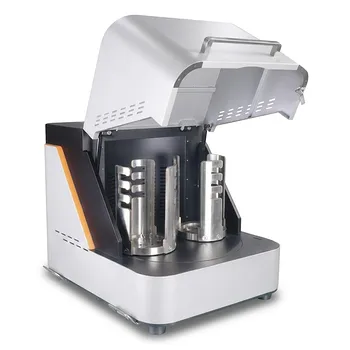
High Energy Laboratory Planetary Ball Mill for Nano Grinding and Colloidal Mixing of Hard and Brittle Materials

Heavy Duty Horizontal Planetary Ball Mill for Efficient Industrial Grinding and Sample Preparation

Vertical Square Planetary Ball Mill for Laboratory Sample Preparation and Nanoscale Grinding

8L Planetary Ball Mill for Laboratory Grinding and Sample Preparation
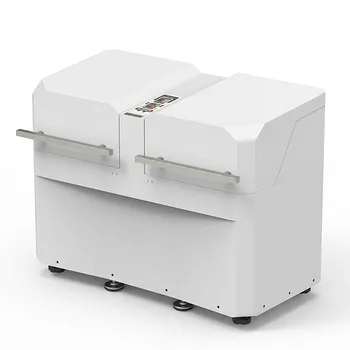
Dual Station Planetary Ball Mill 24L

High Energy Laboratory Planetary Ball Mill for Nano Grinding and Material Science Sample Preparation

High Energy Planetary Ball Mill for Nano Scale Grinding and Mechanical Alloying
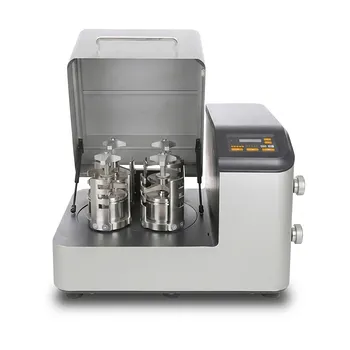
High Energy Planetary Ball Mill for Nano Scale Grinding and Colloidal Mixing in Material Science Research

Miniature Planetary Ball Mill with Vacuum Grinding and High Efficiency for Laboratory Sample Preparation
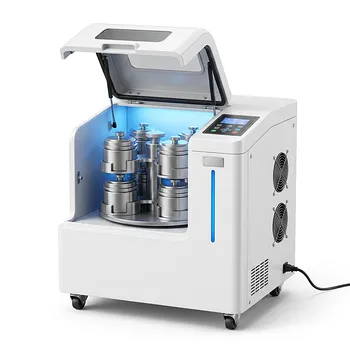
High Energy Omnidirectional Planetary Ball Mill 20L

Vertical Production Planetary Ball Mill for High Throughput Powder Processing
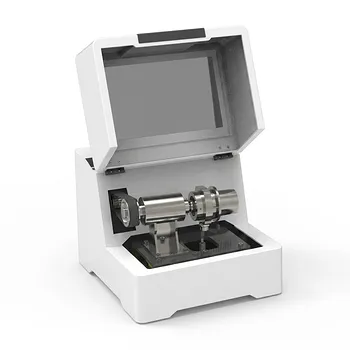
Single Tank High Energy Vibratory Ball Mill for Laboratory Grinding and Mixing

360° Rotating Omnidirectional Laboratory Planetary Ball Mill for Homogeneous Ultra-Fine Grinding and Mixing

High Throughput Micro Ball Mill for Cryogenic Grinding and Laboratory Cell Disruption
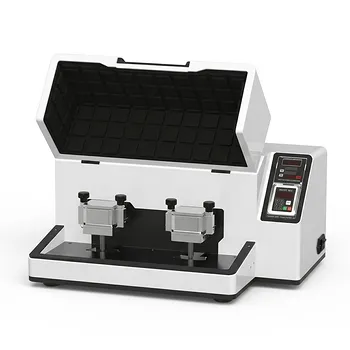
Nanoscale High Energy Vibratory Ball Mill Low Temperature
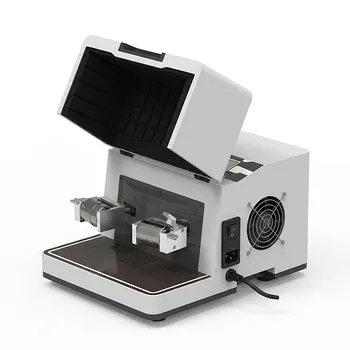
High Energy Hybrid Vibratory Ball Mill for Grinding Mixing and Cell Disruption
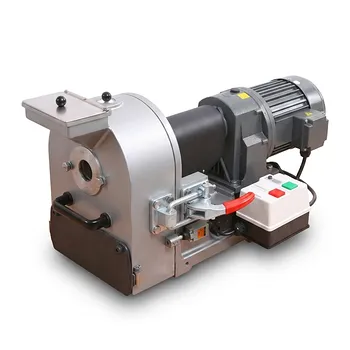
Laboratory Disc Mill for Fine Sample Preparation of Hard and Brittle Materials

Nano High Energy Vibratory Ball Mill with Heating and Temperature Control