Why must a vibratory sieve shaker be used to process tin ore raw materials before jigging experiments? | Expert Guide
Updated 5 months ago
Precise particle size control is the prerequisite for successful gravity separation. A vibratory sieve shaker is used to determine the exact particle size distribution of tin ore and identify how cassiterite (the primary tin mineral) is distributed across different size fractions. This step is critical because gravity jigging efficiency is fundamentally governed by feed size; the shaker provides the quantitative data needed to configure the jig's operating parameters accurately.
The vibratory sieve shaker acts as the foundational diagnostic tool in tin ore processing. By standardizing the feed size and mapping mineral distribution, it ensures that subsequent jigging experiments are based on objective data rather than variable, unclassified raw material.
The Impact of Feed Size on Jigging Mechanics
Optimizing Separation Efficiency
The efficiency of a gravity jig is highly dependent on the feed particle size. A vibratory sieve shaker allows researchers to isolate specific ranges, such as 20 mesh to -100 mesh, to ensure the material meets the specific requirements of the jigging process.
Mapping Mineral Distribution
Before an experiment, it is vital to analyze how cassiterite is distributed across different size fractions. The sieve shaker provides the empirical data necessary to set operating parameters, such as stroke length and frequency, which must be tailored to the specific dimensions of the mineral particles.
Eliminating Initial Size Variability
In an experimental setting, uncontrolled variations in raw material size can mask the true performance of the jig. By extracting precise fractions, the shaker eliminates the influence of size variability on processing efficiency, ensuring that the results reflect the equipment's performance rather than raw material inconsistencies.
Precision and Standardization in the Laboratory
Eliminating Human Operational Bias
Unlike manual screening, an automatic vibratory sieve shaker utilizes mechanized vibration and frequency control. This standardization eliminates human bias, ensuring that the particle size data remains consistent and repeatable across different experimental trials.
High-Frequency 3D Classification
The equipment utilizes high-frequency, three-dimensional vibration to ensure particles "jump" sufficiently on the mesh. This motion ensures that particles pass through the corresponding apertures quickly and accurately, providing a more thorough separation than traditional methods.
Calculating Critical Metrics
The use of mechanical shakers allows for the acquisition of accurate cumulative passing rate curves. These curves are essential for calculating the 80% passing size (P80), a standard metric used to calibrate grinding and concentration circuits in mineral processing.
Understanding the Trade-offs and Pitfalls
The Risk of Mesh Blinding
While vibratory shakers are efficient, certain tin ore samples—especially those with high moisture or clay content—can lead to mesh blinding. This occurs when particles become lodged in the sieve openings, resulting in inaccurate distribution data and potential equipment damage if not monitored.
Material Degradation During Testing
High-frequency vibration can occasionally cause attrition or the breaking down of fragile particles during the sieving process. If the shaking duration is excessive, the resulting data may suggest a finer particle distribution than what actually exists in the original raw material.
Sample Volume Limitations
Vibratory sieve shakers are designed for precision rather than bulk throughput. Attempting to process oversized samples in a single batch can dampen the vibration intensity, leading to incomplete separation and "layering" of the material on the screen.
Applying Sieve Analysis to Your Experimental Goals
How to Apply This to Your Project
To ensure your jigging experiments yield actionable and accurate data, tailor your sieving strategy to your specific research objective:
- If your primary focus is maximizing mineral recovery: Use the shaker to identify which size fractions contain the highest concentration of cassiterite to focus your jigging energy on those specific ranges.
- If your primary focus is process optimization: Utilize the cumulative passing rate curves to calculate the P80, allowing you to synchronize your grinding circuit with the optimal feed size for the jig.
- If your primary focus is experimental repeatability: Implement standardized vibration frequencies and durations to ensure that every sample is classified under identical conditions, removing human error from the equation.
By integrating mechanical sieving into your workflow, you transform a variable raw material into a standardized, predictable feed that is optimized for gravity separation.
Summary Table:
| Key Factor | Role in Tin Ore Processing | Impact on Jigging Results |
|---|---|---|
| Feed Size Control | Isolates specific mesh ranges (e.g., 20 to -100 mesh). | Optimizes separation efficiency and gravity mechanics. |
| Mineral Mapping | Tracks cassiterite distribution across size fractions. | Allows precise calibration of stroke length and frequency. |
| Standardization | Eliminates human bias via mechanized vibration. | Ensures experimental repeatability and objective data. |
| 3D Vibration | High-frequency motion prevents particle layering. | Provides accurate cumulative passing rate curves (P80). |
| Data Accuracy | Identifies optimal feed characteristics. | Synchronizes grinding circuits with concentration goals. |
Elevate Your Mineral Processing Precision with Our Expert Solutions
Successful gravity separation starts with flawless sample preparation. At our core, we provide complete laboratory sample preparation solutions for material science, specializing in the high-performance powder processing and compaction equipment your research demands.
Whether you are processing tin ore or advanced ceramics, our extensive product lines ensure accuracy at every stage:
- Size Reduction & Classification: High-efficiency crushers (jaw/roll), liquid nitrogen cryogenic grinders, and advanced mills (planetary ball, jet, sand/bead).
- Precision Sieving: Professional vibratory and air-jet sieve shakers equipped with high-precision test sieves to eliminate variability.
- Mixing & Compaction: Powder and defoaming mixers, plus a full spectrum of hydraulic presses, including Cold/Warm Isostatic Presses (CIP/WIP), hot presses, and vacuum hot presses.
Ready to optimize your lab's workflow and achieve superior experimental results?
Contact Our Engineering Team Today to discuss how our specialized equipment can enhance your material processing efficiency and data reliability.
References
- Ismu Aditya, Delita Ega Andini. Kajian Teknis Kinerja Jig Primer terhadap Kadar Recovery dan Looses Bijih Timah pada SHP KIP Mitra Matras di Bidang Pengolahan Mineral Unit Pengolahan PT Timah Tbk. DOI: 10.33019/mineral.v9i2.5073
Mentioned Products
- Vibratory Sieve Shaker Electromagnetic 3D Motion Powder Particle Size Analyzer for Dry and Wet Sieving
- Stainless Steel Laboratory Vibratory Test Sieve Shaker
- Small Laboratory Vibratory Sieve Shaker for Powder Gradation and Particle Size Analysis
- Heavy Duty Dry Three Dimensional Vibratory Sieve Shaker for Particle Separation
- Laboratory Dry and Wet Three Dimensional Vibratory Sieve Shaker for Particle Analysis
People Also Ask
- How does a vibratory sieve shaker contribute to optimizing the performance of activated carbon? Enhance Adsorption Precision
- Why is a laboratory vibratory sieve shaker necessary for processing magnesium-based borate precursor powders? Boost Activity
- Why use a vibratory sieve shaker to verify coarse aggregate grading in rubberized concrete? Ensure Structural Integrity
- What function do vibratory sieve shakers and standard test sieves serve in the preparation of adsorbents? Key Guide
- What role does a vibratory sieve shaker play in the particle size analysis of ground corn products? Enhance QC Precision

Tech Team · PowderPreparation
Last updated on May 14, 2026
Related Products

Vibratory Sieve Shaker Electromagnetic 3D Motion Powder Particle Size Analyzer for Dry and Wet Sieving

Stainless Steel Laboratory Vibratory Test Sieve Shaker

Small Laboratory Vibratory Sieve Shaker for Powder Gradation and Particle Size Analysis

Heavy Duty Dry Three Dimensional Vibratory Sieve Shaker for Particle Separation
Laboratory Dry and Wet Three Dimensional Vibratory Sieve Shaker for Particle Analysis
Dry Three Dimensional Vibratory Sieve Shaker

Small Laboratory Vibrating Sieve Shaker for Precise Particle Size Analysis

Laboratory Vibratory Test Sieve Shaker for Precision Particle Size Analysis and Powder Grading
High Frequency Cabinet Type Three-Dimensional Rotary Vibrating Sieve Shaker for Dry Sieving and Particle Classification

High Frequency Wet Three-Dimensional Vibrating Sieve Shaker for Dry and Wet Particle Size Analysis

三维电磁微量振动筛分仪
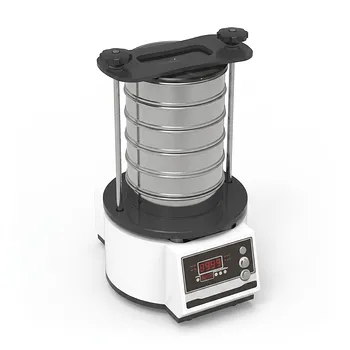
Tapping Oscillating Sieve Shaker for Dry and Wet Particle Size Analysis

Stainless Steel Rotary Vibrating Sieve High Precision Circular Vibratory Separator Industrial Powder Grading Machine Multi Layer Sifting Equipment

Three Dimensional Rotary Vibrating Sieve
Automatic Vibrating Powder Feeder for Laboratory Material Processing Precision Vibratory Hopper Feeder for Granular and Powder Material Handling Industrial Grade Vibrating Tray Feeder for Consistent Material Sample Preparation
Vibratory Disc Mill for Rapid Fine Grinding and High Throughput Sample Preparation of Hard and Brittle Materials