Why is tungsten carbide (WC) selected for (V, Nb)C milling? Achieve maximum purity and efficiency in powder processing.
Updated 4 months ago
The selection of tungsten carbide (WC) grinding media is driven by two critical factors: mechanical efficiency and chemical purity. To effectively refine hard (V, Nb)C powders, the grinding media must possess superior hardness and density to deliver the high-impact energy required for particle size reduction. Furthermore, because both the powder and the media are carbides, any minimal wear debris is chemically compatible, preventing the introduction of foreign (heterogeneous) impurities that would degrade the final ceramic composite.
Tungsten carbide is the preferred media for milling (V, Nb)C because its extreme hardness enables high-energy particle refinement, while its chemical similarity to the target powder ensures that media wear does not introduce detrimental contaminants.
The Mechanical Advantage of High Hardness
Delivering High-Energy Impacts
(V, Nb)C powders are exceptionally hard and refractory, requiring significant force to achieve structural refinement. Tungsten carbide media provides the extreme hardness necessary to withstand high-intensity collisions without shattering or deforming. This ensures the media can effectively crush and shear the powder particles during high-energy ball milling (HEBM).
Superior Wear Resistance
Standard grinding media, such as stainless steel, would wear down rapidly when processing hard carbide powders. WC media exhibits exceptional wear resistance, which is critical for maintaining the efficiency of the milling process over long durations. This resistance ensures that the media maintains its shape and mass, providing consistent results from the beginning to the end of the cycle.
Matching Hardness Profiles
Effective milling requires the media to be significantly harder than the material being processed. By using WC, which is one of the hardest industrial materials available, engineers ensure a hardness mismatch that favors the media. This allows for the efficient fragmentation of (V, Nb)C particles into the sub-micron or nano-scale range.
Preserving Chemical Integrity
Minimizing Heterogeneous Impurities
In advanced ceramic synthesis, the introduction of foreign elements (like iron or chrome from steel balls) can significantly alter the material's properties. Because (V, Nb)C and WC are both carbide-based systems, any debris from media wear is chemically similar to the powder. This "like-grinds-like" approach ensures that the chemical purity of the synthesized composite remains intact.
Impact on Final Material Properties
The presence of heterogeneous impurities can lead to the formation of secondary phases or defects in the final sintered body. Using WC media prevents these inclusions, thereby ensuring the stability of the mechanical properties and the overall performance of the (V, Nb)C ceramic. This is especially vital for applications requiring high thermal stability and hardness.
Chemical Compatibility
WC is chemically stable and does not react adversely with vanadium or niobium carbides under standard milling conditions. This chemical compatibility allows for prolonged milling cycles—sometimes exceeding 30 hours—without the risk of unwanted chemical transformations or the creation of complex, inseparable waste products.
Efficiency through High Density
Optimized Kinetic Energy Transfer
Tungsten carbide is notably dense, which directly correlates to the amount of kinetic energy transferred during each collision. High-density media facilitate faster particle size reduction, significantly decreasing the time required to reach the target powder fineness. This efficiency can reduce overall energy consumption and increase throughput in production environments.
Overcoming Solid Solubility Limits
In some specialized applications, high energy is required to force elements into a solid solution. The high mechanical energy density provided by WC media is often the only way to reach the energy thresholds necessary to break these solubility limits. While this may introduce a minor amount of WC into the mix (typically 1–3 wt%), this is usually considered an acceptable trade-off for achieving the desired alloying.
Understanding the Trade-offs
High Initial Investment
Tungsten carbide media is significantly more expensive than steel or alumina alternatives. The high cost of WC must be balanced against the benefits of increased purity and reduced processing time. For low-value materials, this cost may be prohibitive, but for high-performance (V, Nb)C ceramics, it is a necessary investment.
Equipment Stress and Maintenance
The extreme density of WC media puts significant mechanical stress on the milling jars and the drive system of the ball mill. Increased wear on the milling equipment can lead to higher maintenance costs and may require the use of reinforced or WC-lined jars. Operators must ensure their hardware is rated for the high centrifugal forces generated by heavy media.
Potential for Media Pickup
While WC wear debris is chemically compatible with (V, Nb)C, it still represents a change in the intended stoichiometry. Users must account for minor WC enrichment in their final formulations. If absolute stoichiometric precision is required, the initial powder mix may need to be adjusted to compensate for the anticipated media pickup.
How to Apply This to Your Project
Recommendations for Media Selection
The choice of grinding media should align with your final performance requirements and budget constraints.
- If your primary focus is maximum chemical purity: Use WC-Co media and jars to ensure that any wear debris is compatible with the carbide matrix.
- If your primary focus is rapid particle size reduction: Leverage the high density of WC to maximize kinetic energy transfer and minimize milling time.
- If your primary focus is minimizing equipment wear: Ensure that your milling jars are lined with tungsten carbide to match the media hardness and prevent the jar itself from contaminating the powder.
- If your primary focus is cost-sensitive production: Evaluate whether a minor amount of steel contamination is acceptable, though for (V, Nb)C, WC remains the technical gold standard.
Ultimately, selecting tungsten carbide media is a strategic decision to prioritize material performance and processing efficiency over initial capital expenditure.
Summary Table:
| Feature | Benefit for (V, Nb)C Milling | Practical Impact |
|---|---|---|
| Extreme Hardness | Crushes hard refractory powders | Faster sub-micron/nano-scale refinement |
| High Density | Maximizes kinetic energy transfer | Significantly reduced milling durations |
| Chemical Compatibility | Like-grinds-like carbide system | Prevents detrimental heterogeneous impurities |
| Wear Resistance | Maintains media shape and mass | Consistent results and higher durability |
| Thermal Stability | Resists high-energy friction heat | Stable processing for long-cycle milling |
Optimize Your Material Synthesis with Professional Laboratory Solutions
Achieving the perfect sub-micron (V, Nb)C powder requires more than just the right media; it requires a complete, high-performance processing ecosystem. At our core, we provide complete laboratory sample preparation solutions for material science, specializing in the high-precision equipment your research demands.
Whether you are refining hard carbides or developing advanced ceramics, our extensive product lines are designed for excellence:
- Advanced Milling: Planetary ball mills, jet mills, and cryogenic grinders for superior particle size control.
- Material Compaction: A full spectrum of hydraulic presses, including Cold/Warm Isostatic Presses (CIP/WIP), vacuum hot presses, and XRF pellet presses.
- Processing Essentials: Jaw/roll crushers, vibratory sieve shakers, and high-efficiency powder mixers.
Don't let equipment limitations or media contamination compromise your results. Contact our technical experts today to discuss how our powder processing and compaction equipment can enhance your lab's efficiency and material integrity.
References
- Zhi‐Xuan Zhang, Wen Zhang. Breaking Hardness–Toughness Trade‐Off in Novel (V, Nb)C Carbides via Nanoscale Phase Separation and Local‐Chemical‐Order Dislocation Network. DOI: 10.1002/rar2.70006
Mentioned Products
- Vertical Semi Circular Planetary Ball Mill for Laboratory Precision Grinding
- Vertical Square Planetary Ball Mill for Laboratory Sample Preparation and Nanoscale Grinding
- High Energy Laboratory Planetary Ball Mill for Nano Grinding and Colloidal Mixing of Hard and Brittle Materials
- Miniature Planetary Ball Mill with Vacuum Grinding and High Efficiency for Laboratory Sample Preparation
- High Energy Planetary Ball Mill for Nano Scale Grinding and Colloidal Mixing in Material Science Research
People Also Ask
- What role does a planetary ball mill play in the synthesis of Li6PS5Cl (LPSCl)? Unlock High Ionic Conductivity
- Why is a planetary ball mill essential for SiBCN-rGO wet-spinning? Achieve Superior Dispersion and Spinnability
- Why is an intermittent grinding process required for perovskites in a planetary ball mill? Ensure Stability & Purity
- Why is a planetary ball mill required for PET micronization? Ensure Accurate Chemical Analysis of Reprocessed PET
- How does mechanized planetary ball milling compare to manual agate grinding? Optimize sulfide standard material precision.

Tech Team · PowderPreparation
Last updated on Jun 03, 2026
Related Products
Vertical Semi Circular Planetary Ball Mill for Laboratory Precision Grinding
Vertical Square Planetary Ball Mill for Laboratory Sample Preparation and Nanoscale Grinding
High Energy Laboratory Planetary Ball Mill for Nano Grinding and Colloidal Mixing of Hard and Brittle Materials
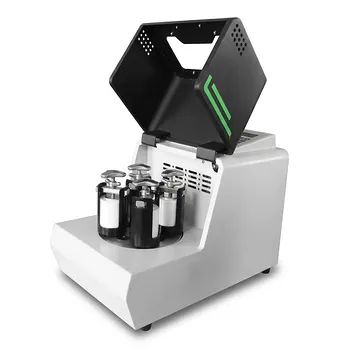
Miniature Planetary Ball Mill with Vacuum Grinding and High Efficiency for Laboratory Sample Preparation
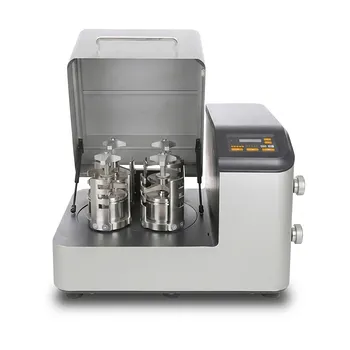
High Energy Planetary Ball Mill for Nano Scale Grinding and Colloidal Mixing in Material Science Research
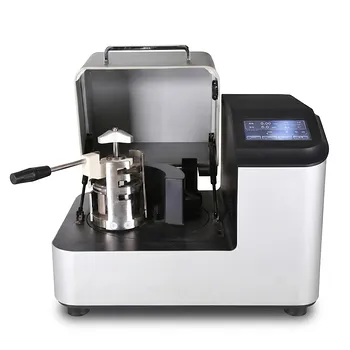
High Energy Laboratory Planetary Ball Mill for Nano Grinding and Material Science Sample Preparation
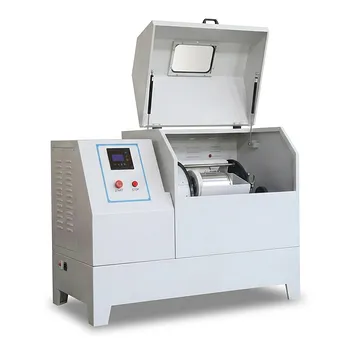
Heavy Duty Horizontal Planetary Ball Mill for Efficient Industrial Grinding and Sample Preparation
Nanoscale High Energy Vibratory Ball Mill Low Temperature
High Energy Hybrid Vibratory Ball Mill for Grinding Mixing and Cell Disruption
High Energy Planetary Ball Mill for Nano Scale Grinding and Mechanical Alloying
360° Rotating Omnidirectional Laboratory Planetary Ball Mill for Homogeneous Ultra-Fine Grinding and Mixing
Vertical Production Planetary Ball Mill for High Throughput Powder Processing
8L Planetary Ball Mill for Laboratory Grinding and Sample Preparation
Single Tank High Energy Vibratory Ball Mill for Laboratory Grinding and Mixing

High Throughput Micro Ball Mill for Cryogenic Grinding and Laboratory Cell Disruption
High Energy Omnidirectional Planetary Ball Mill 16L
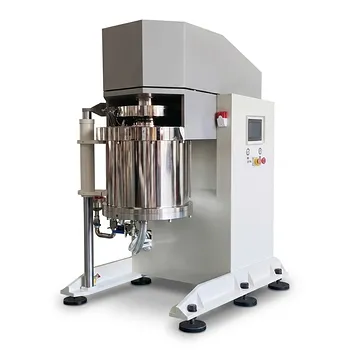
Vertical Nano Bead Mill for Ceramic Materials with Permanent Magnet Motor and High Efficiency Grinding
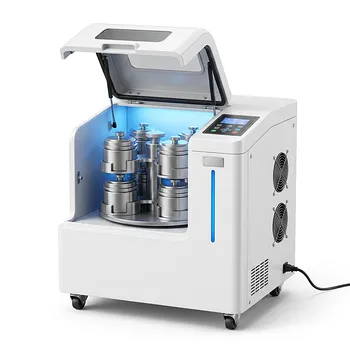
High Energy Omnidirectional Planetary Ball Mill 20L
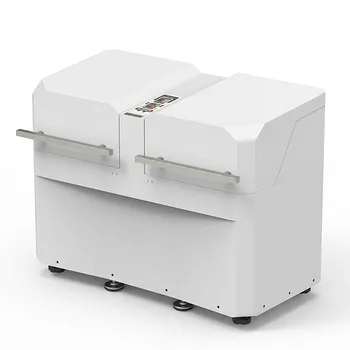
Dual Station Planetary Ball Mill 24L