Why is Uniaxial Pressing Vital for SiC Green Bodies? Mastering Density & Sintering Success
Updated 4 months ago
Uniaxial pressing is the essential bridge between loose raw powder and a viable structural ceramic. This process utilizes a laboratory hydraulic press to transform silicon carbide powder into a "green body"—a compacted part with a defined geometric shape and sufficient mechanical strength to be handled. Without this step, the loose particles would lack the necessary contact area and density required for atomic diffusion, making successful pressureless sintering impossible.
Core Takeaway: Uniaxial pressing provides the critical pre-densification and structural integrity needed to ensure that silicon carbide ceramics can transition from loose powder to a high-strength solid during the subsequent sintering stage.
Establishing the Geometric and Structural Foundation
Converting Loose Powder to Solid Form
The primary role of the hydraulic press is to apply directional pressure (typically between 5 MPa and 38 MPa) to consolidate loose mixed powders within a mold. This step transforms a chaotic pile of particles into a specific preliminary shape, such as a block, bar, or disc.
Dimensional Accuracy and Standardization
By using a rigid steel mold, uniaxial pressing ensures that the resulting green body meets precise geometric dimensions. This standardization is vital for ensuring that the final ceramic component achieves the desired size and shape after the predictable shrinkage of the sintering process.
Mechanical Strength for Handling
The pressure forces particles to bond and interlock, creating what is known as green strength. This internal cohesion allows the fragile ceramic precursor to be moved, measured, or further processed without crumbling or cracking.
Achieving Critical Preliminary Densification
Air Expulsion and Void Reduction
Loose powders contain significant amounts of trapped air that can lead to internal flaws. The hydraulic press mechanically expels air from between particles, eliminating large internal voids that would otherwise cause structural failure or excessive shrinkage during high-temperature processing.
Particle Rearrangement and Interlocking
High pressure allows particles to overcome internal friction and slide into a more efficient, tightly interlocked arrangement. This rearrangement is the first step in achieving the high packing density required for a high-performance ceramic.
Maximizing Particle Contact for Atomic Diffusion
For pressureless sintering to work, atoms must be able to migrate across particle boundaries. Uniaxial pressing increases the contact area between silicon carbide particles, creating the pathways necessary for the material reactions and atomic diffusion that drive final densification.
Understanding the Trade-offs and Limitations
Pressure Gradients and Density Gradients
A common challenge in uniaxial pressing is the non-uniform distribution of pressure caused by friction between the powder and the mold walls. This can result in density gradients within the green body, which may lead to warping or non-uniform shrinkage during the sintering stage.
Geometry and Size Constraints
Uniaxial pressing is generally limited to relatively simple shapes and small-to-medium sizes. Because pressure is applied in only one direction, complex geometries may experience uneven compaction, potentially requiring secondary processes like isostatic pressing to achieve total uniformity.
Optimizing Your Forming Process
How to Apply This to Your Project
To achieve the best results with silicon carbide ceramics, you must tailor your pressing parameters to your specific material goals.
- If your primary focus is maximum final density: Increase the initial pressing pressure (within the limits of your mold) to ensure the highest possible particle contact area before sintering begins.
- If your primary focus is preventing cracks and warping: Use lubricants or binders to reduce friction between the powder and the mold, ensuring a more uniform distribution of pressure throughout the part.
- If your primary focus is dimensional precision: Carefully calculate the expected shrinkage ratio and use a precision-machined mold to compensate for the volume loss that occurs during densification.
By mastering the uniaxial pressing stage, you ensure that your silicon carbide components possess the structural integrity and microscopic pathways required to reach their full mechanical potential.
Summary Table:
| Key Aspect | Role in SiC Forming | Critical Benefit |
|---|---|---|
| Structural Forming | Converts loose powder to solid | Defined shape & mechanical handling strength |
| Densification | Expels air & reduces internal voids | Minimizes shrinkage & prevents structural flaws |
| Sintering Prep | Maximizes particle contact area | Enables atomic diffusion for pressureless sintering |
| Precision | Uses rigid, precision-machined molds | Ensures dimensional accuracy & standardization |
Elevate Your Material Science Research with Precision Compaction
Ready to achieve the perfect green body density for your silicon carbide ceramics? Contact our experts today to find the ideal solution for your laboratory.
We provide complete laboratory sample preparation solutions tailored for material science. Our specialized range includes:
- Advanced Hydraulic Presses: A full spectrum including Standard Lab Presses, XRF Pellet Presses, Hot Presses, Vacuum Hot Presses, and Cold/Warm Isostatic Presses (CIP/WIP).
- Powder Processing: High-efficiency crushers, liquid nitrogen cryogenic grinders, and a variety of mills (planetary ball, jet, and rotor).
- Precision Mixing & Sizing: Powder and defoaming mixers, along with vibratory and air-jet sieve shakers.
Let us help you optimize your powder processing workflow to ensure superior mechanical potential in every sample.
References
- Yeongjun Oh, Hyun‐Sik Kim. Effect of carbon content on electrical, thermal, and mechanical properties of pressureless sintered SiC ceramics. DOI: 10.1111/jace.20562
Mentioned Products
- 6-Ton Small Single-Punch Tablet Press — Laboratory Powder & Granule Tableting Equipment / Tablet Forming Machine
- 5 Ton Single Punch Tablet Press Laboratory Small Batch Production
- Manual Tablet Press with Dual Scale Pressure Gauge for Pharmaceutical Food Chemical Laboratory Sample Preparation
- 6 Ton Variable Frequency Single Punch Tablet Press
- High Shear Laboratory Emulsifier for Mixing and Homogenization
People Also Ask
- What is the function of a laboratory press in Cr-Ti alloy evaluation? Quantify Fracture Stress & Strength
- What is the function of a laboratory press in assessing the hydrophobic performance of modified vermiculite fillers?
- What is the core function of a laboratory press in the forming of ceramic filter element green bodies? Maximize Density.
- What is the function of a laboratory press in the preparation of ceramic feed rods? Master Density and Precision
- Why is vacuum sealing and flexible packaging necessary for Aluminum Titanate powders during CIP? Ensure Peak Density

Tech Team · PowderPreparation
Last updated on May 14, 2026
Related Products
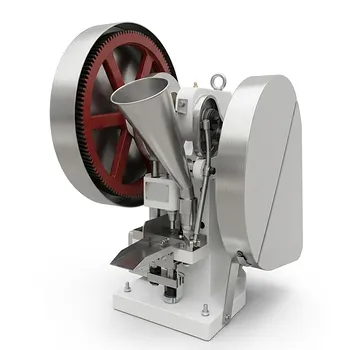
6-Ton Small Single-Punch Tablet Press — Laboratory Powder & Granule Tableting Equipment / Tablet Forming Machine
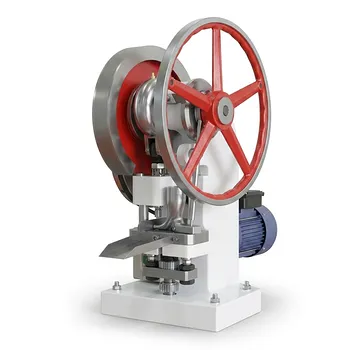
5 Ton Single Punch Tablet Press Laboratory Small Batch Production
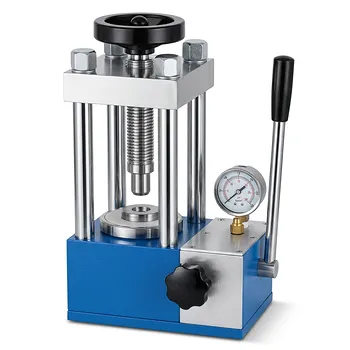
Manual Tablet Press with Dual Scale Pressure Gauge for Pharmaceutical Food Chemical Laboratory Sample Preparation
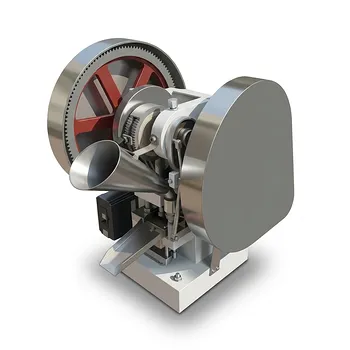
6 Ton Variable Frequency Single Punch Tablet Press
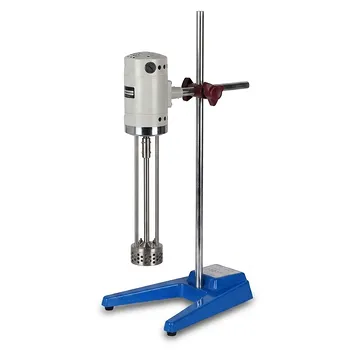
High Shear Laboratory Emulsifier for Mixing and Homogenization
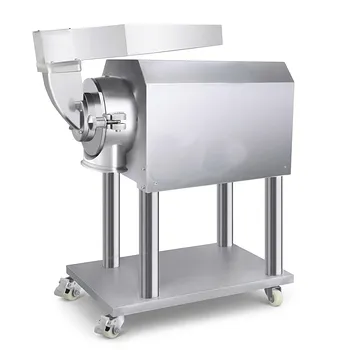
High Speed Small Laboratory Crusher for Dry Material Sample Preparation
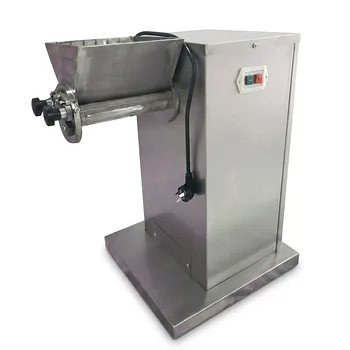
Small Laboratory Oscillating Granulator for Wet and Dry Granulation Processing
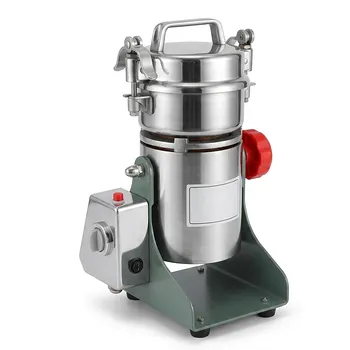
High Speed Swing Type Laboratory Pulverizer for Fine Powder Grinding and Sample Preparation