Why is the selection of standard test sieve aperture ranges critical? Master Soil Classification & Accuracy
Updated 5 months ago
The selection of standard test sieve aperture ranges is the foundational step in determining a soil's physical identity and its environmental behavior. By utilizing a precise range, typically between 2 mm and 0.002 mm, researchers can quantitatively partition a sample into sand, silt, and clay fractions. This classification is essential because the resulting soil texture type directly dictates the soil's capacity to adsorb heavy metals, retain water, and host specific mineral concentrations.
Core Takeaway: Choosing the correct sieve aperture range ensures that soil particles are categorized into strictly defined geometric fractions. This precision is necessary not just for naming a soil type, but for accurately predicting environmental risks, such as pollutant migration and sediment yield.
Quantitative Soil Texture Classification
Defining the Boundaries of Sand, Silt, and Clay
Standard test sieves act as the physical gatekeepers that define the boundaries of each soil fraction. By using a series of sieves from 20 mesh to 400 mesh, researchers can isolate particles to calculate the exact percentages of sand, silt, and clay.
This quantitative data allows for the definitive classification of soil texture types, such as sandy clay loam. Without these specific aperture ranges, the classification would be subjective and lack the precision required for scientific modeling.
Identifying Particle 'Hotspots'
Fine-grained classification is decisive for identifying "hotspot" particle sizes where radionuclide concentrations or heavy metals typically increase. As particle size decreases toward the fine silt and clay range (0.002 mm), the specific surface area increases significantly.
This increased surface area enhances the soil's adsorption and retention capacity. Accurate sieving allows researchers to isolate these specific fractions to assess localized pollution risks and environmental impact.
Ensuring Experimental Reliability and Uniformity
Eliminating Interference in Simulation
In rainfall and infiltration experiments, the uniformity of aggregate components is vital. High-precision test sieves, such as those with apertures of 2.00 mm, 1.18 mm, and 600 μm, remove irregular particles that do not meet size requirements.
This strict geometric control eliminates noise in the data. It ensures that observed changes in sediment yield or water flow are due to the soil’s properties rather than random variations in particle shape or size.
Normalizing Samples for Mineral Analysis
Certain heavy minerals, such as garnet and zircon, tend to cluster within specific diameter ranges, often between 0.1 and 0.25 mm. Standard sieves normalize the grain size, allowing for an accurate quantitative analysis of mineral percentages.
This normalization is a fundamental step in studying mineral sorting patterns. It ensures that the samples being compared are physically consistent, making the subsequent chemical or geological analysis valid.
Understanding the Trade-offs and Limitations
Mechanical Limits of Fine Sieving
While aperture ranges down to 0.002 mm are theoretically critical, physical sieving becomes increasingly difficult as particles approach the sub-63 micron level. At these sizes, particles often clump due to static charges or moisture, which can lead to blinding of the sieve mesh.
In these instances, dry sieving may need to be replaced by wet sieving or sedimentation methods to maintain accuracy. Relying solely on mechanical shaking for the finest fractions can result in an underestimation of the clay and fine silt content.
Compliance and Precision Errors
The accuracy of soil classification is entirely dependent on the sieve's compliance with international standards. Even minor deviations in aperture size can lead to incorrect mass distribution data.
Incorrect data shifts the cumulative frequency curves, which may lead to the misidentification of depositional environments or the incorrect calculation of concrete water-cement ratios in engineering applications.
How to Apply This to Your Project
Making the Right Choice for Your Goal
- If your primary focus is environmental risk assessment: Prioritize high-precision fine sieves (63 μm and below) to accurately measure the clay fractions responsible for heavy metal and radionuclide adsorption.
- If your primary focus is hydraulic or rainfall modeling: Focus on achieving high uniformity in the sand and gravel fractions (2.00 mm to 0.5 mm) to ensure consistent infiltration and sediment yield data.
- If your primary focus is geological facies analysis: Utilize a complete gradient of sieves to plot cumulative frequency curves, which are essential for identifying fluvial or lacustrine depositional environments.
- If your primary focus is industrial or construction quality: Use standard sieves to detect fine impurities in aggregates, allowing you to optimize water-cement ratios for maximum concrete strength.
Selecting the correct sieve aperture range transforms a raw soil sample into a precise data set, enabling accurate predictions of environmental behavior and material performance.
Summary Table:
| Soil Fraction | Size Range (mm) | Research & Practical Significance |
|---|---|---|
| Sand | 2.00 – 0.05 | Critical for hydraulic modeling, infiltration, and sediment yield studies. |
| Silt | 0.05 – 0.002 | Essential for analyzing mineral sorting patterns and depositional environments. |
| Clay | < 0.002 | Key for assessing heavy metal adsorption and radionuclide retention capacity. |
| Aggregates | > 2.00 | Used to optimize water-cement ratios and ensure construction material strength. |
Elevate Your Material Analysis with Precision Equipment
Achieving accurate soil classification requires more than just technique—it requires high-performance equipment. [Your Brand Name] provides complete laboratory sample preparation solutions for material science, specializing in powder processing and compaction.
Our extensive range includes:
- Sieving Excellence: Vibratory and air-jet sieve shakers with a full suite of precision test sieves.
- Advanced Milling: Planetary ball mills, jet mills, and cryogenic grinders for the finest particle sizes.
- Sample Compaction: A full spectrum of hydraulic presses, including Cold/Warm Isostatic Presses (CIP/WIP) and vacuum hot presses.
- Preparation Tools: High-durability crushers and specialized powder mixers.
Whether you are assessing environmental risks or optimizing industrial aggregates, we deliver the reliability your research demands.
Contact our experts today for a tailored solution!
References
- Stellamaris Chinenye Duru, Michael Emeka Okechukwu. Spatial variability of heavy metals concentrations in soil of auto-mechanic workshop clusters in Nsukka, Nigeria. DOI: 10.1038/s41598-024-60044-3
Mentioned Products
- Laboratory Vibratory Test Sieve Shaker for Precision Particle Size Analysis and Powder Grading
- 三维电磁微量振动筛分仪
- High Frequency Wet Three-Dimensional Vibrating Sieve Shaker for Dry and Wet Particle Size Analysis
- Tapping Oscillating Sieve Shaker for Dry and Wet Particle Size Analysis
- Laboratory Air Jet Sieving Machine for Fine Powder Particle Size Analysis and Deagglomeration
People Also Ask
- What role does a laboratory sieve shaker play in determining PDI? Achieve Precision in Biomass Quality Testing
- What are the functions of sieve shakers for coconut shell powder? Achieve Precise Particle Size & Quality Control.
- What function does a laboratory sieve shaker perform in the PSD analysis of residual soil? Ensure Precise Grading
- What is the role of a laboratory sieve shaker in the preparation of plantain peel adsorbents? Standardize Particle Size
- What is the function of a laboratory vibratory sieve shaker? Enhance Coal Particle Size Distribution (PSD) Analysis

Tech Team · PowderPreparation
Last updated on May 14, 2026
Related Products

Laboratory Vibratory Test Sieve Shaker for Precision Particle Size Analysis and Powder Grading

三维电磁微量振动筛分仪

High Frequency Wet Three-Dimensional Vibrating Sieve Shaker for Dry and Wet Particle Size Analysis

Tapping Oscillating Sieve Shaker for Dry and Wet Particle Size Analysis
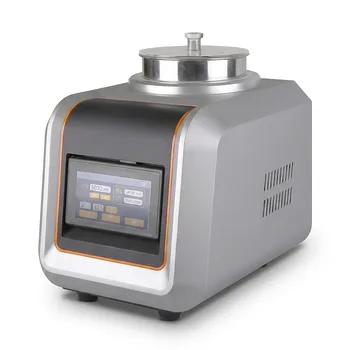
Laboratory Air Jet Sieving Machine for Fine Powder Particle Size Analysis and Deagglomeration

Dry Three Dimensional Vibratory Sieve Shaker

Heavy Duty Dry Three Dimensional Vibratory Sieve Shaker for Particle Separation

Three Dimensional Rotary Vibrating Sieve

Stainless Steel Rotary Vibrating Sieve High Precision Circular Vibratory Separator Industrial Powder Grading Machine Multi Layer Sifting Equipment
