Why is the precise weighing of initial and final sample masses necessary during ball milling experiments? Expert Tips.
Updated 4 months ago
Precise mass measurement in ball milling is the foundation of process quantification and model validation. It allows researchers to calculate material loss, account for adhesion, and provide the empirical data required for effective milling time simulations.
To achieve reliable results, ball milling must be treated as a mass-balance equation. Precise weighing ensures that material losses and physical changes are quantified, which is essential for validating predictive models and maintaining experimental repeatability.
Quantifying Material Dynamics and Process Yield
Tracking Adhesion and High-Energy Losses
During high-energy milling, materials often adhere to the milling jar walls or the grinding media itself. Precise weighing of the final mass reveals how much material has been "lost" to the equipment surfaces, which is critical for understanding the physical behavior of the powder.
Calculating Net Process Yield
Without accurate initial and final masses, calculating the process yield becomes impossible. For high-value materials or small-batch research, even a slight mass discrepancy can lead to significant errors in reporting the efficiency of the synthesis.
Accounting for Friction-Induced Changes
High-energy friction can sometimes lead to slight mass changes through oxidation or the introduction of wear debris from the media. Precise measurement helps identify these deviations, ensuring the final product meets the intended chemical specifications.
The Role of Mass Data in Computational Modeling
Validating Milling Time Simulations
Modern ball milling relies on effective time models to predict particle size reduction. Accurate mass data serves as the primary input to validate these simulations, ensuring the model's output aligns with physical reality.
Bridging the Gap Between Theory and Practice
Simulation models are only as good as the empirical data supporting them. By recording exact mass deltas, you provide the necessary benchmarks to refine grinding efficiency calculations and theoretical energy transfer equations.
Optimizing Feed Rate and Capacity
As noted in process stability studies, mass precision helps determine the ideal feed rate to balance capacity and fragmentation. Accurate mass tracking prevents equipment "plugging" or overloading, which maintains a stable output particle size.
Understanding the Trade-offs and Pitfalls
Measurement Precision vs. Material Recovery
While high precision is necessary, the quest for 100% recovery can sometimes introduce cross-contamination. Over-scraping jar walls to recover every milligram of "lost" mass may incorporate wear particles from the container into your sample.
The Risk of Ignoring Mass Deltas
Ignoring a 1-2% mass loss might seem trivial, but in a multi-stage process, these errors compound. This leads to poor repeatability, where subsequent batches fail to replicate the properties of the original experiment despite using the same settings.
Environmental Influence on Weight
Small mass changes can sometimes be attributed to moisture absorption or degassing during the milling process. If you do not weigh precisely before and after, you may misattribute these atmospheric interactions to milling efficiency or material loss.
Applying Mass Precision to Your Workflow
Achieving the right balance of precision depends on whether your priority is pure research or industrial-scale production.
- If your primary focus is experimental repeatability: Use analytical balances with at least four-decimal precision to document every milligram of loss, as this data is vital for refining your specific milling protocols.
- If your primary focus is process scaling and modeling: Prioritize the "mass balance" of the entire system, using initial and final weights to calibrate your simulation software for larger batch sizes.
- If your primary focus is maximizing production yield: Focus on the delta between feed rate and output mass to identify "dead zones" in the mill where material consistently adheres, allowing for better equipment maintenance schedules.
Mastering the measurement of mass transforms ball milling from an unpredictable craft into a disciplined, repeatable scientific process.
Summary Table:
| Key Factor | Importance in Ball Milling | Practical Benefit |
|---|---|---|
| Material Dynamics | Tracks adhesion to jar walls and media | Quantifies net process yield |
| Model Validation | Provides empirical data for simulations | Accurate milling time predictions |
| Process Stability | Monitors oxidation and wear debris | Ensures chemical specification purity |
| Repeatability | Benchmarks mass deltas across batches | Guarantees consistent experimental results |
Elevate Your Powder Processing Accuracy
Precise measurement is only half the battle; the right equipment ensures your material science research is both repeatable and scalable. We provide complete laboratory sample preparation solutions, specializing in high-performance powder processing and compaction equipment designed for the most demanding applications.
Our extensive product line includes:
- Advanced Milling: Planetary ball mills, jet mills, liquid nitrogen cryogenic grinders, and rotor mills.
- Crushing & Sizing: Jaw/roll crushers and vibratory/air-jet sieve shakers.
- Mixing Solutions: Powder mixers and vacuum defoaming mixers.
- Precision Compaction: A full spectrum of hydraulic presses, including Cold/Warm Isostatic Presses (CIP/WIP), XRF pellet presses, and vacuum hot presses.
Whether you are refining a research protocol or scaling to production, our expertise helps you minimize material loss and maximize efficiency. Contact us today to find the perfect equipment for your lab!
References
- Adel Jalaee, E. Johan Foster. Improvement in the Thermomechanical Properties and Adhesion of Wood Fibers to the Polyamide 6 Matrix by Sequential Ball Milling Technique. DOI: 10.1021/acssuschemeng.3c06351
Mentioned Products
- Heavy Duty Horizontal Planetary Ball Mill for Efficient Industrial Grinding and Sample Preparation
- Vertical Semi Circular Planetary Ball Mill for Laboratory Precision Grinding
- Vertical Production Planetary Ball Mill for High Throughput Powder Processing
- Vertical Square Planetary Ball Mill for Laboratory Sample Preparation and Nanoscale Grinding
- High Energy Planetary Ball Mill for Nano Scale Grinding and Mechanical Alloying
People Also Ask
- Why grind lime-pozzolan specimens for TG/DTA for 3 mins? Master sample prep for high-precision thermal analysis.
- What is the role of a planetary ball mill in the mechanical activation of ZTA powder? Boost Sintering Performance
- What is the function of a planetary ball mill in wollastonite ceramic prep? Achieve Molecular Homogenization & Reactivity
- How does a planetary ball mill contribute to the homogenization of trace elements? Achieve Sub-Micron Uniformity
- What is the function of a high-performance planetary ball mill in AMZ laminates? Master Ceramic Homogenization.

Tech Team · PowderPreparation
Last updated on Jun 03, 2026
Related Products
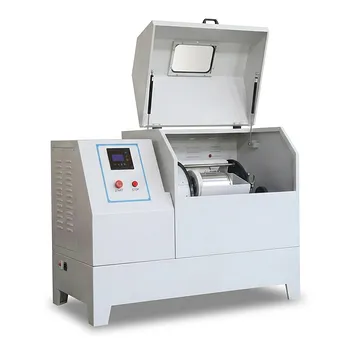
Heavy Duty Horizontal Planetary Ball Mill for Efficient Industrial Grinding and Sample Preparation
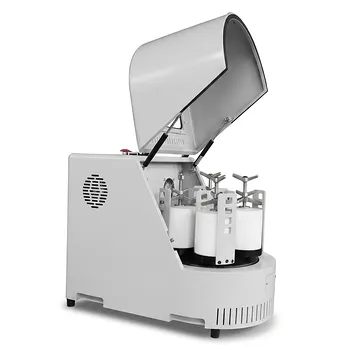
Vertical Semi Circular Planetary Ball Mill for Laboratory Precision Grinding
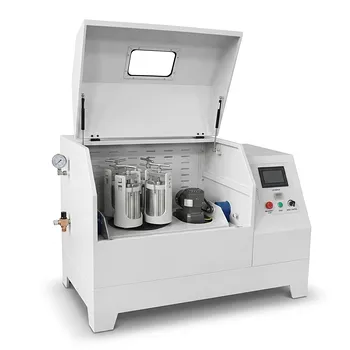
Vertical Production Planetary Ball Mill for High Throughput Powder Processing

Vertical Square Planetary Ball Mill for Laboratory Sample Preparation and Nanoscale Grinding
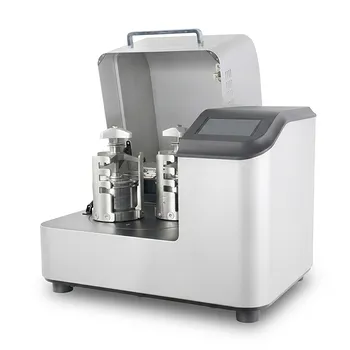
High Energy Planetary Ball Mill for Nano Scale Grinding and Mechanical Alloying
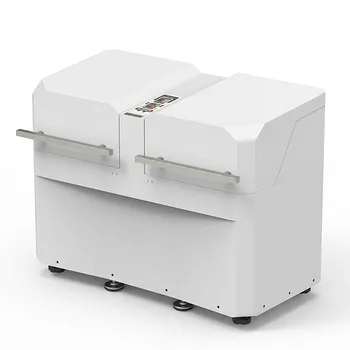
Dual Station Planetary Ball Mill 24L

Single Tank High Energy Vibratory Ball Mill for Laboratory Grinding and Mixing

High Energy Laboratory Planetary Ball Mill for Nano Grinding and Material Science Sample Preparation
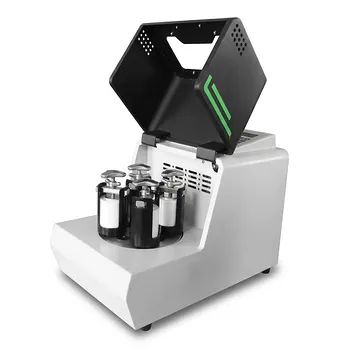
Miniature Planetary Ball Mill with Vacuum Grinding and High Efficiency for Laboratory Sample Preparation

High Energy Omnidirectional Planetary Ball Mill 16L
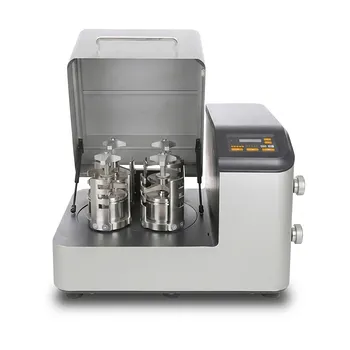
High Energy Planetary Ball Mill for Nano Scale Grinding and Colloidal Mixing in Material Science Research
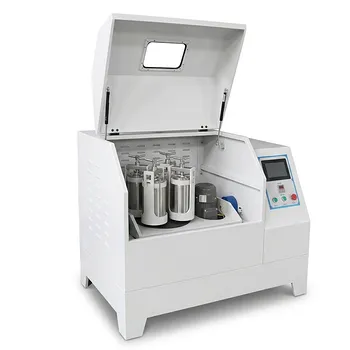
360° Rotating Omnidirectional Laboratory Planetary Ball Mill for Homogeneous Ultra-Fine Grinding and Mixing
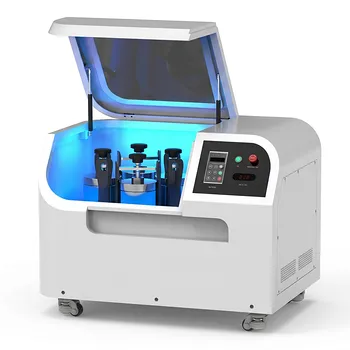
Planetary Ball Mill 12L
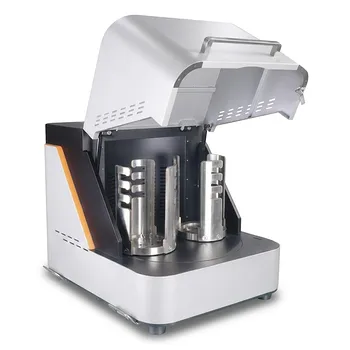
High Energy Laboratory Planetary Ball Mill for Nano Grinding and Colloidal Mixing of Hard and Brittle Materials
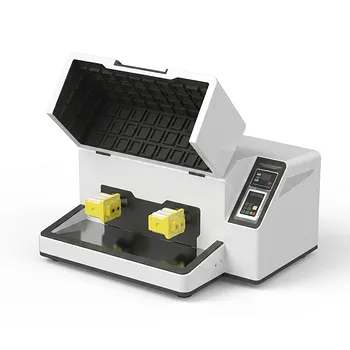
Multi-Platform Nanoscale High-Energy Vibratory Ball Mill
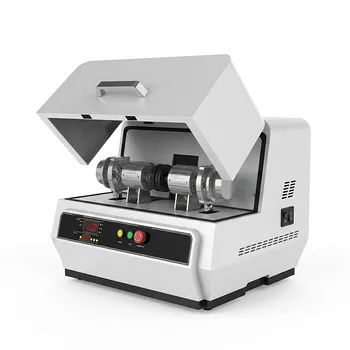
Dual Jar High Energy Vibratory Ball Mill
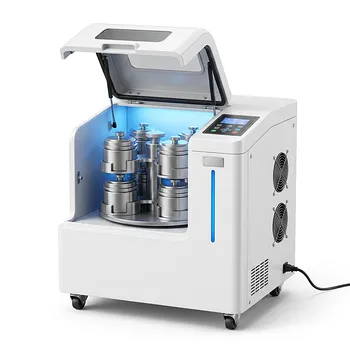
High Energy Omnidirectional Planetary Ball Mill 20L
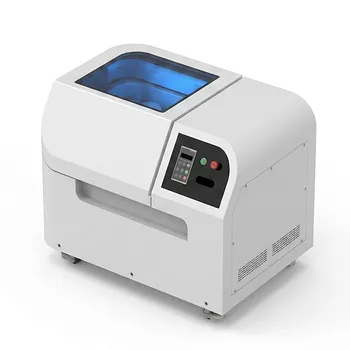
8L Planetary Ball Mill for Laboratory Grinding and Sample Preparation

Nano High Energy Vibratory Ball Mill for Laboratory Sample Preparation