Why combine vibratory sieve shaker & hydrometer analysis for soil classification in brick making? Key Benefits & Guide
Updated 4 months ago
The necessity of combining these two methods lies in the diverse nature of soil particles. To classify soil accurately for brick manufacturing, you must account for the entire range of particle sizes, from coarse gravel to microscopic clay. A vibratory sieve shaker isolates particles larger than 0.075 mm, while hydrometer analysis measures the finer silt and clay via sedimentation; together, they produce a complete particle size distribution curve required to determine material suitability and additive ratios.
To manufacture durable bricks, you must understand the soil's full mechanical profile. Combining mechanical sieving with hydrometer sedimentation ensures that both the granular "skeleton" and the cohesive "binder" of the soil are quantified, allowing for precise control over brick density and strength.
Bridging the Gap Between Coarse and Fine Fractions
Sieve Shakers for Granular Integrity
A vibratory sieve shaker utilizes high-frequency, three-dimensional vibration to force soil particles through a series of decreasing mesh apertures. This process is highly efficient for isolating coarse fractions (sand and gravel) larger than 0.075 mm, ensuring that particles jump sufficiently to prevent mesh clogging.
Hydrometer Analysis for Cohesive Properties
Standard sieves cannot physically capture the minute dimensions of silt and clay. Hydrometer analysis fills this gap by using sedimentation principles—measuring the rate at which fine particles settle in a liquid—to determine the concentration of particles smaller than 0.075 mm.
Creating the Particle Size Distribution Curve
The data from both methods are synthesized into a single distribution curve. This curve is the primary diagnostic tool used to identify if a soil is a "sandy loam" or another category, which is a fundamental prerequisite for ensuring the structural stability of pressed bricks.
Impact on Brick Structural Performance
Optimizing Density and Porosity
Precise classification allows manufacturers to calculate technical parameters like the fineness modulus and the coefficient of uniformity (Cu). Controlling these variables ensures the brick body has a uniform microstructure, minimizing defects and optimizing porosity for products like modified firebricks.
Validating Additive Effectiveness
In modern manufacturing, soil is often stabilized with additives like Rice Husk Ash (RHA), bagasse ash, or lime. Knowing the exact silt and clay content via hydrometer analysis allows technicians to determine the optimal mixing ratios for these stabilizers, ensuring the chemical reactions occur uniformly throughout the brick.
Consistency in Mass Production
Mechanical vibratory sieving significantly reduces manual labor and improves repeatability. For large-scale operations, this standardization ensures that every batch of raw material meets the specific grading models required for high-strength Adobe or laterite blocks.
Understanding the Trade-offs
Equipment and Time Constraints
While the dual-method approach provides the most accurate data, it is time-intensive. Hydrometer analysis requires long sedimentation periods, and vibratory shakers require calibrated, high-precision sieves that must be meticulously cleaned to maintain accuracy.
Sensitivity to Sample Preparation
Both methods are sensitive to how the soil is initially processed. If the soil is not properly dried or if organic matter is not removed, particles may clump together (flocculation), leading to erroneous grading data that can cause bricks to crack during the firing or drying process.
Making the Right Choice for Your Goal
How to Apply This to Your Project
Determining the necessity of these tests depends on your specific manufacturing requirements and the raw materials available.
- If your primary focus is Adobe Brick with Rice Husk Ash: You must use both methods to ensure the clay content is high enough to react with the ash while maintaining a sand skeleton for volume stability.
- If your primary focus is High-Precision Firebricks: Prioritize the vibratory sieve shaker with ultra-fine meshes (150–300 micrometers) to ensure the uniformity of the powder mix and prevent structural voids.
- If your primary focus is Compressed Earth Blocks (CEBs): Focus on the distribution curve to achieve maximum dry density, which is only possible when the void spaces between large grains are perfectly filled by smaller particles.
Accurate soil classification through combined analysis is the only way to transform raw earth into a reliable, engineered building material.
Summary Table:
| Method | Particle Size Range | Role in Brick Manufacturing | Key Benefit |
|---|---|---|---|
| Vibratory Sieve Shaker | > 0.075 mm (Coarse) | Isolates sand and gravel fractions | Ensures a stable structural "skeleton" |
| Hydrometer Analysis | < 0.075 mm (Fine) | Quantifies silt and clay content | Determines "binder" quality & additive ratios |
| Combined Analysis | Full Spectrum | Creates Particle Size Distribution Curve | Optimizes density, porosity, and strength |
Elevate Your Material Testing with Professional Sample Prep Solutions
Achieving the perfect brick requires more than just soil—it requires precise data. Our brand provides complete laboratory sample preparation solutions tailored for material science and powder processing.
Whether you need to prepare raw materials using our high-performance crushers (jaw/roll) and planetary ball mills, or achieve accurate grading with our vibratory and air-jet sieve shakers, we have the expertise to support your workflow. For final production, we offer a full spectrum of hydraulic presses, including Cold/Warm Isostatic Presses (CIP/WIP), vacuum hot presses, and XRF pellet presses to ensure maximum structural integrity.
Ready to optimize your soil classification and brick quality?
Contact Our Experts Today for a Custom Solution
References
- Win Ei Ei Tun, Khin Mya Thwin. PREPARATION OF ADOBE BRICK BY MIXING WITH RICE HUSH ASH. DOI: 10.30780/ijtrs.v3.i6.2018.004
Mentioned Products
- Vibratory Sieve Shaker Electromagnetic 3D Motion Powder Particle Size Analyzer for Dry and Wet Sieving
- Laboratory Dry and Wet Three Dimensional Vibratory Sieve Shaker for Particle Analysis
- Dry Three Dimensional Vibratory Sieve Shaker
- Stainless Steel Laboratory Vibratory Test Sieve Shaker
- Heavy Duty Dry Three Dimensional Vibratory Sieve Shaker for Particle Separation
People Also Ask
- How does a vibratory sieve shaker contribute to optimizing the performance of activated carbon? Enhance Adsorption Precision
- Why is a laboratory vibratory sieve shaker necessary for processing magnesium-based borate precursor powders? Boost Activity
- Why use a vibratory sieve shaker to verify coarse aggregate grading in rubberized concrete? Ensure Structural Integrity
- What function do vibratory sieve shakers and standard test sieves serve in the preparation of adsorbents? Key Guide
- What role does a vibratory sieve shaker play in the particle size analysis of ground corn products? Enhance QC Precision

Tech Team · PowderPreparation
Last updated on Jun 03, 2026
Related Products
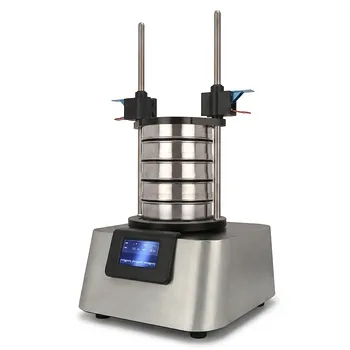
Vibratory Sieve Shaker Electromagnetic 3D Motion Powder Particle Size Analyzer for Dry and Wet Sieving
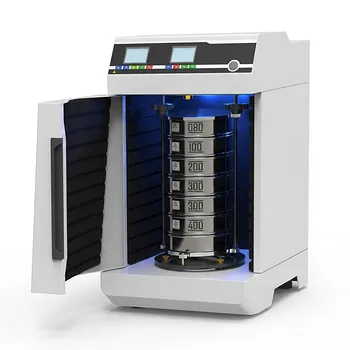
Laboratory Dry and Wet Three Dimensional Vibratory Sieve Shaker for Particle Analysis
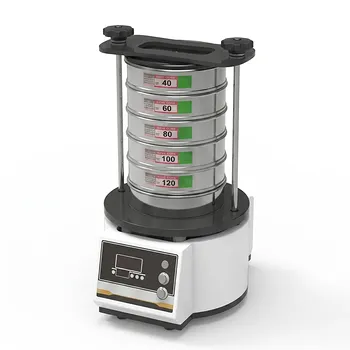
Dry Three Dimensional Vibratory Sieve Shaker
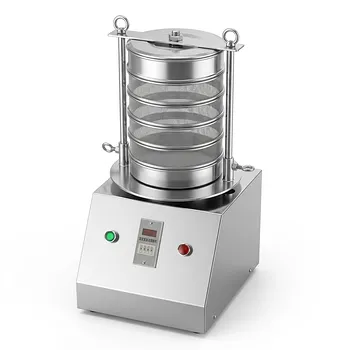
Stainless Steel Laboratory Vibratory Test Sieve Shaker
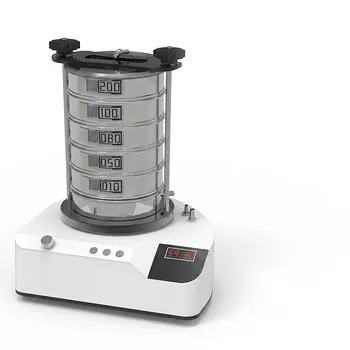
Heavy Duty Dry Three Dimensional Vibratory Sieve Shaker for Particle Separation
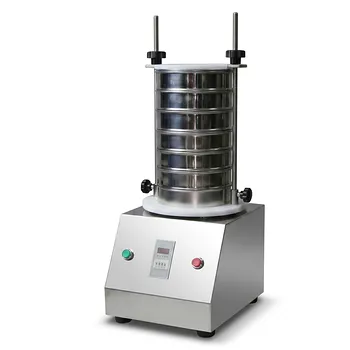
Small Laboratory Vibratory Sieve Shaker for Powder Gradation and Particle Size Analysis
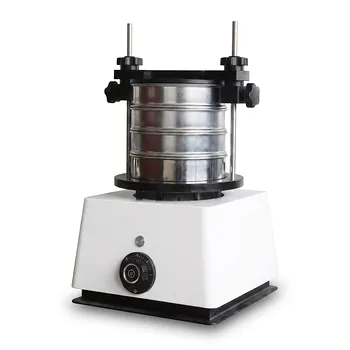
Small Laboratory Vibrating Sieve Shaker for Precise Particle Size Analysis
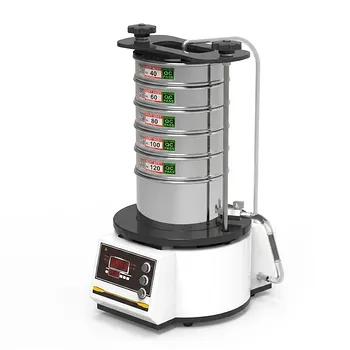
High Frequency Wet Three-Dimensional Vibrating Sieve Shaker for Dry and Wet Particle Size Analysis
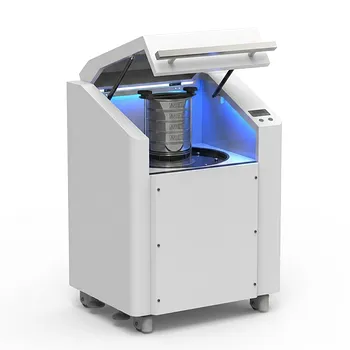
High Frequency Cabinet Type Three-Dimensional Rotary Vibrating Sieve Shaker for Dry Sieving and Particle Classification
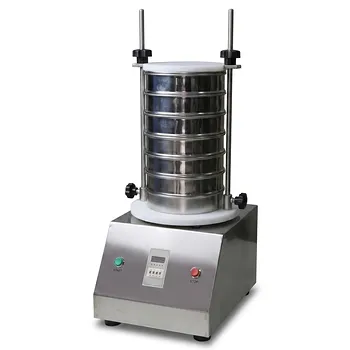
Laboratory Vibratory Test Sieve Shaker for Precision Particle Size Analysis and Powder Grading
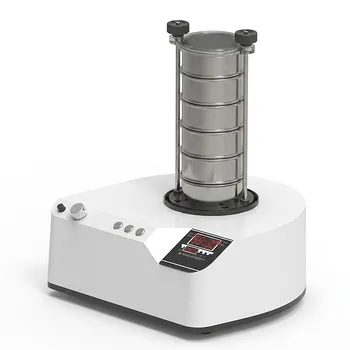
三维电磁微量振动筛分仪
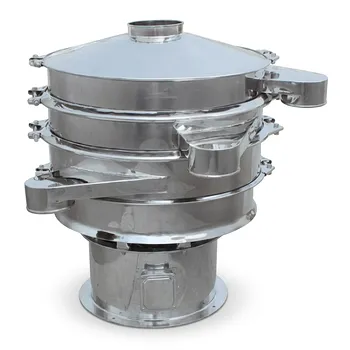
Stainless Steel Rotary Vibrating Sieve High Precision Circular Vibratory Separator Industrial Powder Grading Machine Multi Layer Sifting Equipment
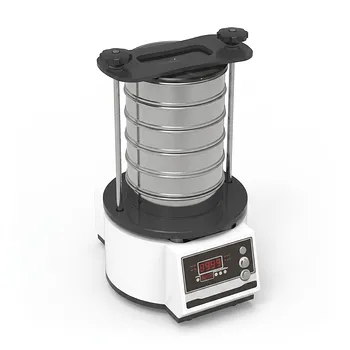
Tapping Oscillating Sieve Shaker for Dry and Wet Particle Size Analysis
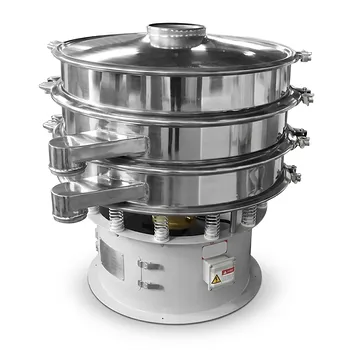
Three Dimensional Rotary Vibrating Sieve
Vibratory Superfine Grinder for Ultra Fine Laboratory Powder Milling
Small Vibrating Ultrafine Grinder for Traditional Chinese Medicine
Automatic Vibrating Powder Feeder for Laboratory Material Processing Precision Vibratory Hopper Feeder for Granular and Powder Material Handling Industrial Grade Vibrating Tray Feeder for Consistent Material Sample Preparation