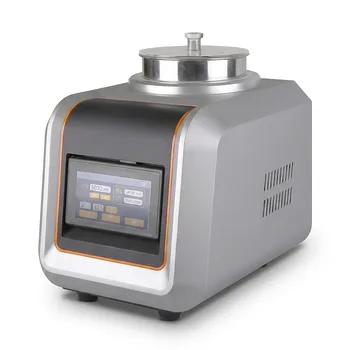
What is the purpose of using a vibratory sieve shaker prior to material bed compression? Ensure High-Fidelity Data
Updated 3 months ago
The primary purpose of using a vibratory sieve shaker is to achieve a narrow and precise particle size distribution within the raw material feed. This process classifies pre-crushed or bulk materials into specific size ranges—such as 1–3 mm or 150–355 µm—ensuring that the experimental input is physically consistent. By standardizing the particle dimensions, researchers can isolate the effects of compression forces from the variables introduced by irregular material sizing.
A vibratory sieve shaker acts as the fundamental quality control step that ensures experimental reproducibility; it eliminates sizing outliers to provide a uniform material bed, which is essential for accurately measuring the relationship between applied pressure and material density.
Achieving Precision Through Particle Classification
Standardizing the Experimental Feed
Raw materials often possess highly heterogeneous dimensions that can skew data during compression. Vibratory sieve shakers utilize high-frequency mechanical energy to pass material through standard test sieves, isolating specific fractions. This ensures that every test run begins with a statistically similar sample, which is a prerequisite for any scientifically valid comparison of crushing or compression technologies.
Establishing the Physical Foundation for Uniformity
In material science, the consistency of particle size is the primary driver of mixing uniformity and bed homogeneity. Whether preparing drug substances for direct compression or biomass for chemical modification, the shaker removes oversized or undersized components that would otherwise cause segregation. This uniformity is critical for ensuring that the active ingredients or reactive surfaces are evenly distributed throughout the material bed.
The Impact on Compression Physics and Data Accuracy
Enhancing Density and Porosity Calculations
The initial "packing" of a material bed dictates its behavior under pressure. By using a shaker to obtain a single and clear particle size distribution, researchers can more accurately calculate initial bulk density and subsequent changes in porosity. This reduces experimental errors in single-particle compression tests and allows for a clearer understanding of how the compression ratio relates to applied pressure.
Eliminating Reactivity and Flow Variables
In specialized fields like seepage experiments or thermal treatment, particle size directly influences parameters such as the Reynolds number or slagging tendencies. A sieve shaker eliminates differences in reactivity or fluidization behavior caused by uneven dimensions. This allows for the establishment of quantitative relationships between physical size and the mechanical transition points of the material under stress.
Understanding the Trade-offs and Limitations
The Risk of Mechanical Degradation
While vibration is necessary for classification, excessive shaking duration or intensity can lead to attrition or particle breakage. If the material is fragile, the very process intended to standardize the size may inadvertently create "fines" (micro-particles) that change the material’s properties before the experiment begins.
Blinding and Static Interference
Certain materials, especially fine powders or those with high moisture content, are prone to mesh blinding, where particles clog the sieve openings. Additionally, high-frequency vibration can generate electrostatic charges in polymers or dry powders, causing particles to clump together. These factors can lead to an inaccurate classification, undermining the goal of a narrow size distribution.
Optimizing Material Preparation for Your Research
Implementing the Right Classification Strategy
Effective material preparation requires matching the sieving parameters to the specific goals of the compression experiment.
- If your primary focus is scientific reproducibility: Use a narrow range of mesh sizes to isolate a highly specific particle fraction, minimizing the standard deviation of your input.
- If your primary focus is industrial scalability: Grade materials into broader, representative ranges that simulate actual production feeds while still removing extreme outliers.
- If your primary focus is maximizing material density: Focus on removing the "fines" that can fill interstitial spaces unpredictably, ensuring the compression data reflects the deformation of the primary particles.
By meticulously controlling the particle size distribution through vibratory sieving, you create the necessary conditions for high-fidelity data and professional-grade material analysis.
Summary Table:
| Key Objective | Benefit for Compression Experiments | Risk Management |
|---|---|---|
| Particle Classification | Creates a narrow, precise size distribution for consistent input. | Prevents data skewing from outliers. |
| Bed Homogeneity | Eliminates segregation to ensure uniform density throughout the bed. | Reduces errors in porosity calculations. |
| Process Standardization | Isolates compression force variables from irregular material sizing. | Ensures high experimental reproducibility. |
| Reactivity Control | Removes 'fines' that can alter flow and mechanical transition points. | Minimizes unintended electrostatic charges. |
Elevate Your Material Research with Precision Powder Solutions
Success in material bed compression starts with flawless sample preparation. We provide complete laboratory sample preparation solutions tailored for material science, specializing in professional powder processing and compaction equipment.
Our extensive product line supports every stage of your research workflow:
- Classification & Analysis: High-performance vibratory and air-jet sieve shakers equipped with precision test sieves and meshes.
- Size Reduction: Robust jaw/roll crushers, liquid nitrogen cryogenic grinders, and specialized mills (planetary ball, jet, sand, disc, and rotor).
- Compaction Excellence: A full spectrum of hydraulic presses, including Cold/Warm Isostatic Presses (CIP/WIP), standard lab presses, XRF pellet presses, and vacuum hot presses.
- Homogenization: Advanced powder mixers and defoaming mixers for perfect material blending.
Don't let irregular particle sizing or inconsistent bed density compromise your results. Contact us today to discover how our specialized equipment can enhance your lab's efficiency and experimental accuracy.
References
- László Tamás, Ádám Rácz. Material Bed Compression Experiments and the Examination of the Bulk Density of the Product. DOI: 10.33030/geosciences.2022.15.110
Mentioned Products
- Vibratory Sieve Shaker Electromagnetic 3D Motion Powder Particle Size Analyzer for Dry and Wet Sieving
- Laboratory Dry and Wet Three Dimensional Vibratory Sieve Shaker for Particle Analysis
- Stainless Steel Laboratory Vibratory Test Sieve Shaker
- Heavy Duty Dry Three Dimensional Vibratory Sieve Shaker for Particle Separation
- Dry Three Dimensional Vibratory Sieve Shaker
People Also Ask
- How does a vibratory sieve shaker contribute to optimizing the performance of activated carbon? Enhance Adsorption Precision
- Why is a laboratory vibratory sieve shaker necessary for processing magnesium-based borate precursor powders? Boost Activity
- Why use a vibratory sieve shaker to verify coarse aggregate grading in rubberized concrete? Ensure Structural Integrity
- What function do vibratory sieve shakers and standard test sieves serve in the preparation of adsorbents? Key Guide
- What role does a vibratory sieve shaker play in the particle size analysis of ground corn products? Enhance QC Precision

Tech Team · PowderPreparation
Last updated on Jun 03, 2026
Related Products

Vibratory Sieve Shaker Electromagnetic 3D Motion Powder Particle Size Analyzer for Dry and Wet Sieving
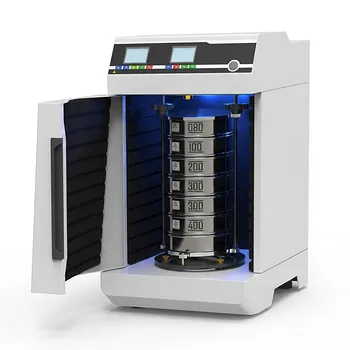
Laboratory Dry and Wet Three Dimensional Vibratory Sieve Shaker for Particle Analysis

Stainless Steel Laboratory Vibratory Test Sieve Shaker

Heavy Duty Dry Three Dimensional Vibratory Sieve Shaker for Particle Separation
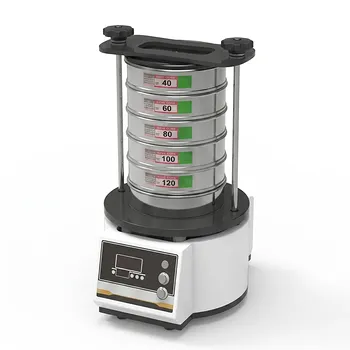
Dry Three Dimensional Vibratory Sieve Shaker

Small Laboratory Vibratory Sieve Shaker for Powder Gradation and Particle Size Analysis

High Frequency Wet Three-Dimensional Vibrating Sieve Shaker for Dry and Wet Particle Size Analysis

Small Laboratory Vibrating Sieve Shaker for Precise Particle Size Analysis
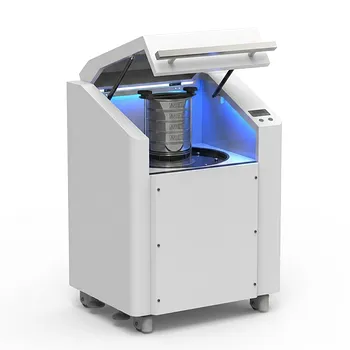
High Frequency Cabinet Type Three-Dimensional Rotary Vibrating Sieve Shaker for Dry Sieving and Particle Classification

Laboratory Vibratory Test Sieve Shaker for Precision Particle Size Analysis and Powder Grading

三维电磁微量振动筛分仪
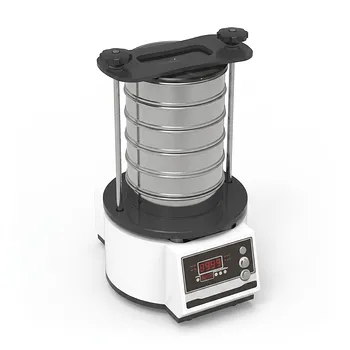
Tapping Oscillating Sieve Shaker for Dry and Wet Particle Size Analysis

Stainless Steel Rotary Vibrating Sieve High Precision Circular Vibratory Separator Industrial Powder Grading Machine Multi Layer Sifting Equipment

Three Dimensional Rotary Vibrating Sieve
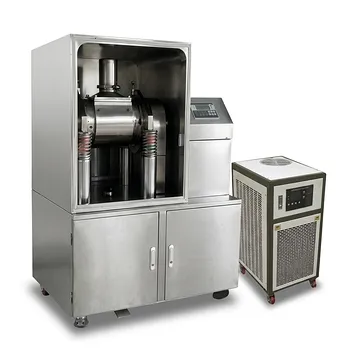
Small Vibrating Ultrafine Grinder for Traditional Chinese Medicine
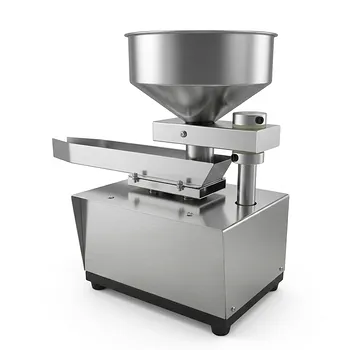
Automatic Vibrating Powder Feeder for Laboratory Material Processing Precision Vibratory Hopper Feeder for Granular and Powder Material Handling Industrial Grade Vibrating Tray Feeder for Consistent Material Sample Preparation
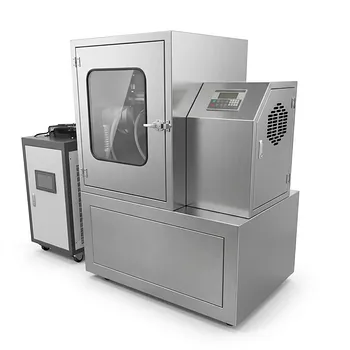
Vibratory Superfine Grinder for Ultra Fine Laboratory Powder Milling
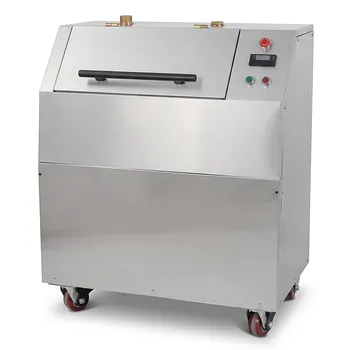
Vibratory Disc Mill for Rapid Fine Grinding and High Throughput Sample Preparation of Hard and Brittle Materials