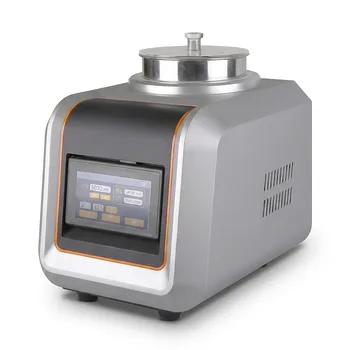
How is a high-precision vibratory sieve shaker utilized in the classification of marine sediments? Expert Grading Guide
Updated 4 months ago
Precision grain size classification is the cornerstone of marine geology. A high-precision vibratory sieve shaker utilizes controlled mechanical vibration to drive sediment samples through a stack of nested, standard test sieves with decreasing apertures. This process physically separates particles into discrete size fractions—ranging from fine silt (0.038 mm) to coarse sand (4.0 mm)—enabling the calculation of essential geological parameters such as mean grain size, skewness, and kurtosis.
A vibratory sieve shaker provides a standardized, repeatable method for categorizing marine sediment powders into precise particle size ranges. This mechanical grading is essential for sediment trend analysis, mineralogical study, and the extraction of specific fractions for environmental testing.
The Mechanics of Automated Sediment Grading
The Role of Multi-Directional Vibration
The shaker generates high-frequency mechanical vibrations that cause sediment particles to tumble and migrate across the sieve mesh. Unlike manual agitation, the machine provides a constant amplitude, ensuring that every particle has an equal opportunity to pass through the apertures during a preset time interval.
Nested Sieve Stacks and the Phi Scale
Researchers utilize a series of nested sieves to categorize powders according to the Krumbein phi scale. This standardized grading typically focuses on fractions between 0.063 mm and 4.0 mm, allowing for the precise physical separation required for statistical mineral analysis.
Ensuring Repeatability and Consistency
By using an automated shaker, laboratories eliminate human operational error and ensure uniform processing times. This consistency is vital for comparing samples across different locations or time periods, providing a reliable baseline for longitudinal marine studies.
Transforming Physical Samples into Geological Data
Statistical Parameter Calculation
Once the sediment is separated, each fraction is weighed to determine its percentage of the total sample. These weights are used to calculate the mean grain size, standard deviation, and skewness, which describe the sediment's distribution profile.
Analyzing Origin and Transport Mechanisms
The resulting data allows scientists to infer the origin and transport mechanisms of the sediment. For example, the degree of sorting (standard deviation) can indicate whether a sample was deposited by high-energy wave action or calm, deep-water currents.
Determining Structural Composition
The shaker enables the classification of sediment types into sandy, gravelly, or silty textures. This structural breakdown is fundamental for mapping the seafloor and understanding the physical characteristics of different marine environments, such as island coastlines or deep-sea basins.
Specialized Applications in Marine Research
Heavy Metal and Contaminant Correlation
Sieve shakers provide the physical preparation necessary to study how heavy metal concentrations correlate with specific grain sizes. Researchers often find that contaminants adhere differently to silt, sand, or clay, making precise fraction extraction a prerequisite for accurate chemical analysis.
Microplastic Extraction and Analysis
In modern environmental science, vibratory sieving is used to isolate specific particle size groups for microplastic extraction. By grading the sediment first, researchers can more efficiently identify and quantify synthetic polymers within a standardized sample size.
Standardization of Sample Homogenization
The mechanical process ensures that dry sediment samples are homogenized and graded according to international standards. This allows for the cross-verification of data between global research institutions, ensuring that "fine sand" in one study matches the dimensions of "fine sand" in another.
Understanding the Trade-offs
The Limitations of Dry Sieving
While efficient, dry sieving can be problematic for sediments with high moisture or organic content, which may cause particles to clump. In these cases, the mechanical vibration may not be sufficient to break surface tension, leading to inaccurate size classification.
Particle Shape and Aperture Bias
Vibratory sieving classifies particles based on their smallest cross-sectional dimension. If a sample contains elongated or flat particles, they may pass through the mesh end-first, potentially skewing the results toward a finer classification than their actual volume would suggest.
Equipment Maintenance and Calibration
To maintain high precision, sieves must be regularly inspected for mesh blinding or stretching. Over time, the constant mechanical vibration can degrade the sieve apertures, necessitating frequent calibration against certified reference materials to ensure ongoing accuracy.
Optimizing Sieve Shaker Utility in Marine Research
How to Apply This to Your Project
To achieve the most accurate results in sediment classification, tailor your sieving protocol to your specific research objective:
- If your primary focus is sediment transport modeling: Prioritize the use of a full nest of sieves following the Krumbein phi scale to capture the most detailed distribution curve possible.
- If your primary focus is environmental toxicology: Target the extraction of the finest fractions (typically <0.063 mm), as these smaller particles often harbor the highest concentrations of adsorbed pollutants and heavy metals.
- If your primary focus is microplastic density: Use a vibratory shaker with adjustable amplitude to ensure delicate synthetic particles are not fragmented during the grading process.
Utilizing a high-precision vibratory sieve shaker transforms raw marine samples into standardized data, providing the empirical foundation required for advanced geological and environmental analysis.
Summary Table:
| Feature | Application in Marine Sediment Analysis | Key Benefit |
|---|---|---|
| Multi-Directional Vibration | High-frequency tumbling and migration of particles | Ensures uniform exposure and repeatability |
| Nested Sieve Stacks | Grading particles via the Krumbein phi scale (0.038–4.0 mm) | Standardized classification for global data sharing |
| Statistical Extraction | Calculation of mean size, skewness, and kurtosis | Identifies sediment origin and transport mechanisms |
| Environmental Prep | Isolation of silt and fine sand fractions | Facilitates heavy metal and microplastic analysis |
Elevate Your Marine Research with Precision Sample Preparation
At [Company Name], we provide complete laboratory sample preparation solutions tailored for material science and geological research. We specialize in high-performance powder processing and compaction equipment designed to ensure data repeatability and accuracy.
Our extensive product line includes:
- Grading & Separation: Vibratory and air-jet sieve shakers with various test sieves and meshes.
- Milling & Grinding: Planetary ball mills, jet mills, disc mills, and liquid nitrogen cryogenic grinders.
- Crushing: Industrial-grade jaw and roll crushers.
- Compaction & Pressing: A full spectrum of hydraulic presses, including Cold/Warm Isostatic Presses (CIP/WIP), XRF pellet presses, and vacuum hot presses.
- Mixing: High-efficiency powder mixers and defoaming mixers.
Whether you are analyzing sediment transport mechanisms or extracting microplastics, our equipment provides the reliability your laboratory demands. Contact us today to optimize your lab workflow!
References
- A. V. Krek, Marina Ulyanova. Mineral tracers of the alongshore sediment transport (example from the South-Eastern Baltic Sea). DOI: 10.2205/2020es000714
Mentioned Products
- Vibratory Sieve Shaker Electromagnetic 3D Motion Powder Particle Size Analyzer for Dry and Wet Sieving
- Laboratory Dry and Wet Three Dimensional Vibratory Sieve Shaker for Particle Analysis
- Stainless Steel Laboratory Vibratory Test Sieve Shaker
- Heavy Duty Dry Three Dimensional Vibratory Sieve Shaker for Particle Separation
- Dry Three Dimensional Vibratory Sieve Shaker
People Also Ask
- How does a vibratory sieve shaker contribute to optimizing the performance of activated carbon? Enhance Adsorption Precision
- Why is a laboratory vibratory sieve shaker necessary for processing magnesium-based borate precursor powders? Boost Activity
- Why use a vibratory sieve shaker to verify coarse aggregate grading in rubberized concrete? Ensure Structural Integrity
- What function do vibratory sieve shakers and standard test sieves serve in the preparation of adsorbents? Key Guide
- What role does a vibratory sieve shaker play in the particle size analysis of ground corn products? Enhance QC Precision

Tech Team · PowderPreparation
Last updated on Jun 03, 2026
Related Products
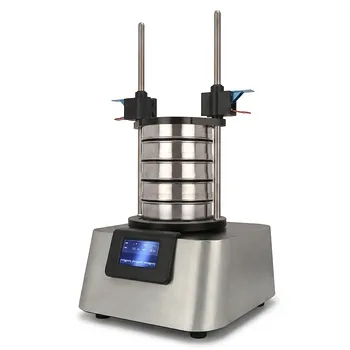
Vibratory Sieve Shaker Electromagnetic 3D Motion Powder Particle Size Analyzer for Dry and Wet Sieving
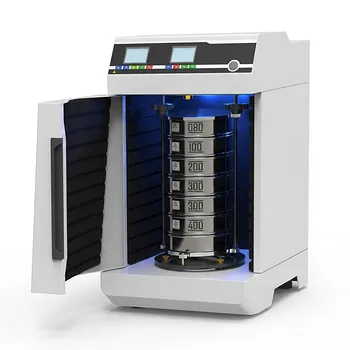
Laboratory Dry and Wet Three Dimensional Vibratory Sieve Shaker for Particle Analysis
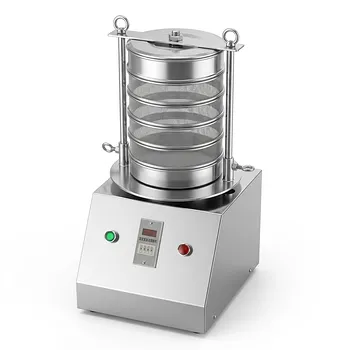
Stainless Steel Laboratory Vibratory Test Sieve Shaker
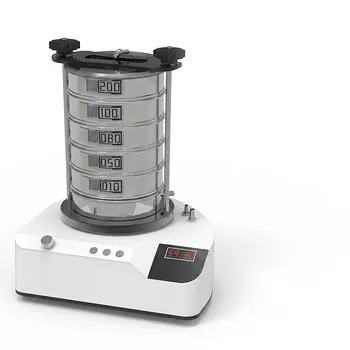
Heavy Duty Dry Three Dimensional Vibratory Sieve Shaker for Particle Separation
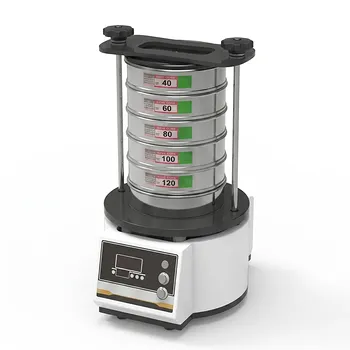
Dry Three Dimensional Vibratory Sieve Shaker
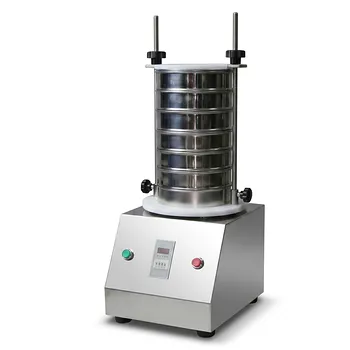
Small Laboratory Vibratory Sieve Shaker for Powder Gradation and Particle Size Analysis
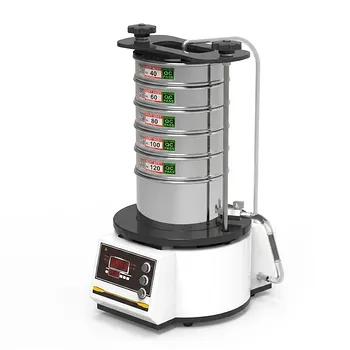
High Frequency Wet Three-Dimensional Vibrating Sieve Shaker for Dry and Wet Particle Size Analysis
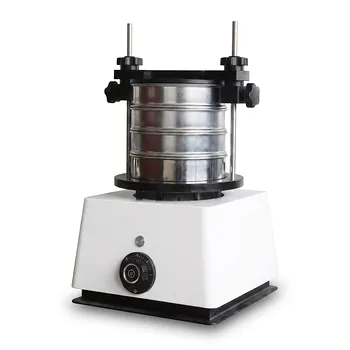
Small Laboratory Vibrating Sieve Shaker for Precise Particle Size Analysis
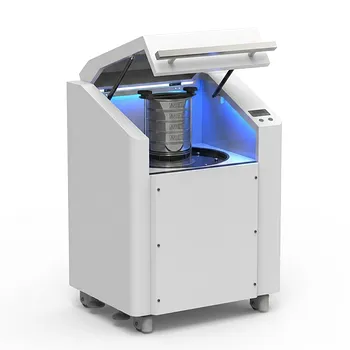
High Frequency Cabinet Type Three-Dimensional Rotary Vibrating Sieve Shaker for Dry Sieving and Particle Classification
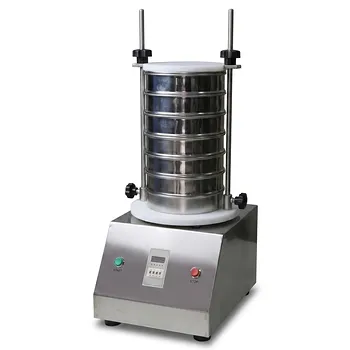
Laboratory Vibratory Test Sieve Shaker for Precision Particle Size Analysis and Powder Grading
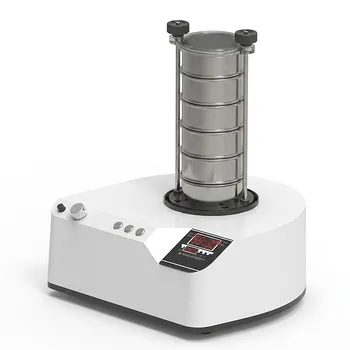
三维电磁微量振动筛分仪
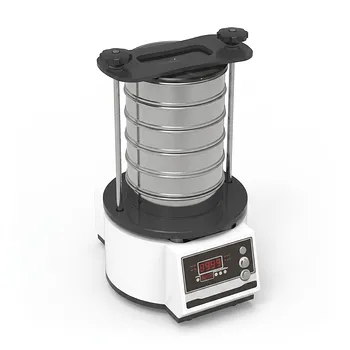
Tapping Oscillating Sieve Shaker for Dry and Wet Particle Size Analysis
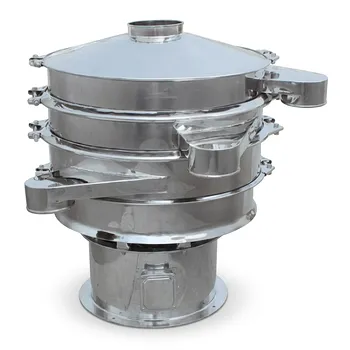
Stainless Steel Rotary Vibrating Sieve High Precision Circular Vibratory Separator Industrial Powder Grading Machine Multi Layer Sifting Equipment
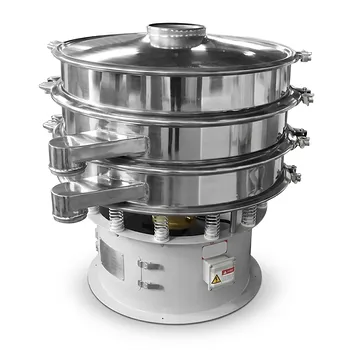
Three Dimensional Rotary Vibrating Sieve
Small Vibrating Ultrafine Grinder for Traditional Chinese Medicine
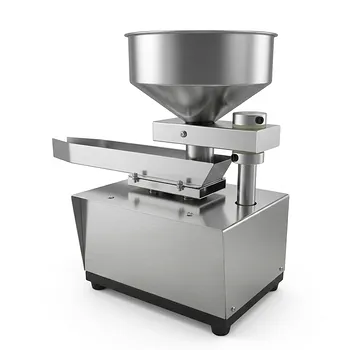
Automatic Vibrating Powder Feeder for Laboratory Material Processing Precision Vibratory Hopper Feeder for Granular and Powder Material Handling Industrial Grade Vibrating Tray Feeder for Consistent Material Sample Preparation
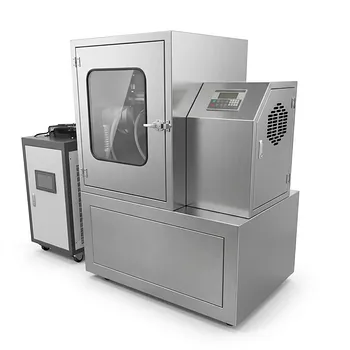
Vibratory Superfine Grinder for Ultra Fine Laboratory Powder Milling
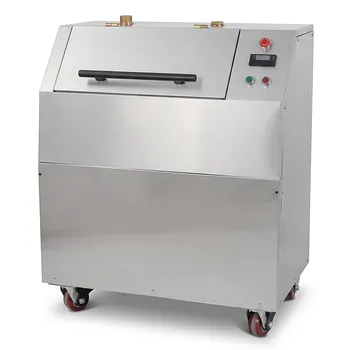
Vibratory Disc Mill for Rapid Fine Grinding and High Throughput Sample Preparation of Hard and Brittle Materials