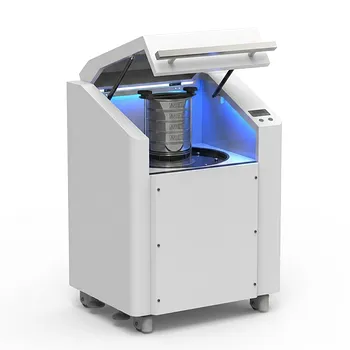
Why is precision sieving to 200/350 mesh necessary for CoSb3 powders? Master material homogeneity & reaction efficiency.
Updated 3 months ago
Precision sieving is the foundational step for ensuring chemical homogeneity and reaction efficiency in the synthesis of high-performance thermoelectric materials.
By refining raw powders to specific sizes like 200 mesh (approx. 75 microns) or 350 mesh (approx. 45 microns), researchers ensure a large specific surface area and high dimensional consistency. This preparation facilitates the uniform distribution of brass dopants at the atomic level and drastically accelerates the solid-state reaction kinetics required to integrate these elements into the cobalt antimonide ($CoSb_3$) crystal lattice.
Precision particle size control is necessary to transform raw materials into a highly reactive precursor, ensuring that doping elements are fully incorporated into the lattice while minimizing structural defects and maximizing material density.
The Role of Surface Area in Reaction Kinetics
Accelerating Solid-State Reactions
High-mesh sieving increases the total specific surface area of the raw material powders. This increased surface area maximizes the contact points between cobalt, antimony, and the brass dopants, which significantly speeds up the solid-state reaction kinetics during thermal processing.
Facilitating Atomic-Level Distribution
Using fine particles ensures that during planetary ball milling, the different chemical components can mix with higher intimacy. This process allows for an atomic-level uniform distribution, preventing the formation of localized clusters of dopants that could degrade thermoelectric performance.
Ensuring Lattice Integration
For $CoSb_3$ to function effectively, the brass doping elements must be fully integrated into the crystal lattice. Precision sieving ensures that no oversized particles remain to act as barriers, allowing for a complete and homogeneous phase transformation during synthesis.
Improving Structural Integrity and Density
Achieving Maximum Packing Density
Strictly controlling the particle size distribution allows for more efficient packing of the powder during the molding stage. By removing oversized particles, the remaining powder can reach its maximum packing density, which is essential for creating a robust material structure.
Minimizing Internal Defects
Uniform powder components lead to consistent grain sizes, which reduce the likelihood of internal defects in the green body. This uniformity ensures that the final thermoelectric product has the structural reliability needed to withstand thermal cycling without fracturing.
Standardizing Planetary Ball Milling
Precision sieving provides a consistent starting point for the mechanical alloying process. By standardizing the input size at 200 or 350 mesh, the energy from planetary ball milling is applied evenly to all particles, resulting in a predictable and repeatable grain size reduction.
Understanding the Trade-offs
The Risk of Powder Agglomeration
While finer meshes like 350 mesh provide superior surface area, they also increase the risk of particle agglomeration due to van der Waals forces. If particles clump together, it can negate the benefits of sieving and lead to non-uniformity during the mixing phase.
Yield Loss and Processing Time
Achieving high-precision mesh sizes often results in a lower material yield, as a significant portion of the raw material may be excluded. Additionally, sieving to 350 mesh is significantly more time-consuming and requires specialized equipment, such as vibratory or air-jet sieves, to prevent mesh clogging.
How to Apply This to Your Project
When preparing brass-doped $CoSb_3$, your choice of mesh size should align with your specific performance and production requirements:
- If your primary focus is Maximum Thermoelectric Efficiency: Prioritize 350 mesh sieving to ensure the highest possible surface area and atomic integration of the brass dopant into the lattice.
- If your primary focus is Structural Reliability and Density: Utilize 200 mesh sieving to achieve a balanced particle size distribution that optimizes packing density and minimizes internal voids.
- If your primary focus is Analytical Consistency (e.g., XRF/XRD): Ensure strict adherence to a narrow particle size range to reduce fluctuations in X-ray absorption and ensure reliable quantitative data.
Mastering particle size through precision sieving is the most effective way to guarantee the chemical and structural integrity of your thermoelectric materials.
Summary Table:
| Feature | 200 Mesh (75 μm) | 350 Mesh (45 μm) | Impact on CoSb3 Synthesis |
|---|---|---|---|
| Primary Focus | Structural Reliability | Maximum Efficiency | Optimizes density vs. reaction speed |
| Surface Area | Moderate | Very High | Accelerates solid-state reaction kinetics |
| Dopant Distribution | Consistent | Atomic-Level Uniformity | Prevents localized clusters/defects |
| Packing Density | Maximum Efficiency | High (Risk of voids) | Ensures robust structural integrity |
| Processing Risk | Low Agglomeration | Higher Clogging Risk | Requires specialized air-jet sieving |
Elevate Your Thermoelectric Material Synthesis with Precision Equipment
Achieving the perfect 200 or 350 mesh size is only the first step in creating high-performance brass-doped CoSb3. At [Company Name], we provide complete laboratory sample preparation solutions tailored for material science. Our expertise in powder processing and compaction equipment ensures your raw materials meet the highest standards of homogeneity and density.
Our Specialized Solutions Include:
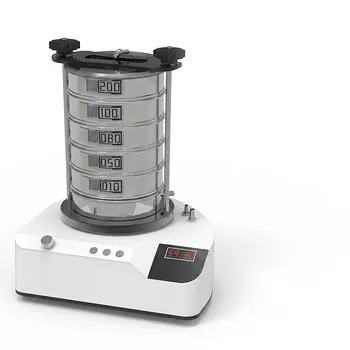
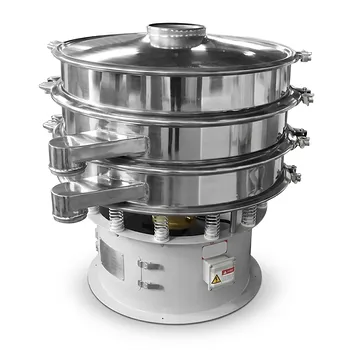
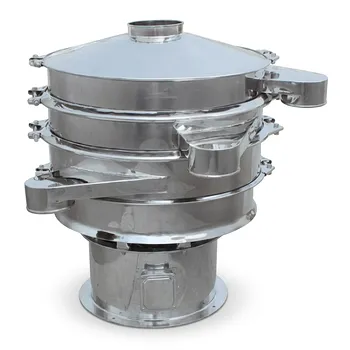
- Precision Sieving: Vibratory and air-jet sieve shakers to achieve accurate 200/350 mesh separation without clogging.
- Advanced Milling: High-energy planetary ball mills and jet mills for atomic-level dopant distribution.
- Superior Compaction: A full spectrum of hydraulic presses, including Cold/Warm Isostatic Presses (CIP/WIP), vacuum hot presses, and standard lab presses to ensure maximum material density.
- Powder Processing: Specialized powder and defoaming mixers for consistent precursor preparation.
Ready to optimize your lab’s efficiency and material performance? Contact our technical experts today to discuss your specific requirements and find the ideal equipment for your research or production needs.
References
- Dan Zhao, Run Huang. Unveiling Brass-Doped CoSb3-Based Thermoelectric Materials Using Solid-State Reaction. DOI: 10.3390/ma18173928
Mentioned Products
- Laboratory Vibratory Test Sieve Shaker for Precision Particle Size Analysis and Powder Grading
- 三维电磁微量振动筛分仪
- High Frequency Wet Three-Dimensional Vibrating Sieve Shaker for Dry and Wet Particle Size Analysis
- Laboratory Air Jet Sieving Machine for Fine Powder Particle Size Analysis and Deagglomeration
- Tapping Oscillating Sieve Shaker for Dry and Wet Particle Size Analysis
People Also Ask
- What role does a laboratory sieve shaker play in determining PDI? Achieve Precision in Biomass Quality Testing
- What are the functions of sieve shakers for coconut shell powder? Achieve Precise Particle Size & Quality Control.
- What function does a laboratory sieve shaker perform in the PSD analysis of residual soil? Ensure Precise Grading
- What is the role of a laboratory sieve shaker in the preparation of plantain peel adsorbents? Standardize Particle Size
- What is the function of a laboratory vibratory sieve shaker? Enhance Coal Particle Size Distribution (PSD) Analysis

Tech Team · PowderPreparation
Last updated on Jun 03, 2026
Related Products
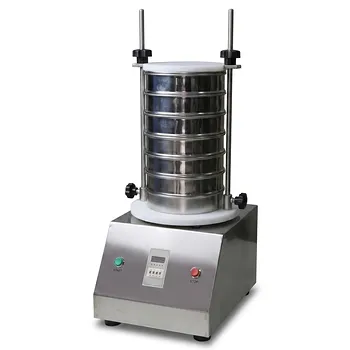
Laboratory Vibratory Test Sieve Shaker for Precision Particle Size Analysis and Powder Grading
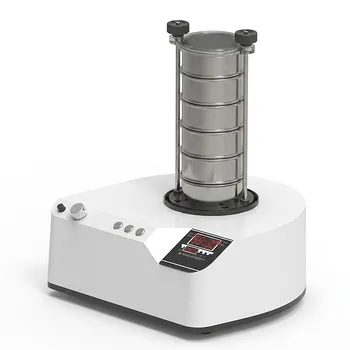
三维电磁微量振动筛分仪

High Frequency Wet Three-Dimensional Vibrating Sieve Shaker for Dry and Wet Particle Size Analysis
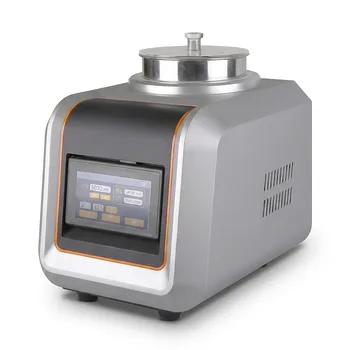
Laboratory Air Jet Sieving Machine for Fine Powder Particle Size Analysis and Deagglomeration

Tapping Oscillating Sieve Shaker for Dry and Wet Particle Size Analysis

Dry Three Dimensional Vibratory Sieve Shaker
Heavy Duty Dry Three Dimensional Vibratory Sieve Shaker for Particle Separation
Three Dimensional Rotary Vibrating Sieve
Stainless Steel Rotary Vibrating Sieve High Precision Circular Vibratory Separator Industrial Powder Grading Machine Multi Layer Sifting Equipment