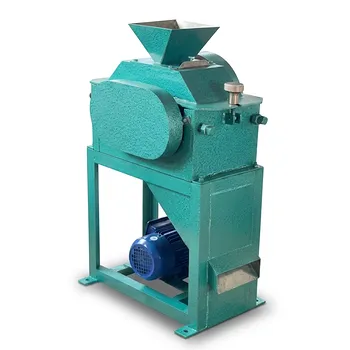
Why is precise pressure control from a laboratory hydraulic press necessary? Optimize Sodium-Ion Battery Performance
Updated 5 months ago
Achieving optimal performance in sodium-ion battery cathodes requires rigorous control over the precursor's initial physical state. Precise pressure control from a laboratory hydraulic press is necessary because it ensures uniform particle packing and minimal porosity within the green pellet. This dense, consistent structure is the primary driver for efficient ion diffusion and correct phase evolution during the critical high-temperature calcination process.
Core Takeaway: Precise pressure control dictates the initial density and porosity of the green body, which directly regulates the solid-state diffusion rates and structural integrity required for high-performance battery materials.
Optimizing Ion Diffusion and Phase Evolution
Enhancing Particle Contact Area
Precise pressure forces powder particles into tangential contact, maximizing the surface area where chemical reactions occur. In sodium-ion precursors, this increased contact area is vital for optimizing solid-state diffusion rates during subsequent high-temperature annealing.
Facilitating Phase Transformation
A laboratory hydraulic press provides the stable load needed to ensure the powder reaches a specific green density. This density determines how efficiently the material undergoes phase evolution, allowing for the formation of a dense, structurally integrated layered oxide.
Managing Porosity for Chemical Accuracy
By regulating the initial porosity of the green body, researchers can better control the stoichiometric ratio of the final composite. High-precision control ensures that air is expelled and voids are minimized, preventing localized chemical imbalances during calcination.
Ensuring Structural Integrity and Consistency
Minimizing Density Gradients
Precise pressure control reduces internal density gradients within the pellet, ensuring the top, middle, and bottom layers have identical packing. This uniformity prevents the final cathode material from delaminating or cracking during the intense heat of the sintering process.
Reducing Sintering Shrinkage
Accurate high-pressure forming (often ranging from 15 MPa to 40 MPa) forces particles to rearrange and overcome internal friction. This high initial density is decisive for reducing shrinkage deviations, ensuring the final pellet maintains its intended dimensions without deformation.
Preventing Micro-cracks
A stable, controlled application of force prevents the formation of internal micro-cracks that can occur under erratic or excessive pressure. These microscopic flaws often expand during sintering, leading to structural failure or poor electrical conductivity in the battery cell.
Understanding the Trade-offs and Pitfalls
The Risk of Over-Pressurization
While high pressure increases density, exceeding the material's limit can cause plastic deformation or mechanical crushing of the precursor particles. This may lead to "spring-back" effects where the pellet expands and cracks upon being released from the mold.
The Consequences of Under-Pressurization
Insufficient pressure results in high porosity and poor particle-to-particle connectivity. This leads to sluggish ion diffusion, incomplete chemical reactions during calcination, and a finished product that lacks the mechanical strength to survive battery assembly.
Friction and Wall Effects
Even with precise pressure, friction between the powder and the mold walls can cause non-uniform stress distribution. Using a laboratory press with precise control allows researchers to use specific, repeatable loading cycles to mitigate these effects.
How to Apply This to Your Project
Recommendations for Material Preparation
- If your primary focus is maximizing energy density: Use higher, precisely controlled pressures (e.g., 40 MPa or above) to minimize porosity and create the densest possible green body for sintering.
- If your primary focus is preventing structural failure: Prioritize a slow, stable ramp-up of pressure to ensure uniform particle rearrangement and prevent the formation of internal stress points.
- If your primary focus is chemical purity and stoichiometry: Ensure the press maintains a constant peak pressure to achieve a predictable green density, which regulates the volume percentage of your composite components.
Precision in the pressing stage is the fundamental precursor to achieving the high-quality microstructures and electrochemical performance required for modern sodium-ion battery technology.
Summary Table:
| Key Aspect | Importance of Precise Control | Risk of Improper Pressure |
|---|---|---|
| Ion Diffusion | Maximizes particle contact for faster solid-state diffusion. | Sluggish diffusion and incomplete chemical reactions. |
| Phase Evolution | Ensures uniform green density for correct phase transformation. | Structural imbalances and poor stoichiometric accuracy. |
| Structural Integrity | Minimizes density gradients to prevent cracking/delamination. | Internal micro-cracks and significant sintering shrinkage. |
| Mechanical Strength | Achieves optimal porosity for durable pellet formation. | Pellets may crumble or suffer from "spring-back" expansion. |
Elevate Your Material Research with Precision Compaction
At [Brand Name], we provide complete laboratory sample preparation solutions for material science, specializing in high-performance powder processing and compaction equipment. Achieving the perfect green pellet for sodium-ion battery research requires equipment that offers unmatched stability and control.
Our extensive product lines include:
- Hydraulic Presses: A full spectrum featuring Cold/Warm Isostatic Presses (CIP/WIP), standard lab presses, XRF pellet presses, hot presses, and vacuum hot presses.
- Milling & Grinding: Planetary ball mills, jet mills, liquid nitrogen cryogenic grinders, and rotor mills.
- Processing & Sizing: Jaw/roll crushers, vibratory/air-jet sieve shakers, and advanced powder/defoaming mixers.
Whether you are refining cathode precursors or developing advanced ceramics, our equipment ensures uniform particle packing and structural integrity. Contact us today to discuss your specific application and discover how our solutions can enhance your laboratory's efficiency and results!
References
- Yongchun Li, Philipp Adelhelm. ‘Oxygen Bound to Magnesium’ as High Voltage Redox Center Causes Sloping of the Potential Profile in Mg‐Doped Layered Oxides for Na‐Ion Batteries. DOI: 10.1002/adfm.202519132
Mentioned Products
- 6-Ton Small Single-Punch Tablet Press — Laboratory Powder & Granule Tableting Equipment / Tablet Forming Machine
- 5 Ton Single Punch Tablet Press Laboratory Small Batch Production
- Manual Tablet Press with Dual Scale Pressure Gauge for Pharmaceutical Food Chemical Laboratory Sample Preparation
- 6 Ton Variable Frequency Single Punch Tablet Press
- High Shear Laboratory Emulsifier for Mixing and Homogenization
People Also Ask
- What is the function of a laboratory press in Cr-Ti alloy evaluation? Quantify Fracture Stress & Strength
- What is the function of a laboratory press in assessing the hydrophobic performance of modified vermiculite fillers?
- What is the core function of a laboratory press in the forming of ceramic filter element green bodies? Maximize Density.
- What is the function of a laboratory press in the preparation of ceramic feed rods? Master Density and Precision
- Why is vacuum sealing and flexible packaging necessary for Aluminum Titanate powders during CIP? Ensure Peak Density

Tech Team · PowderPreparation
Last updated on May 14, 2026
Related Products
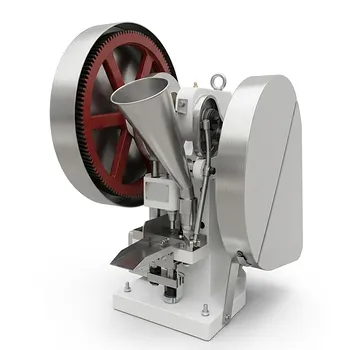
6-Ton Small Single-Punch Tablet Press — Laboratory Powder & Granule Tableting Equipment / Tablet Forming Machine
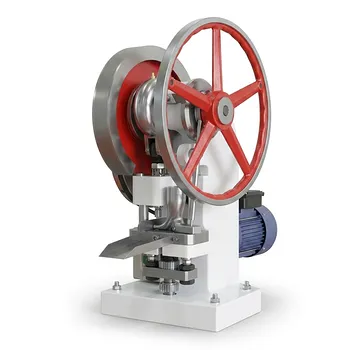
5 Ton Single Punch Tablet Press Laboratory Small Batch Production
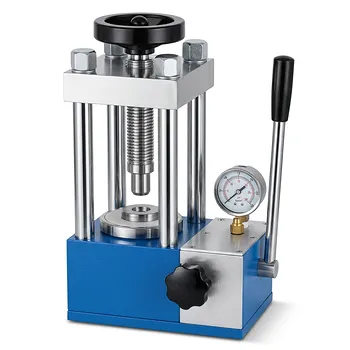
Manual Tablet Press with Dual Scale Pressure Gauge for Pharmaceutical Food Chemical Laboratory Sample Preparation
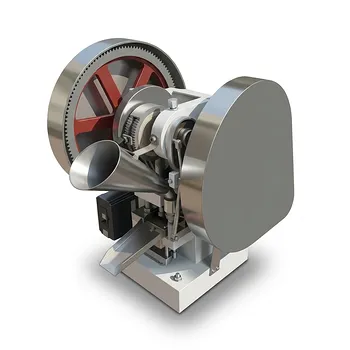
6 Ton Variable Frequency Single Punch Tablet Press
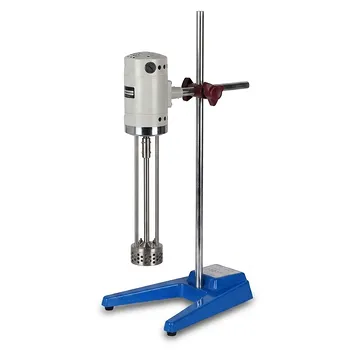
High Shear Laboratory Emulsifier for Mixing and Homogenization
High Speed Small Laboratory Crusher for Dry Material Sample Preparation
Small Laboratory Oscillating Granulator for Wet and Dry Granulation Processing
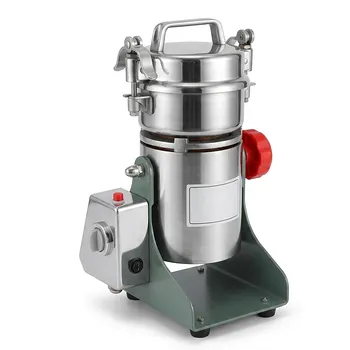
High Speed Swing Type Laboratory Pulverizer for Fine Powder Grinding and Sample Preparation
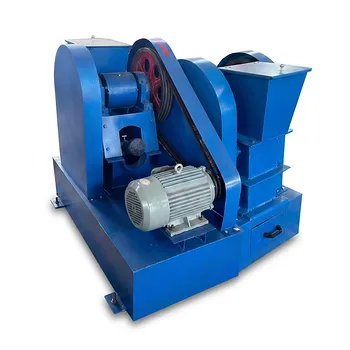
Horizontal Jaw Crusher Medium Hard Material Crushing Laboratory Sample Preparation Equipment