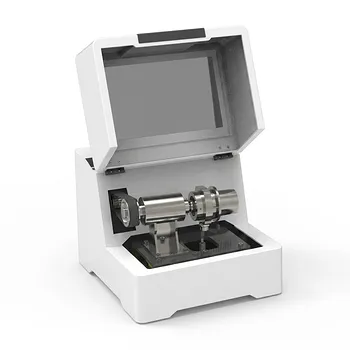
Why is precise control of the ball-to-powder ratio (BPR) critical when producing nanocrystalline powders? Key Factors.
Updated 5 months ago
Precise control of the ball-to-powder ratio (BPR) is the fundamental lever for governing energy transfer in a planetary ball mill. It directly dictates the collision frequency and energy density applied to the material, which determines whether the powder successfully transitions from the micron to the nanocrystalline scale. Failing to calibrate this ratio results in either insufficient refinement or excessive chemical contamination from the milling media and jar walls.
The ball-to-powder ratio is the primary determinant of energy dissipation efficiency. By balancing the mass of the grinding media against the material, operators can optimize the trade-off between rapid grain size reduction and the maintenance of high chemical purity and phase uniformity.
The Mechanics of Energy Dissipation
Controlling Collision Frequency and Impact
The BPR defines how often the grinding balls strike the material during the high-energy motion of the planetary mill. An appropriate ratio ensures that the powder receives sufficient and uniform mechanical impact, which is necessary to drive particle size reduction into the nanometer range.
Optimizing Energy Density
BPR serves as a proxy for grinding energy density, or the amount of mechanical energy available per unit of material. Precise control ensures that the energy input is high enough to induce lattice distortion and fragmentation without overwhelming the system's thermal or structural limits.
Ensuring Process Repeatability
In laboratory and industrial settings, a fixed BPR is essential for process repeatability. Establishing a specific ratio, such as 10:1 or 20:1, allows researchers to consistently define the relationship between the energy applied and the resulting material transformations across different batches.
Impact on Material Characteristics
Achieving Nanocrystalline Refinement
As energy is accumulated through repeated impacts, the powder undergoes a rapid reduction in grain size. Precise BPR management allows for a low polydispersity index (PDI), ensuring that the final nanocrystalline powder has a narrow and uniform size distribution rather than a mix of coarse and fine particles.
Maintaining Phase Purity and Crystallinity
The BPR influences the phase composition and the successful incorporation of dopants into a host lattice. For example, a lower BPR can facilitate uniform phase formation, while a higher ratio provides the mechanical energy required for complex synthesis, such as Er-doped titanium dioxide.
Influencing Functional Properties
For specialized materials, the BPR directly impacts magnetic and electronic properties. By controlling the energy distribution, operators can fine-tune characteristics like saturation magnetization and coercivity, which are sensitive to the final grain size and structural integrity of the powder.
Understanding the Trade-offs
The Contamination vs. Size Dilemma
While a higher BPR generally accelerates the reduction of grain size, it significantly increases the risk of powder contamination. As the relative amount of powder decreases, the grinding balls frequently collide with each other and the jar walls, leading to the "wearing off" of media material into the product.
The Buffering Effect and Mechanical Wear
An excessively low BPR (too much powder) creates a "buffering effect" where the material cushions the impact of the balls, drastically reducing milling efficiency. Conversely, too few balls lead to excessive equipment wear and potential damage to the milling jars due to un-cushioned high-velocity impacts.
Capacity vs. Efficiency
There is a constant tension between the processing capacity of the mill and the required grinding time. While a lower BPR allows for larger batches, it often necessitates much longer milling durations to achieve the same nanocrystalline threshold, increasing the total energy consumption of the process.
How to Apply This to Your Process
When configuring your planetary ball milling parameters, your BPR should be selected based on the specific requirements of your end product.
- If your primary focus is Maximum Chemical Purity: Utilize a lower ball-to-powder ratio to minimize media-to-media collisions and reduce the risk of elemental shedding from the jar and balls.
- If your primary focus is Minimum Grain Size: Opt for a higher BPR to maximize collision frequency and energy density, while selecting high-hardness media (like zirconia) to mitigate the increased risk of contamination.
- If your primary focus is Phase Uniformity: Maintain a moderate, balanced BPR to ensure energy is distributed evenly throughout the powder bed, preventing localized "over-milling" or unreacted segments.
- If your primary focus is Scalability and Throughput: Carefully determine the minimum BPR required to achieve your target particle size to maximize the volume of powder processed per cycle.
Mastering the ball-to-powder ratio transforms the planetary ball mill from a simple grinding tool into a high-precision instrument for advanced nanomaterial synthesis.
Summary Table:
| Impact Factor | High BPR (More Balls) | Low BPR (More Powder) |
|---|---|---|
| Refinement Speed | Rapid reduction to nano-scale | Slower, often stays micron-scale |
| Energy Density | High impact frequency | Low (cushioning/buffering effect) |
| Chemical Purity | Higher risk of media contamination | Lower risk; higher material purity |
| Phase Uniformity | Excellent (low PDI) | Risk of localized over/under-milling |
| Processing Time | Shorter; high energy efficiency | Longer; higher total energy use |
Elevate Your Nanomaterial Synthesis with Precision Lab Solutions
At [Brand Name], we specialize in providing complete laboratory sample preparation solutions tailored for material science. Achieving the perfect nanocrystalline structure requires precision equipment that allows for the exact control of parameters like the ball-to-powder ratio.
Our extensive product line supports your entire powder processing and compaction workflow:
- Advanced Grinding & Milling: Planetary ball mills, jet mills, liquid nitrogen cryogenic grinders, and rotor mills for ultimate grain size control.
- Precision Compaction: A full spectrum of hydraulic presses, including Cold/Warm Isostatic Presses (CIP/WIP), vacuum hot presses, and XRF pellet presses.
- Material Processing: Jaw/roll crushers, sieve shakers (vibratory/air-jet), and high-efficiency powder or defoaming mixers.
Whether you are a researcher optimizing BPR for maximum purity or an industrial lab scaling up throughput, our expert-engineered tools ensure repeatable, high-quality results.
Ready to optimize your powder processing? Contact our technical experts today to find the right equipment for your application!
References
- P. Sarma, Anil Borah. Solid Lubricants in Sustainable Manufacturing: A Review of Processing Techniques, Materials and Applications. DOI: 10.15282/ijame.22.4.2025.1.0978
Mentioned Products
- Vertical Semi Circular Planetary Ball Mill for Laboratory Precision Grinding
- High Energy Planetary Ball Mill for Nano Scale Grinding and Mechanical Alloying
- Vertical Production Planetary Ball Mill for High Throughput Powder Processing
- Heavy Duty Horizontal Planetary Ball Mill for Efficient Industrial Grinding and Sample Preparation
- 360° Rotating Omnidirectional Laboratory Planetary Ball Mill for Homogeneous Ultra-Fine Grinding and Mixing
People Also Ask
- What role does a planetary ball mill play in the synthesis of Li6PS5Cl (LPSCl)? Unlock High Ionic Conductivity
- Why is a planetary ball mill essential for SiBCN-rGO wet-spinning? Achieve Superior Dispersion and Spinnability
- Why is an intermittent grinding process required for perovskites in a planetary ball mill? Ensure Stability & Purity
- Why is a planetary ball mill required for PET micronization? Ensure Accurate Chemical Analysis of Reprocessed PET
- How does mechanized planetary ball milling compare to manual agate grinding? Optimize sulfide standard material precision.

Tech Team · PowderPreparation
Last updated on May 14, 2026
Related Products
Vertical Semi Circular Planetary Ball Mill for Laboratory Precision Grinding
High Energy Planetary Ball Mill for Nano Scale Grinding and Mechanical Alloying
Vertical Production Planetary Ball Mill for High Throughput Powder Processing
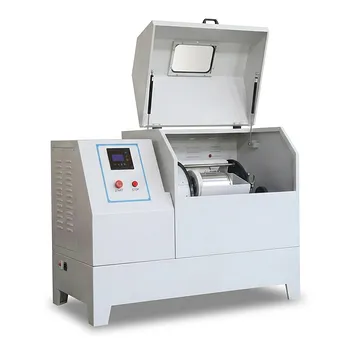
Heavy Duty Horizontal Planetary Ball Mill for Efficient Industrial Grinding and Sample Preparation
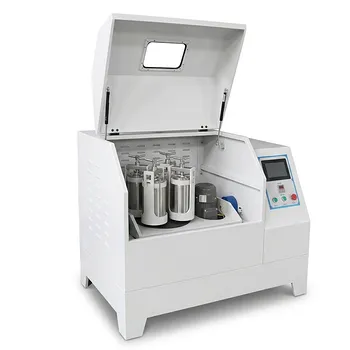
360° Rotating Omnidirectional Laboratory Planetary Ball Mill for Homogeneous Ultra-Fine Grinding and Mixing
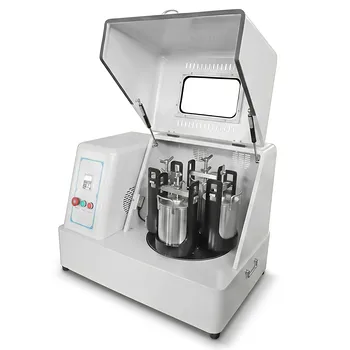
Vertical Square Planetary Ball Mill for Laboratory Sample Preparation and Nanoscale Grinding
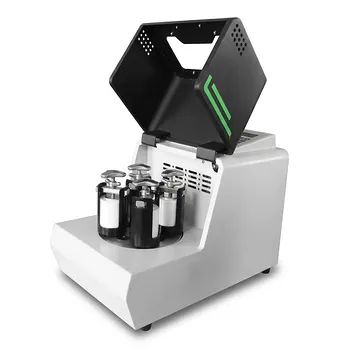
Miniature Planetary Ball Mill with Vacuum Grinding and High Efficiency for Laboratory Sample Preparation
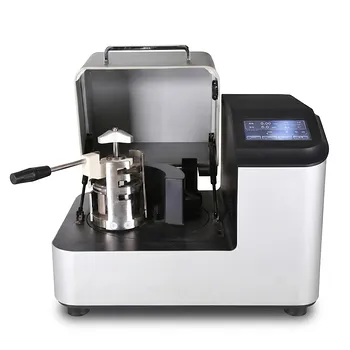
High Energy Laboratory Planetary Ball Mill for Nano Grinding and Material Science Sample Preparation
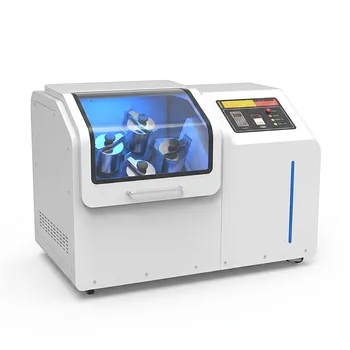
High Energy Omnidirectional Planetary Ball Mill 16L
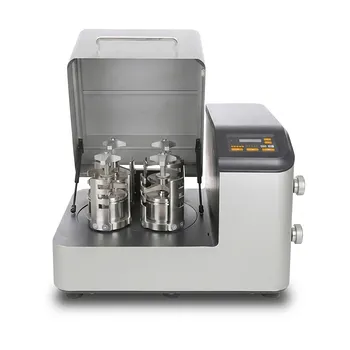
High Energy Planetary Ball Mill for Nano Scale Grinding and Colloidal Mixing in Material Science Research
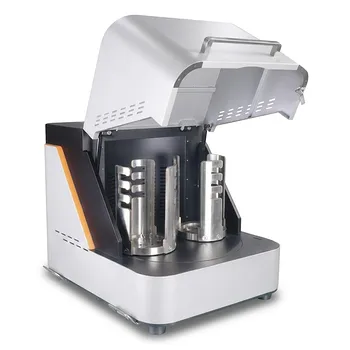
High Energy Laboratory Planetary Ball Mill for Nano Grinding and Colloidal Mixing of Hard and Brittle Materials
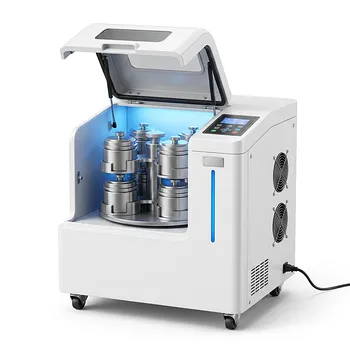
High Energy Omnidirectional Planetary Ball Mill 20L
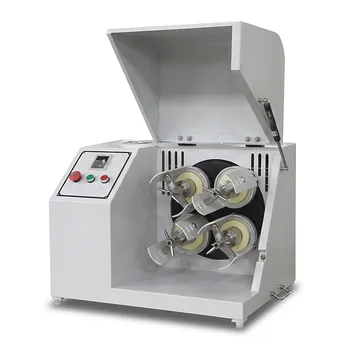
Horizontal Light Duty Planetary Ball Mill for Laboratory Sample Preparation
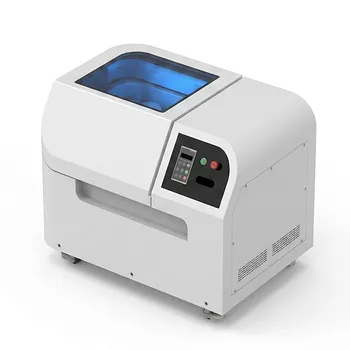
8L Planetary Ball Mill for Laboratory Grinding and Sample Preparation
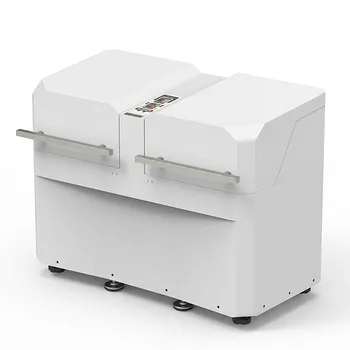
Dual Station Planetary Ball Mill 24L
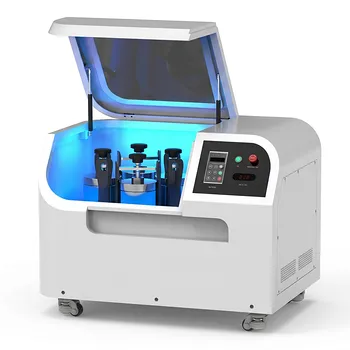
Planetary Ball Mill 12L

Nano High Energy Vibratory Ball Mill for Laboratory Sample Preparation
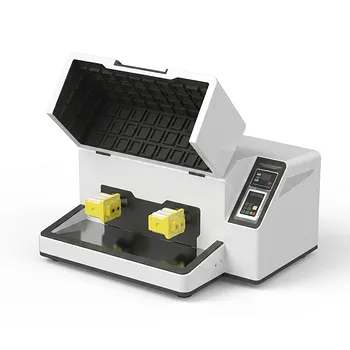
Multi-Platform Nanoscale High-Energy Vibratory Ball Mill
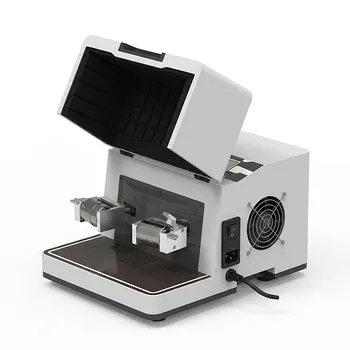
High Energy Hybrid Vibratory Ball Mill for Grinding Mixing and Cell Disruption