Why is liquid argon preferred over nitrogen for titanium ball milling? Ensure Superior Purity and Performance
Updated 5 months ago
The primary reason liquid argon is preferred over liquid nitrogen is titanium's high chemical reactivity with nitrogen under high-energy conditions. While liquid nitrogen is a common and effective cryogen for many materials, it reacts with titanium to form brittle nitrides and introduces significant interstitial contamination. Liquid argon provides the same essential cooling benefits while remaining completely inert, preserving the chemical purity and mechanical integrity of the titanium powder.
Liquid argon acts as a dual-purpose medium that provides the cryogenic temperatures necessary to prevent grain coarsening while maintaining an inert atmosphere that eliminates the risk of nitrogen-induced embrittlement.
The Chemical Barrier: Why Nitrogen Fails for Titanium
The Risk of Nitrogen Contamination
Titanium exhibits extreme chemical activity, particularly when subjected to the high-energy impacts of ball milling. If liquid nitrogen is used, the titanium powder can suffer from severe nitrogen contamination, with levels potentially exceeding 2.99 wt%. This reaction leads to the formation of titanium nitride (TiN), a brittle compound that compromises the material's final properties.
Reactivity of Fresh Surfaces
During the milling process, the constant fracturing of particles creates "fresh" surfaces that have not yet developed a protective oxide layer. these surfaces are highly unstable and will immediately react with any available nitrogen or oxygen. Using liquid argon ensures that these newly exposed surfaces remain clean and uncontaminated throughout the refinement process.
Preserving Material Performance
Contamination from interstitial atoms like nitrogen or oxygen leads to material embrittlement, making the powder difficult to process in subsequent manufacturing stages. By choosing an inert medium like argon, engineers ensure the powder retains its required ductility and processing performance. This is especially critical for high-cost or isotope-enriched raw materials where purity is the top priority.
The Physical Advantage: Why Cryogenic Milling is Necessary
Suppressing Thermal Recovery
High-energy ball milling generates significant localized heat that can trigger thermal recovery and dynamic recrystallization. At room temperature, this heat allows grains to soften and grow, preventing them from reaching the desired nanometer or sub-micrometer scales. A cryogenic environment inhibits these thermally activated processes, keeping the material in a state of severe plastic deformation.
Enhancing Pulverization Efficiency
Titanium is naturally highly ductile, which can lead to "cold welding" where particles stick together rather than breaking apart. The ultra-low temperatures of a liquid argon system bring the titanium into a low-temperature brittle state. This transition suppresses plastic deformation and significantly improves the fracture efficiency, allowing for much finer powder production.
Improving Grain Stability
By continuously removing frictional heat, cryomilling prevents grain coarsening. This results in a final product with finer, more thermally stable nanocrystalline grains than those produced through conventional room-temperature milling. The result is a powder with superior mechanical strength and a more refined microstructure.
Understanding the Trade-offs
Cost and Resource Management
Liquid argon is generally more expensive and less readily available than liquid nitrogen. For many non-reactive materials like polymers or biological tissues, liquid nitrogen is the superior choice due to its lower cost and excellent cooling capacity. However, for reactive metals like titanium, the increased cost of argon is a necessary investment to avoid destroying the material's chemical integrity.
Equipment Requirements
Utilizing liquid argon requires specialized cryogenic handling systems that can maintain the medium in a liquid state while isolating it from atmospheric oxygen and moisture. While liquid nitrogen systems are more common, the infrastructure for liquid argon must be strictly maintained to ensure that the inert atmosphere is not compromised during long-duration milling cycles.
Making the Right Choice for Your Goal
To determine the best cryogenic approach for your specific application, consider the following recommendations:
- If your primary focus is maximum chemical purity: Use liquid argon to eliminate the risk of nitrogen pickup and nitride formation during the milling of reactive metals.
- If your primary focus is achieving the smallest possible grain size: Employ liquid argon to suppress thermal recovery, as it provides the necessary cooling without the chemical side effects of nitrogen.
- If your primary focus is cost-effective milling of non-reactive materials: Stick with liquid nitrogen, as it offers a more economical cooling solution for materials that do not react with nitrogen.
- If your primary focus is preventing oxidation in alloys: Ensure the milling jar is filled with high-purity argon gas or liquid to isolate the powder from oxygen and moisture.
By prioritizing chemical inertness alongside thermal management, liquid argon ensures that high-performance titanium powders maintain the precise characteristics required for advanced engineering applications.
Summary Table:
| Feature | Liquid Nitrogen (LN2) | Liquid Argon (LAr) |
|---|---|---|
| Chemical Reactivity | High (Forms brittle nitrides) | Completely Inert |
| Powder Purity | Risk of interstitial contamination | Maintains chemical integrity |
| Mechanical Properties | Leads to material embrittlement | Preserves ductility and quality |
| Grain Refinement | Suppresses thermal recovery | Suppresses recovery & prevents oxidation |
| Best Use Case | Non-reactive metals & polymers | Titanium & reactive alloy powders |
Elevate Your Material Research with Precision Powder Solutions
Achieving high-performance titanium powder requires the perfect balance of thermal management and chemical inertness. At [Company Name], we provide complete laboratory sample preparation solutions tailored for material science. We specialize in high-efficiency powder processing and compaction equipment designed to meet the strictest purity standards.
Our extensive product line includes:
- Grinding & Milling: Liquid nitrogen cryogenic grinders, planetary ball mills, jet mills, and rotor mills.
- Sizing & Mixing: Sieve shakers (vibratory/air-jet), powder mixers, and defoaming mixers.
- Advanced Pressing: A full spectrum of hydraulic presses, including Cold/Warm Isostatic Presses (CIP/WIP), standard lab presses, XRF pellet presses, and vacuum hot presses.
Whether you are refining reactive metals or developing advanced ceramics, our equipment ensures your samples remain uncontaminated and structurally optimized.
Ready to optimize your powder processing? Contact our experts today to find the right solution for your lab!
References
- Jiří Kozlík, Miloš Janeček. Microstructure and texture in cryomilled and spark plasma sintered Ti Grade 2. DOI: 10.1051/matecconf/202032112030
Mentioned Products
- Vibratory Ultra-Low Temperature Ultrafine Grinder for Cryogenic Powder Processing
- Ultra-Low Temperature Cryogenic High-Energy Vibratory Ball Mill
- Ultra-Low Temperature Vibratory Mill for Ultrafine Grinding
- High Throughput Micro Ball Mill for Cryogenic Grinding and Laboratory Cell Disruption
- Nanoscale High Energy Vibratory Ball Mill Low Temperature
People Also Ask
- How cryogenic vibration mills assist cellulose analysis? Achieve High-Precision Substitution Degree Measurements
- What is the primary role of the cryomilling process in the preparation of nanocrystalline copper powder? Refine Grains
- What is the impact of grinding time on drug-loaded powders in cryogenic grinding? Optimize Morphology & Performance
- Why is cryogenic milling using liquid nitrogen necessary during the mechanical alloying of Cu-Ta alloy powders? Key Benefits
- How does cryogenic milling affect the dispersion and structural integrity of graphene in polymer nanocomposites? Guide.

Tech Team · PowderPreparation
Last updated on May 14, 2026
Related Products
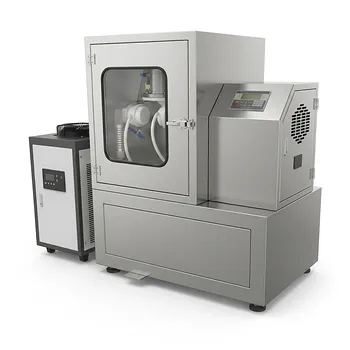
Vibratory Ultra-Low Temperature Ultrafine Grinder for Cryogenic Powder Processing
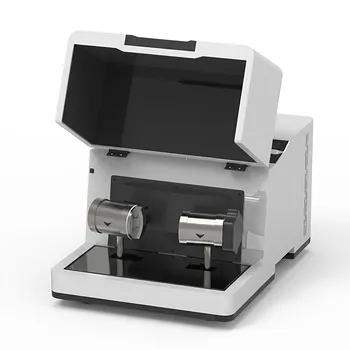
Ultra-Low Temperature Cryogenic High-Energy Vibratory Ball Mill
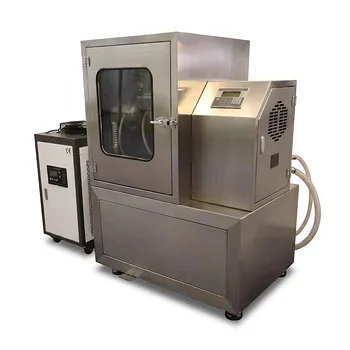
Ultra-Low Temperature Vibratory Mill for Ultrafine Grinding
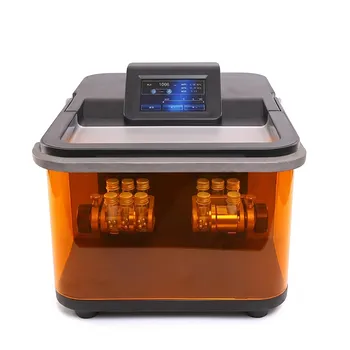
High Throughput Micro Ball Mill for Cryogenic Grinding and Laboratory Cell Disruption
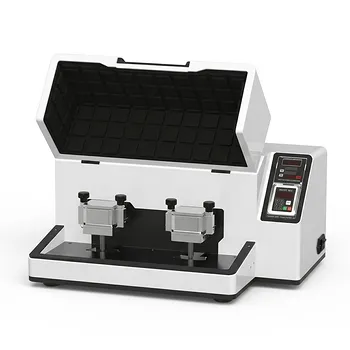
Nanoscale High Energy Vibratory Ball Mill Low Temperature
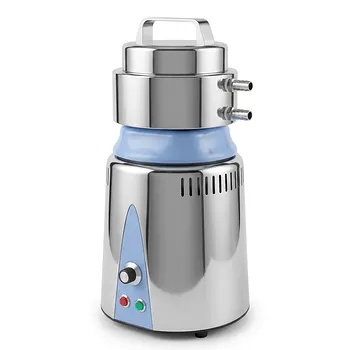
Low Temperature Laboratory Knife Mill Cryogenic Sample Grinder Material Science Powder Processing

Vertical Production Planetary Ball Mill for High Throughput Powder Processing
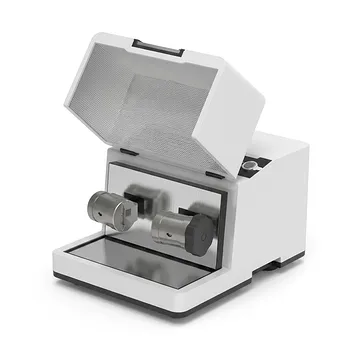
Heating Temperature Controlled High Energy Vibratory Ball Mill
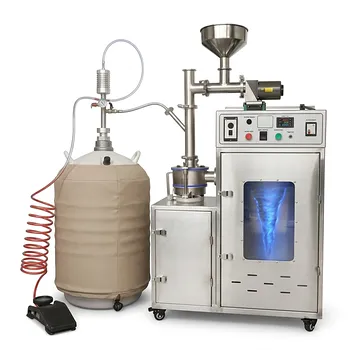
Small Liquid Nitrogen Cryogenic Grinder for Ultrafine Grinding of Heat-Sensitive Materials in Laboratories
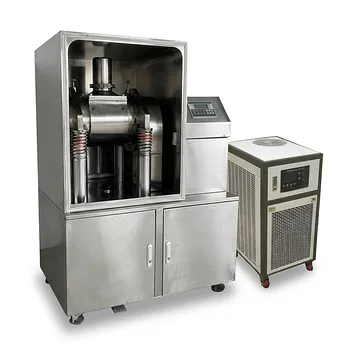
Water Cooled Cryogenic Ultra Fine Cell Wall Breaking Mill

High Energy Laboratory Planetary Ball Mill for Nano Grinding and Material Science Sample Preparation

Vertical Square Planetary Ball Mill for Laboratory Sample Preparation and Nanoscale Grinding

High Energy Planetary Ball Mill for Nano Scale Grinding and Mechanical Alloying
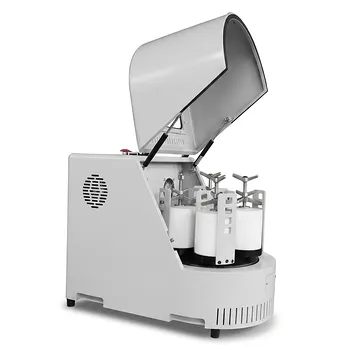
Vertical Semi Circular Planetary Ball Mill for Laboratory Precision Grinding

8L Planetary Ball Mill for Laboratory Grinding and Sample Preparation
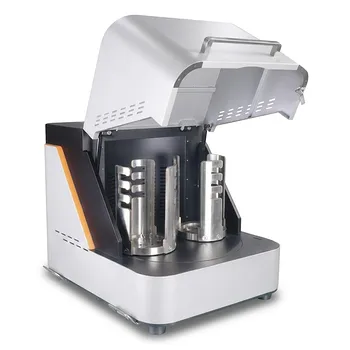
High Energy Laboratory Planetary Ball Mill for Nano Grinding and Colloidal Mixing of Hard and Brittle Materials
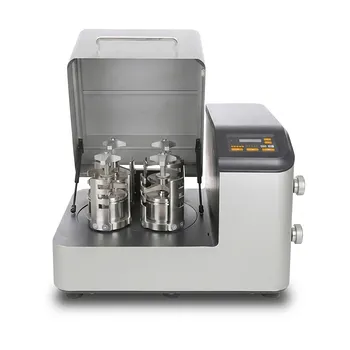
High Energy Planetary Ball Mill for Nano Scale Grinding and Colloidal Mixing in Material Science Research
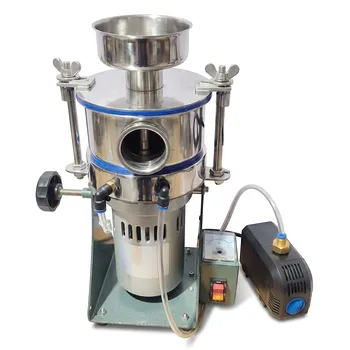
Water Cooled Airflow Ultra Fine Grinder for Low Temperature Material Processing
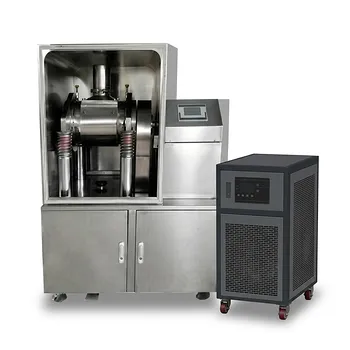
Ultra-low Temperature Vibratory Mill Ultrafine Grinder
