Why use ISO/IS metal wire woven test sieves for fertilizers? Ensure High-Precision Particle Analysis
Updated 3 months ago
Standardization is the foundation of precision. Using metal wire woven test sieves that comply with international standards like ISO or IS is necessary because it guarantees the accuracy and consistency of aperture diameters. This uniform measurement baseline allows for the precise calculation of mass percentages across specific size ranges, which is vital for evaluating the flowability, distribution uniformity, and manufacturing quality of fertilizer products.
Core Takeaway: International standards eliminate measurement variables by ensuring that sieve openings are manufactured to strict tolerances. This consistency is the only way to achieve repeatable data that can be compared across different laboratories and used to optimize industrial granulation and application processes.
The Role of Precision in Fertilizer Analysis
Consistency Across Global Laboratories
Compliance with standards like ISO 3310-1 ensures that a 1.0 mm aperture in one laboratory is identical to a 1.0 mm aperture in another. This global alignment prevents abnormal particle retention and ensures that experimental results are repeatable and legally defensible.
Without these standards, slight variations in weave density or wire thickness would lead to discrepant data. This would make it impossible for manufacturers and distributors to agree on product specifications or quality grades.
Optimizing Flowability and Field Application
For products like urea, specific size ranges (such as 1.0 mm to 1.7 mm) are critical indicators of how the fertilizer will perform in the field. Standardized sieves allow researchers to accurately assess the distribution uniformity required for mechanized application equipment.
If the particle size distribution is inaccurate, the fertilizer may clog machinery or spread unevenly. This results in poor crop yields and wasted resources due to non-uniform nutrient delivery.
Impact on Manufacturing and Granulation
Controlling Structural Integrity
The ratio of fine powder to coarse particles significantly influences the bulk density and structural integrity of the final fertilizer granules. High-precision vibratory shakers using standard sieves allow for the separation of materials into distinct mass fraction intervals.
Quantitative monitoring of these components allows engineers to adjust the crushing process. This ensures that the particles have the correct specific surface area to interact with binders, improving the mechanical durability of the finished product.
Measuring Crushing Efficiency
Standard sieves provide a quantitative benchmark for measuring the effectiveness of industrial crushing equipment. By using a series of sieves (ranging from 2.0 mm to 10 mm), operators can plot sieve curves to evaluate classification performance.
This data is the core basis for calculating equipment efficiency. It allows for targeted adjustments to the production line, reducing energy waste and ensuring the product meets "well-graded" status.
Understanding the Trade-offs
Cost versus Compliance
Certified international standard sieves carry a higher initial cost than non-certified alternatives. This is due to the rigorous manufacturing tolerances and the certification process required to prove compliance.
The Requirement for Maintenance
Standardization is not a "one-time" event; these sieves require periodic recalibration. Over time, the wire mesh can tension or wear down, meaning a sieve that once met ISO standards may eventually drift out of compliance, leading to "silent" errors in data.
Precision vs. Throughput
While standard test sieves provide extreme accuracy for analytical samples, they are not designed for high-volume industrial screening. Relying on laboratory-grade sieves for mass production would be inefficient and would likely damage the precision mesh.
Making the Right Choice for Your Goal
- If your primary focus is Quality Assurance and Regulatory Compliance: Use ISO 3310-1 certified sieves to ensure your data is internationally recognized and repeatable across different testing facilities.
- If your primary focus is Optimizing Manufacturing Yield: Utilize a multi-layered stack of standard sieves to create detailed sieve curves, allowing you to fine-tune your crushing and granulation equipment for maximum efficiency.
- If your primary focus is Improving Field Performance: Focus on standardized measurements of the 1.0 mm to 2.0 mm range to guarantee that your product will flow consistently through mechanized spreaders.
By adhering to international sieving standards, you transform a simple physical check into a robust, data-driven process that ensures product integrity from the factory to the field.
Summary Table:
| Feature | Importance in Fertilizer Analysis | Key Benefit |
|---|---|---|
| Aperture Precision | Guarantees exact 1.0mm - 2.0mm sizing | Accurate flowability & application |
| ISO/IS Compliance | Aligns data across global laboratories | Repeatable & legally defensible QC |
| Mesh Uniformity | Identifies fine powder vs. coarse granules | Optimized granulation & durability |
| Sieve Curves | Benchmarks crushing & milling efficiency | Reduced energy waste & higher yield |
Optimize Your Material Analysis with Precision Solutions
Achieve unmatched accuracy in your fertilizer quality control with our standardized testing and processing equipment. At our core, we provide complete laboratory sample preparation solutions for material science, specializing in high-performance powder processing and compaction technology.
Our extensive product range includes:
- Sieving & Classification: Vibratory and air-jet sieve shakers with a full range of ISO-compliant test sieves.
- Milling & Grinding: Planetary ball mills, jet mills, and liquid nitrogen cryogenic grinders.
- Crushing: Heavy-duty jaw and roll crushers for primary sample reduction.
- Mixing: High-efficiency powder mixers and vacuum defoaming mixers.
- Compaction: A full spectrum of hydraulic presses, including Cold/Warm Isostatic Presses (CIP/WIP), XRF pellet presses, and vacuum hot presses.
Whether you are a researcher focused on field performance or a manufacturer optimizing industrial yields, we bring the expertise to enhance your lab's efficiency. Contact us today to find the perfect solution for your lab!
References
- Vasu Kumar, SA Kanade. Comparative study of particle size distribution in Commercial urea fertilizers from India. DOI: 10.33545/2618060x.2025.v8.i7sa.3189
Mentioned Products
- Laboratory Vibratory Test Sieve Shaker for Precision Particle Size Analysis and Powder Grading
- 三维电磁微量振动筛分仪
- Laboratory Air Jet Sieving Machine for Fine Powder Particle Size Analysis and Deagglomeration
- Tapping Oscillating Sieve Shaker for Dry and Wet Particle Size Analysis
- Dry Three Dimensional Vibratory Sieve Shaker
People Also Ask
- What role does a laboratory sieve shaker play in determining PDI? Achieve Precision in Biomass Quality Testing
- What are the functions of sieve shakers for coconut shell powder? Achieve Precise Particle Size & Quality Control.
- What function does a laboratory sieve shaker perform in the PSD analysis of residual soil? Ensure Precise Grading
- What is the role of a laboratory sieve shaker in the preparation of plantain peel adsorbents? Standardize Particle Size
- What is the function of a laboratory vibratory sieve shaker? Enhance Coal Particle Size Distribution (PSD) Analysis

Tech Team · PowderPreparation
Last updated on Jun 03, 2026
Related Products

Laboratory Vibratory Test Sieve Shaker for Precision Particle Size Analysis and Powder Grading

三维电磁微量振动筛分仪
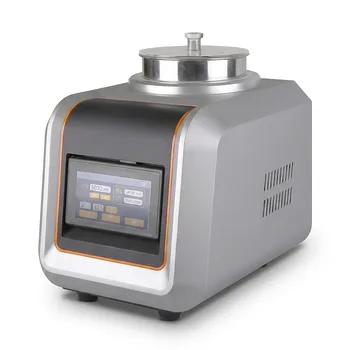
Laboratory Air Jet Sieving Machine for Fine Powder Particle Size Analysis and Deagglomeration

Tapping Oscillating Sieve Shaker for Dry and Wet Particle Size Analysis

Dry Three Dimensional Vibratory Sieve Shaker

Three Dimensional Rotary Vibrating Sieve

Heavy Duty Dry Three Dimensional Vibratory Sieve Shaker for Particle Separation

Stainless Steel Rotary Vibrating Sieve High Precision Circular Vibratory Separator Industrial Powder Grading Machine Multi Layer Sifting Equipment
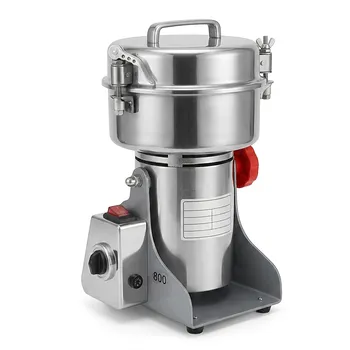
Small High-Speed Laboratory Grinder for Rapid Sample Preparation
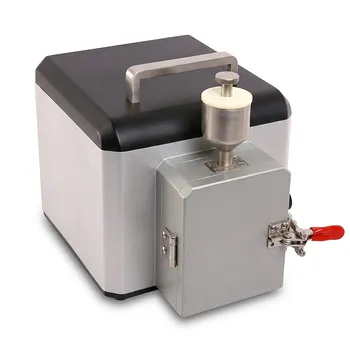
Portable Cutting Mill for Laboratory Sample Preparation and RoHS WEEE Compliance Testing
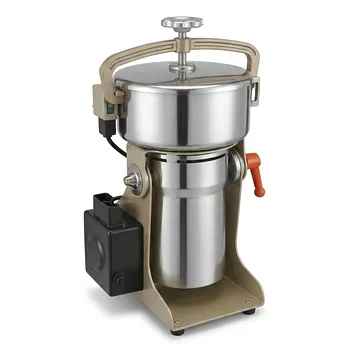
Multifunctional High Efficiency High Speed Laboratory Grinder
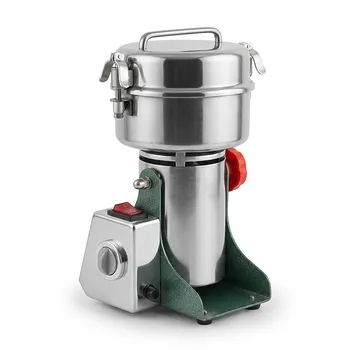
Small High-Speed Swing Grinder for Laboratory Sample Preparation
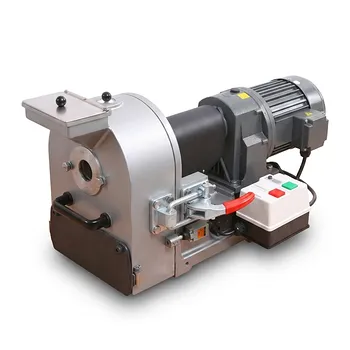
Laboratory Disc Mill for Fine Sample Preparation of Hard and Brittle Materials