Why is it necessary to use an electronic vibratory sieve shaker during the coal powder preparation phase? Ensure Precise PSD
Updated 4 months ago
The primary necessity of an electronic vibratory sieve shaker in coal powder preparation is the enforcement of precise particle size distribution (PSD). By utilizing high-frequency mechanical vibration, these devices ensure that coal samples are separated into uniform, repeatable size ranges, such as those below 200 mesh (74 μm). This standardization is critical for eliminating physical variables—like surface area fluctuations—that would otherwise skew the results of chemical and thermal experiments.
The vibratory sieve shaker transforms raw ground coal into a standardized technical medium. By ensuring particle uniformity, it allows researchers to isolate the chemical effects of coal components from the physical effects of mass and heat transfer resistance.
Ensuring Kinetic Consistency and Reaction Efficiency
Optimizing Mass and Heat Transfer
Consistent particle size is fundamental to maintaining stable mass transfer efficiency during coal-to-methane or hydrothermal carbonization (HTC) experiments. When particles are uniform, the diffusion paths remain consistent, ensuring that the entire sample reacts at a predictable rate.
Preventing Incomplete Chemical Reactions
Oversized particles in a sample can lead to incomplete reactions or internal diffusion resistance. In applications like coal shale catalysis, fine and uniform particles prevent the catalyst from settling and ensure high dispersion stability within the reactor.
Controlling Slagging and Thermal Behavior
During thermal treatment or slagging tendency experiments, precise grading (e.g., 4mm to 20mm) is required to assess physical changes accurately. High-frequency vibration ensures these specific ranges are strictly maintained, providing a reliable foundation for assessing how coal behaves under extreme heat.
Isolating Chemical Properties for Reliable Data
Minimizing Surface Area Fluctuations
The primary goal of many coal studies is to understand the influence of internal components, such as vitrinite reflectance and volatile matter. An electronic sieve shaker ensures that differences in experimental results are caused by these chemical factors rather than variations in the physical contact area.
Facilitating Comparative Analysis
Using standardized sieving allows for the comparable analysis of samples from different coal sources. This is vital when measuring yields of specific substances, such as humic acid, where kinetic differences must be eliminated to ensure that extraction conditions are truly identical across all samples.
Enhancing Repeatability in Adsorption
For adsorption capacity assessments, precise particle control prevents variations in diffusion paths. This ensures that the kinetics of the experiment are repeatable, allowing for an accurate evaluation of how different coal structures interact with gases or liquids.
Managing the Physical Challenges of Coal Fines
Eliminating Electrostatic Agglomeration
Dry sieving coal powder often generates friction, leading to static electricity that causes fine particles to adhere to one another. Advanced electronic shakers often include grounding mechanisms to export these charges, preventing particles from forming "clumps" that would otherwise distort size data.
Preventing Sieve Blinding and Clogging
High-frequency vibration is more effective than manual shaking at preventing fine particles from clogging the sieve pores, a phenomenon known as blinding. This ensures that the resulting data represents the authentic particle size distribution of the material rather than a failure of the sieving process.
Ensuring Slurry Quality for Downstream Use
In the production of electrode slurries or chemical coatings, removing large aggregates through vibratory sieving is essential. This uniformity ensures consistent thickness during the coating process and improves the overall utilization rate of the active coal-based materials.
Understanding the Trade-offs
The Risk of Sieve Overloading
While electronic shakers are efficient, overloading the sieve deck can lead to "cushioning," where the vibration is dampened by too much material. This results in poor separation and allows fine particles to remain trapped on top of larger ones, compromising the accuracy of the 200-mesh threshold.
Mesh Integrity and Wear
Continuous high-frequency vibration can lead to the degradation of the sieve mesh over time. If the mesh stretches or tears, the precision of the particle size distribution is lost, which can introduce significant errors into kinetic calculations and mass transfer models.
How to Apply This to Your Research
Recommended Strategy Based on Goal
- If your primary focus is kinetic modeling or adsorption: Prioritize the use of a grounded electronic shaker to eliminate static-induced agglomeration and ensure consistent diffusion paths.
- If your primary focus is thermal behavior or slagging: Use a shaker capable of handling larger diameter sieves to precisely grade samples into the 4mm to 20mm range required for slagging assessments.
- If your primary focus is chemical extraction (e.g., Humic Acid): Ensure all samples are sieved through the same standardized mesh (e.g., <0.1 mm) to eliminate physical surface area as a variable.
- If your primary focus is catalyst stability in heavy media: Utilize the finest possible sieving (below 0.1 mm) to minimize internal diffusion resistance and prevent settling within the reactor.
Standardizing particle size through electronic vibratory sieving is the single most effective way to ensure that coal research data is both repeatable and scientifically valid.
Summary Table:
| Key Benefit | Core Function | Impact on Research |
|---|---|---|
| PSD Standardization | Precise high-frequency separation | Ensures repeatable kinetic & thermal data |
| Reaction Efficiency | Optimizes mass & heat transfer | Prevents incomplete reactions and settling |
| Data Reliability | Isolates chemical properties | Eliminates physical surface area variables |
| Physical Management | Prevents blinding & static clumping | Ensures authentic size distribution data |
| Quality Control | Removes large aggregates | Guarantees consistent slurry/coating quality |
Optimize Your Coal Research with Kindle Tech
Achieve uncompromising precision in your material science experiments with our complete laboratory sample preparation solutions. At Kindle Tech, we specialize in high-performance equipment designed to meet the rigorous demands of coal and powder processing.
Our extensive product line includes:
- Sieving & Grading: High-precision vibratory and air-jet sieve shakers with a full range of standardized test sieves.
- Milling & Grinding: Jaw/roll crushers, planetary ball mills, jet mills, and liquid nitrogen cryogenic grinders.
- Compaction & Pressing: A full spectrum of hydraulic presses, including Cold/Warm Isostatic Presses (CIP/WIP), vacuum hot presses, and XRF pellet presses.
- Mixing: Advanced powder and defoaming mixers for uniform slurry preparation.
Ensure your research data is repeatable and scientifically valid. Contact our experts today to discuss your specific application and find the ideal equipment for your laboratory.
References
- Liu Zhu, Yi Liu. Substrate Composition Effects on the Microbial Enhancement of Biogenic Methane Production from Coal. DOI: 10.3390/su17114953
Mentioned Products
- Vibratory Sieve Shaker Electromagnetic 3D Motion Powder Particle Size Analyzer for Dry and Wet Sieving
- Small Laboratory Vibratory Sieve Shaker for Powder Gradation and Particle Size Analysis
- Laboratory Vibratory Test Sieve Shaker for Precision Particle Size Analysis and Powder Grading
- 三维电磁微量振动筛分仪
- Automatic Vibrating Powder Feeder for Laboratory Material Processing Precision Vibratory Hopper Feeder for Granular and Powder Material Handling Industrial Grade Vibrating Tray Feeder for Consistent Material Sample Preparation
People Also Ask
- How does a vibratory sieve shaker contribute to optimizing the performance of activated carbon? Enhance Adsorption Precision
- Why is a laboratory vibratory sieve shaker necessary for processing magnesium-based borate precursor powders? Boost Activity
- Why use a vibratory sieve shaker to verify coarse aggregate grading in rubberized concrete? Ensure Structural Integrity
- What function do vibratory sieve shakers and standard test sieves serve in the preparation of adsorbents? Key Guide
- What role does a vibratory sieve shaker play in the particle size analysis of ground corn products? Enhance QC Precision

Tech Team · PowderPreparation
Last updated on Jun 03, 2026
Related Products

Vibratory Sieve Shaker Electromagnetic 3D Motion Powder Particle Size Analyzer for Dry and Wet Sieving

Small Laboratory Vibratory Sieve Shaker for Powder Gradation and Particle Size Analysis

Laboratory Vibratory Test Sieve Shaker for Precision Particle Size Analysis and Powder Grading

三维电磁微量振动筛分仪

Automatic Vibrating Powder Feeder for Laboratory Material Processing Precision Vibratory Hopper Feeder for Granular and Powder Material Handling Industrial Grade Vibrating Tray Feeder for Consistent Material Sample Preparation

Stainless Steel Rotary Vibrating Sieve High Precision Circular Vibratory Separator Industrial Powder Grading Machine Multi Layer Sifting Equipment

Three Dimensional Rotary Vibrating Sieve

Stainless Steel Laboratory Vibratory Test Sieve Shaker

Small Laboratory Vibrating Sieve Shaker for Precise Particle Size Analysis

Dry Three Dimensional Vibratory Sieve Shaker

High Frequency Cabinet Type Three-Dimensional Rotary Vibrating Sieve Shaker for Dry Sieving and Particle Classification

Laboratory Dry and Wet Three Dimensional Vibratory Sieve Shaker for Particle Analysis

Heavy Duty Dry Three Dimensional Vibratory Sieve Shaker for Particle Separation

High Frequency Wet Three-Dimensional Vibrating Sieve Shaker for Dry and Wet Particle Size Analysis

Tapping Oscillating Sieve Shaker for Dry and Wet Particle Size Analysis
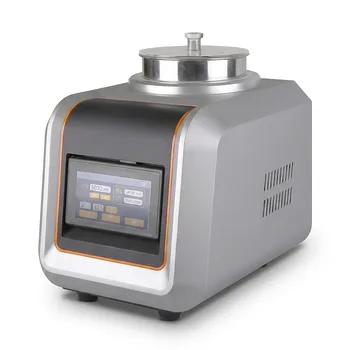
Laboratory Air Jet Sieving Machine for Fine Powder Particle Size Analysis and Deagglomeration
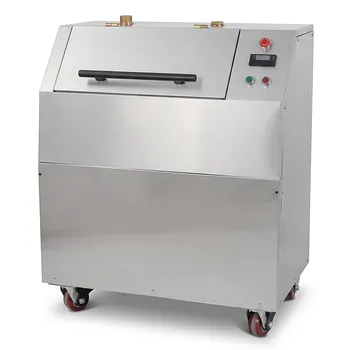
Vibratory Disc Mill for Rapid Fine Grinding and High Throughput Sample Preparation of Hard and Brittle Materials
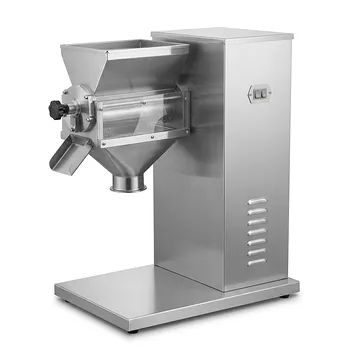
Small Swing Granulator Efficient Powder Granulation for Pharmaceutical Chemical Food Industries
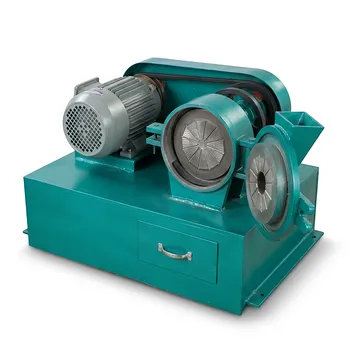
Laboratory Disc Pulverizer for Coal Coke Ore and Medium Hard Materials Sample Preparation