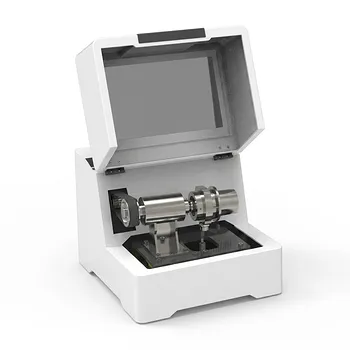
Why is it necessary to use a planetary ball mill for precursor mixing? Achieve Atomic-Level Homogeneity for Perovskites
Updated 5 months ago
Using a planetary ball mill is the only way to achieve the atomic-level homogeneity required for high-performance iron-based perovskites. This high-energy process utilizes intense impact and shear forces to refine precursor powders—such as iron oxide and lanthanum oxide—into a uniform mixture. Without this precise mechanical activation, the subsequent sintering process will fail to produce a single pure-phase structure, leading to detrimental impurity phases and unstable electrochemical performance.
The planetary ball mill is essential because it provides the mechanical activation and atomic-level distribution necessary to drive complex solid-state reactions. By reducing particle sizes and increasing surface reactivity, it ensures the formation of a stable, high-purity perovskite composite.
The Mechanics of High-Energy Mixing
Generating Intense Kinetic Forces
A planetary ball mill operates through high-frequency rotation that generates strong impact and shear forces. These forces are significantly more powerful than traditional mixing methods, allowing for the deep refinement of hard oxide and carbonate precursors.
Achieving Sub-Micron Refinement
The process effectively reduces particle sizes to the micron or sub-micron range (0.1–1 µm). By crushing larger particles and filling microscopic gaps, the mill creates a high-density precursor mix with a vastly increased specific surface area.
Mechanical Activation of Precursors
High-energy milling goes beyond simple physical mixing; it provides mechanical activation. This increases the stored energy and reactivity of the powder, creating optimal kinetic conditions for new phase nucleation during subsequent heat treatments.
Ensuring Structural Purity and Performance
Atomic-Level Uniformity
The primary goal of using a planetary ball mill is to achieve atomic-level uniform mixing. This level of homogeneity ensures that chemical components are distributed evenly at the molecular level before they ever reach the furnace.
Preventing Impurity Phases
In iron-based perovskite synthesis, a lack of uniformity leads to the formation of unwanted secondary or impurity phases. The high-energy environment of the ball mill is a prerequisite for forming a single pure-phase perovskite structure during solid-state sintering.
Enhancing Reaction Kinetics
The intimate contact between different oxide precursors facilitates faster ion diffusion. This accelerates the solid-state reaction, allowing for more consistent results and higher phase purity in the final composite ceramic or coating.
Understanding the Trade-offs and Risks
Potential for Media Contamination
The intense energy required for refinement can cause wear on the grinding jars and balls. If the material of the grinding media (e.g., zirconia or alumina) is not compatible with the iron-based composite, contamination can occur, potentially altering the material's magnetic or electrical properties.
Overheating and Cold Welding
Prolonged high-speed milling can generate significant heat within the jar. For certain iron-based alloys, this can lead to unwanted phase transformations or "cold welding," where the powder sticks to the milling media instead of refining further.
Energy Consumption and Scaling
Planetary ball milling is a batch process that requires significant energy and time. While ideal for laboratory-scale high-purity synthesis, scaling this level of mechanical alloying to industrial volumes requires careful optimization of milling parameters to maintain consistency.
Making the Right Choice for Your Goal
- If your primary focus is Phase Purity: Use a high-energy planetary mill with a high ball-to-powder ratio to ensure the precursors are mixed at the atomic level, preventing secondary phase formation.
- If your primary focus is Surface Reactivity: Focus on extended milling times at moderate speeds to maximize the specific surface area and enhance diffusion during the sintering stage.
- If your primary focus is Minimizing Contamination: Select grinding media that matches the hardness of your precursors, such as tungsten carbide or hardened steel, and consider wet milling to dissipate heat.
Utilizing a planetary ball mill transforms precursor powders from a simple physical mixture into a highly reactive, homogenous system capable of forming stable, high-performance perovskite structures.
Summary Table:
| Key Feature | Functional Benefit | Impact on Perovskite Synthesis |
|---|---|---|
| High-Energy Impact | Particle size reduction (0.1–1 µm) | Increases specific surface area for better reactivity. |
| Mechanical Activation | Increases stored energy in powders | Lowers the energy barrier for new phase nucleation. |
| Shear Force Mixing | Atomic-level homogeneity | Prevents the formation of detrimental impurity phases. |
| Intimate Contact | Facilitates faster ion diffusion | Accelerates solid-state reaction kinetics during sintering. |
Optimize Your Perovskite Synthesis with Precision Engineering
Achieving a pure-phase iron-based perovskite requires more than just mixing—it demands mechanical activation and absolute homogeneity. [Our Brand Name] provides complete laboratory sample preparation solutions specifically designed for advanced material science.
Whether you need to refine precursors or compact final composites, our extensive product line supports your entire workflow:
- High-Energy Milling: Planetary ball mills, jet mills, and cryogenic grinders for sub-micron refinement.
- Powder Processing: Vibratory sieve shakers, powder mixers, and defoaming mixers for perfect consistency.
- Advanced Compaction: A full spectrum of hydraulic presses, including Cold/Warm Isostatic Presses (CIP/WIP), vacuum hot presses, and XRF pellet presses.
Ready to elevate your material performance? Contact our technical experts today to find the ideal equipment configuration for your laboratory's unique requirements.
References
- Celal Avcıoğlu, Suna Avcıoğlu. Recent Advances in Iron‐Containing Perovskites for Supercapacitors. DOI: 10.1002/aesr.202400289
Mentioned Products
- Vertical Semi Circular Planetary Ball Mill for Laboratory Precision Grinding
- High Energy Planetary Ball Mill for Nano Scale Grinding and Mechanical Alloying
- Vertical Production Planetary Ball Mill for High Throughput Powder Processing
- Heavy Duty Horizontal Planetary Ball Mill for Efficient Industrial Grinding and Sample Preparation
- 360° Rotating Omnidirectional Laboratory Planetary Ball Mill for Homogeneous Ultra-Fine Grinding and Mixing
People Also Ask
- What role does a planetary ball mill play in the synthesis of Li6PS5Cl (LPSCl)? Unlock High Ionic Conductivity
- Why is a planetary ball mill essential for SiBCN-rGO wet-spinning? Achieve Superior Dispersion and Spinnability
- Why is an intermittent grinding process required for perovskites in a planetary ball mill? Ensure Stability & Purity
- Why is a planetary ball mill required for PET micronization? Ensure Accurate Chemical Analysis of Reprocessed PET
- How does mechanized planetary ball milling compare to manual agate grinding? Optimize sulfide standard material precision.

Tech Team · PowderPreparation
Last updated on May 14, 2026
Related Products
Vertical Semi Circular Planetary Ball Mill for Laboratory Precision Grinding
High Energy Planetary Ball Mill for Nano Scale Grinding and Mechanical Alloying
Vertical Production Planetary Ball Mill for High Throughput Powder Processing
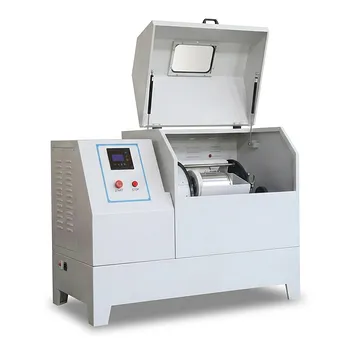
Heavy Duty Horizontal Planetary Ball Mill for Efficient Industrial Grinding and Sample Preparation
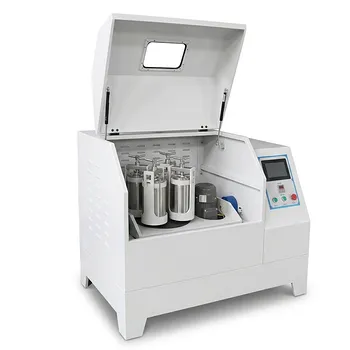
360° Rotating Omnidirectional Laboratory Planetary Ball Mill for Homogeneous Ultra-Fine Grinding and Mixing
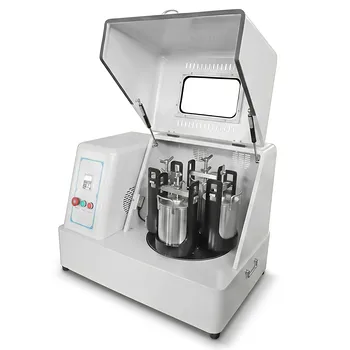
Vertical Square Planetary Ball Mill for Laboratory Sample Preparation and Nanoscale Grinding
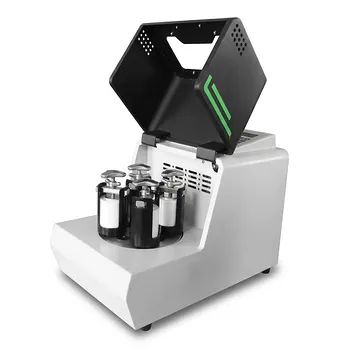
Miniature Planetary Ball Mill with Vacuum Grinding and High Efficiency for Laboratory Sample Preparation

High Energy Laboratory Planetary Ball Mill for Nano Grinding and Material Science Sample Preparation
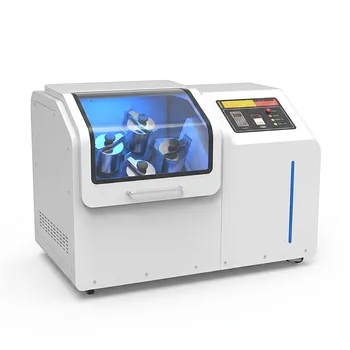
High Energy Omnidirectional Planetary Ball Mill 16L
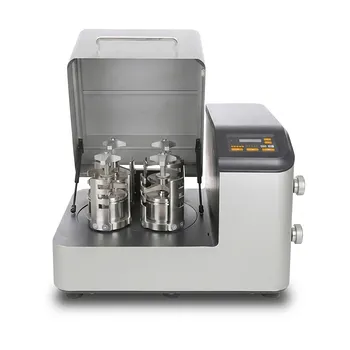
High Energy Planetary Ball Mill for Nano Scale Grinding and Colloidal Mixing in Material Science Research
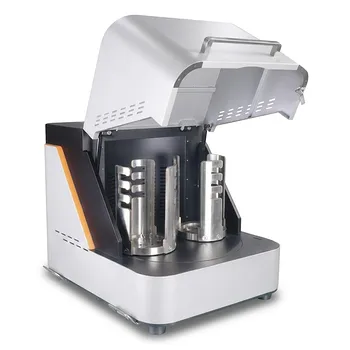
High Energy Laboratory Planetary Ball Mill for Nano Grinding and Colloidal Mixing of Hard and Brittle Materials
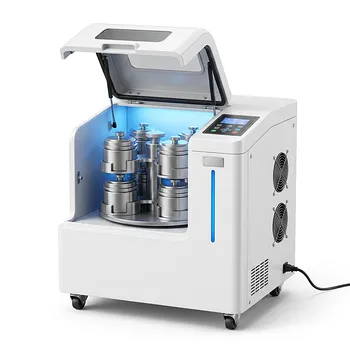
High Energy Omnidirectional Planetary Ball Mill 20L
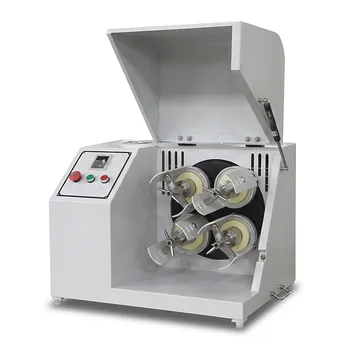
Horizontal Light Duty Planetary Ball Mill for Laboratory Sample Preparation

8L Planetary Ball Mill for Laboratory Grinding and Sample Preparation
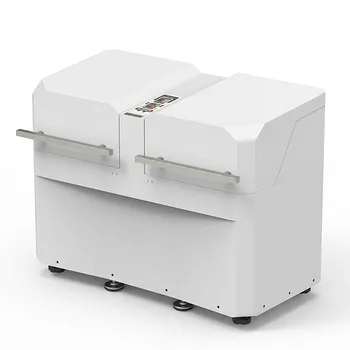
Dual Station Planetary Ball Mill 24L
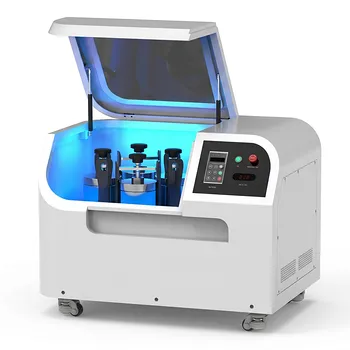
Planetary Ball Mill 12L

Nano High Energy Vibratory Ball Mill for Laboratory Sample Preparation

Multi-Platform Nanoscale High-Energy Vibratory Ball Mill

High Energy Hybrid Vibratory Ball Mill for Grinding Mixing and Cell Disruption