Why use a lab sieve shaker for dopamine-modified BCZT powders? Ensure Uniform Dispersion & High-Performance Films
Updated 4 months ago
The use of a laboratory sieve shaker is a critical quality control step in the processing of BCZT powders. It is primarily necessary to remove coarse agglomerates that inevitably form during the drying process following dopamine modification. By ensuring a highly consistent particle size, the sieving process prevents microscopic defects and localized stress concentrations that would otherwise compromise the integrity of the final composite films.
Core Takeaway: Sieving dopamine-modified BCZT powder eliminates drying-induced clumps to ensure a uniform particle distribution. This is essential for maintaining the mechanical reliability and electrical uniformity of flexible films, especially when working with high filling ratios.
Eliminating Agglomeration from Post-Modification Drying
The Impact of the Drying Stage
During the dopamine modification of Barium Calcium Zirconium Titanate (BCZT), the subsequent drying phase often leads to secondary agglomeration. These large clumps are significantly larger than the primary particles and can disrupt the homogeneity of the powder.
Physical Interception of Coarse Clumps
A vibratory sieve shaker uses mechanical energy to force the powder through precise mesh openings. This process physically intercepts and removes oversized agglomerates, ensuring that only particles within the desired size range proceed to the film preparation stage.
Enhancing Powder Fluidity
Uniformly sieved powders exhibit better fluidity and dispersion characteristics. This consistency is vital for the subsequent mixing stages, preventing material clogging and ensuring a smooth, even distribution of the ceramic phase within the polymer matrix.
Protecting the Structural Integrity of Flexible Films
Preventing Localized Stress Concentration
In flexible composite films, large clusters of powder act as stress concentrators. If these agglomerates are not removed by sieving, they become weak points where cracks can initiate, leading to premature mechanical failure of the material.
Minimizing Microscopic Defects
Consistent particle size is the foundation for a defect-free microstructure. By using a sieve shaker, researchers can eliminate the "islands" of un-dispersed powder that cause microscopic voids or uneven thickness in the resulting films.
Ensuring Electrical Uniformity
For materials like BCZT, which are valued for their electrical properties, uniformity is paramount. Precise control over particle distribution—especially at high filling ratios (4–61 vol%)—guarantees that the electrical response of the composite is consistent across the entire surface of the film.
Understanding the Trade-offs and Limitations
Sieve Blinding and Mesh Maintenance
One common challenge is sieve blinding, where fine particles become lodged in the mesh openings. This reduces screening efficiency and requires frequent cleaning or the use of ultrasonic deblinding systems to maintain accuracy.
Potential for Material Contamination
Mechanical sieving involves constant contact between the BCZT powder and the stainless steel mesh. If the sieves are not properly maintained or are of low quality, there is a minor risk of introducing metallic impurities into the modified powder.
Processing Time vs. Precision
While finer meshes provide greater uniformity, they significantly increase the processing time. Researchers must balance the need for extreme particle precision with the practical throughput requirements of their specific project.
Optimizing Your Powder Preparation Strategy
To achieve the best results with dopamine-modified BCZT, the sieving parameters should be aligned with your specific application goals.
- If your primary focus is mechanical flexibility: Prioritize the removal of all particles above 50–100 μm to eliminate potential stress points that lead to film cracking.
- If your primary focus is high dielectric performance: Use a vibratory shaker with fine-mesh sieves to ensure a high filling ratio (up to 61 vol%) without creating electrical "hot spots" caused by particle clustering.
- If your primary focus is process scalability: Implement a multi-stage sieving approach to quickly remove large chunks before finishing with a precision fine-mesh screen.
Effective particle size management through laboratory sieving is the definitive bridge between chemical modification and high-performance material application.
Summary Table:
| Key Function | Benefit for BCZT Powder | Impact on Final Composite |
|---|---|---|
| Agglomerate Removal | Eliminates clumps formed during post-modification drying. | Prevents localized stress and mechanical failure. |
| Size Uniformity | Ensures a consistent particle distribution range. | Guarantees electrical uniformity across the film surface. |
| Flowability Enhancement | Improves powder dispersion and fluidity during mixing. | Enables high filling ratios (up to 61 vol%) without voids. |
| Microstructure Control | Removes oversized "islands" of un-dispersed powder. | Creates a defect-free, smooth, and flexible microstructure. |
Elevate Your Material Research with Precision Powder Solutions
Achieving superior dielectric performance and mechanical flexibility in BCZT films requires precision at every stage of preparation. [Brand Name] provides complete laboratory sample preparation solutions tailored for material science, specializing in high-performance powder processing and compaction equipment.
Our extensive range of equipment ensures your modified powders meet the highest standards:
- Particle Size Management: Vibratory and air-jet sieve shakers with precision meshes to eliminate agglomerates, alongside planetary ball mills and jet mills for ultra-fine grinding.
- Sample Compaction: A full spectrum of hydraulic presses, including Cold/Warm Isostatic Presses (CIP/WIP), vacuum hot presses, and XRF pellet presses for high-density material formation.
- Homogeneous Mixing: Advanced powder and defoaming mixers to ensure uniform distribution of the ceramic phase within polymer matrices.
- Primary Processing: Heavy-duty jaw and roll crushers, plus liquid nitrogen cryogenic grinders for sensitive materials.
Don't let powder clumps compromise your research integrity. Contact our technical team today to discover how our equipment can optimize your laboratory workflow and enhance your material performance!
References
- Yueping Wang, Zhijian Peng. [Retracted Article] Performance of Ba<sub>0.95</sub>Ca<sub>0.05</sub>Zr<sub>0.15</sub>Ti<sub>0.85</sub>O<sub>3</sub>/PVDF composite flexible films. DOI: 10.2109/jcersj2.122.719
Mentioned Products
- Small Laboratory Vibratory Sieve Shaker for Powder Gradation and Particle Size Analysis
- Laboratory Vibratory Test Sieve Shaker for Precision Particle Size Analysis and Powder Grading
- Vibratory Sieve Shaker Electromagnetic 3D Motion Powder Particle Size Analyzer for Dry and Wet Sieving
- Stainless Steel Laboratory Vibratory Test Sieve Shaker
- Small Laboratory Vibrating Sieve Shaker for Precise Particle Size Analysis
People Also Ask
- Why use a 450 μm vibratory sieve shaker for MLO? Ensure Superior Particle Uniformity & Adsorption Performance
- Why is a laboratory vibratory sieve shaker essential for coconut cake fiber? Achieve Precise Particle Size Analysis
- What is the role of laboratory vibratory sieve shakers in waste PUR foam recycling? Optimize Particle Size and Density
- How does a laboratory vibratory sieve shaker contribute to the pre-treatment of PCB powders before sorting? Boost Yields
- What is the primary function of a laboratory vibratory sieve shaker in the evaluation of sand liquefaction potential?

Tech Team · PowderPreparation
Last updated on Jun 03, 2026
Related Products

Small Laboratory Vibratory Sieve Shaker for Powder Gradation and Particle Size Analysis

Laboratory Vibratory Test Sieve Shaker for Precision Particle Size Analysis and Powder Grading

Vibratory Sieve Shaker Electromagnetic 3D Motion Powder Particle Size Analyzer for Dry and Wet Sieving

Stainless Steel Laboratory Vibratory Test Sieve Shaker

Small Laboratory Vibrating Sieve Shaker for Precise Particle Size Analysis
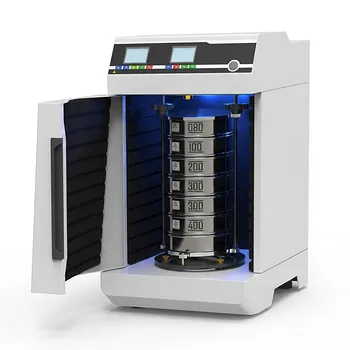
Laboratory Dry and Wet Three Dimensional Vibratory Sieve Shaker for Particle Analysis
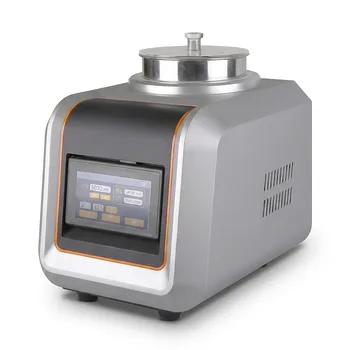
Laboratory Air Jet Sieving Machine for Fine Powder Particle Size Analysis and Deagglomeration

High Frequency Wet Three-Dimensional Vibrating Sieve Shaker for Dry and Wet Particle Size Analysis

三维电磁微量振动筛分仪
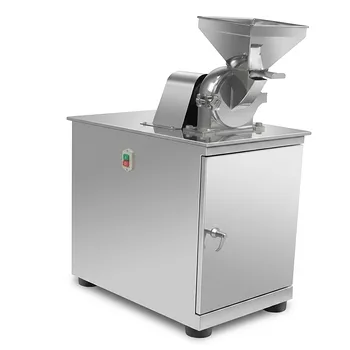
Universal Laboratory Pulverizer Grinder for Small Batch Powder Processing and Material Science Research

Heavy Duty Dry Three Dimensional Vibratory Sieve Shaker for Particle Separation
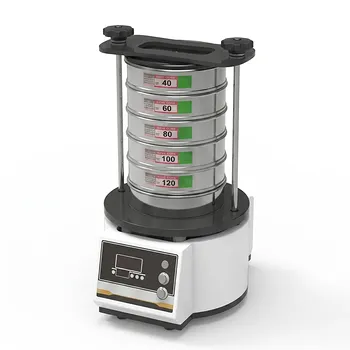
Dry Three Dimensional Vibratory Sieve Shaker
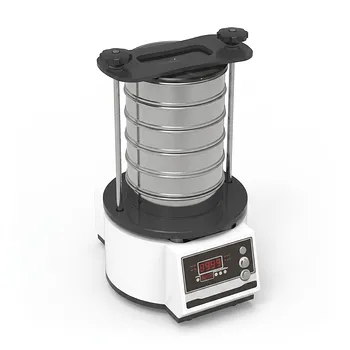
Tapping Oscillating Sieve Shaker for Dry and Wet Particle Size Analysis
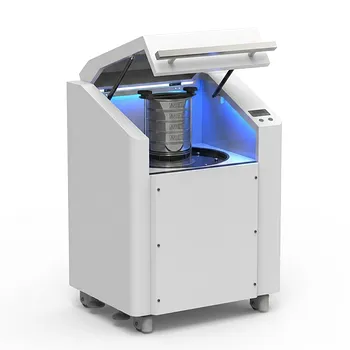
High Frequency Cabinet Type Three-Dimensional Rotary Vibrating Sieve Shaker for Dry Sieving and Particle Classification
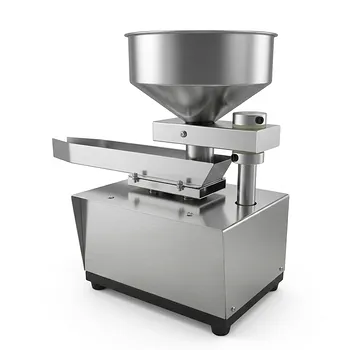
Automatic Vibrating Powder Feeder for Laboratory Material Processing Precision Vibratory Hopper Feeder for Granular and Powder Material Handling Industrial Grade Vibrating Tray Feeder for Consistent Material Sample Preparation
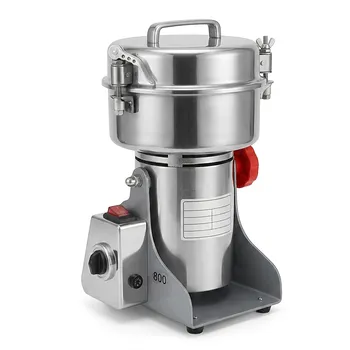
Small High-Speed Laboratory Grinder for Rapid Sample Preparation
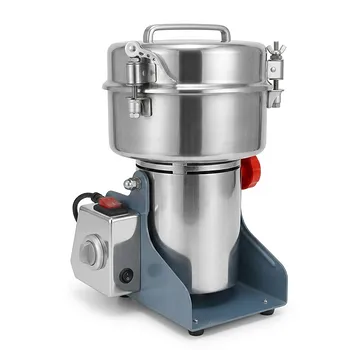
Small High-Speed Grinder for Efficient Laboratory Sample Preparation
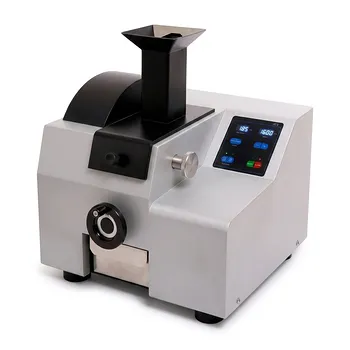
Laboratory Benchtop Jaw Crusher for Hard Brittle Materials Primary Size Reduction and Sample Preparation

Three Dimensional Rotary Vibrating Sieve
