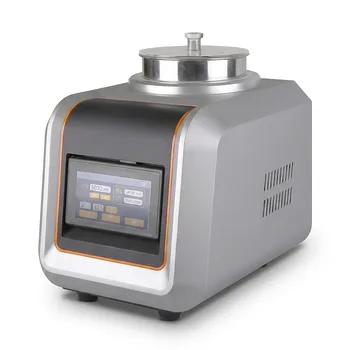
Why use a high-precision vibratory sieve shaker for phosphate glass kinetics? Ensure Accurate Surface Area Control
Updated 5 months ago
The precision of particle size classification is the cornerstone of glass degradation studies. High-precision vibratory sieve shakers are required to strictly control the particle size distribution of phosphate glass samples. Because ion release and degradation rates are fundamentally dictated by the specific surface area exposed to a solvent, this precise physical classification ensures that experimental data is both reproducible and comparable across various glass compositions.
Core Takeaway: Utilizing high-precision vibratory sieving isolates chemical degradation kinetics from physical sample variations by ensuring a uniform surface-area-to-volume ratio. This standardization is a prerequisite for any scientifically valid comparison of how different glass compositions react over time.
The Critical Link Between Surface Area and Kinetics
Controlling the Reaction Interface
In phosphate glass research, degradation occurs at the interface between the glass surface and the solvent. A high-precision shaker allows researchers to isolate specific fractions, such as 106 microns to 150 microns, to ensure the surface area remains a known constant.
Ensuring Data Comparability
Without strict size control, a glass composition might appear to degrade faster simply because it has a higher proportion of fine particles. Precise sieving removes this "noise," allowing the degradation kinetics to be attributed solely to the chemical properties of the glass rather than its physical geometry.
Facilitating Kinetic Modeling
Precise classification is a prerequisite for applying advanced models like the Austin kinetic method. By isolating narrow or mono-size grain fractions, researchers can independently measure specific rates for each particle size, which is necessary for constructing accurate population balance models.
Advantages of Vibratory Automation over Manual Methods
Uniform Energy Distribution
Vibratory sieve shakers provide constant and uniform mechanical energy that manual shaking cannot replicate. High-frequency vibration ensures that aggregate particles bounce and penetrate the mesh layers effectively, which significantly improves screening efficiency and the accuracy of the grading results.
Improving Grading Repeatability
Automated equipment eliminates human error and variability in shaking intensity. This consistency is critical for calculating the Fineness Modulus (FM) and ensuring that every batch of glass powder used in a study meets the exact same physical specifications.
Enhancing Sample Uniformity for Analysis
High-frequency vibration helps in rapidly grinding hard glass into a uniform fine powder. This uniformity is essential for downstream techniques like XRD analysis, where a random orientation of particles is required to accurately verify the amorphous, non-crystalline structure of the glass.
Impact on Material Performance and Application
Sintering and Crystallization Kinetics
For specialized glass powders, such as SnO–MgO–P2O5, a narrow particle size distribution (e.g., 37 to 44 microns) is a deciding factor for sintering activity and wettability. Precise control ensures that the glass flows and bonds correctly during sealing applications or composite manufacturing.
Preventing Processing Failures
In industrial contexts like twin-screw extrusion, consistent particle size prevents local uneven heating or flow blockages. Maintaining a uniform distribution ensures the material maintains stable rheological properties, which improves the overall quality of the final extruded product.
Optimizing Spectroscopic Accuracy
Using fine meshes (such as 0.075mm) for techniques like FTIR and XRD eliminates shielding effects and scattering interference. Fine, uniform particles ensure that the detected chemical phase and functional group information are truly representative of the sample.
Understanding the Trade-offs and Pitfalls
The Risk of Mesh Blinding
When working with very fine powders, particles can become lodged in the sieve apertures, a phenomenon known as blinding. High-precision vibratory shakers often require anti-blinding accessories or specific cleaning protocols to maintain accuracy over multiple runs.
Potential for Sample Attrition
Excessively high-frequency vibration can sometimes cause secondary breakage of fragile phosphate glass particles during the sieving process. Researchers must balance the need for efficient separation with the risk of creating "new" fines that could skew the surface area calculations.
Equipment Calibration Requirements
The "high-precision" label is only valid if the equipment and the standard test sieves are regularly calibrated. Wear and tear on the mesh can lead to apertures widening over time, which compromises the reproducibility of the degradation data.
How to Apply This to Your Project
When setting up your glass degradation experiments, choose your sieving parameters based on your primary analytical goal.
- If your primary focus is kinetic reproducibility: Use an automated vibratory shaker with a specific narrow range (e.g., 106–150 microns) to ensure the surface area is the only controlled variable.
- If your primary focus is structural verification (XRD/FTIR): Prioritize fine stainless steel meshes (0.075mm or smaller) to eliminate scattering interference and ensure a representative signal.
- If your primary focus is industrial processing (Extrusion/Sintering): Focus on achieving a narrow particle size distribution to prevent rheological instability and ensure uniform thermal flow.
By standardizing the physical state of your phosphate glass samples, you transform raw data into a definitive understanding of chemical behavior.
Summary Table:
| Application Focus | Recommended Sieving Strategy | Key Research Benefit |
|---|---|---|
| Kinetic Reproducibility | Narrow range (e.g., 106–150 µm) | Isolates chemical kinetics from physical surface variations. |
| Structural Analysis | Fine mesh (≤ 0.075 mm) | Eliminates scattering interference for accurate XRD/FTIR results. |
| Industrial Processing | Strict distribution control | Prevents rheological instability and local heating in extrusion. |
| Kinetic Modeling | Mono-size grain fractions | Enables accurate population balance and Austin method modeling. |
Elevate Your Material Research with Precise Sample Preparation
Achieving scientific breakthroughs in phosphate glass degradation requires absolute control over particle geometry. At [Company Name], we provide complete laboratory sample preparation solutions tailored for material science.
We specialize in high-performance powder processing equipment, including:
- Sieve Shakers: High-precision vibratory and air-jet models with a wide range of standard test sieves.
- Milling & Grinding: Planetary ball mills, jet mills, and liquid nitrogen cryogenic grinders for ultimate uniformity.
- Compaction Solutions: A full spectrum of hydraulic presses, including Cold/Warm Isostatic Presses (CIP/WIP), vacuum hot presses, and XRF pellet presses.
- Mixing: Advanced powder and defoaming mixers for homogeneous sample preparation.
Don’t let physical variability compromise your chemical data. Partner with experts who understand the nuances of powder kinetics and material performance.
Contact our technical team today to find the perfect equipment configuration for your laboratory!
References
- Farzad Foroutan, Jonathan C. Knowles. Novel sol–gel preparation of (P2O5)0.4–(CaO)0.25–(Na2O)X–(TiO2)(0.35−X) bioresorbable glasses (X = 0.05, 0.1, and 0.15). DOI: 10.1007/s10971-014-3555-6
Mentioned Products
- Laboratory Vibratory Test Sieve Shaker for Precision Particle Size Analysis and Powder Grading
- Stainless Steel Laboratory Vibratory Test Sieve Shaker
- Small Laboratory Vibrating Sieve Shaker for Precise Particle Size Analysis
- Vibratory Sieve Shaker Electromagnetic 3D Motion Powder Particle Size Analyzer for Dry and Wet Sieving
- High Frequency Wet Three-Dimensional Vibrating Sieve Shaker for Dry and Wet Particle Size Analysis
People Also Ask
- What role does a laboratory sieve shaker play in determining PDI? Achieve Precision in Biomass Quality Testing
- What are the functions of sieve shakers for coconut shell powder? Achieve Precise Particle Size & Quality Control.
- What function does a laboratory sieve shaker perform in the PSD analysis of residual soil? Ensure Precise Grading
- What is the role of a laboratory sieve shaker in the preparation of plantain peel adsorbents? Standardize Particle Size
- What is the function of a laboratory vibratory sieve shaker? Enhance Coal Particle Size Distribution (PSD) Analysis

Tech Team · PowderPreparation
Last updated on May 14, 2026
Related Products
Laboratory Vibratory Test Sieve Shaker for Precision Particle Size Analysis and Powder Grading
Stainless Steel Laboratory Vibratory Test Sieve Shaker
Small Laboratory Vibrating Sieve Shaker for Precise Particle Size Analysis
Vibratory Sieve Shaker Electromagnetic 3D Motion Powder Particle Size Analyzer for Dry and Wet Sieving
High Frequency Wet Three-Dimensional Vibrating Sieve Shaker for Dry and Wet Particle Size Analysis
High Frequency Cabinet Type Three-Dimensional Rotary Vibrating Sieve Shaker for Dry Sieving and Particle Classification
Heavy Duty Dry Three Dimensional Vibratory Sieve Shaker for Particle Separation
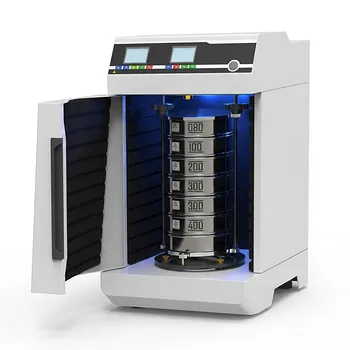
Laboratory Dry and Wet Three Dimensional Vibratory Sieve Shaker for Particle Analysis
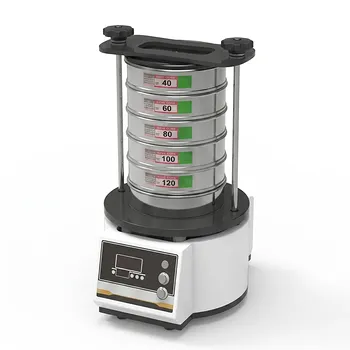
Dry Three Dimensional Vibratory Sieve Shaker
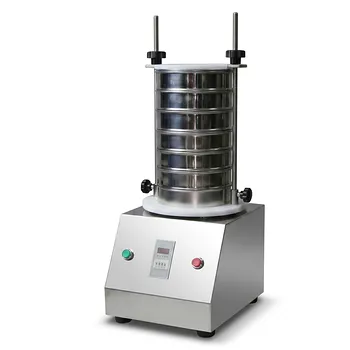
Small Laboratory Vibratory Sieve Shaker for Powder Gradation and Particle Size Analysis
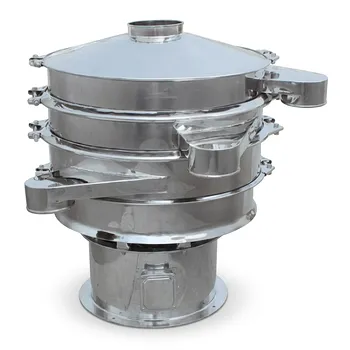
Stainless Steel Rotary Vibrating Sieve High Precision Circular Vibratory Separator Industrial Powder Grading Machine Multi Layer Sifting Equipment
三维电磁微量振动筛分仪
Tapping Oscillating Sieve Shaker for Dry and Wet Particle Size Analysis
Three Dimensional Rotary Vibrating Sieve
Vibratory Superfine Grinder for Ultra Fine Laboratory Powder Milling
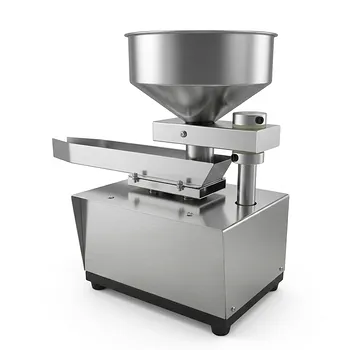
Automatic Vibrating Powder Feeder for Laboratory Material Processing Precision Vibratory Hopper Feeder for Granular and Powder Material Handling Industrial Grade Vibrating Tray Feeder for Consistent Material Sample Preparation
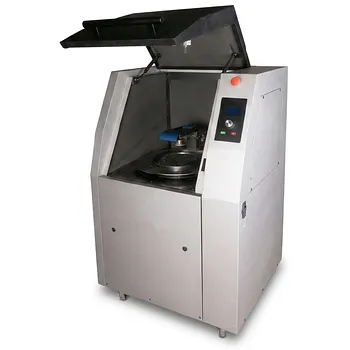
High Speed Vibratory Disc Mill for Spectral Analysis Sample Preparation and Rapid Powder Grinding
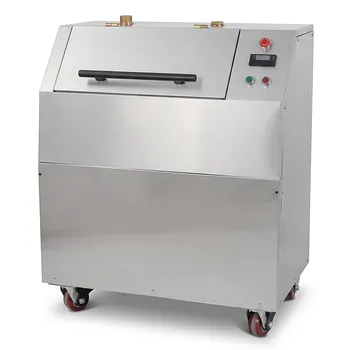
Vibratory Disc Mill for Rapid Fine Grinding and High Throughput Sample Preparation of Hard and Brittle Materials
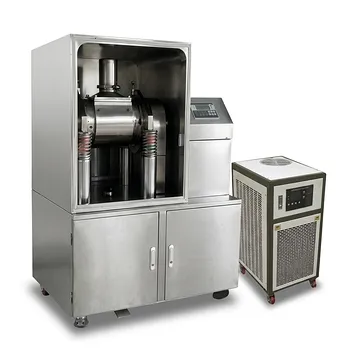
Small Vibrating Ultrafine Grinder for Traditional Chinese Medicine