Why are vibratory sieve shakers and standard test sieves essential for particle size control in abrasive tool manufacturing?
Updated 5 months ago
Precise particle size control is the cornerstone of abrasive tool manufacturing. Vibratory sieve shakers and standard test sieves are essential because they provide a standardized, repeatable method for classifying raw materials into specific grit sizes, such as 250 μm or 500 μm. This classification ensures that grinding wheels and abrasive tools deliver consistent surface finishing precision, predictable mechanical performance, and optimized particle packing density.
Core Takeaway: By providing mechanical agitation and high-precision mesh filtration, these tools eliminate the variability of manual sieving and ensure that abrasives meet strict particle size distribution (PSD) requirements. This standardization is critical for both the structural integrity of the final tool and the accuracy of the industrial processes they perform.
Achieving Precision Through Standardized Classification
Defining Grit Size for Surface Finish
The primary role of test sieves is to categorize crushed particles into uniform grit sizes. This precision is vital because the size of the abrasive particle directly dictates the surface finish of the workpiece; inconsistent sizing leads to unpredictable scratch patterns and poor quality control.
Optimizing Particle Packing Density
Standardized screening allows manufacturers to optimize the packing density of particles within grinding wheels. By controlling the distribution of sizes, producers can ensure that particles fit together tightly, which reduces internal porosity and maximizes the tool's effective lifespan.
Removing Impurities and Outsized Particles
Mechanical grading through multi-layer meshes efficiently removes oversized or undersized impurities. Ensuring a clean, standardized particle range is vital for maintaining the physical baseline of the material before it is bonded into a tool.
Ensuring Consistency and Repeatability
Mechanical Agitation vs. Manual Methods
Vibratory sieve shakers offer a significant advantage over manual sieving by providing constant amplitude and uniform processing time. This mechanical consistency ensures that the resulting data is repeatable, regardless of the operator, which is essential for industrial quality assurance.
Eliminating Variables in Quality Testing
By strictly controlling metrics like D10, D50, and D90 values, manufacturers can isolate the effects of other variables, such as chemical additives. This allows researchers to accurately measure improvements in fracture resistance or bulk density without the "noise" of inconsistent particle sizes.
Supporting Numerical Simulations
The data obtained from precise sieving provides accurate parameters for mathematical models, such as the Rosin-Rammler distribution function. These models are used to simulate flow fields and particle behavior, allowing for more advanced tool design and process optimization.
Impact on Manufacturing Efficiency
Enhancing Mechanical Strength
In tools made from plant fibers or refractory clays, proper sieving optimizes the filling rate and enhances overall mechanical strength. Controlling the particle size distribution allows for the adjustment of raw material ratios to achieve specific physical properties like air permeability and volume stability.
Validating Grinding Efficiency
Sieving is used to determine the mean final product diameter, which is a critical metric for calculating comminution energy consumption. This allows manufacturers to validate their energy prediction models and assess the efficiency of their grinding equipment.
Determining Optimal Process Parameters
Through dry and wet sieve analysis, technicians can plot the relationship between grinding time and particle size. This data is fundamental for identifying the optimal grinding duration required to reach a specific target, such as a 65 percent passing rate through a 75μm sieve.
Understanding the Trade-offs and Limitations
The Challenge of Particle Shape
While sieves are excellent at measuring the second-smallest dimension of a particle, they can struggle with acicular (needle-like) particles. A long, thin particle may pass through a mesh end-first, potentially skewing the data if shape distribution is not also monitored.
Screen Blinding and Maintenance
High-frequency vibration is necessary to prevent screen blinding, where particles become lodged in the mesh openings. Regular calibration and careful cleaning of standard test sieves are mandatory to maintain the high-precision tolerances required for abrasive manufacturing.
Limitations in Ultra-Fine Ranges
As particle sizes drop below 45 μm, dry sieving becomes increasingly difficult due to electrostatic forces and agglomeration. In these instances, manufacturers must often pivot to wet sieve analysis or laser diffraction to maintain accuracy.
How to Apply This to Your Manufacturing Process
Making the Right Choice for Your Goal
To maximize the utility of your sieving equipment, align your methodology with your primary production objective:
- If your primary focus is consistent surface finishing: Prioritize the use of a multi-layer sieve stack to isolate narrow grit ranges and eliminate "stray" large particles that cause deep scratches.
- If your primary focus is tool durability and strength: Focus on optimizing the particle size distribution (PSD) to maximize packing density and minimize internal voids in the bonding matrix.
- If your primary focus is process efficiency: Use regular sieve analysis to monitor grinding media wear and adjust comminution times to minimize energy waste.
Implementing a rigorous, vibration-assisted sieving protocol is the most reliable way to ensure that your abrasive products perform with the precision and predictability that modern industry demands.
Summary Table:
| Key Factor | Functional Role | Impact on Quality |
|---|---|---|
| Grit Classification | Uniform particle sizing | Consistent surface finish & predictable scratch patterns |
| Packing Density | Optimized distribution | Minimized internal porosity & enhanced tool lifespan |
| Mechanical Agitation | Repeatable processing | Standardized D10/D50/D90 values & quality assurance |
| Impurity Removal | High-precision filtration | Clean material baseline for reliable bonding and strength |
Elevate Your Material Preparation Standards
Ensure your abrasive tools meet the highest industrial benchmarks with our complete laboratory sample preparation solutions. We specialize in high-performance powder processing and compaction equipment tailored specifically for material science research and industrial manufacturing.
Our extensive product line includes:
- Sieving & Milling: Vibratory and air-jet sieve shakers, planetary ball mills, jet mills, and cryogenic grinders.
- Crushing & Mixing: Jaw/roll crushers and advanced powder/defoaming mixers.
- Compaction Equipment: A full spectrum of hydraulic presses, including Cold/Warm Isostatic Presses (CIP/WIP), vacuum hot presses, and XRF pellet presses.
Whether you are optimizing particle packing density or refining surface finish precision, our specialized equipment delivers the accuracy and repeatability your process demands. Contact our experts today to find the ideal solution for your laboratory or production line.
References
- Adeiza Avidime Samuel, I. O. Alabi. Morphology, microstructure evolution and properties of resin-bonded palm kernel and coconut shell grain-based abrasive grinding. DOI: 10.4314/njtd.v20i1.1235
Mentioned Products
- Vibratory Sieve Shaker Electromagnetic 3D Motion Powder Particle Size Analyzer for Dry and Wet Sieving
- Laboratory Dry and Wet Three Dimensional Vibratory Sieve Shaker for Particle Analysis
- Dry Three Dimensional Vibratory Sieve Shaker
- Stainless Steel Laboratory Vibratory Test Sieve Shaker
- Heavy Duty Dry Three Dimensional Vibratory Sieve Shaker for Particle Separation
People Also Ask
- How does a vibratory sieve shaker contribute to optimizing the performance of activated carbon? Enhance Adsorption Precision
- Why is a laboratory vibratory sieve shaker necessary for processing magnesium-based borate precursor powders? Boost Activity
- Why use a vibratory sieve shaker to verify coarse aggregate grading in rubberized concrete? Ensure Structural Integrity
- What function do vibratory sieve shakers and standard test sieves serve in the preparation of adsorbents? Key Guide
- What role does a vibratory sieve shaker play in the particle size analysis of ground corn products? Enhance QC Precision

Tech Team · PowderPreparation
Last updated on May 14, 2026
Related Products
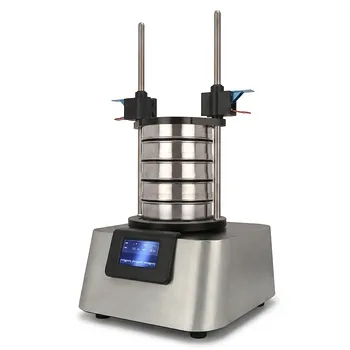
Vibratory Sieve Shaker Electromagnetic 3D Motion Powder Particle Size Analyzer for Dry and Wet Sieving
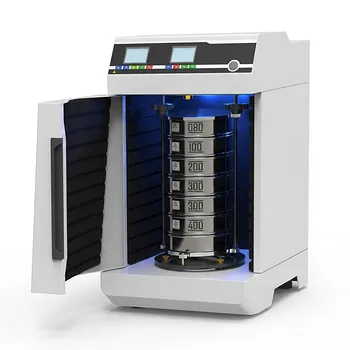
Laboratory Dry and Wet Three Dimensional Vibratory Sieve Shaker for Particle Analysis
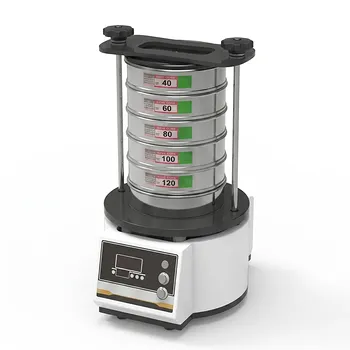
Dry Three Dimensional Vibratory Sieve Shaker
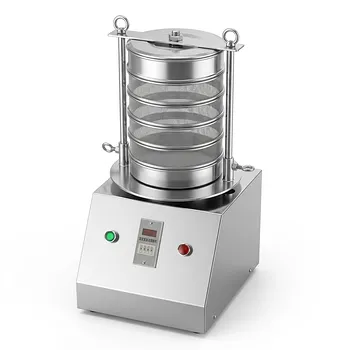
Stainless Steel Laboratory Vibratory Test Sieve Shaker
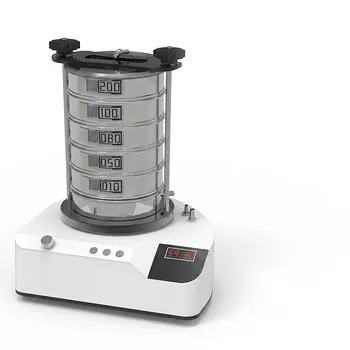
Heavy Duty Dry Three Dimensional Vibratory Sieve Shaker for Particle Separation
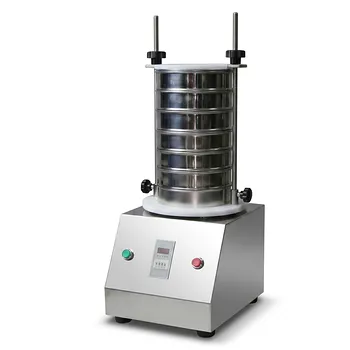
Small Laboratory Vibratory Sieve Shaker for Powder Gradation and Particle Size Analysis
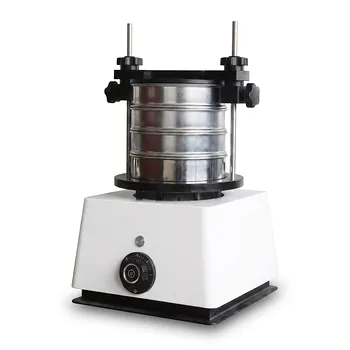
Small Laboratory Vibrating Sieve Shaker for Precise Particle Size Analysis
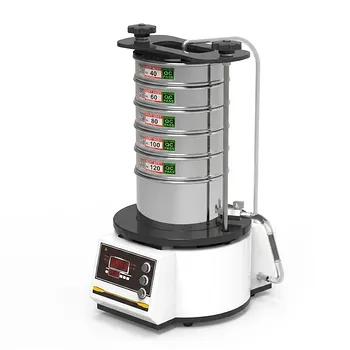
High Frequency Wet Three-Dimensional Vibrating Sieve Shaker for Dry and Wet Particle Size Analysis
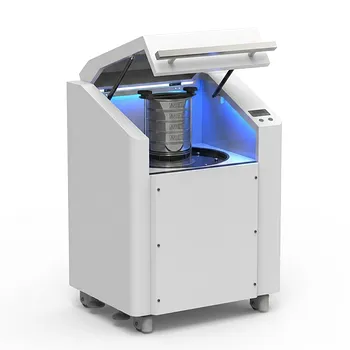
High Frequency Cabinet Type Three-Dimensional Rotary Vibrating Sieve Shaker for Dry Sieving and Particle Classification
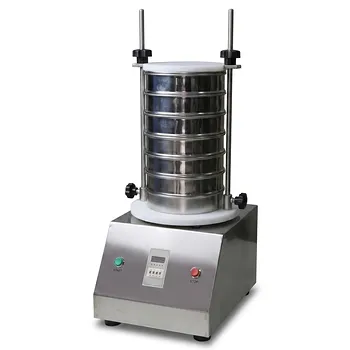
Laboratory Vibratory Test Sieve Shaker for Precision Particle Size Analysis and Powder Grading
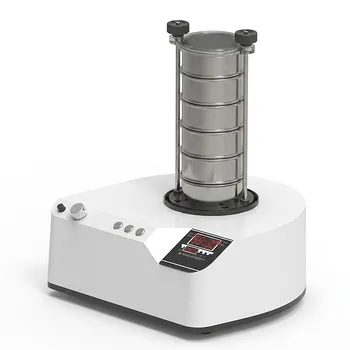
三维电磁微量振动筛分仪
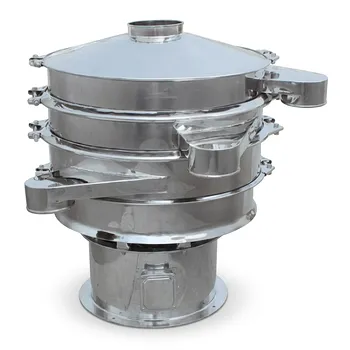
Stainless Steel Rotary Vibrating Sieve High Precision Circular Vibratory Separator Industrial Powder Grading Machine Multi Layer Sifting Equipment
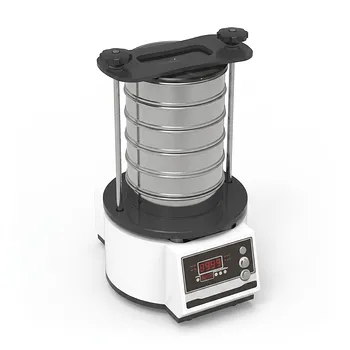
Tapping Oscillating Sieve Shaker for Dry and Wet Particle Size Analysis
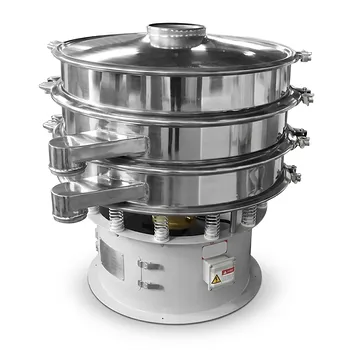
Three Dimensional Rotary Vibrating Sieve
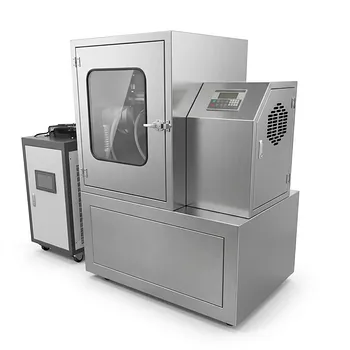
Vibratory Superfine Grinder for Ultra Fine Laboratory Powder Milling
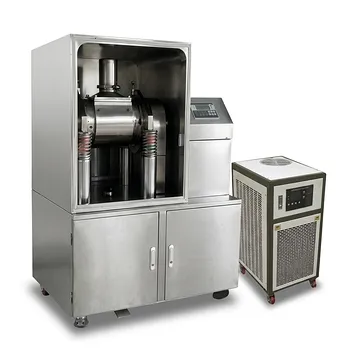
Small Vibrating Ultrafine Grinder for Traditional Chinese Medicine
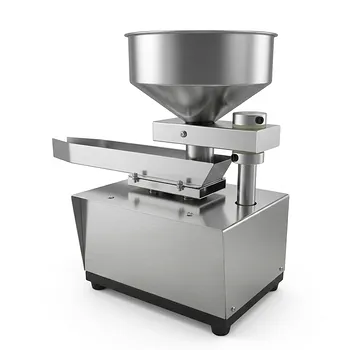
Automatic Vibrating Powder Feeder for Laboratory Material Processing Precision Vibratory Hopper Feeder for Granular and Powder Material Handling Industrial Grade Vibrating Tray Feeder for Consistent Material Sample Preparation