Why is it necessary for an industrial hydraulic press to provide high unit pressure when preparing MMC green bodies? Optimize Densification
Updated 4 months ago
High unit pressure is essential for MMC green bodies because it forces powder particles to undergo plastic deformation and rearrangement, establishing the initial contact tightness required for structural integrity. By applying pressures up to 610 MPa, industrial hydraulic presses eliminate internal voids and create a stable mechanical interlock between the reinforcement phase and the metal matrix. This high-density state is the critical foundation for controlling sintering shrinkage and ensuring efficient electromagnetic coupling during subsequent thermal processing.
High-pressure compaction transforms loose powder into a cohesive "green body" by overcoming inter-particle friction and inducing plastic flow. This process determines the final material's density, dimensional stability, and the efficiency of the sintering phase.
Achieving Structural Integrity and Green Strength
Overcoming Inter-particle Friction
Loose powder mixtures inherently contain significant air gaps and resist movement due to surface friction. High unit pressure provides the necessary axial force to overcome these frictional barriers, allowing particles to slide into a more compact arrangement.
Inducing Plastic Deformation
Beyond simple rearrangement, high pressure forces the metal matrix particles to plastically deform around the harder reinforcement particles. This deformation fills microscopic gaps and creates a mechanical interlock, which is vital for the green body to resist cracking during handling.
Establishing Particle Contact Tightness
The "tightness" of the contact between the matrix and reinforcement phase directly impacts the material's green strength. Without sufficient unit pressure, the compact remains fragile and prone to macroscopic defects or structural failure before it even reaches the furnace.
Optimization for Subsequent Sintering
Enhancing Electromagnetic Coupling Efficiency
In processes like microwave sintering, the initial contact tightness between particles influences how energy is absorbed. High-pressure compaction ensures uniform particle distribution, which optimizes electromagnetic coupling and leads to more consistent heating profiles.
Minimizing Volumetric Shrinkage
A high-density green body has significantly fewer pores to close during the sintering stage. By maximizing green density through high-pressure pressing, manufacturers can drastically reduce the shrinkage rate, ensuring the final component meets precise geometric tolerances.
Preventing Sintering Defects
Low-pressure compacts often suffer from non-uniform density, which leads to warping, cracking, or dimensional deformation during heating. Industrial-grade pressure ensures a homogenous internal structure that remains stable as the material densifies into its final form.
Understanding the Trade-offs and Limitations
Mold Wear and Tooling Fatigue
Applying pressures as high as 610 MPa puts extreme stress on precision steel molds. Constant high-pressure cycling can lead to accelerated tool wear or fatigue, requiring high-strength materials and regular maintenance to prevent dimensional drift in the green bodies.
The Risk of Particle Crushing
While plastic deformation is desired, excessive pressure can lead to the unintentional crushing of brittle reinforcement particles. This can alter the composite's mechanical properties and degrade the intended performance of the Metal Matrix Composite.
Internal Residual Stresses
Rapid application of high pressure can trap residual stresses within the green body. If the pressure is not released controlledly, or if the dwell time is insufficient, the compact may experience "spring-back" or laminations upon ejection from the mold.
How to Apply This to Your Production
- If your primary focus is Dimensional Precision: Prioritize high unit pressure and precise dwell time control to maximize green density, which minimizes unpredictable shrinkage during the final sintering stage.
- If your primary focus is Microwave Sintering Efficiency: Use the highest rated pressure compatible with your powder chemistry (up to 610 MPa) to ensure the particle contact tightness required for optimal electromagnetic coupling.
- If your primary focus is Preventing Component Cracking: Ensure the hydraulic press provides stable axial pressure to facilitate uniform mechanical interlocking between the matrix and reinforcement phases.
Establishing high unit pressure during the compaction stage is the single most important factor in determining the final density and structural reliability of a Metal Matrix Composite.
Summary Table:
| Key Factor | Impact on MMC Green Body | Manufacturing Benefit |
|---|---|---|
| Friction Reduction | Overcomes inter-particle resistance | Higher green density |
| Plastic Deformation | Gaps fill around hard reinforcements | Strong mechanical interlock |
| Contact Tightness | Enhances electromagnetic coupling | Efficient microwave sintering |
| Void Elimination | Removes internal air pockets | Minimal sintering shrinkage |
| Structural Stability | Homogenous internal structure | Prevention of warping/cracks |
Master Your Material Compaction with Professional Grade Solutions
Achieving the high unit pressure necessary for high-density Metal Matrix Composite (MMC) green bodies requires robust and precise equipment. At [Your Brand Name], we provide complete laboratory sample preparation solutions for material science, ensuring your research translates into high-quality components.
Specializing in powder processing and compaction, our extensive product line is designed to help you overcome inter-particle friction and achieve superior mechanical interlocking:
- Advanced Hydraulic Presses: A full spectrum including Cold/Warm Isostatic Presses (CIP/WIP), standard lab presses, XRF pellet presses, and vacuum hot presses capable of reaching critical compaction pressures.
- Precision Powder Processing: High-efficiency crushers, liquid nitrogen cryogenic grinders, and various mills (planetary ball, jet, sand/bead) for ideal particle sizing.
- Sizing & Mixing: Vibratory sieve shakers and high-homogeneity powder mixers to ensure uniform matrix-reinforcement distribution.
Ready to eliminate sintering defects and optimize your densification process?
Contact our experts today to find the perfect equipment for your material needs!
References
- Fernando A. Costa Oliveira, Jorge Cruz Fernandes. Manufacturing of Diamond Tool Segments via Microwave–Hybrid Sintering. DOI: 10.3390/jmmp9110370
Mentioned Products
- 6 Ton Variable Frequency Single Punch Tablet Press
- 5 Ton Single Punch Tablet Press Laboratory Small Batch Production
- 6-Ton Small Single-Punch Tablet Press — Laboratory Powder & Granule Tableting Equipment / Tablet Forming Machine
- Vertical Production Planetary Ball Mill for High Throughput Powder Processing
- Manual Tablet Press with Dual Scale Pressure Gauge for Pharmaceutical Food Chemical Laboratory Sample Preparation
People Also Ask
- Why is a laboratory hydraulic press required for FT-IR KBr pellets? Achieve Precise Sample Clarity for ZrC–SiC Analysis
- Why is vacuum sealing and flexible packaging necessary for Aluminum Titanate powders during CIP? Ensure Peak Density
- What are the advantages of using hardened steel molds and graphite spray for titanium powder? Ensure structural integrity
- Why is a laboratory hydraulic press required to compress oyster shell powder before XRF analysis? Improve Data Accuracy.
- What role does a high-strength stainless steel mold kit play in the uniaxial die compaction process? Ensuring Precision

Tech Team · PowderPreparation
Last updated on Jun 03, 2026
Related Products
6 Ton Variable Frequency Single Punch Tablet Press
5 Ton Single Punch Tablet Press Laboratory Small Batch Production
6-Ton Small Single-Punch Tablet Press — Laboratory Powder & Granule Tableting Equipment / Tablet Forming Machine

Vertical Production Planetary Ball Mill for High Throughput Powder Processing
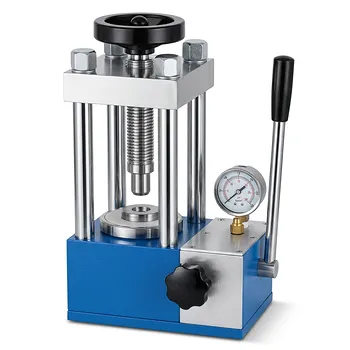
Manual Tablet Press with Dual Scale Pressure Gauge for Pharmaceutical Food Chemical Laboratory Sample Preparation
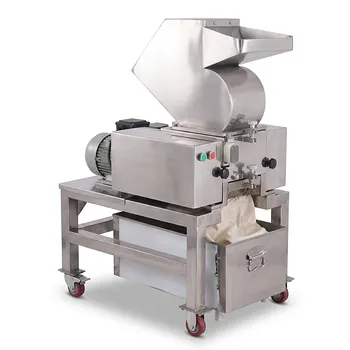
Stainless Steel Coarse Crusher for Pharmaceutical Food and Plastic Material Processing
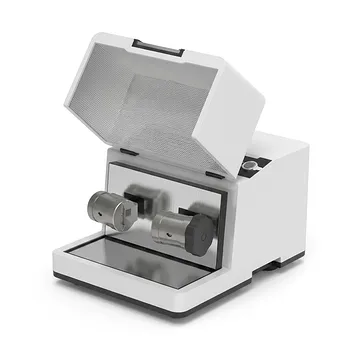
Heating Temperature Controlled High Energy Vibratory Ball Mill
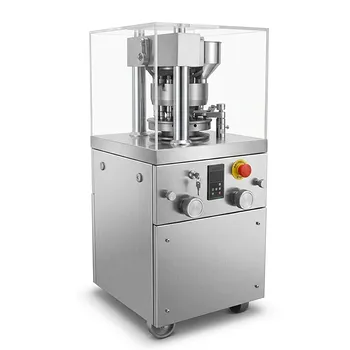
Ordinary Type Rotary Tablet Press for Pharmaceutical Chemical Food Electronic Industries
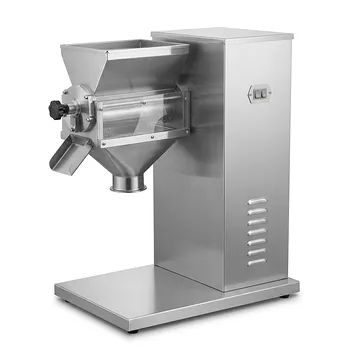
Small Swing Granulator Efficient Powder Granulation for Pharmaceutical Chemical Food Industries
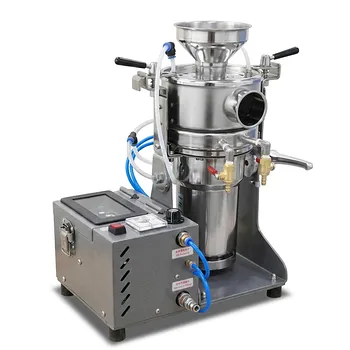
Water Cooled Pulse Jet Ultrafine Grinder
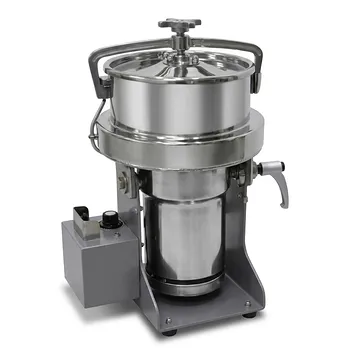
500g Capacity Water Cooled Low Temperature Grinder with Variable Speed and Safety Cover
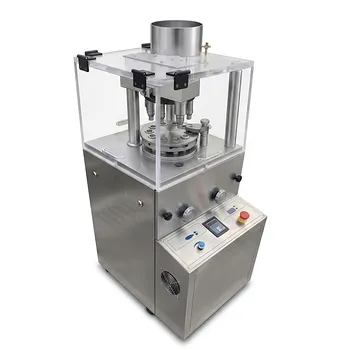
Enhanced 9 Punch Rotary Tablet Press for Powder Compaction

High Energy Omnidirectional Planetary Ball Mill 16L
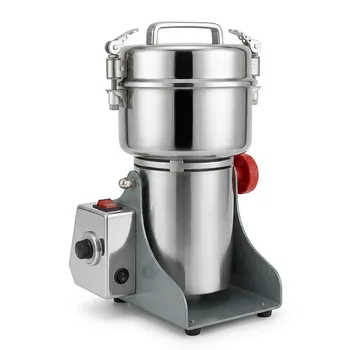
Versatile Industrial Crusher for Laboratory Crushing and Material Processing
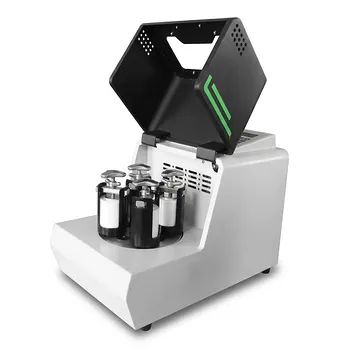
Miniature Planetary Ball Mill with Vacuum Grinding and High Efficiency for Laboratory Sample Preparation
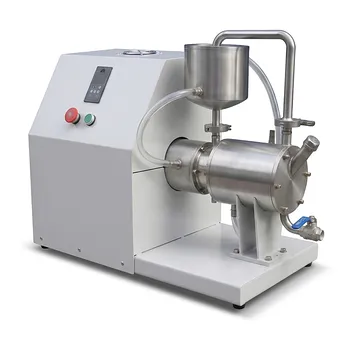
Laboratory Small Horizontal Sand Mill for Nano Materials Wet Grinding
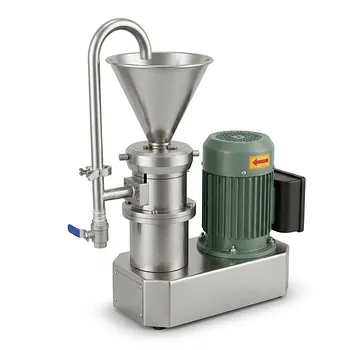
Small Laboratory Colloid Mill for Ultra-Fine Wet Grinding and Emulsification
Dual Cup Vacuum Centrifugal Mixer Planetary Paste Defoaming Machine Industrial Material Processor
Industrial Planetary Centrifugal Vacuum Defoaming Mixer for High Viscosity Paste and Powder Homogenization