Why is it essential to use a vibrating sieve shaker for the final grading of dietary fiber products? Master Quality.
Updated 5 months ago
Achieving precise particle size distribution is the cornerstone of high-quality dietary fiber production. A vibrating sieve shaker is essential because it mechanically classifies ground fibers into specific, repeatable ranges using standardized apertures. This process ensures that the final product meets strict functional and sensory requirements while maintaining consistency across production batches.
Precise particle size control is the foundation of functional dietary fiber products. By utilizing controlled mechanical vibration, manufacturers can ensure uniform chemical reaction kinetics, predictable mouthfeel in food applications, and a reliable data foundation for process optimization.
The Impact on Product Functionality and Sensory Profile
Influencing Mouthfeel and Bulk Density
Particle size directly dictates how dietary fiber interacts with the human palate and food matrices. Fine particles provide a smooth, non-gritty mouthfeel, whereas specific size ranges are required to manage bulk density for packaging and formulation accuracy.
Enabling Customized Manufacturing
The use of standard analytical sieves—ranging from 20 to 400 micrometers—allows for the creation of "designer" fibers. This precision enables manufacturers to tailor fiber functionality to the specific needs of a recipe, such as improving the crumb structure in baking or the viscosity in beverages.
Standardizing Physiological Properties
Uniformity in particle size eliminates interference during testing for water holding capacity (WHC) and swelling capacity. Without precise grading, the data regarding how a fiber behaves in the digestive tract or a dough matrix becomes unreliable and inconsistent.
Optimizing Downstream Chemical and Thermal Processes
Ensuring Consistent Reaction Kinetics
Fiber powder must often undergo alkali treatment and bleaching to achieve the desired purity and color. A vibratory sieve ensures that all particles are below a specific threshold (typically 0.25 mm), allowing chemical agents to penetrate to a consistent depth and preventing incomplete reactions in oversized particles.
Facilitating Even Mass and Heat Transfer
During chemical extraction or drying stages, uniform particle distribution ensures even mass and heat transfer. This prevents "hot spots" or uneven reactions that could lead to photo-degradation or the incomplete removal of non-cellulosic components.
Improving Material Reliability
Just as in advanced ceramics, the microstructure of a fiber-dense product is affected by the size distribution of its components. Precise grading reduces the "dispersion of material strength," ensuring that the final food or supplement product is physically stable and reliable.
Enhancing Manufacturing Efficiency and Research
Optimizing Grinding Parameters
Data from a vibrating sieve shaker allows engineers to quantitatively analyze the mass percentage at various size levels. This information is critical for optimizing ball mill performance and adjusting rotor speeds to ensure the grinding process is energy-efficient and effective.
Establishing Experimental Reproducibility
For researchers performing surface modification analysis or specific surface area testing, consistent samples are mandatory. Using a sieve shaker to isolate fine particles (such as those smaller than 270 mesh) removes variables caused by inconsistent sizes, providing a standardized baseline for scientific inquiry.
Understanding the Trade-offs
Managing Sieve Blinding
One of the primary challenges in vibratory sieving is blinding, where fibers become wedged in the mesh apertures. This is particularly common with needle-like fibers, which may require specialized anti-blinding balls or ultrasonic attachments to maintain throughput.
Limitations of Two-Dimensional Grading
While effective, vibrating sieves grade primarily based on the smallest cross-section of a fiber. For highly elongated fibers, the sieve may not fully represent the actual volume or length of the particle, necessitating supplemental analysis if aspect ratio is a critical metric.
Sample Degradation Risks
Extended sieving times or excessive vibration intensity can cause particle attrition, where fragile fibers break down further during the test itself. Operators must balance the need for complete separation with the physical integrity of the fiber samples.
How to Apply This to Your Project
Recommendations for Implementation
Effective grading requires aligning your sieve configuration with your ultimate application goal.
- If your primary focus is sensory quality: Prioritize the use of high-mesh sieves (200-400 micrometers) to ensure the absence of "gritty" particles that negatively impact mouthfeel.
- If your primary focus is chemical processing: Ensure all material passes through a 0.25 mm screen to guarantee that subsequent bleaching and alkali treatments reach the core of every particle.
- If your primary focus is process optimization: Use a full stack of standard analytical sieves to calculate the P80 index, allowing you to fine-tune your grinding equipment for maximum energy efficiency.
By mastering the precision of the vibrating sieve shaker, you transition from "crushing material" to "engineering a functional ingredient."
Summary Table:
| Key Benefit | Impact on Dietary Fiber Production |
|---|---|
| Particle Size Control | Ensures smooth mouthfeel (20-400μm) and optimal bulk density. |
| Chemical Uniformity | Guarantees consistent bleaching and alkali treatment kinetics. |
| Process Efficiency | Optimizes grinding parameters and reduces energy consumption. |
| Research Accuracy | Provides reproducible data for surface area and WHC testing. |
Elevate Your Material Processing with Precision Engineering
At [Brand Name], we provide complete laboratory sample preparation solutions for material science, specializing in high-performance powder processing and compaction equipment. Whether you are refining dietary fibers or developing advanced materials, our tools ensure the repeatability and accuracy your research demands.
Our Core Solutions Include:
- Sieving & Milling: Vibratory and air-jet sieve shakers, planetary ball mills, jet mills, and cryogenic grinders.
- Crushing & Mixing: Jaw/roll crushers, powder mixers, and high-speed defoaming mixers.
- Compaction Excellence: A full spectrum of hydraulic presses, including Cold/Warm Isostatic Presses (CIP/WIP), XRF pellet presses, and vacuum hot presses.
Ready to enhance your lab's efficiency and product consistency?
Contact Our Experts Today for a Custom Solution
References
- Isis Von Ulardt, Rafael Valbuena. Structural characteristics and functional properties of fiber-rich by-products of white cabbage modified by high-energy wet media milling. DOI: 10.30721/fsab2020.v3.i1.89
Mentioned Products
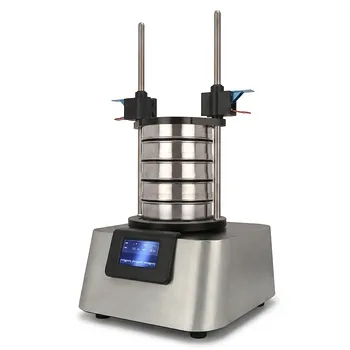
- Vibratory Sieve Shaker Electromagnetic 3D Motion Powder Particle Size Analyzer for Dry and Wet Sieving
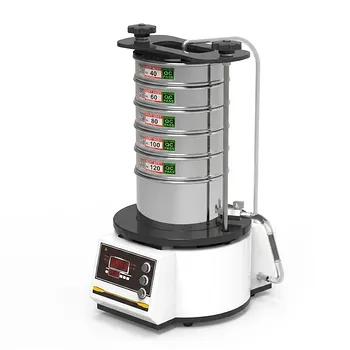
- High Frequency Wet Three-Dimensional Vibrating Sieve Shaker for Dry and Wet Particle Size Analysis
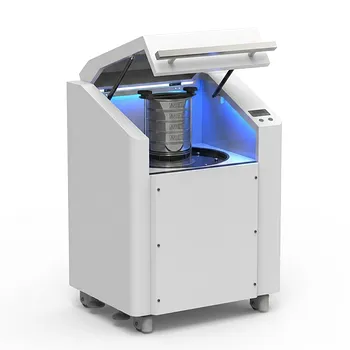
- High Frequency Cabinet Type Three-Dimensional Rotary Vibrating Sieve Shaker for Dry Sieving and Particle Classification
- Dry Three Dimensional Vibratory Sieve Shaker
- Small Laboratory Vibrating Sieve Shaker for Precise Particle Size Analysis
People Also Ask
- How does a vibratory sieve shaker contribute to optimizing the performance of activated carbon? Enhance Adsorption Precision
- Why is a laboratory vibratory sieve shaker necessary for processing magnesium-based borate precursor powders? Boost Activity
- Why use a vibratory sieve shaker to verify coarse aggregate grading in rubberized concrete? Ensure Structural Integrity
- What function do vibratory sieve shakers and standard test sieves serve in the preparation of adsorbents? Key Guide
- What role does a vibratory sieve shaker play in the particle size analysis of ground corn products? Enhance QC Precision

Tech Team · PowderPreparation
Last updated on May 14, 2026
Related Products
Vibratory Sieve Shaker Electromagnetic 3D Motion Powder Particle Size Analyzer for Dry and Wet Sieving
High Frequency Wet Three-Dimensional Vibrating Sieve Shaker for Dry and Wet Particle Size Analysis
High Frequency Cabinet Type Three-Dimensional Rotary Vibrating Sieve Shaker for Dry Sieving and Particle Classification
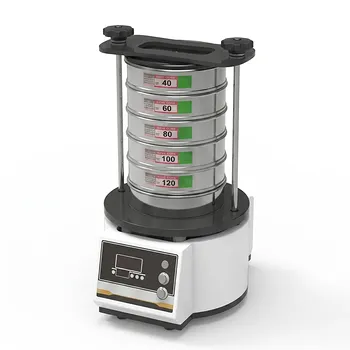
Dry Three Dimensional Vibratory Sieve Shaker
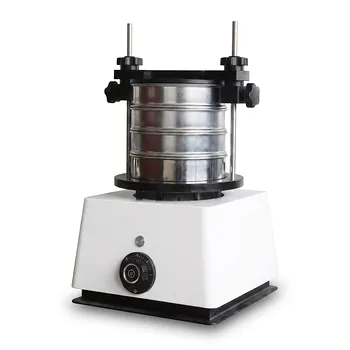
Small Laboratory Vibrating Sieve Shaker for Precise Particle Size Analysis
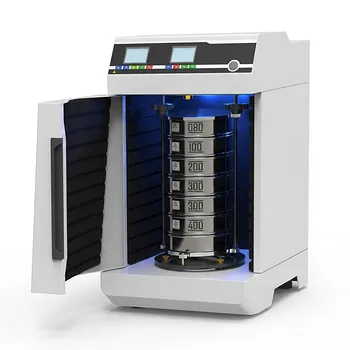
Laboratory Dry and Wet Three Dimensional Vibratory Sieve Shaker for Particle Analysis
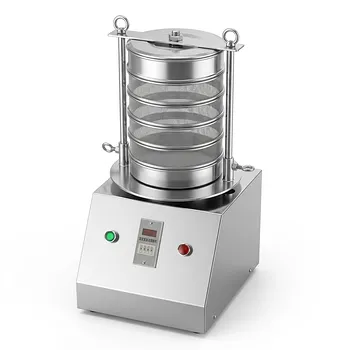
Stainless Steel Laboratory Vibratory Test Sieve Shaker
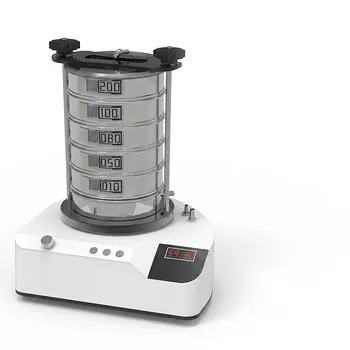
Heavy Duty Dry Three Dimensional Vibratory Sieve Shaker for Particle Separation
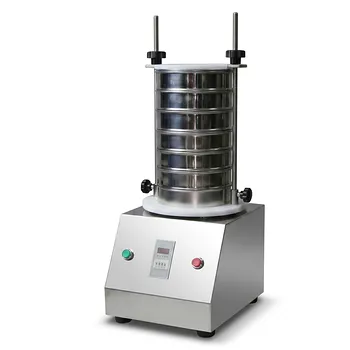
Small Laboratory Vibratory Sieve Shaker for Powder Gradation and Particle Size Analysis
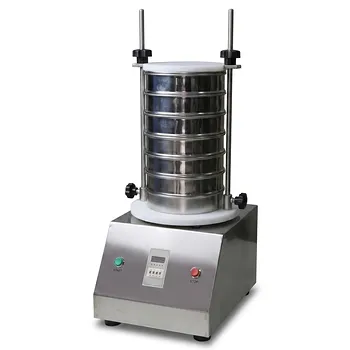
Laboratory Vibratory Test Sieve Shaker for Precision Particle Size Analysis and Powder Grading
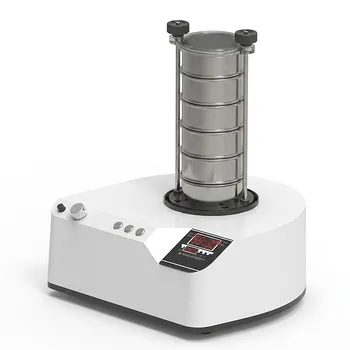
三维电磁微量振动筛分仪
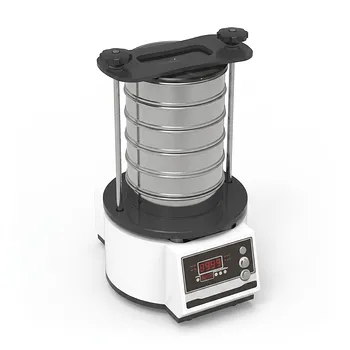
Tapping Oscillating Sieve Shaker for Dry and Wet Particle Size Analysis
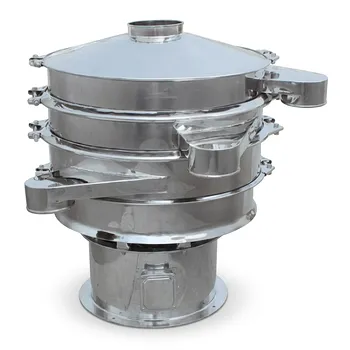
Stainless Steel Rotary Vibrating Sieve High Precision Circular Vibratory Separator Industrial Powder Grading Machine Multi Layer Sifting Equipment
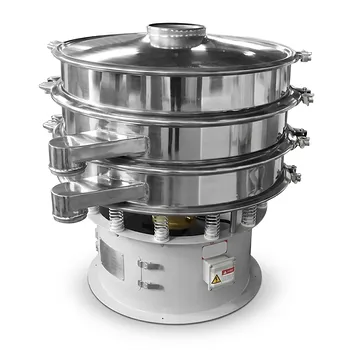
Three Dimensional Rotary Vibrating Sieve
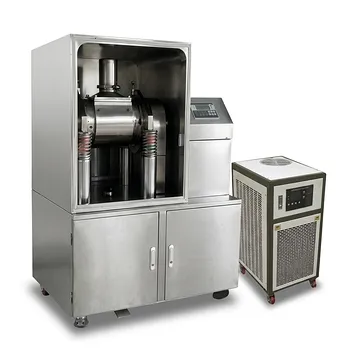
Small Vibrating Ultrafine Grinder for Traditional Chinese Medicine
Automatic Vibrating Powder Feeder for Laboratory Material Processing Precision Vibratory Hopper Feeder for Granular and Powder Material Handling Industrial Grade Vibrating Tray Feeder for Consistent Material Sample Preparation