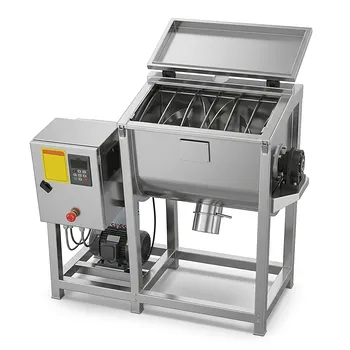
Why is intensive mixing equipment necessary for the pretreatment of pelletization raw materials? Ensure Peak Homogeneity
Updated 4 months ago
Achieving absolute homogeneity is the prerequisite for successful pelletization. Intensive mixing equipment is necessary because it ensures a uniform distribution of binders, fluxes, and moisture throughout the raw material matrix. By applying high-shear forces, these mixers prevent component segregation and ensure that fine powders effectively coat coarser particles, which is the foundational step for rapid nucleation and structural integrity in the final pellet.
Intensive mixing transforms a heterogenous blend of powders and binders into a perfectly homogenized feedstock, directly determining the mechanical strength, chemical stability, and yield of the subsequent pelletizing process.
The Mechanics of Material Preparation
High-Shear Coating and Particle Interaction
Intensive mixers utilize high-speed rotation to generate strong shear forces that physicalize the bond between different material types.
This process enables fine powders—such as fly ash or metakaolin—to evenly coat the surfaces of coarser particles like bottom ash.
Without this mechanical "interlocking," the raw materials remain as a loose collection of disparate particles rather than a cohesive precursor for pellet formation.
Prevention of Binder Localization
Binders like bentonite or cement are often used in small quantities, making them prone to "clumping" or localized concentration.
Intensive mixing distributes these binders at a microscopic level, ensuring every part of the mix has the same adhesive properties.
This prevents "weak spots" within the pellets that typically occur when binders are not thoroughly integrated into the raw material matrix.
Impact on Pellet Formation and Performance
Facilitating Rapid Nucleation
The pelletization process relies on "seeds" or nuclei forming quickly to begin the growth of the green pellet.
A perfectly homogenized mixture allows for a consistent moisture-material interface, which triggers rapid and uniform nucleation.
This speed is critical for maintaining high throughput in industrial production lines while ensuring the pellets are of a consistent size.
Ensuring Chemical Isotropy and Stability
For specialized materials like radio-transparent glass or geopolymers, chemical uniformity (isotropy) is a non-negotiable requirement.
Intensive mixing eliminates component segregation, ensuring that the finished product has stable dielectric properties or consistent geopolymerization reactions.
This prevents fluctuations in the final product's performance, such as variations in thermal shock stability or chemical resistance.
Understanding the Trade-offs
Energy Consumption vs. Material Quality
Intensive mixing requires significantly higher energy input than standard blending techniques due to the high-speed rotors and shear actions.
While this increases operational costs, the trade-off is often a reduction in the consumption of expensive binders, such as bentonite, as the mixer maximizes the binder's efficiency.
Equipment Wear and Maintenance
The high-velocity movement of abrasive materials (like iron ore or ash) against mixer components leads to accelerated wear and tear.
Operators must balance the need for high-intensity mixing with the lifecycle costs of specialized liners and rotor blades.
How to Apply This to Your Process
Making the Right Choice for Your Goal
Achieving the best results from intensive mixing requires aligning the equipment settings with your specific material characteristics and production targets.
- If your primary focus is reducing binder costs: Use high-intensity shear settings to maximize the specific surface area coverage of fine additives, allowing you to use less expensive binder material.
- If your primary focus is pellet strength and density: Prioritize mixing duration and moisture control to ensure a perfectly homogenous matrix that prevents structural irregularities during formation.
- If your primary focus is chemical consistency in specialized ceramics: Implement high-efficiency mixing to eliminate component segregation and ensure chemical isotropy throughout the melting or solidification stage.
By mastering the homogenization of raw materials through intensive mixing, you secure the structural and chemical foundation necessary for high-performance pellet production.
Summary Table:
| Key Factor | Intensive Mixing Action | Benefit to Final Pellet |
|---|---|---|
| Binder Distribution | High-shear microscopic dispersion | Eliminates weak spots and reduces binder waste |
| Material Coating | Mechanical interlocking of fines/coarse | Higher mechanical strength and structural integrity |
| Nucleation | Uniform moisture-material interface | Faster production and consistent pellet sizing |
| Homogeneity | Prevention of component segregation | Stable chemical, thermal, and dielectric properties |
Elevate Your Pellet Quality with Precision Material Solutions
Achieving high-performance pellets begins with absolute homogeneity. At our core, we provide complete laboratory sample preparation solutions for material science, specializing in high-efficiency powder processing and compaction equipment.
From intensive powder mixers and defoaming mixers that ensure perfect feedstock blending to our full spectrum of hydraulic presses—including Cold/Warm Isostatic Presses (CIP/WIP), vacuum hot presses, and XRF pellet presses—we empower your lab to achieve superior structural and chemical stability. Our extensive range also includes high-performance crushers, planetary ball mills, jet mills, and vibratory sieve shakers to refine your raw materials to perfection.
Ready to optimize your pelletization process and reduce material costs?
Contact our technical experts today to find the right solution for your application.
References
- Pei Tang, H.J.H. Brouwers. Integral recycling of municipal solid waste incineration (MSWI) bottom ash fines (0–2 mm) and industrial powder wastes by cold-bonding pelletization. DOI: 10.1016/j.wasman.2017.02.028
Mentioned Products
- 非介入式材料均质机真空脱泡行星搅拌高粘度混合设备
- Multi Dimensional Universal Mixer for High Uniformity Powder Blending
- High Viscosity Planetary Centrifugal Vacuum Mixer for Material Defoaming and Uniform Mixing
- Inclined Mixer for Homogeneous Powder Blending and Grinding
- Industrial Planetary Centrifugal Vacuum Defoaming Mixer for High Viscosity Paste and Powder Homogenization
People Also Ask
- How does a planetary vacuum defoaming mixer help magnesium calcium phosphate slurries? Achieve Flawless 3D Printed Bone
- Why is vacuum defoaming necessary for PDMS mixtures before microwave irradiation curing? Key to Structural Integrity
- What role does a vacuum defoaming mixer play in BNT MLCC slurry? Ensure High Dielectric Strength & Pinhole-Free Prep
- Why is a vacuum defoaming mixer essential for DLP 3D printing ceramic slurries? Key to Structural Integrity
- What is the purpose of using a high-vacuum defoaming mixer for SiC/Cf composites? Optimize Density and Strength

Tech Team · PowderPreparation
Last updated on Jun 03, 2026
Related Products
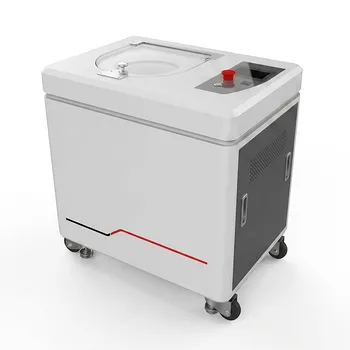
非介入式材料均质机真空脱泡行星搅拌高粘度混合设备
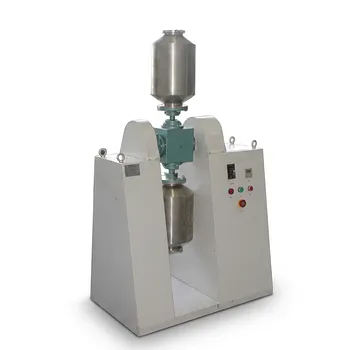
Multi Dimensional Universal Mixer for High Uniformity Powder Blending
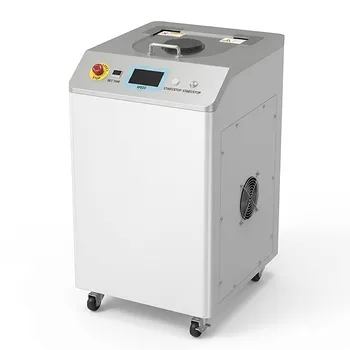
High Viscosity Planetary Centrifugal Vacuum Mixer for Material Defoaming and Uniform Mixing
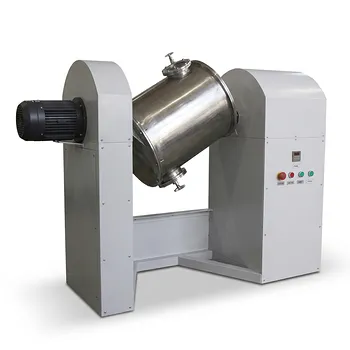
Inclined Mixer for Homogeneous Powder Blending and Grinding
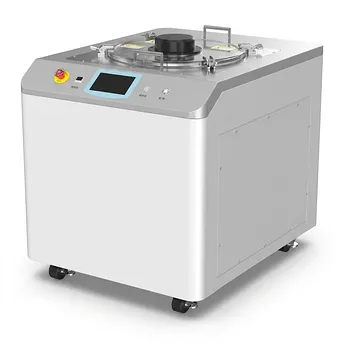
Industrial Planetary Centrifugal Vacuum Defoaming Mixer for High Viscosity Paste and Powder Homogenization
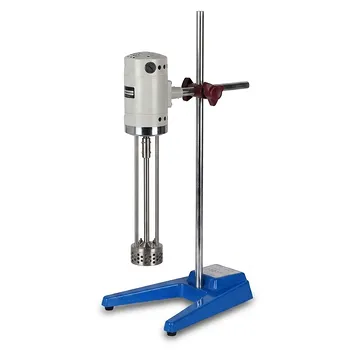
High Shear Laboratory Emulsifier for Mixing and Homogenization
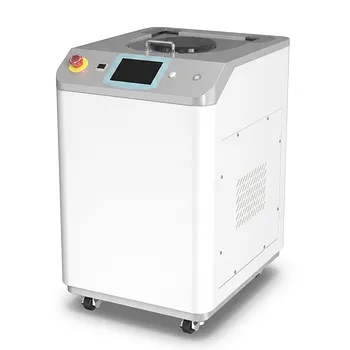
High Viscosity Planetary Centrifugal Mixing and Vacuum Defoaming Machine for Laboratory Material Preparation
Industrial Planetary Centrifugal Vacuum Defoaming Mixer for High Viscosity Paste and Advanced Material Science
High Speed Vacuum Planetary Centrifugal Mixer and Defoamer for Industrial Paste Processing
High-Speed Simple Disperser for Efficient Mixing, Dispersion, and Emulsification
Hydraulic Double Shaft Disperser for High Viscosity Liquid Mixing and Dispersion
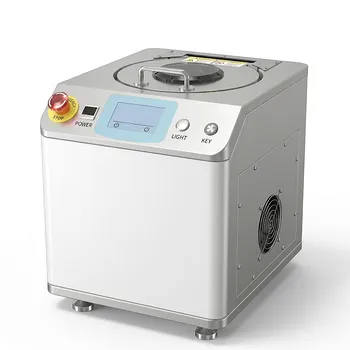
High Efficiency Vacuum Planetary Centrifugal Mixer and Defoaming Machine for Industrial Material Research and Precise Laboratory Powder Dispersion
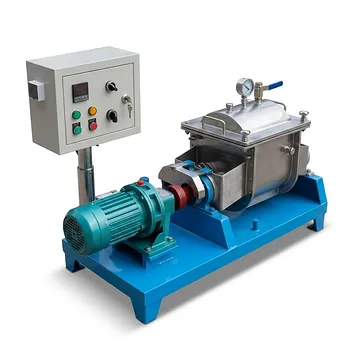
Industrial Vacuum Kneader for High-Viscosity Silicone, Rubber, and Compound Mixing
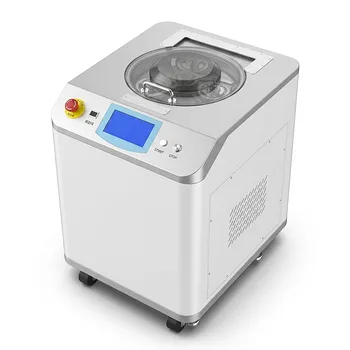
Dual Cup Vacuum Centrifugal Mixer Planetary Paste Defoaming Machine Industrial Material Processor
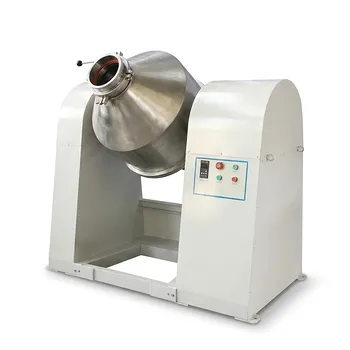
Industrial Double Cone Mixer for Powder Blending and Homogeneous Mixing
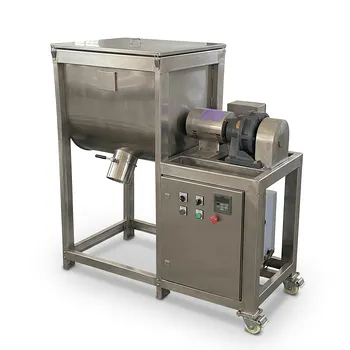
Horizontal Ribbon Mixer for Dry Powder and Slurry Blending
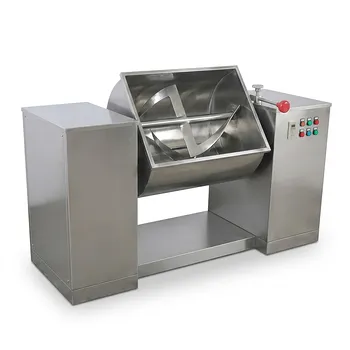
Horizontal Trough Mixer for Uniform Powder and Paste Blending
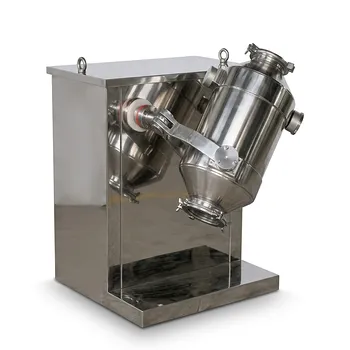
Three-Dimensional Motion Mixer for Laboratory Powder and Granule Blending
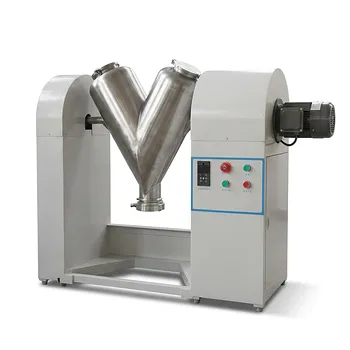
V-Type Powder Mixer for Uniform Blending of Dry Powders and Granules