How do vacuum mixing and defoaming mixers improve armor ceramics? Boost Reliability & Ballistic Yield
Updated 4 months ago
High-purity vacuum mixing and defoaming mixers serve as a critical quality control gate in the production of high-performance armor ceramics. By eliminating microscopic air bubbles and ensuring uniform powder dispersion, these mixers remove the root causes of structural failure, leading to a significant increase in both ballistic reliability and manufacturing yield.
High-purity vacuum mixers solve the fundamental problem of microscopic porosity in ceramic materials. By removing entrapped air and breaking down powder agglomerates, they create a dense, uniform material structure that survives the sintering process and delivers predictable, high-level ballistic protection.
Eliminating the Root Causes of Material Failure
The Danger of Internal Pores
Microscopic defects, specifically internal pores and impurities, are the primary drivers of catastrophic failure in armor ceramics. In a high-impact ballistic event, these tiny voids act as stress concentration points where cracks can easily initiate and propagate. By utilizing vacuum mixing, manufacturers can remove these voids at the slurry stage, ensuring the final material can withstand extreme forces.
Removing Adsorbed Gases
Ceramic powders often carry adsorbed gases on their surfaces that remain trapped during traditional mixing. A vacuum environment effectively extracts these gases while stirring, preventing them from forming micro-bubbles. This is especially critical for high-viscosity mixtures where air cannot escape naturally through buoyancy.
Preventing Micro-bubble Transformation
In advanced materials like SiC/Cf composites, small bubbles introduced during mixing will transform into permanent pore defects after the material hardens. Using a high-vacuum defoaming mixer before mold injection controls the size and distribution of these pores. This process directly enhances the structural durability and tensile strength of the finished ceramic matrix.
Achieving Structural Consistency and Density
Breaking Down Nano-Powder Agglomerates
Ceramic particles, particularly nano-powders, have a natural tendency to cluster or agglomerate, leading to uneven density in the green body. Defoaming mixers use high shear and centrifugal forces to break these clusters apart. This ensures that the ceramic powders, binders, and dispersants are perfectly distributed throughout the solvent.
Increasing Green Body Density
The "green body" is the unfired, shaped ceramic material; its quality determines the success of the final product. By eliminating internal bubbles, vacuum mixers produce green bodies with high microscopic density and superior structural consistency. This high initial density is the foundation for a defect-free final ceramic.
Uniformity in High-Solid-Phase Suspensions
For ceramic suspensions with a high solid-to-liquid ratio, achieving a smooth, bubble-free slurry is notoriously difficult. Mixers using sugar acids as dispersants rely on vacuum defoaming to prevent internal stresses. This level of uniformity is necessary to prevent "dead spots" or weak areas in the armor plating.
Enhancing Manufacturing Yield and Repeatability
Reducing Sintering Risks
The sintering process involves extreme heat that causes ceramic particles to fuse, and any internal defect at this stage can cause the part to crack. High-purity mixing ensures the structural integrity of the green body, which dramatically reduces the risk of cracking during firing. This leads to a higher percentage of usable parts and less industrial waste.
Performance Repeatability
In large-scale industrial manufacturing, consistency is as important as peak performance. Vacuum defoaming mixers ensure that every batch of ceramic material has the same microstructural characteristics. This repeatability allows manufacturers to guarantee specific ballistic ratings across entire production runs.
Cross-Industry Reliability Standards
The same principles used to prevent electrical shorts and hotspots in electronics manufacturing apply to armor ceramics. Just as vacuum mixing prevents delamination in PCBs, it prevents structural delamination in ceramic layers. This cross-industry proven technology ensures that the material layers are defect-free and functionally reliable.
Understanding the Trade-offs
Equipment Complexity and Maintenance
Vacuum defoaming mixers are significantly more complex than standard atmospheric mixers. They require robust vacuum seals and specialized chambers that must be meticulously maintained to prevent contamination. Any leak in the vacuum system can reintroduce the very defects the machine is designed to eliminate.
Cycle Times vs. Purity Levels
Achieving the highest levels of purity and defoaming often requires longer processing cycles and specific temperature controls. While this increases the quality of the ceramic, it can create a bottleneck in high-volume production lines. Manufacturers must balance the "degree of vacuum" with the required throughput of the factory.
Potential Loss of Volatile Components
In some specialized slurry chemistries, a high-vacuum environment can cause the evaporation of volatile solvents or additives. If not carefully monitored, this can change the chemical composition of the mixture. Operators must calibrate vacuum levels to remove air without stripping essential liquid components from the suspension.
How to Apply This to Your Project
Choosing the Right Mixing Strategy
- If your primary focus is maximum ballistic energy absorption: Prioritize a high-vacuum defoaming mixer that utilizes high shear forces to ensure the absolute removal of micro-pores.
- If your primary focus is large-scale industrial yield: Implement automated vacuum mixing systems to reduce human error and ensure repeatable green body density across all batches.
- If your primary focus is complex composite armor (e.g., SiC/Cf): Use a negative pressure environment specifically during the injection phase to prevent "trapped air" defects in the fiber matrix.
- If your primary focus is cost-effective production: Focus on optimizing the defoaming cycle time to find the "sweet spot" where porosity is minimized without excessively slowing down the manufacturing line.
By mastering the transition from a porous slurry to a dense, uniform green body, manufacturers can produce armor ceramics that offer unfailing protection and superior structural integrity.
Summary Table:
| Key Challenge | Vacuum Mixing Solution | Impact on Armor Quality |
|---|---|---|
| Internal Pores | Removes entrapped air/adsorbed gases | Eliminates stress points to prevent ballistic failure |
| Agglomeration | High shear breaks nano-powder clusters | Ensures uniform dispersion and consistent density |
| Sintering Risks | Produces defect-free green bodies | Dramatically reduces cracking and industrial waste |
| Repeatability | Standardized microstructural control | Guarantees consistent ballistic ratings across batches |
Elevate Your Material Performance with Precision Equipment
Are you looking to eliminate structural defects and optimize your high-performance ceramic production? We provide complete laboratory sample preparation solutions tailored for material science. Our expertise specializes in advanced powder processing and compaction equipment designed to ensure maximum reliability and yield.
Our extensive product lines include:
- Advanced Mixing: High-purity vacuum defoaming mixers and powder mixers for defect-free slurries.
- Milling & Grinding: Planetary ball mills, jet mills, and liquid nitrogen cryogenic grinders.
- Preparation & Sizing: Jaw/roll crushers and vibratory/air-jet sieve shakers.
- Compaction Excellence: A full spectrum of hydraulic presses, including Cold/Warm Isostatic Presses (CIP/WIP), hot presses, and vacuum hot presses.
Whether you are developing next-generation armor or high-tech electronics, our equipment provides the consistency your research demands. Contact us today to optimize your lab workflow!
References
- James W. McCauley. Institutional and technical history of requirements‐based strategic armor ceramics basic research leading up to the multiscale material by design materials in extreme dynamic environments (MEDE) program. Part I. Brief history of institutional changes and relevant major research programs. DOI: 10.1002/ces2.10176
Mentioned Products
- High Viscosity Planetary Centrifugal Vacuum Mixer for Material Defoaming and Uniform Mixing
- High Viscosity Planetary Centrifugal Mixing and Vacuum Defoaming Machine for Laboratory Material Preparation
- Industrial Planetary Centrifugal Vacuum Defoaming Mixer for High Viscosity Paste and Powder Homogenization
- High Speed Vacuum Planetary Centrifugal Mixer and Defoamer for Industrial Paste Processing
- Industrial Planetary Centrifugal Vacuum Defoaming Mixer for High Viscosity Paste and Advanced Material Science
People Also Ask
- What core functions does a planetary centrifugal mixer perform? Optimize Hard Carbon Anode Slurry & Degassing
- Why is a planetary centrifugal mixer recommended for geopolymer slurries? Achieve high-shear, air-free homogenization.
- Why is a planetary centrifugal mixer utilized for wood powder and HPMC? Achieve uniform dispersion & rapid defoaming.
- How does a planetary centrifugal mixer address key challenges in Tyr-CDs@EVA optical films? Ensure Optical Clarity.
- What is the role of a planetary centrifugal mixer in UHTC slurry preparation? Achieve Void-Free, High-Viscosity Mixing

Tech Team · PowderPreparation
Last updated on Jun 03, 2026
Related Products
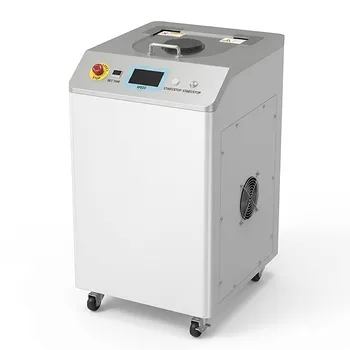
High Viscosity Planetary Centrifugal Vacuum Mixer for Material Defoaming and Uniform Mixing
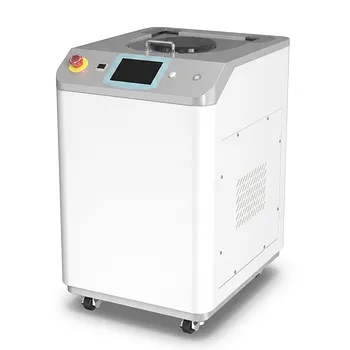
High Viscosity Planetary Centrifugal Mixing and Vacuum Defoaming Machine for Laboratory Material Preparation
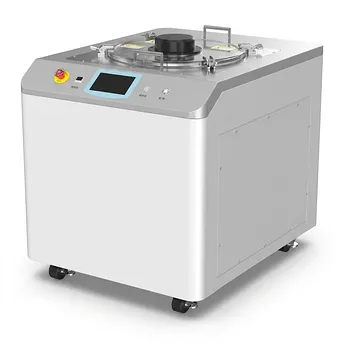
Industrial Planetary Centrifugal Vacuum Defoaming Mixer for High Viscosity Paste and Powder Homogenization
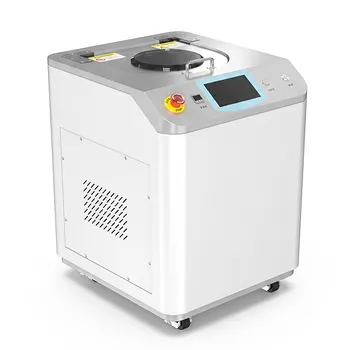
High Speed Vacuum Planetary Centrifugal Mixer and Defoamer for Industrial Paste Processing
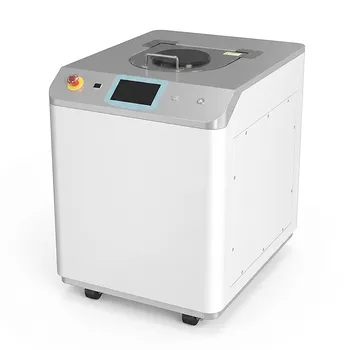
Industrial Planetary Centrifugal Vacuum Defoaming Mixer for High Viscosity Paste and Advanced Material Science
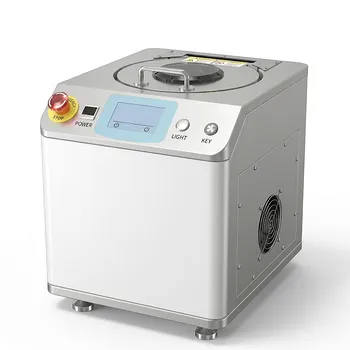
High Efficiency Vacuum Planetary Centrifugal Mixer and Defoaming Machine for Industrial Material Research and Precise Laboratory Powder Dispersion
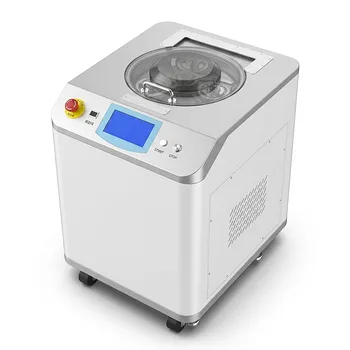
Dual Cup Vacuum Centrifugal Mixer Planetary Paste Defoaming Machine Industrial Material Processor
非介入式材料均质机真空脱泡行星搅拌高粘度混合设备
Industrial Vacuum Kneader for High-Viscosity Silicone, Rubber, and Compound Mixing
High Shear Laboratory Emulsifier for Mixing and Homogenization
High-Speed Simple Disperser for Efficient Mixing, Dispersion, and Emulsification
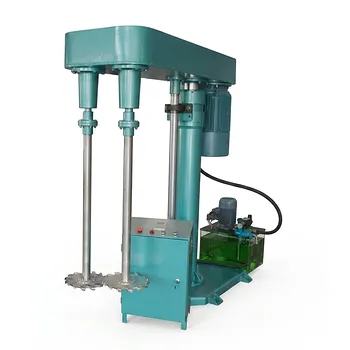
Hydraulic Double Shaft Disperser for High Viscosity Liquid Mixing and Dispersion
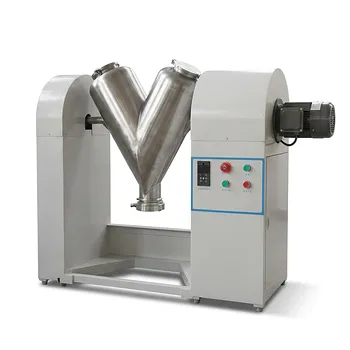
V-Type Powder Mixer for Uniform Blending of Dry Powders and Granules
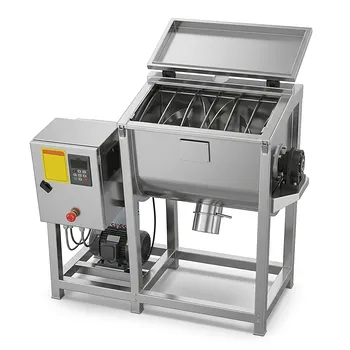
Horizontal Ribbon Mixer for Uniform Powder and Slurry Mixing
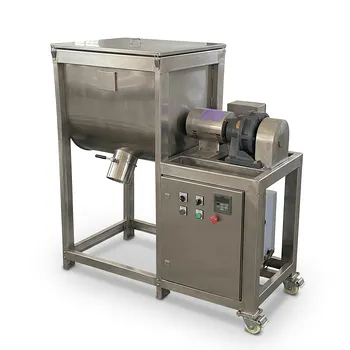
Horizontal Ribbon Mixer for Dry Powder and Slurry Blending
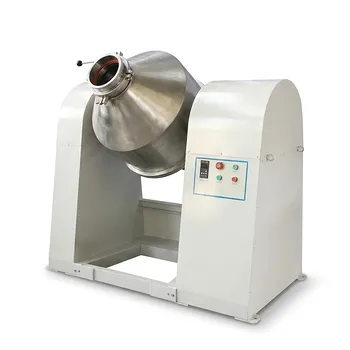
Industrial Double Cone Mixer for Powder Blending and Homogeneous Mixing
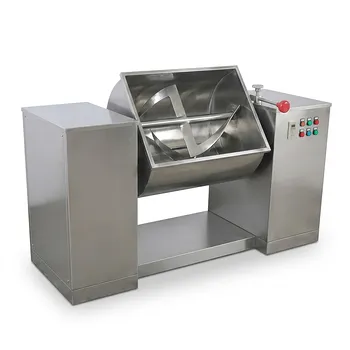
Horizontal Trough Mixer for Uniform Powder and Paste Blending
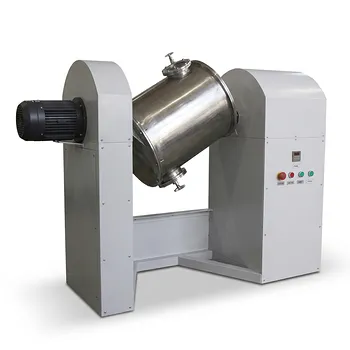
Inclined Mixer for Homogeneous Powder Blending and Grinding
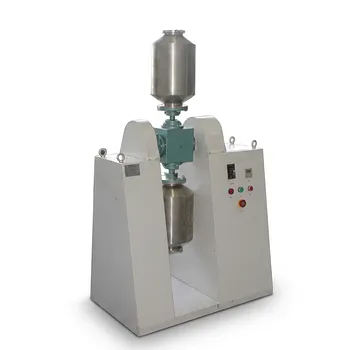
Multi Dimensional Universal Mixer for High Uniformity Powder Blending