Why is ethanol utilized as a process control agent (PCA) during planetary ball milling? Optimize Mg Powder Yield
Updated 4 months ago
Ethanol acts as a critical surfactant and lubricant that prevents ductile magnesium powders from fusing into a solid mass during high-energy milling. By adsorbing onto the surface of the metal particles, ethanol lowers their surface energy and creates a physical barrier that regulates the balance between cold welding and fracturing. This ensures the production of a fine, uniform powder while preventing the material from sticking to the grinding media or the container walls.
Ethanol serves as a Process Control Agent (PCA) by providing a protective film that inhibits excessive cold welding and promotes particle refinement. This mechanism is essential for achieving a high yield of fine powder and maintaining the chemical stability of reactive magnesium alloys.
The Challenge of Milling Ductile Magnesium
Managing Magnesium's High Ductility
Magnesium alloys are inherently soft and ductile, which presents a significant challenge during planetary ball milling. Under high-power impacts, these particles tend to undergo excessive cold welding, where they bond together upon contact rather than breaking apart.
Preventing Equipment Adhesion
Without a process control agent, magnesium powder frequently adheres to the grinding balls and the inner walls of the jar. This "caking" reduces the efficiency of the milling process and can lead to a near-total loss of recoverable powder.
Balancing Fracturing and Welding
For successful mechanical alloying, the rate of particle fracturing must be balanced with the rate of cold welding. Ethanol intervenes in this cycle by facilitating fracture mechanisms, allowing the powder to reach a finer, more uniform particle size distribution.
The Functional Role of Ethanol as a PCA
Adsorption and Surface Energy Reduction
Ethanol molecules adsorb onto the fresh surfaces of magnesium particles created during milling. This layer lowers the surface energy of the particles, which significantly reduces the attractive forces that drive agglomeration and secondary welding.
Thermal Regulation and Oxidation Control
The high-energy impacts in a planetary mill generate significant local heat, which can trigger the oxidation of reactive magnesium. Ethanol acts as a grinding aid and coolant, dissipating heat and providing a liquid medium that shields the powder from atmospheric oxygen.
Improving Powder Flowability
By preventing the formation of large, irregular clumps, ethanol ensures the final product remains a free-flowing powder. This flowability is critical for subsequent manufacturing steps, such as cold pressing or additive manufacturing.
Understanding the Trade-offs
The Risk of Impurity Contamination
While ethanol is effective, it can introduce trace amounts of carbon or oxygen into the magnesium matrix if the milling duration is excessive. These impurities can alter the mechanical properties of the final alloy, making it necessary to optimize the volume of PCA used.
Yield vs. Processing Time
Using too much ethanol can overly lubricate the system, reducing the impact energy transferred to the powder and slowing down the refinement process. Conversely, too little ethanol leads to poor yield due to powder sticking to the equipment, requiring a precise weight-ratio calculation for the specific alloy.
How to Apply This to Your Project
Optimizing Your Milling Strategy
To achieve the best results when milling ductile magnesium alloys, consider your specific production goals:
- If your primary focus is maximizing powder yield: Use a slightly higher volume of ethanol to ensure a complete coating of the grinding media, which prevents material loss from adhesion.
- If your primary focus is high chemical purity: Use the minimum required amount of anhydrous ethanol and limit milling time to prevent the breakdown of the PCA into carbon contaminants.
- If your primary focus is ultra-fine particle size: Utilize a "wet milling" approach where the ethanol serves as a continuous liquid phase to prevent secondary agglomeration of sub-micron particles.
Selecting the correct amount of ethanol transforms the milling process from a messy equipment-cleaning challenge into a precise method for engineering high-performance magnesium powders.
Summary Table:
| Functional Role | Mechanism of Action | Benefit to Magnesium Milling |
|---|---|---|
| Surface Control | Adsorbs onto fresh particle surfaces | Lowers surface energy; reduces agglomeration |
| Cold Welding Inhibition | Creates a physical barrier/lubricant film | Prevents ductile particles from fusing into masses |
| Fracture Promotion | Balances welding vs. fracturing rates | Ensures uniform particle size refinement |
| Equipment Protection | Prevents "caking" on jar walls and balls | Maximizes powder recovery and processing efficiency |
| Thermal Management | Acts as a liquid coolant/grinding aid | Dissipates heat and shields against oxidation |
Elevate Your Material Science Research with Precision Powder Solutions
Achieving the perfect balance between cold welding and fracturing requires not only the right Process Control Agent (PCA) but also the highest quality equipment. At [Company Name], we provide complete laboratory sample preparation solutions specifically designed for the demanding requirements of material science.
Whether you are refining reactive magnesium alloys or developing advanced composites, our specialized equipment ensures repeatable, high-purity results:
- Advanced Milling: High-energy Planetary Ball Mills, Jet Mills, and Cryogenic Grinders for superior particle refinement.
- Sample Processing: A full range of Jaw/Roll Crushers, Sieve Shakers, and high-performance Powder Mixers.
- Consolidation Excellence: Precision Hydraulic Presses, including Cold/Warm Isostatic Presses (CIP/WIP), Hot Presses, and XRF Pellet Presses for high-density compaction.
Ready to optimize your powder processing workflow? Contact our technical experts today to find the ideal equipment configuration for your specific laboratory needs.
References
- Kimia Jamshidi, Hamed Jamshidi Aval. Microstructure and corrosion resistance of AZ91- Hydroxyapatite composites processed via deformation-driven metallurgy. DOI: 10.1007/s10856-025-06942-y
Mentioned Products
- Vertical Semi Circular Planetary Ball Mill for Laboratory Precision Grinding
- High Energy Planetary Ball Mill for Nano Scale Grinding and Mechanical Alloying
- Vertical Production Planetary Ball Mill for High Throughput Powder Processing
- Heavy Duty Horizontal Planetary Ball Mill for Efficient Industrial Grinding and Sample Preparation
- 360° Rotating Omnidirectional Laboratory Planetary Ball Mill for Homogeneous Ultra-Fine Grinding and Mixing
People Also Ask
- What role does a planetary ball mill play in the synthesis of Li6PS5Cl (LPSCl)? Unlock High Ionic Conductivity
- Why is a planetary ball mill essential for SiBCN-rGO wet-spinning? Achieve Superior Dispersion and Spinnability
- Why is an intermittent grinding process required for perovskites in a planetary ball mill? Ensure Stability & Purity
- Why is a planetary ball mill required for PET micronization? Ensure Accurate Chemical Analysis of Reprocessed PET
- How does mechanized planetary ball milling compare to manual agate grinding? Optimize sulfide standard material precision.

Tech Team · PowderPreparation
Last updated on Jun 03, 2026
Related Products
Vertical Semi Circular Planetary Ball Mill for Laboratory Precision Grinding

High Energy Planetary Ball Mill for Nano Scale Grinding and Mechanical Alloying

Vertical Production Planetary Ball Mill for High Throughput Powder Processing
Heavy Duty Horizontal Planetary Ball Mill for Efficient Industrial Grinding and Sample Preparation
360° Rotating Omnidirectional Laboratory Planetary Ball Mill for Homogeneous Ultra-Fine Grinding and Mixing
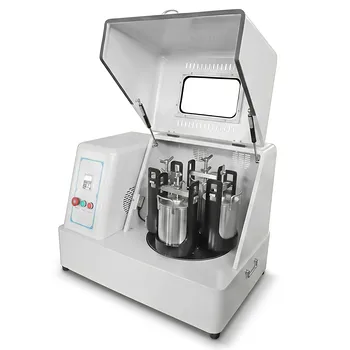
Vertical Square Planetary Ball Mill for Laboratory Sample Preparation and Nanoscale Grinding
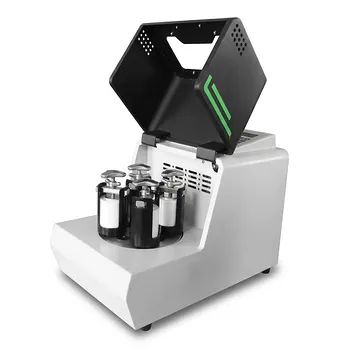
Miniature Planetary Ball Mill with Vacuum Grinding and High Efficiency for Laboratory Sample Preparation
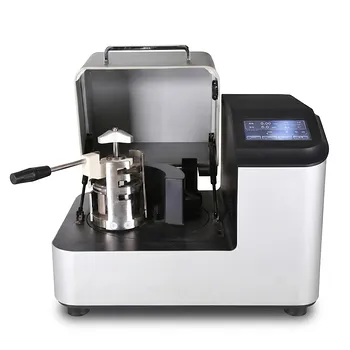
High Energy Laboratory Planetary Ball Mill for Nano Grinding and Material Science Sample Preparation

High Energy Omnidirectional Planetary Ball Mill 16L
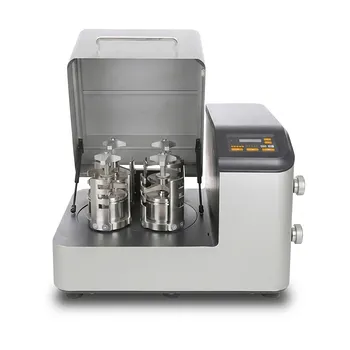
High Energy Planetary Ball Mill for Nano Scale Grinding and Colloidal Mixing in Material Science Research
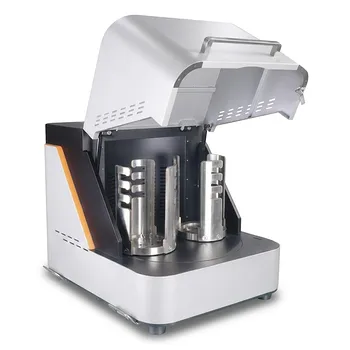
High Energy Laboratory Planetary Ball Mill for Nano Grinding and Colloidal Mixing of Hard and Brittle Materials
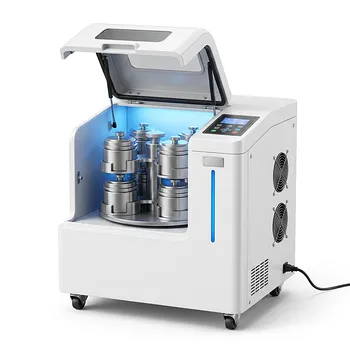
High Energy Omnidirectional Planetary Ball Mill 20L
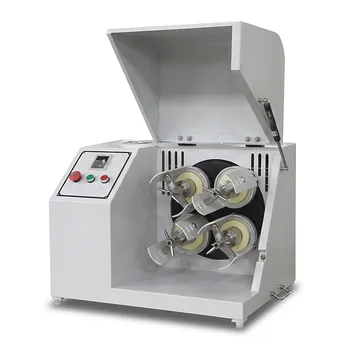
Horizontal Light Duty Planetary Ball Mill for Laboratory Sample Preparation
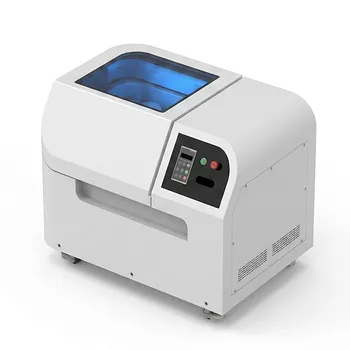
8L Planetary Ball Mill for Laboratory Grinding and Sample Preparation
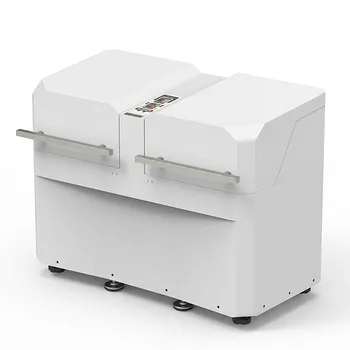
Dual Station Planetary Ball Mill 24L
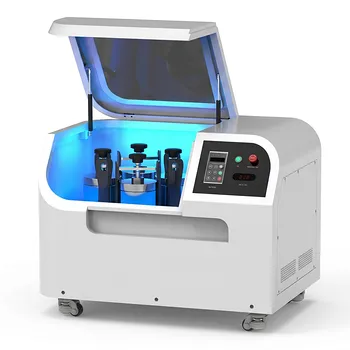
Planetary Ball Mill 12L
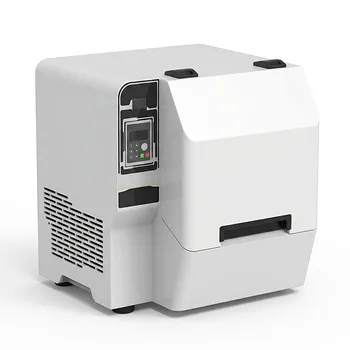
Nano High Energy Vibratory Ball Mill for Laboratory Sample Preparation
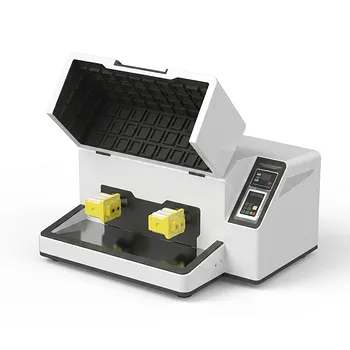
Multi-Platform Nanoscale High-Energy Vibratory Ball Mill
High Energy Hybrid Vibratory Ball Mill for Grinding Mixing and Cell Disruption